Hills and Tombs
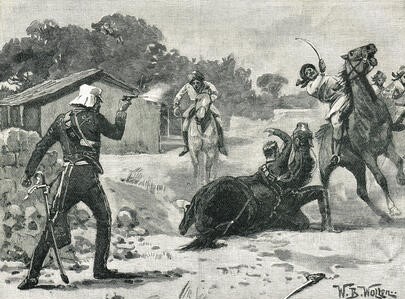
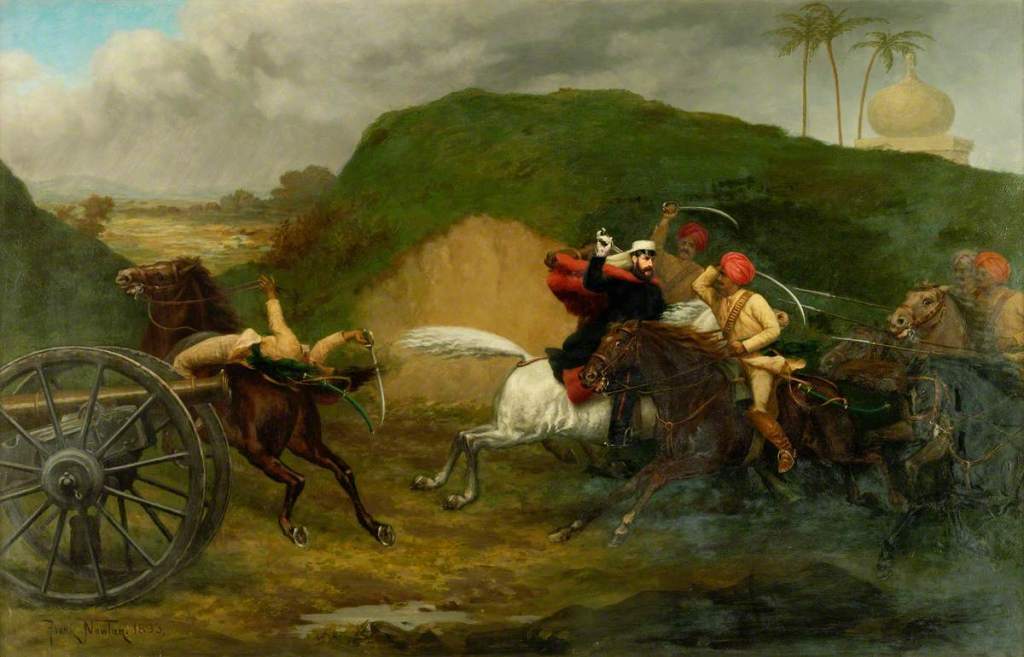
We have already seen in the previous post, “A Desperate, War, the Ridge in July”, how Major Henry Tombs twice saved the life of his subaltern, the rather reckless James Hills. For the action of the 9th of July that very nearly cost Hills his life, both men were recommended for the VC, Hills for defending his position and Tombs for rescuing Hills.
“For very gallant conduct on the part of Lieutenant Hills before Delhi, in defending the position assigned to him in case of alarm, and for noble behaviour on the part of Lieutenant-Colonel Tombs in twice coming to his subaltern’s rescue, and on each occasion killing his man.” (See despatch of Lieutenant-Colonel Mackenzie, Commanding 1st Brigade Horse Artillery, dated Camp, near Delhi, 10 July 1857, published in the Supplement to the London Gazette of 16 January 1858.)
Both Addiscombe men, Hills, like Tombs, had been born in Bengal.
James Hills (or, as he later became known, Sir James Hills-Johnes) was born in 1833 in Neechindipore, Bengal, the son of a Scottish indigo planter and his wife, Charlotte, the daughter of Signor John Angelo Savi of Moisegunge, an Italian with a French wife. (https://www.thedailystar.net/literature/the-man-three-nationalities-1593940) James was sent back to Scotland for his schooling, first to the Edinburgh Academy and then to Addiscombe, where he received his commission as 2nd Lieutenant in the Bengal Horse Artillery in 1853.
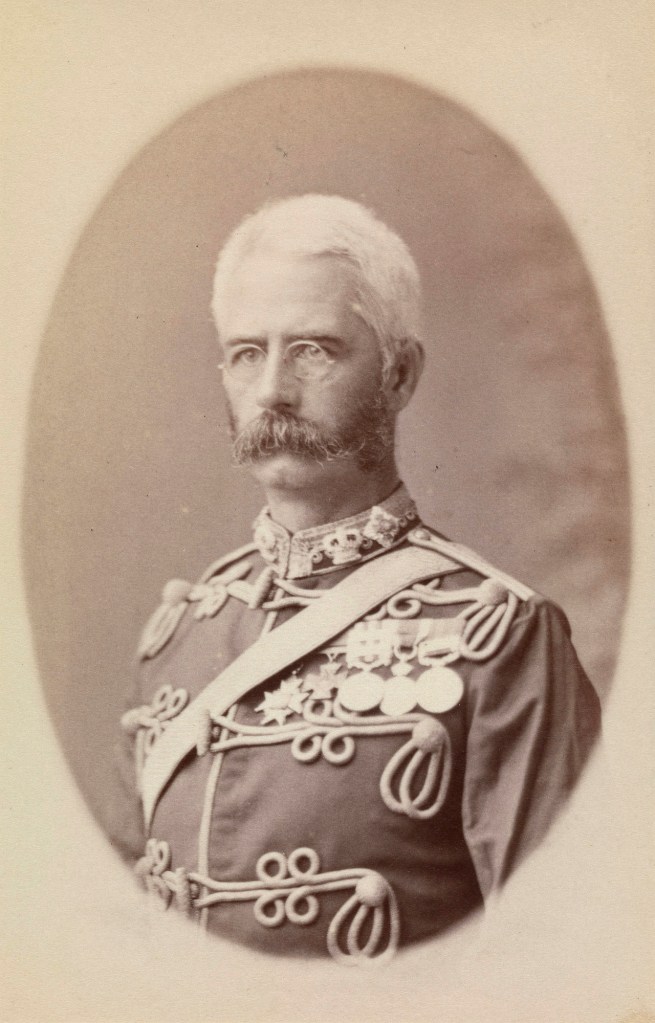
Hills would serve through the mutiny in the 2nd Troop, 1st Brigade Bengal Horse Artillery. He was present at the action on the Hindun River in May, Badli ki Serai and then served on Ridge. Initially, his troop assisted Reid in defending Hindu Rao’s House but were then on regular picket duty on the Mound after the heavy guns were positioned. Hills would be attached to Tombs’s troop at the Battle of Najafgarh in August. Following the fall of Delhi in September, Hills would join the force. which in 1858 captured Lucknow.
At the end of the mutiny, Hills became ADC to Lord Canning. His active career, however, was far from over. he served in the Abyssinian Expedition (1867-1868), and then, as Lieutenant-Colonel, he was appointed Commandant of the Peshawar Mountain Battery in 1869. From 1870, he would be the district and garrison commander at Kohat. Back on active service during the Lushai Campaign, he commanded the battery and was once again mentioned in dispatches.
Hills joined the Kandahar Field Force as Assistant Adjutant General and served in the latter part of the Afghan War of 1878-1880. He then joined another mutiny veteran, Sir Frederick Roberts, who was commanding the force in the Kurram Valley in 1879. Hills was to be the last Military Governor of Kabul, holding the post from October 1879 until it was abolished in 1880. Before his retirement in 1881, Hills saw service for a final time as commander of the 3rd Division, Northern Afghanistan Field Force. It earned him mentions in dispatches and thanks from both Houses of Parliament.
After his retirement, Hills married Miss Elizabeth Johnes at Westminster Abbey in 1882, joining her name to his. However, he was not quite done with the army. He became Honorary Colonel of Carmarthenshire Artillery in 1891 and then, in 1893, went with Lord Roberts, privately, from Kronstadt to Diamond Hill during the South African War. As Honorary Colonel of the 4th Welsh Regiment and chairman of the Territorial Force Association in Carmarthenshire, James Hills finally retired from army life. He died in Wales in 1919 at the age of 85. His was not the only VC in the family – his brother-in-law William Cubitt (married to James’ sister) would win his VC at the Battle of Chinhat in June 1857, while his nephew, Brigader Lewis Pugh Evans of the Black Watch, would win his at Zonnebeke, Belgium in 1917.
As for Henry Tombs, his career would sadly be much shorter than that of his friend James Hills.
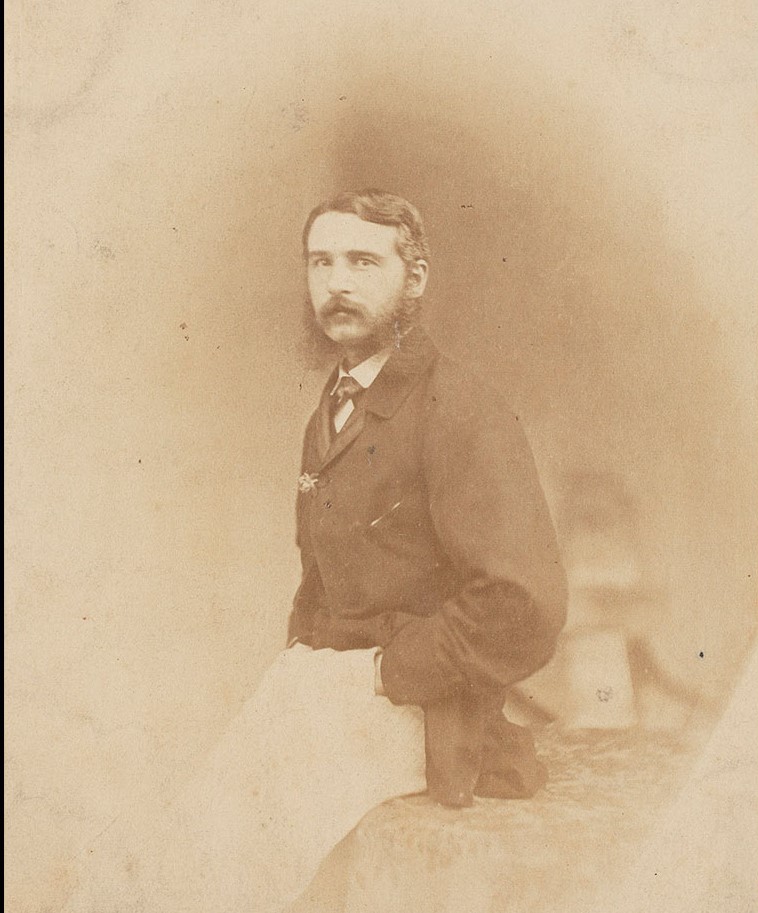
Henry Tombs was born in 1824 in Calcutta, the seventh son of Major General John Tombs and his wife Mary, daughter of John Remington. His father was a career soldier who had commanded the 3rd Bengal Cavalry at the Siege of Bhurtpore (1824-1825). Sent to England for his schooling, Henry entered Addiscombe at the age of 14. In 1841, he received his commission as a second lieutenant in the Bengal Horse Artillery. At the age of 19, he would see active service for the first time with his regiment during the Gwalior Campaign at the Battle of Punniar in 1843. Serving with the No. 16 Light Field Battery, Henry would be mentioned in dispatches for his gallantry and received the Punniar Star. It was a promising start for a young officer.
During the 1st Sikh War, Tombs commanded the horse artillery troop at the actions of Mudki and Ferozeshur, the affair at Buddiwal and the Battle of Aliwal while also serving as ADC to Sir Henry Smith. Tombs received the Sutlej campaign medal with two clasps (for Ferozeshur and Aliwal). During the second Sikh War (1848-49), Henry, now Deputy Assistant Quartermaster General of Artillery, would be present not only at the Battle of Ramnagar and the passage of Chenab but also at Chillianwallah and Goojerat. Besides mentions in dispatches, he was promoted to brevet-major for his services and received another campaign medal with 2 clasps. Events were unrelentingly hurtling their way towards 1857. Like Heathcote and Hills, Tombs was in Meerut in May. He was commanding the 2nd Troop of the 1st Brigade Bengal Horse Artillery. Under him, the troop would fight the battle of Ghaziudinnagar on their way to Delhi in May. Henry Tombs was at Badli ki Serai and then, under John Nicholson at Najafgarh. For Hills (who was part of Tombs’ troop at Najafgarh), he was “the best commander he had served under…” Gallantry appears to have had a sobering effect on Henry Tombs – when writing his report of the affair on the 9th of July, he deliberately left his part out of the report, much to the chagrin of Lieutenant Mackenzie, who promptly tore it up and submitted his own instead, thus ensuring Tombs a VC.
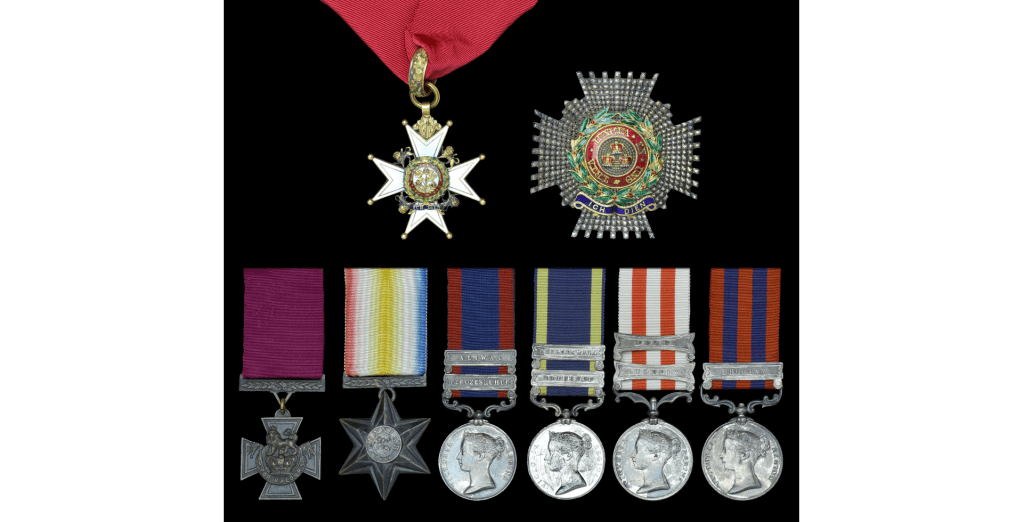
https://www.noonans.co.uk/auctions/archive/lot-archive/results/301691/
| “Yesterday, the 9th instant (July ’57), Second Lieutenant J. Hills was on picquet duty with two guns at the mound to the right of the Camp. About 11 o’clock a. m., there was a rumour that the enemy’s Cavalry were coming down on this post. Lieutenant Hills proceeded to take up the position assigned to him in case of alarm; but before he reached the spot, he saw the enemy close upon his guns before they had time to form up. To enable him to do this, Lieutenant Hills boldly charged single-handed the head of the enemy’s Column, cut down the first man, struck the second, and was then ridden down, horse and all. On getting up and searching for his sword, three more men came at him (two mounted); the first man he wounded with his pistol; he caught the lance of the second in his left hand, and wounded him with his sword; the first man then came on again and was cut down; the third man (on foot) then came up and wrenched the sword from the hand of Lieutenant Hills (who fell in the struggle), and the enemy was about to cut him down when Major Tombs (who had gone up to visit his two guns) saw what was going on, rushed in, and shot the man and saved Lieutenant Hills. By this time the enemy’s Cavalry had passed by, and Major Tombs and Lieutenant Hills went to look after the wounded men when Lieutenant Hills observed one of the enemy passing with his (Lieutenant Hills’) pistol. They walked towards him, the man flourishing his sword and dancing about. He first cut at Lieutenant Hills, who parried the blow, and he then turned on Major Tombs, who received the blow in the same manner. The second attack on Lieutenant Hills was (I regret to say) more successful, as he was cut down with a bad sword cut on the head, and would have been, no doubt, killed, had not Major Tombs rushed in and put his sword through the man. I feel convinced that such gallant conduct on the part of these two Officers has only to be brought properly forward to meet with an appropriate reward. Major Tombs was saved from a severe sword cut on the head by the wadded headdress he wore.” – Mentioned in General Reed’s Despatch, 14th July ’57, for being conspicuous for distinguished gallantry. | |
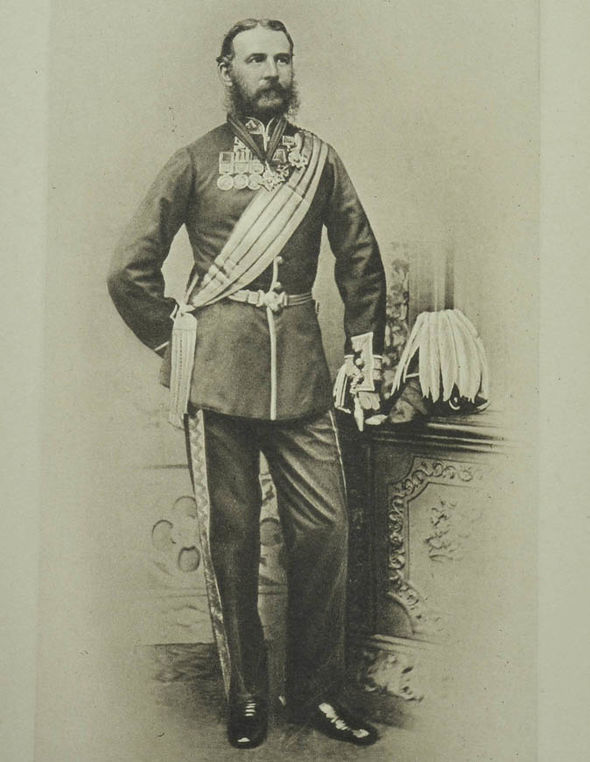
After the mutiny, Tombs continued his career in India and saw active service for the last time, commanding the right column of the Bhutan Field Force sent to recapture Dewangiri in 1865. He had attained the rank of Brigadier General in command of the Gwalior District – following the last campaign, he was made ADC to Queen Victoria. After a brief sojourn in England, Tombs returned to India with his wife – Georgina Janet, the youngest daughter of Sir James Stirling and Ellen neé Mangles, who was the cousin of Ross Mangles, VC. Together, Henry and Georgina would have three children, but their son Henry died in infancy.
In 1871, Henry was given command of the Allahabad Division, which was then transferred in 1872 to Oudh. The family settled in Lucknow. It was here that Henry Tombs’s life began its decline. During Christmas 1873, upon falling ill, the doctor had no option but to send him home on sick leave. By the time he reached Marseille, his condition had dramatically worsened, and he was operated on in Paris. When he finally reached England, the doctor had given Tombs the sobering news that his condition was incurable – Tombs decided to spend his final days on the Isle of Wight where he died, on the 2nd of August, 1874. He was 49.
“Henry Tombs an unusually handsome man and a thorough soldier. … I had always heard of Tombs as one of the best officers in the regiment. …. As a cool, bold leader of men, Tombs was unsurpassed: no fire, however hot, and no crisis, however unexpected, could take him by surprise; he grasped the situation in a moment and issued his orders without hesitation, inspiring all ranks with confidence in his power and capacity. He was somewhat of a martinet, and was more feared than liked by his men until they realized what a grand leader he was, when they gave him their entire confidence, and were ready to follow him anywhere and everywhere.” – Field Marshal Lord Roberts
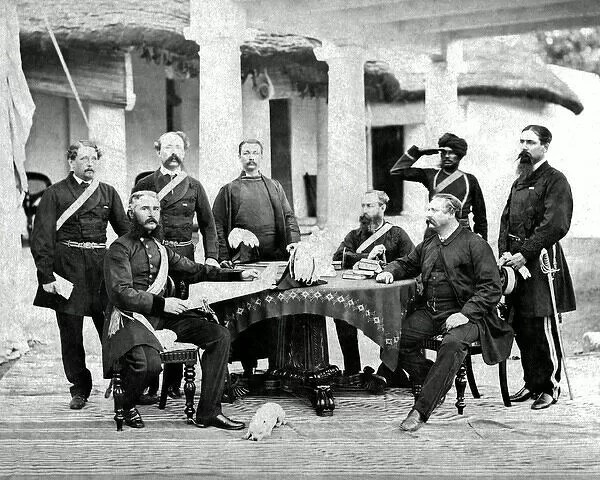
” “In the eyes of all those who had watched his career from its brilliant and joyous commencement to its most sad and untimely end, he was the very type of Spartan fortitude, of chivalrous valour and of every manly grace … one who united in himself all the attributes of a heroic martyr, of a splendid soldier, and of a knightly gentleman.” – Sir George Cowper, C.B.
During his lifetime, Henry Tombs was considered a beau idéal of a man and soldier- intelligent, brave, generous, kind and handsome. His looks caused women to swoon wherever he went and even swayed a general to offer Tombs his only daughter in marriage! Tombs, always the gallant gentleman, declined. Perhaps his nickname, “Cupid,” given to him by the ladies, was fitting after all.
 Mutiny Reflections
Aside from the valour, these men all seemed to be cut from the same cloth soaked in wanderlust!
LikeLiked by 1 person
For sure! I think they were cut from very different cloth in more ways than one. It never ceases to amaze me how unabashedly brave they were and then went on as if what they had done was nothing in particular. The VC was a new kind of award and only recently open for men of the East India Company which were considered by men of the Queen’s service an inferior branch of the army and in part the idea of winning one certainly spurred on some of the acts of bravery, yet I think many of these men were inherently possessed of a strong sense of duty and honour which led them on. The Indian Mutiny was one of the last conflicts which saw fighting at such close quarters and they would have been very close to their foes to do what they did. There is a trend today to mock these men yet I wonder how many of our friendly keyboard “warriors” would be able to keep up even at half a pace with a Hodson or a Nicholson, have the clear judgement of Tombs or the cold determination of a Gough. I doubt any of them would make the muster.
LikeLiked by 1 person
Agreed. The old maxim of walking a mile in another’s shoes certainly holds true here!
LikeLiked by 1 person