November
1st of November
78th Regiment of Foot
Drummer James Murray – died of wounds
Private Thomas Traimer -killed in action
2nd of November
“November 3rd.—Yesterday (Monday) I had another narrow escape of being shot. I was behind a Venetian door in a turret, with Captain Grant, of the Madras Fusiliers, shooting at the rebels on the top of a sandbagged, loopholed house, from which they were keeping up a hot fire on our picket. While we were firing they sent in several bullets, stinging us with the splinters from the door. Grant had only just picked out some splinters from my neck, and was on the point of taking a shot, when he threw down his rifle, and said, ” I’m shot ! ” I took him downstairs, and laid him down till the doctor came, who dressed his wound and extracted the bullet. I fear from what the doctors say the wound is serious, but it is early to judge. I shall go in the evening to see him, poor fellow.” (Danver)
32nd Regiment of Foot
Privates
Thurston, William – wounded
Webster, Samuel – wounded 5th of July and again on 2nd November
78th Regiment of Foot
Private John Smith – died of wounds
1st Madras Fusiliers
Captain E.L. Grant – severely wounded at the Mosque Picquet by a musket shot. He had been holding the picquet since the 11th of October. “They brought him down and Dr. Kerry of the 64th cut out the bullet with a knife as blunt as a table knife, while I (Dale) held his head between my knees. He had been wounded once in Burma, once on the road to Cawnpore, and now again, but he recovered and lived to the age of 85.” (Dale in “Neill’s Blue Caps)
3rd of November
78th Regiment of Foot
Privates
Cockshaw, Thomas -died of wounds
Smith, John – died of wounds
“The rebel batteries have been in play more than usual; their range has much improved. Two of our brave Highlanders were hit to-day from sheer exposure; one was killed by a musket-bullet on the spot, while the man standing next to him was mortally wounded by an open breach in the wall. The many deaths resulting from incautiousness prove how familiarity with danger deadens the perception of its existence. In vain have our men been warned of the necessity of caution, to insure their own safety.” (North)
4th of November
1st Battalion 5th Foot
Private F. West – killed in action
32nd Regiment of Foot
Privates
Anton, Alexander – wounded 13th of September and again on 4th November
Stewart, Robert – wounded
78th Regiment of Foot
Private James Lawther – died of wounds
84th Regiment of Foot
Private Eli Stott – severely wounded
18th Regiment Bengal Native Infantry
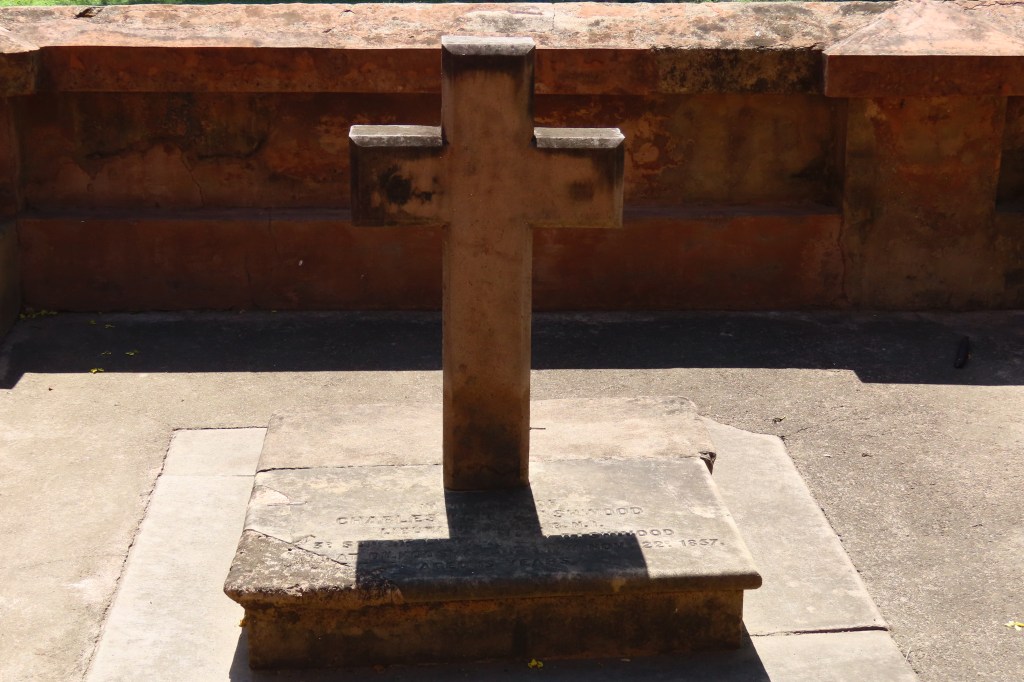
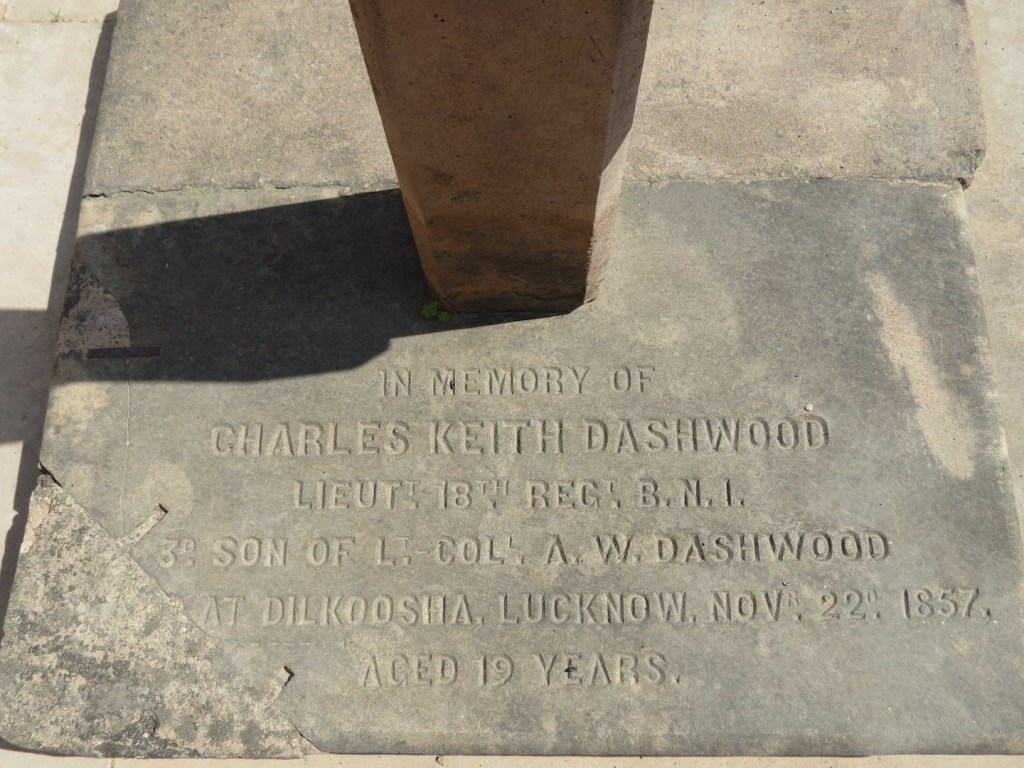
Lieutenant Charles Keith Dashwood – wounded while sketching in the Residency grounds. He was struck by roundshot that smashed both his legs. They were subsequently amputated below the knee on the 7th of November . He died at the Dilkusha on the 22nd of November, aged 19.
5th of November
1st Battalion, 5th Foot
Private F. Frost – died of wounds
78th Regiment of Foot
Private Archibald Gavin – killed in action
90th Regiment of Foot
Privates
Clarke, W. – killed in action
Garretty, J. (2) – killed
1st Madras Fusiliers
Drummer James Carey – slightly wounded in right leg
6th of November
32nd Regiment of Foot
Private George Collins – wounded
7th of November
32nd Regiment of Foot
Privates
Burke, James – died of wounds
Clines, Michael – wounded at Chinhat and again on 7th November
Samuel Smith – died of wounds
78th Regiment of Foot
Privates
Hawker, Samuel – killed in action
Hick, Peter – dangerously wounded. Died of wounds, 8th November
84th Regiment of Foot
Private John McMahon – wounded
1st Madras Fusiliers
Private Thomas Bailey – wounded at Oonao 29th July and again at Lucknow, 7th November
“Throughout the succeeding night, the fire of small arms was incessant. In the morning, the rebels commenced firing briskly from then: batteries, killing and wounding some of our men in the entrenchment. A poor Sepoy, one of the faithful few, was mortally wounded whilst on sentry.” (North)
9th of November
1st Madras Fusiliers
Private Thomas Sweeney – slightly wounded at Oonao on 29th July, again at Lucknow on 11th October and again at Lucknow on 9th November.
The returns of the Lucknow Garrison from the25th of September to the 9th of November under Brigadier Inglis were reported as
31 Europeans killed
47 wounded
20 Indians killed
24 wounded
11th of November
“Poor Colonel Campbell, whose leg had been gradually getting worse for some days, was obliged this morning to have it amputated ; we were so very sorry for him. Dr. Scott performed the operation, and they were able to procure him a little chloroform ; he bore it well, but was very weak afterwards.” (Inglis)
32nd Regiment of Foot
Lieutenant Henry Gore-Brown – wounded on 6th November and again on the 11th of November
Privates Robert Adamson – died of wounds.
78th Regiment of Foot
Private James Duncan- died of wounds
12th of November
“Colonel Campbell, who had been sinking gradually since yesterday, died at eleven o’clock; he was insensible some time before his death. We felt so glad it had been in our power to give him comforts which he could not have had in the hospital, and thereby in some degree to have eilleviated his sufferings. He was a gallant soldier, and a clear-headed, valuable officer. A curious incident occurred in connection with his illness. During the siege, we had picked up a little white hen, which used to run about and pick up what it could. Just before Colonel Campbell became so very ill, we had decided to kill and eat it, when one morning Johnny ran in and said, ‘Oh, mamma, the white hen has laid an egg !’ We took it at once to Colonel Campbell, it being a great luxury in those days. The hen laid one every day for him till he died, and then ceased for the rest of the siege; but we would not kill it then.” (Inglis)
14th of November
1st Battalion, 5th Foot
Private T. Sullivan – killed in action
32nd Regiment of Foot
Private Robert Adamson – died of wounds
Sources:
Danvers, Robert William. Letters Written from India and China During the Years 1854–1858. London: Imperial Press, 1898.
Fayrer, Joseph. Recollections of My Life. Edinburgh: William Blackwood and Sons, 1900.
Gubbins, Martin Richard. An Account of the Mutinies in Oudh, and of the Siege of the Lucknow Residency. London: Richard Bentley, 1858.
Home, Anthony Dickson. Service Memories. Edited by Charles H. Melville. London: Edward Arnold, 1912.
Inglis, Julia Selina. The Siege of Lucknow: A Diary. London: James R. Osgood, McIlvaine & Co., 1892.
Innes, J. J. McLeod. Lucknow and Oude in the Mutiny: A Narrative and a Study. London: Innes & Co., 1895.
Maude, Francis Cornwallis. Memories of the Mutiny. Vol. 2. London: Remington & Co., 1894.
North, Charles Napier. Journal of an English Officer in India. London: Hurst and Blackett, 1858.
Rees, L. E. Ruutz. A Personal Narrative of the Siege of Lucknow, from Its Commencement to Its Relief by Sir Colin Campbell. London: Longman, Brown, Green, Longmans, & Roberts, 1858.
Tavender, I. T., comp. Casualty Roll for the Indian Mutiny, 1857-59. Polstead, Suffolk: J. B. Hayward & Son, 1983.
Williamson, George. Military Surgery. London: John Churchill, 1863
 Mutiny Reflections
I have been to that place, says a lot though. Nice one, thanks.
LikeLiked by 1 person