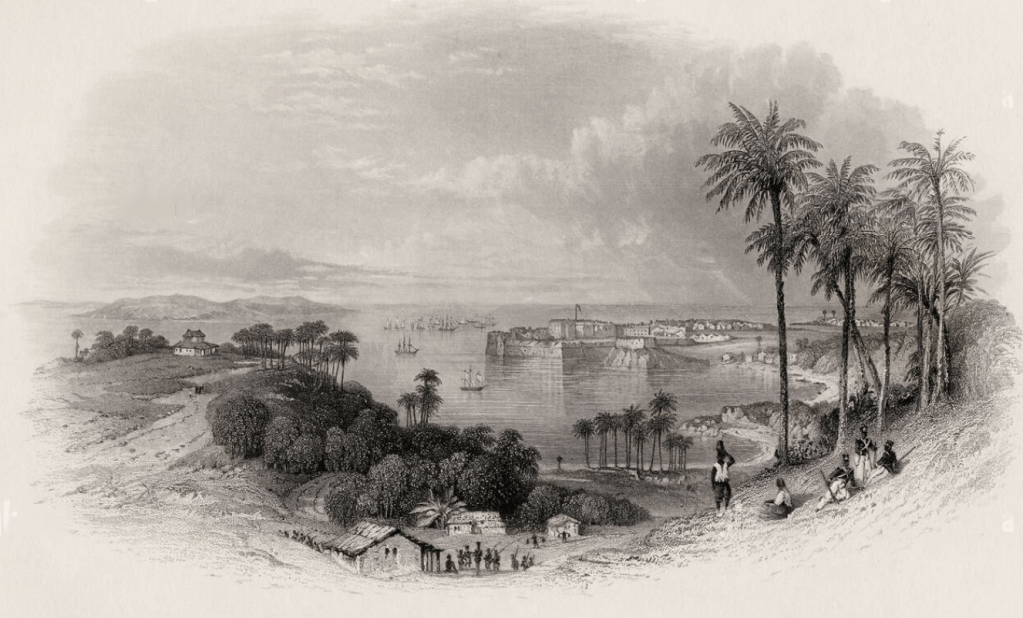
In 1857, Bombay was awash with problems.
” Buist proposes to cover the main drain. Forjett advocates gas to light the city. The buggies are condemned as the most disgraceful conveyances in the civilised world. Wilson opens an orphanage at Mazagon. Arthur Malet and the Byculla Club dine the officers of the 33rd Regiment. A meeting is called by the Sheriff, in the Town Hall, to express admiration for Sir Henry Havelock. Henry Carter founds a Natural History Society. Framji Nusserwanji Patel gives a catalogue to the Asiatic Library. Henry Austin Layard, of Nineveh, is among us. The Bible Society is represented by Major Mylne, and Dr. George Birdwood is balloted a Member of the Royal Asiatic Society, all of which we must put to the credit of 1857. Even the amenities of the town were discussed. For it is an extraordinary incident, and shows what faith men had in the future, when they busied themselves with the best means of making beautiful the suburbs of Bombay. When treasonable placards bespattered the walls in Poona, and when one would suppose a great fear and dread had fallen on all men we read {Bombay Times, September 16th) :
” For thirty years successive Governors have ineffectually endeavoured to have the open road across the
Esplanade planted with an avenue of trees, to afford shelter to the Natives during the heat, and to the European, pleasure of the eye.” (Glimpses of Old Bombay)
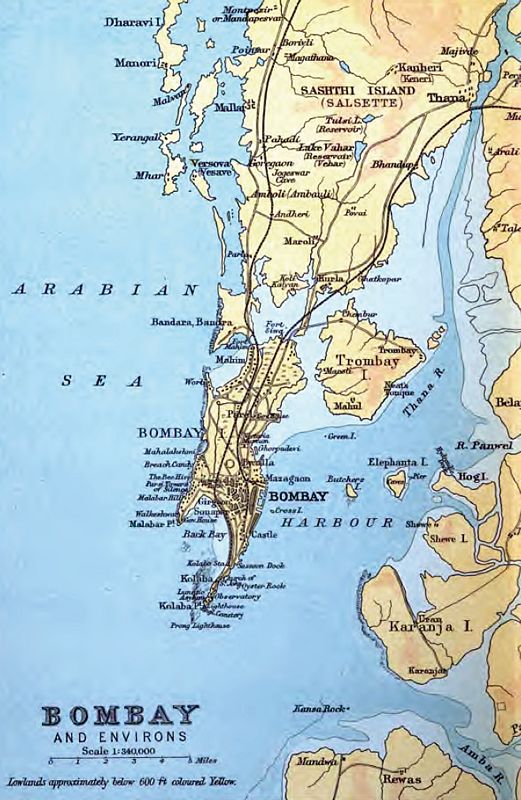
Throughout the 1800s Bombay was a city on the rise. Trade was on the up and combined with the EICo’s successful military campaigns in the Deccan, strides were made to establish Bombay as an economically stable city and as far as improvements went, a thoroughly modern 19th-century one. The Wellington Pier was constructed (on the site of today’s Gateway of India area) and opened to commercial traffic in 1819, in 1838, the Colaba Causeway connected the islands of Colaba and Little Colaba to the Bombay proper and by 1845 the Hornby Vellard Project had connected all seven islands form one large one called Old Bombay with a combined area of 167,95 sq mi. In 1838 too, monthly communication opened between Bombay and London. The same year the Mahin Causeway brought Mahin into the fold, connecting it to Bandra. While most of India looked on envy, in 1853, the first Indian railway line started operations for a distance of 21 miles from Bombay to Tanna. In 1855 the Bombay, Baroda and Central India Railway was incorporated.
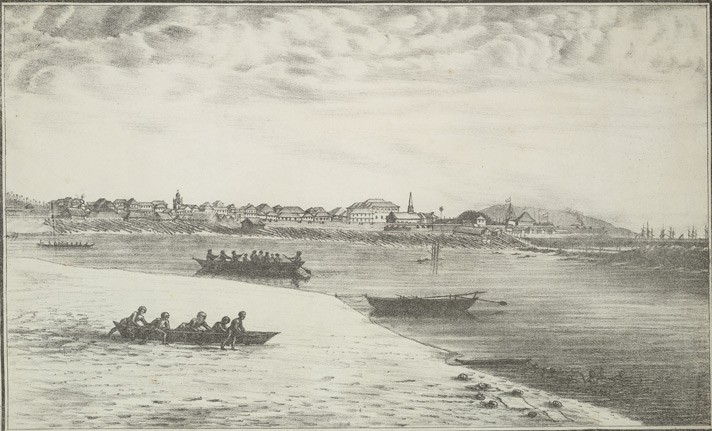
Although the mint was constructed in 1825, the Bank of Bombay opened for business in 1840 followed shortly after by the Bank of Western India in 1842 while in 1845 the Commercial Bank of India began issuing “exotic notes with an interblend of Western and Eastern Motifs.”
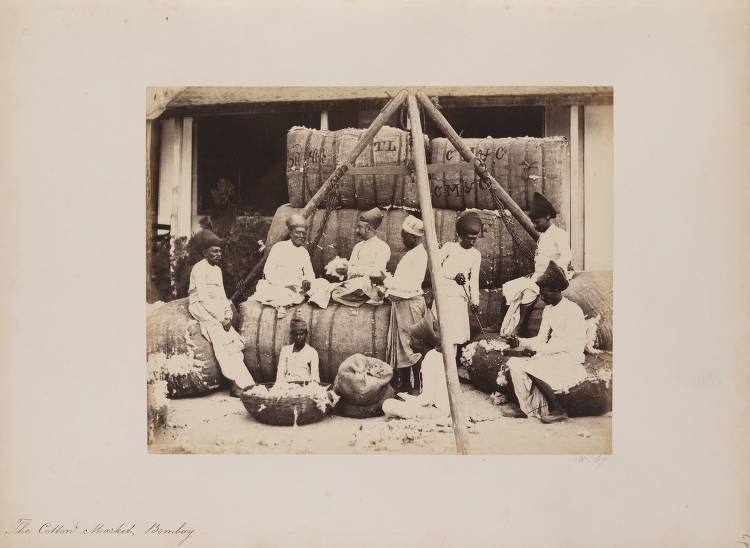
Bombay too had a cotton mill; the first, called the Bombay Spinning and Weaving Company opened in 1854 however the Cotton Exchange had been established a full ten years earlier, in 1844.
In 1845, the Grant Medical College and Hospital was founded by the then-governor, Robert Grant. It was only the third institution of its kind in India. and by the time 1857 rolled in, the University of Bombay was established along with the University of Calcutta and the University of Madras, providing the finest in modern education. Not that Bombay had been an educational backwater before 1857 – Elphinstone College was founded in 1835 and Grant Medical College in 1845, both with survive within the university as the Faculty of Arts and the Faculty of Medicine – they became the first departments of the new university, which was modelled on similar scholastic establishments in England, namely the University of London.
Greater things would come but for now, we will remain in 1857.
Enter Charles Forjett
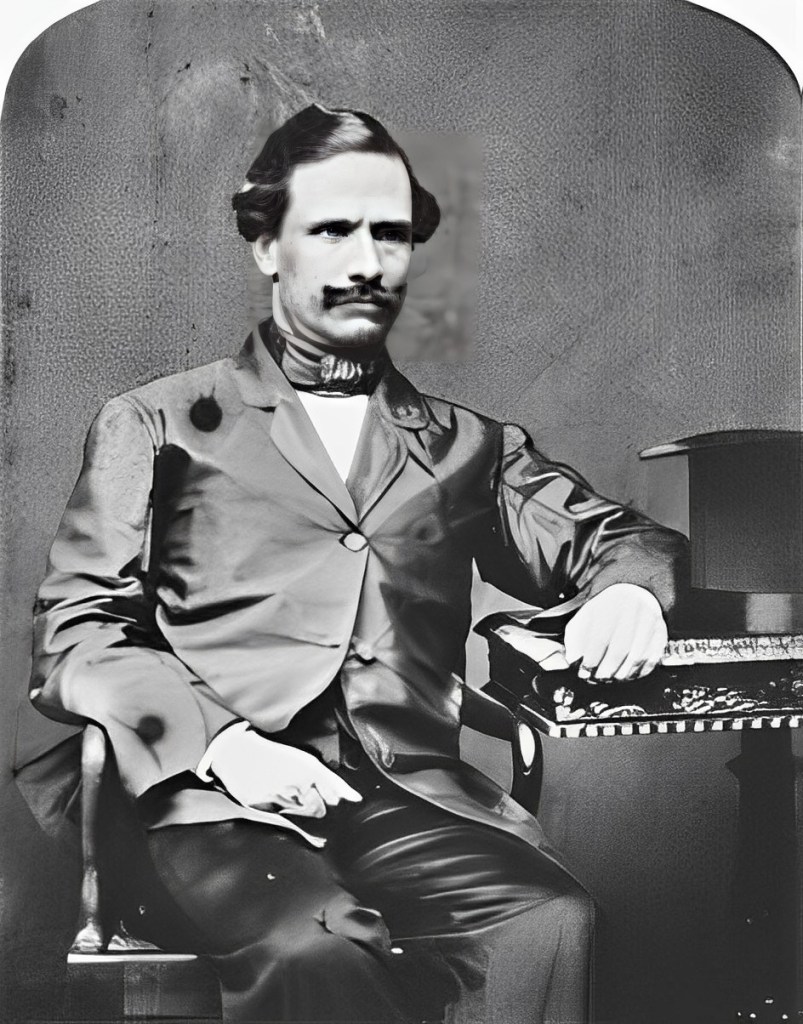
In 1855, Charles Forjett took up his position as the Superintendent of Police in Bombay. No ordinary man, he was the son of an officer of the old Madras Fort Artillery who was wounded at Seringapatam and his Indian wife. Born in Madras in 1817, Bombay would become Forjett’s hunting ground.
For over 40 years, he would serve the Bombay Government, first as a topographical surveyor and then as a translator, before making his advent in the policing world as head of the Poona police. A stint as a subordinate and chief uncovenanted assistant judge would lead him to the post of superintendent of police in the Southern Maratha Country and finally at the end of his long career, as Municipal Commissioner of Police for Bombay.
Forjett was a man of many talents; besides his obvious passion for police work which earned him the favourable notice of the Bombay government following his successful reorganisation of the police in the Belgaum division, he was a talented linguist, having learned the different vernaculars of the Bombay Presidency while still a youth, his patient study of caste-customs and habits and above all, a master of disguise. With his black hair and naturally darker complexion, Forjett was able to blend into any crowd in the teeming city of Bombay. The enigma of Charles Forjett lives on in the stories of Rudyard Kipling (himself born in Bombay) in the exploits of a fictional policeman named Strickland.
The legend of Forjett started well before 1857 when he convinced Lord Elphinstone he could enter the Governor-General’s bed chamber at 6 am regardless of how many guards Elphinstone chose to place in Government House. Amused by the boast, Elphinstone took Forjett up on it and was left more than a little surprised when promptly the next Elphinstone was awakened by Forjett, disguised as a sweeper. The guards had not been negligent in their duties but no one had given a lowly, menial servant a second thought as he traversed the halls and staircases of Government House.
His service to Bombay, although often overshadowed by the events of 1857 and deserve some attention, namely his service as Deputy Superintendent of the Bombay police force. With corruption running rife through all the ranks of the police, Forjett took it upon himself to purge the city of the menace that was damaging the reputation of the force.
Using elaborate disguises and a series of tests, Forjett managed to uncover a ring of men who were acting as go-betweens and bribe receivers. Through the medium of these go-betweens, Forjett bribed not only European constables but native policemen. He even dined with one of the go-betweens, on his pressing invitation, without being discovered. Forjett would eventually uncover the entire network and present an elaborate report to the Bombay Government, furnishing them with enough evidence to purge men of all ranks out of the Bombay Police. Satisfied as he might have been with this outcome, Forjett was not finished.
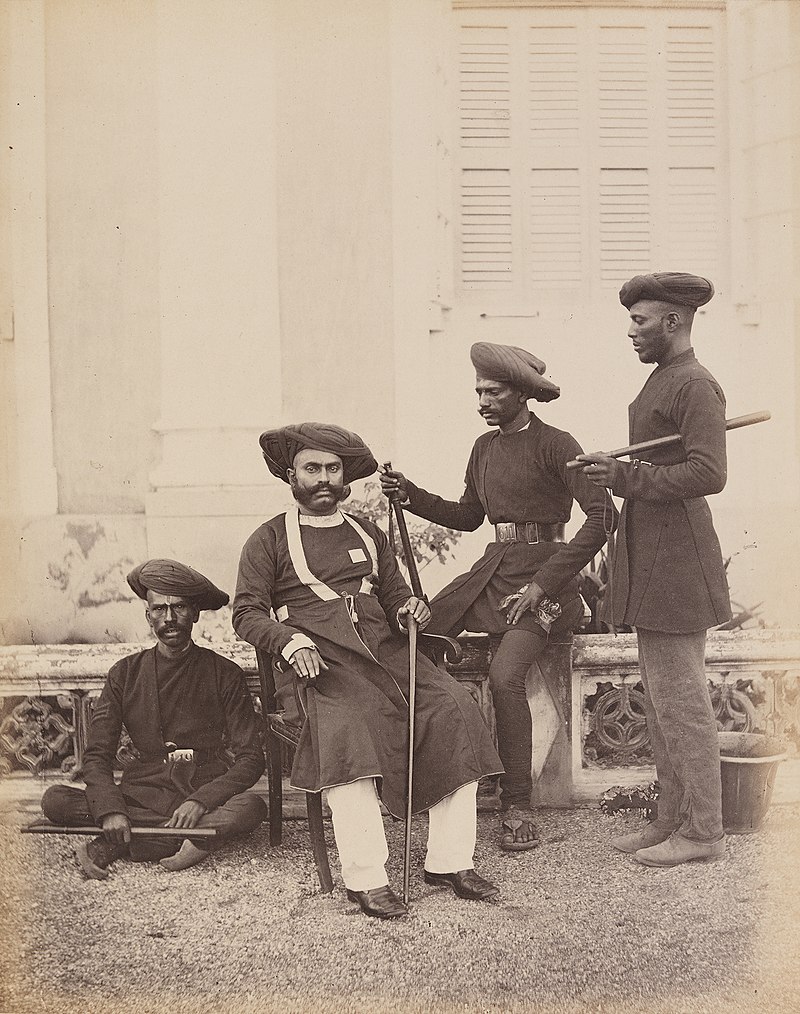
Photographs of Western India. Volume I. Costumes and Character ca.
ca. 1855-1862, William Johnson.
He tackled the criminal classes next. With the rising prosperity of Bombay came the upward swing of crime and gangs of ruffians regularly preyed on any hapless citizen they could swoop down upon. Nor did location matter – highway robbery and violence were as common on the outskirts of the city as in the very heart of it and not a few of the offenders, as Forjett found out, were soldiers who employed the following tactic:
“They used to lie in wait for a likely carriage with a rope thrown across the road, so that the horse stumbled and fell, and then they rifled the occupants of the carriage at their leisure…” The police were powerless to stop the gangs and incidents of crime in the city went largely unchecked. Upon taking his appointment in 1855, Forjett’s first task was to reform the police: without the temptation of bribery, better arms and strict discipline, they became one of the finest non-military forces in the Bombay Presidency. The results over the next five years were evident: by 1856, 59% of all goods stolen were found and violent crime fell. One of his measures to curb crime was to make an example of the criminals – though perhaps considered distasteful by some, Forjett utilised the spectacle of public hangings. By 1860, crime was so low, there were only three burglaries reported for the whole year and the majority of the property stolen was successfully returned. Roving bands of ruffians (some of whom were so notorious, had been dispersed from the city and the executions too, had stopped.
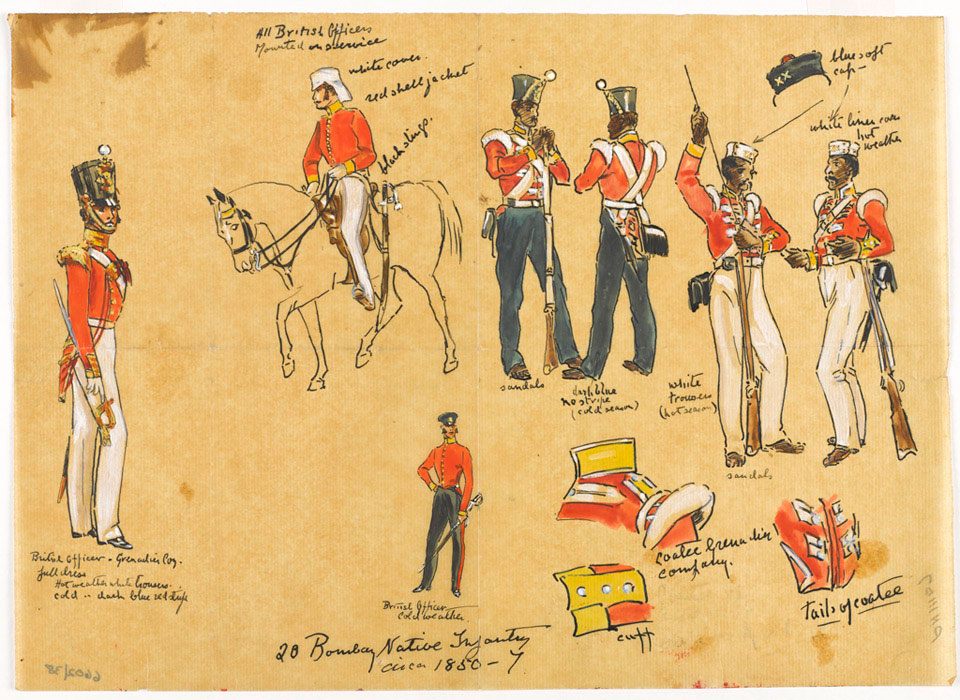
Pen, ink and watercolour on waxed paper with ink notes based on contemporary prints,
ca. 1930, artist unknown
NAM. 1966-02-38-1
 Mutiny Reflections
The events of that tumultuous year brought out the best and worst in people. What we can learn now is what many have forgotten – the resilience of humanity.
LikeLike
I love these posts. An insight into ages gone by, but somehow relevant to the current day and age. We could learn how to better govern ourselves I think, if everyone went through this site page by page.
LikeLiked by 1 person
I agree with Peter, fascinating. Thanks.
LikeLiked by 1 person
As ever, many thanks for these; they really are a great read! It often seems that there is little mention of what was happening in either Bombay or Madras during the Mutiny, so this was fascinating to read.
LikeLiked by 1 person
Bombay is fascinating and much neglected since most of the action was in Bengal. This the 2nd of a series of three posts and one VC, so there is more to come! I will tackle Madras as well.
LikeLiked by 1 person