Lies and Conspiracies
Although 1857 was the year in which Forjett advocated for gas to light the city, he had other duties. When news from Meerut and Delhi arrived in Bombay, suspicions began running rife. Forjett, like Elphinstone, were daily barraged with stories of plots, sub-plots, conspiracies and every rumour imaginable. It was Forjett’s task to weed out the real troublemakers. As he found out there was no lack of persons in the city to present knowledge of plots and conspiracies and he had his hands full sorting out the mess.
Whether the information came from Indians or Europeans, Forjett insisted on ascertaining the veracity of every statement – in one case, had the rumour been believed, an innocent man would have lost his life.
Mr. Jugonnath Sunkersett, a wealthy and respectable Indian gentleman had for some time been the centre of these vicious rumours, propagated throughout the city by not only fellow Indians but by several influential Europeans. Each story purported he was hosting seditious meetings on his premises and was in constant contact with the Nana Sahib. Not only Sunkersett was named in the plot but a further four men including Mir Jaffer Ali, the titular Nawab of Surat were implicated.
In the premises of Sunkersett’s house stood a rest-house meant to receive any wandering Brahmin mendicants; realising that these men would be able to provide information regarding the state of affairs in Bengal through their long wanderings, shortly after the start of the mutiny, Forjett placed a spy in their midst, an up-country Brahmin of his own police force disguised as a fellow wanderer. It soon became clear the very fact that Sunkersett was entertaining the mendicants on his premises and they were from Bengal, led to him being declared, defacto, a traitor. Fuelling the rumours were Sunkersett’s own rivals and enemies who Forjett decided were long overdue for a lesson. Calling them together for a meeting,
“I left these informants under the impression that I believed they had it in their power to bring about a momentous revelation, and expressed myself ready to take action in the matter whenever they wished I should do so. ” But,” I added, “my friends, listen to what I have to say. I shall take nothing at second hand. You must know I never do. You know, too, that I can speak your language as well as yourselves; that I can so disguise myself as to render discover impossible.”
While the men left the office in the belief that mutiny was indeed a dangerous game, some of their compatriots were less overawed even though Forjett’s threat was not an empty one. He continued to wander about the city in disguise,
“And if, during my presence at any place of rendezvous, the language of anyone bordered on the seditious, I immediately threw off my disguise and seized him on the spot; and such was the fear inspired by the police, and such the opinion in regard to its ubiquity, that though the number assembled was a hundred, or two hundred, or more, they immediately hastened away, leaving the man who was taken into custody to his fate. And in order to keep up the awe of the gallows, Lord Elphinstone kindly permitted the deportation of the men so taken into custody to the Tanna Gaol by night, a mystery thus hanging over their fate.”
He was indeed everywhere, fomenting the idea that the authorities knew what was afoot – an uprising was practically impossible.
Looming in the foreseeable future was the Mohammedan festival of Muhharam, a time which had always placed Bombay in a state of unwarranted trepidation, more so now with mutiny on their doorstep. The Government made plans to stop trouble before it started, but in Forjett’s estimation the plan of placing small divisions of European troops and police at various points through the town was highly inadequate as it left the area of the barracks unprotected from whence, Forjett felt, mutiny would start. He further believed the Mohmmedans were being unfairly singled out having received valuable help from the community. – from the Kazi of Bombay and the Muhammedan subedar of police and an Arab, under whose wing Forjett could visit mosques and other places of popular resort. Brigadier-General Shortt insisted Forjett speak to the respectable members of the community in “the preservation of order” a move, which Forjett felt was uncalled for and dangerous.
” The Kazee and a few other Mahomedans of property and wealth, who had nothing to gain and much to lose in the event of a disturbance, would gladly, if they could, have aided me in the maintenance of order; but the knowledge of my having spoken to them, and the communications they would make to their coreligionists, would, within four-and-twenty hours, have created an impression throughout Bombay, that the Government and the police were in fear of the Mahomedans. Such a result would have been productive of the worst consequences. Mahomedans, moreover, are fanatics in matters of government as well as religion; they would naturally have asked, What had they done to create apprehension? Why this stir? And they would say, Surely our God has put fear into the minds of the infidels. Why has He done so? In order that we might take advantage of it. Yes; we see in it an indication of His will.”
It was not a risk Forjett was willing to take. Instead, he informed Shortt to look after his own business and he would mind the streets of Bombay – any man, Forjett said, seen attempting an outbreak would be shot or cut down and hoped for his part, Shortt would act the same way. To irritate Shortt a little more, Forjett then informed him he had already placed a spy in the sepoy lines and expected of there being any agitation, to gain timely intelligence of it. To Forjett’s relief, Elphinstone did not insist he spoke to the Mohmeedan community; and only answered that Forjett was “perfectly right.”
Regarding the deployment of the troops for the festival, Forjett came up with his own plans – while he could say nothing to the military arrangements, Forjett informed Elphinstone he felt compelled to disobey orders where the police were concerned and keep his men together in case of an outbreak in the sepoy lines. Elphinstone replied, “It is a very risky thing to disobey orders, but I am sure you will do nothing rash.” Though his plan was not officially sanctioned by Elphinstone, Forjett went ahead and disobeyed orders, and concentrated his efforts on outwitting the plotters instead.
The festival passed over Bombay without anything more than the usual disturbances and would have gone off without any remark. Leave it up to one person to spoil it.
On the eve of the end of the festival, a Hindu procession, replete with much fanfare and a statue of a god on a pedestal was winding its way through the streets. A drunk Christian drummer of the 10th Regiment NI first assaulted the men carrying the god and then proceeded to knock over the statue. Two policemen who had been delegated to watch the proceedings immediately arrested the drummer and removed him to the lock-up to await the charges he so rightly deserved.
The report of his arrest reached the lines of the 10th.
Twenty men turned out, broke into the police station and in quick succession, assaulted the policemen, freed their drummer and proceeded to take the policemen as prisoners back to the lines. Bombay would, after all, have an uprising.
“The European constable of the section, with four policemen, then proceeded to the lines and demanded the liberation of the policemen; but a large body of sepoys surrounded them, and commenced an assault, when the European constable and the policemen, in self-defence, fought their way out, leaving two sepoys for dead and wounding several others.”
Not ready to leave things lie, several sepoys ran back to get their arms and the news that reached Forjett was that a native regiment had broken into mutiny. He immediately ordered the European mounted police to ride with all haste to the lines – Forjett put spurs to his horse and arrived before them.
What he found was the sepoys in a state of agitation, trying to force their way out of the lines and six Europeans with swords drawn keeping them back. As soon as the sepoys saw Forjett, they shouted he was the man who had ordered them to be killed, prompting the European officers to shout repeatedly at Forjett,
“For God’s sake Mr. Forjett, go away, your presence is exciting the men!”
Still sitting on his horse, Forjett replied,
“If your men are bent on mischief the sooner it is over the better.” and stubbornly refused to leave.
“Within three or four minutes after, my assistant, Mr. Edington, came galloping up, followed very soon after by my mounted Europeans, about fifty-five in number. Bringing my men to the ” halt,” I cried, “Throw open the gates, I am prepared for them.” This had the effect of cooling their ardour for an outbreak, and they soon fell back. Had I in compliance with the wishes of the officers, attempted to retire, and ordered my men to do so, the sepoys would have fired upon us and broken out into mutiny. This I was resolved not to afford them the opportunity of doing; feeling confident that if not disposed of before being joined by my men, I should be readily able to cope with sepoy disloyalty and violence.”
The mutiny, from the side of the sepoys, was back in the hands of the army but Forjett was not finished with the city and its citizens. A few days later, he called the leading men in the city, those he was convinced through his own spy network and the information he had gathered himself while in disguise, as those most likely to lead the civilian population in revolt, and showed them the gibbet he had erected in the yard of the police office. Should he have the least reason to believe that they as much as contemplated an uprising in Bombay, they would be seized and hung without any questions asked. The sudden arrests and the disappearance of four men from the bazaar (still languishing, unbeknownst to them, in Thanna Gaol) and now Forjett standing there, pointing to a gibbet, was more than what even the most ill-disposed conspirator was willing to take. They know, if nothing else, Forjett was a man of his word and he would keep it.
With the citizens suitably cowed, Forjett redoubled his efforts against the sepoys, who after their recent demonstration, were still not past plotting.
“On the last night of the Mohorum, three Europeans were placed on each of the two sides of the sepoy lines, and intermediately, I had three intelligent trustworthy native policemen, crouched down near the railings of the lines, on the watch, to report to the Europeans on either side, if anything was astir within.”
The remaining 48 were placed within easy reach of the lines and in the adjoining neighbourhood, to be called together at a moment’s notice.
“Such was my confidence that everything in the town would be perfectly quiet and that unless a beginning was made by the sepoys there was not a man among the inhabitants who would dare to raise a finger, that I confined my attention that night to the sepoy lines, and kept myself in their vicinity. If the sepoys attempted to break out, which the revelation at Sonapoor proved they contemplated, I should have become aware of it by their movements within the lines, and by the time they shouldered arms and marched out, I should have been in the street nearest to the lines with my men, and then it would have been only necessary to ” right wheel,” and ” charge.”
He would have had some 1300 bayonets to deal with but Forjett calculated his success in the element of surprise – a sudden dash into the sepoys should have been enough to throw them into a panic and give him and his policemen the advantage. When he explained to his men what he contemplated to do and what their orders were in such an event, he was met with “…three such cheers as left no doubt that they would be found equal to any emergency.”
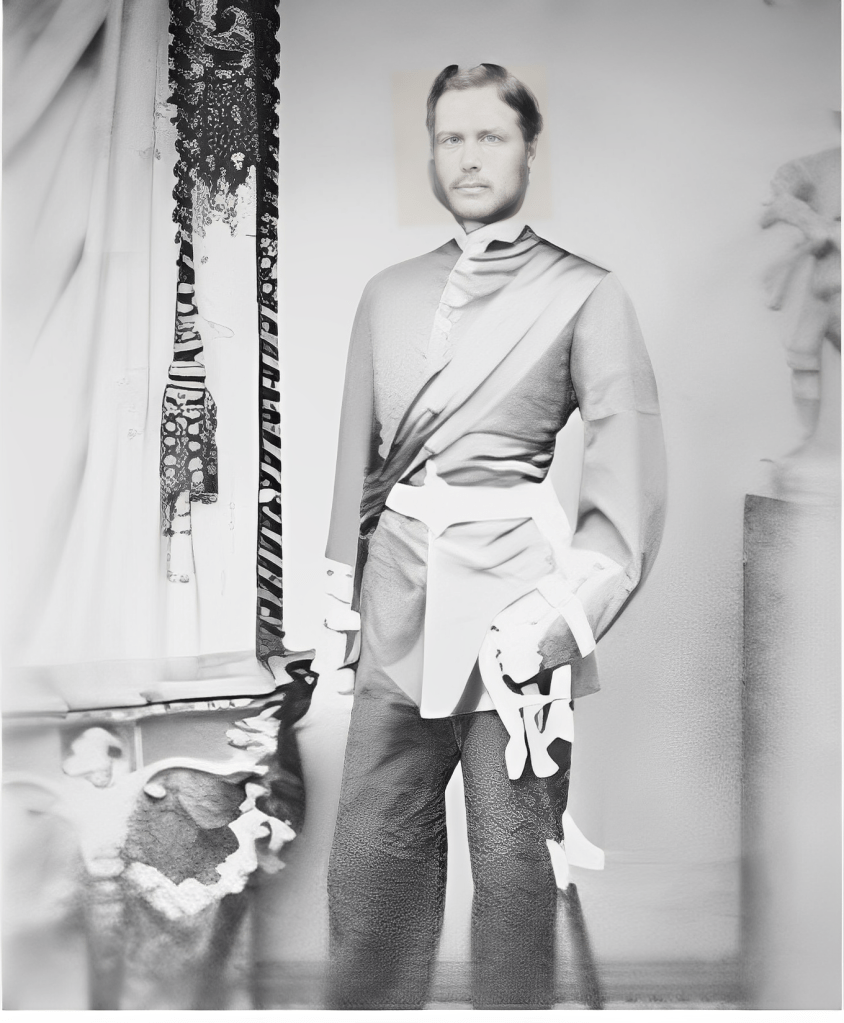
While there was no more trouble on the last night of the Mohurram, and Forjett would have no means to resort to the charge he had planned, the Sonapoor Plot at least proved he was not altogether wrong.
A detective serving und Subhedar Mahomed Booden of the Bomplay Police Force discovered, shortly after the festival that the house of one Gunga Prashad had become the meeting point for several sepoys – Gunga Prashad himself being above suspicion and with Forjett looming seemingly in every corner of the city, they felt they could hold their nightly meetings at Prashad’s house and no one would be the wiser. For once, Forjett was thwarted – the sepoys refused entrance to the domicile to anyone but men from their own regiment, thus foiling the attempts of Forjett’s spy to infiltrate the meetings. Not to be outdone, Forjett pulled Ganga Prashad from his house in the middle of the night and brought him to the police office.
“…by means of intimidation and encouragement, and under promise of a comparatively large pecuniary reward, he was induced to divulge the plot which the sepoys who met at his house had concocted. I learnt from him that in the triple character of priest, devotee, and physician, he had acquired the confidence of a large and influential body of the native military, who believed themselves perfectly safe with him, and who made his house their place of rendezvous and consultation.”
Forjett however wanted to hear the would-be mutineers with his own ears but not before warning Prashad that any attempt to play him false would be met with sudden and dire consequences. With measures taken to prevent Prashad from attempting any treachery, Forjett proceed to the house the following evening, in disguise, accompanied by his assistant Mr. Edington and an Indian policeman. The house consisted of an ante-room some thirty feet long and fifteen wide, with a narrow passage from the entrance to a small room behind the ante-room. In this, Prashad settled his guests.
Three or four small holes carefully poked through the plaster wickerwork wall separating the rooms allowing Forjett and his companions to not just hear but see the sepoys.
“They came into the room one by one at short intervals; and though their number was not large, it was not possible, from the conversation which took place, that there could be any misconception as to the widespread disloyalty of the sepoys in Bombay, or as to their traitorous intentions.”
His word and that of his assistants, Forjett knew, would not be enough to sway the officers of the army or for that matter officials in government. There was no point bringing it up with their own officers who would not listen to Forjett much less accompany him to Ganga Prashad’s house – instead, he turned to Major Barrow, commander of the Marine Battalion.
Barrow, he found, was game. To avert suspicion, Forjett instructed Barrow to meet him away from the lines and at Forjett’s house. Once suitably disguised and with Mr. Edington in tow, the three men made their way to the Back Bay where they separated, each making their own way to Ganga Prashad’s house.
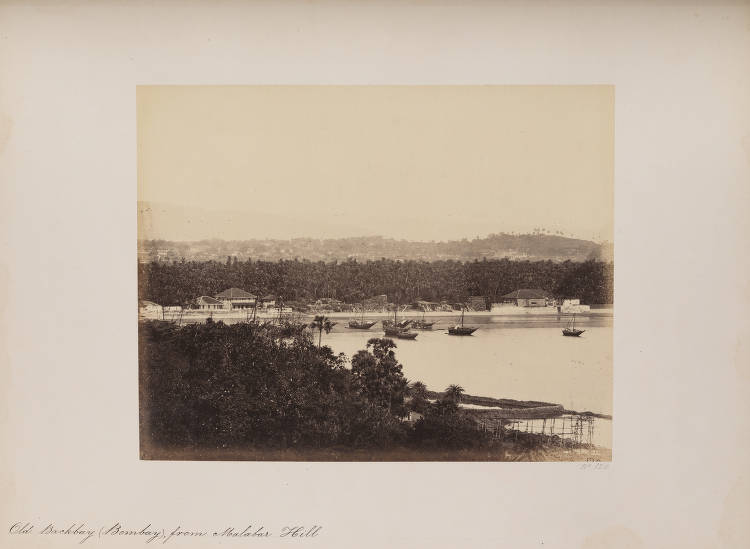
Photographs of Western India. Volume III. Scenery, Public Buildings &c.,
ca. 1855-1862, William Johnson.
For the next four nights Barrow sat in on the meetings of the sepoys behind a plastered wicker wall he sat and listened to their plots. On the last night, it was Ganga Prashad who gave the warning – one of them had been seen in the immediate neighbourhood of the house and he deemed it too dangerous for them to continue their nightly visits.
However, the information Forjett, Barrow and Eddington gleaned from these meetings was enough to damn the sepoys.
The outbreak, they heard, had been planned for the Mohurram festival, as Forjett had expected. Unfortunately, it was the vigilance of the police that had thwarted their plans.
They were now determined to plan an uprising for the upcoming Divali festival, to kill any Europeans who crossed their path and anyone who dared oppose them. They would then loot and pillage Bombay before marching away from the island.
What worried Forjett was not the fact they were discussing a plot – they were talking about events that had already been planned and were not so much contemplated but were already a fact. Where the sepoys planned to go after sacking the city they never mentioned. However, from the time Ganga Prashad became an agent of the police, he was able to fill in some of the gaps.
The sepoys he said, were particularly worked about coming into collision with the European sailors who they believed would “cause them trouble and annoyance” making a swift departure from Bombay a necessity. Their plan, after quitting the city was to march to Poona and together with the native regiments there, “proclaim the sovereignty of the Nana as Peshwa of the Deccan.” They hoped with this ruse, to quiet the people of Poona and lead them to the belief that the sepoys only had their well-being in mind. If the Bombay sepoys were as aware of the situation in Bengal as history purports them to be, they would have known the Nana Sahib was no longer a flag to rally around and the ruse was pretty thin ice. When Barrow heard of the plot with his own ears, it was the 3rd of October. In 1857, the Divali celebrations would have commenced on the 13th.
Major Barrow, and not Forjett, reported daily to Brigadier-General Shortt while Forjett tackled the government, holding meetings with the Private Secretary who in turn informed Elphinstone. Based on the evidence provided by Barrow and the others, the men were duly arrested and court-maritalled. Eight were found guilty and condemned. One other sepoy, of the 10th regiment joined their ranks – convicted of treasonable intentions on evidence given against him by other sepoys of his own regiment.
As for Barrow, it was a shock. Forjett recalled:
“Major Barrow’s astonishment when he saw some of his own men in Gunga Pursad’s house was remarkable. He exclaimed, ” My God, my own men! Is it possible?” And his memorable words to me at the court-martial were, ” It is well I was present, and saw and heard them myself, but for which I should
have been here, not as a witness for the prosecution, but as one for the defence: such was my confidence in these men.”
As for Shortt, he only had one thing to say. After listening to the revelations presented by Barrow, he remarked, “Mr. Forjett has caught us at last.”
In all 38 men were convicted of treason and mutiny:
Drill Havildar, Sayed Hussein, Marine Battalion
Sepoy Mangal Guddrea, 10th Regiment NI –
both condemned, as ringleaders, to be blown from guns;
1 Subhadar and 2 sepoys of the 11th Regiment NI, and two sepoys of the 10th Regiment NI – transportation for life to the Andaman Islands.
The man who had been betrayed by his regiment was likewise transported. The remaining 30 men were reprieved by the clemency of Lord Elphinstone.
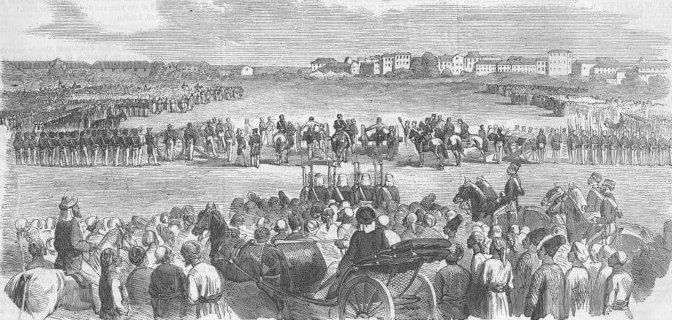
On the 14th of October, the sentences were confirmed and on the 15th, the two condemned men were brought to the Esplanade, tied to the waiting guns, and at ten minutes past 5pm, Captain Bolton gave the signal to be “ready” and in a low tone, only heard by the gunners, order them to fire. The mutiny in Bombay was over.
 Mutiny Reflections
The events of that tumultuous year brought out the best and worst in people. What we can learn now is what many have forgotten – the resilience of humanity.
LikeLike
I love these posts. An insight into ages gone by, but somehow relevant to the current day and age. We could learn how to better govern ourselves I think, if everyone went through this site page by page.
LikeLiked by 1 person
I agree with Peter, fascinating. Thanks.
LikeLiked by 1 person
As ever, many thanks for these; they really are a great read! It often seems that there is little mention of what was happening in either Bombay or Madras during the Mutiny, so this was fascinating to read.
LikeLiked by 1 person
Bombay is fascinating and much neglected since most of the action was in Bengal. This the 2nd of a series of three posts and one VC, so there is more to come! I will tackle Madras as well.
LikeLiked by 1 person