The Bombay Army
Forjett’s own thoughts on the mutiny were quite clear – it was a military disaffection which had been mishandled and in some respects, he is right. He blames the mutiny on the praise lavished in the army by their officers, communicated through general orders, read out
“..and interpreted to every native soldier in the Indian army, with all the blandiloquent flattery peculiar to native diction, undoubtedly inspired them with very highly inflated views of their own valour and importance, and these, conjoined with the contempt for their European officers which was engendered by the concession to them of promotion by seniority, and the still deeper contempt inspired by habits in the European which are held as detestable by the Bhramin, the Rajpoot, and the Mahomedan,—the elements of which the Bengal army consisted—tended completely to undermine sepoy allegiance and devotion…”
He believed the Bengal Army in particular had been coddled to the point they believed they could run the country themselves. With the training they had received from the Europeans and the fact they outnumbered them vastly, it would only be simple matter to kick them out of India. He further takes into consideration Canning’s General Service Enlistment Order and the report that the government intended to enlist 30’000 Sikhs into the army which brought matters to a head. With the exception of 6 regiments, the rest of the Bengal Army had to this point been exempt from serving abroad – while the change would not affect those who had already enlisted, it would apply to all new recruits and thus their honourable profession would be sullied by men “that would go anywhere, and do anything, like coolies and pariahs.” (Malleson) It did not take long for the more daring men in the self-same army to commence the work of spreading disaffection, poisoning the minds of sepoys with tales of greased cartridges and bone dust. The very officers they had followed through battle now became the men they would hate. The situation, in Forjett’s mind, was preposterous.
“Could anything have exceeded the monstrous absurdity that corn-dealers, themselves high caste men, could have laid themselves open as to be induced by us to sell bone-dust to the sepoys or to anyone else? And the dogged persistence of the jemedar, — who was a Brahmin, of the Oude artillery, mentioned by Sir Henry Lawrence in his letter to Lord Canning on the day previous to the outbreak at Meerut,—in stating that he believed that for ten years the Government had been engaged in measures for the fraudulent conversion of the natives, and that he considered them quite capable of the bone-dust ” dodge,” shows the ineffable pitch of bold impudence reached by the Bengal army. And the conduct of the non-commissioned officer of the 26th Regiment, who visited the rifle depot and was publicly taunted by a soobedar with having become a Christian, and who cried like a child when reporting the circumstance to Lieutenant Martineau, that he was an outcast, and that the men of his regiment had refused to eat with him, shows the extent to which the ignorant had been imposed upon by the daring and the disaffected.”
The sepoys were in effect, gullible and were being led on by men with inflated egos.
As it was, Bombay had the smallest of the three Presidency armies, with only 45’213 native troops of which the majority, some 25’000 were serving in the 29 infantry regiments. Only 1500 made up the three regiments of cavalry, while the rest were divided up, serving in the one troop of horse artillery and two battalions of foot artillery, while only 450 men made up the five companies of Sappers and Miners. Any deficits were filled by irregular troops. However, as recruitment into the Bombay Army was mostly from the same areas as that of the Bengal Army, one would imagine the Europeans would have been worried. As it was, the detachment of the 12the Bombay NI that refused orders in Nasirabad in August it was the Hindustanis who threatened to “shoot the Marattas, Purwarees and other castes if they tried to separate themselves.” ( Return affording the information on Mutiny since January 1857, as called for by the Honourable Court of Directors … in Letter No. 829, dated 29 January 1858, from the Military Secretary to the Government of Bombay, P. P., H. C., 1859, XVIII) and the only regiments that actually did mutiny, the 27th at Kolhapur in July and the 21st at Karachi in September were both new and contained a disproportionately high amount of recruits from Bengal. Only the 27th killed three of the officers while the 28th and the 29th that had promised to revolt, were “new regiments with no tradition behind them…” (Cadell) Another such case was the attempted mutiny of the 2nd Grenadiers at Ahmedabad on the 15th of September, another regiment recruited mostly from the Bengal Presidency, they were overcome by the Maratha battalions.
A mutinous spirit did exist in the Bombay Army but it was mostly confined to the men recruited from the Bengal Presidency, wanting to show their solidarity with their brethren to the north. Disaffection was by no means widespread and this had much to do with the system under which the Bombay Army was run. Strict discipline, with less pandering to caste by their officers and a more sensible approach to promotion, set the Bombay Army apart from its Bengal counterpart.
“In the Bombay regiments … men of all castes, some high, others extremely low, stood and worked together. Promotion was by merit and selection, and men of low caste were constantly promoted to the commissioned ranks: while those of exceptionally intelligent, though numerically small, classes, such as the Bene Israel, supplied a large number of officers, who had no caste ties. In the Bengal Army, moreover, officers nominally in command of regiments had, in the words of a Bengal officer, become Scrjcant-Majors owing to excessive centralization and interference from above. In Bombay, such officers still commanded their regiments. To some extent, the jealousy between the sepoys of Bengal and Bombay … tended to prevent the Bombay men from following the evil example of the mutiny. But the main reason was the superior discipline of the Bombay sepoys. Above all their traditional attachment to their regimental colours and their officers… ” (Cadell)
Unlike in Bengal where relations between European officers and their men had been allowed to deteriorate, the Bombay Army had taken notice of the problem as far back as 1854. A furious Lord Frederick Fitzclarence, then Commander-in-Chief, writing to Lord Elphinstone in that year, pointed out the woeful ignorance of with which his officers went about their duty, in contrast to the “intelligent and knowledge of the sepoy added to the enviable correctness of the native officer.” Convincing Elphinstone that such a state of affairs was nothing less than a threat to the empire itself, Fitzclarence implemented a series of examinations for any officer thinking of appointment outside his regiment – ensigns were thus drilled on the duties of a captain and while the lieutenants and captains had to display their knowledge of the duties of a major before any of them could be considered for any other appointment, including civilian ones. This was but one of the measures Fitzclarence implemented with the sanction of the Bombay Government and ensured that even though absenteeism was still a problem in the Bombay Army, at least the men who stayed behind were up to par. Whereas in Bengal the feeling that their officers no longer cared for their well-being and the officers believed their men were their dear, albeit spoiled children, in the Bombay Army the officers and men were bound by mutual respect.
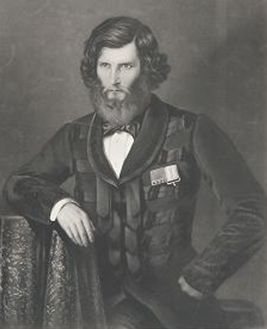
Although all three armies were bound by the same laws and edicts, it was left in the hands of the erstwhile Commander-in-Chief how to interpret them. While in Bengal it was a common practice for sepoys to apply directly to the Commander-in-Chief in matters of discipline without consulting first their own commander, in Bombay, any sepoy trying his luck and bypassing his commander would be dismissed from the service after a second trial. Court-martial was most prevalent in Bombay than in the other Presidency armies – it is no wonder that Brigadier-General John Jacob, a Bombay officer who had had a chance to observe the Bengal Army throughout his career, stated the Bengal Army appeared to be suffering under a permanent state of mutiny. The sepoys he believed were not taught or trained to “instinctively obey orders and even the European officers are afraid of them.”
“Instead of being taught to pride themselves on their soldiership and discipline, the sepoys are trained to pride themselves on their absurdities of caste and think that their power and value are best shown by refusing to obey any orders which they please to say do not accord with their religious prejudices. It is a grave mistake to suppose that religious feelings have any real influence on these occasions …, but it is certain that the Bengal sepoy is a stickler for his imaginary rights of caste for the sake of increased power; he knows that by crying out about his caste, he keeps power in his hands, saves himself from many of the hardships of the service, and makes his officers afraid of him.”
In the Bombay Army, the general service order was considered a mere formality – the sepoy would march and serve where he was told, and “the Brahmin (father, brother, or son, it may be, of him of Bengal) stands shoulder to shoulder in the ranks – nay sleeps in the same tent with his Purwaree fellow-soldier, and dreams not of any objection to the arrangement! “ When asked if this arrangement was repugnant to them when it was pointed out by Bengal officers, the sepoys inevitably answered, “What do I care; is he not the soldier of the State?” The regiment and pride of it played a much larger part in the lives of the Bombay Army than with their Bengal counterparts. Caste did not interfere with duty in Bombay while in Bengal it dictated duty and offered them a ready excuse to avoid duty and cry wolf.
In 1857, there was only a mere handful of European troops in Bombay itself – 350 – and a further 5000 spread out through the Presidency. However, with the exception of Kolhapur, the officers of the native regiments had every reason to believe their men would not mutiny. Bombay after all, was not Bengal – and as Forjett would quickly find out, his problem was not with the sepoys. However, much to the irritation of their officers, especially Brigadier-General Shortt, in command of the Bombay garrison, Forjett would continue to purport the theory that if mutiny would come to Bombay the sepoys would start it and the native population would follow in their wake. As it was, Forjett only had 60 European policemen and a handful of Indian constables to thwart three native regiments and 500’000 inhabitants. Only after the news of Cawnpore in July could Forjett increase his force to a further 50 European mounted police. His fears would be justified to a point but not as expected.
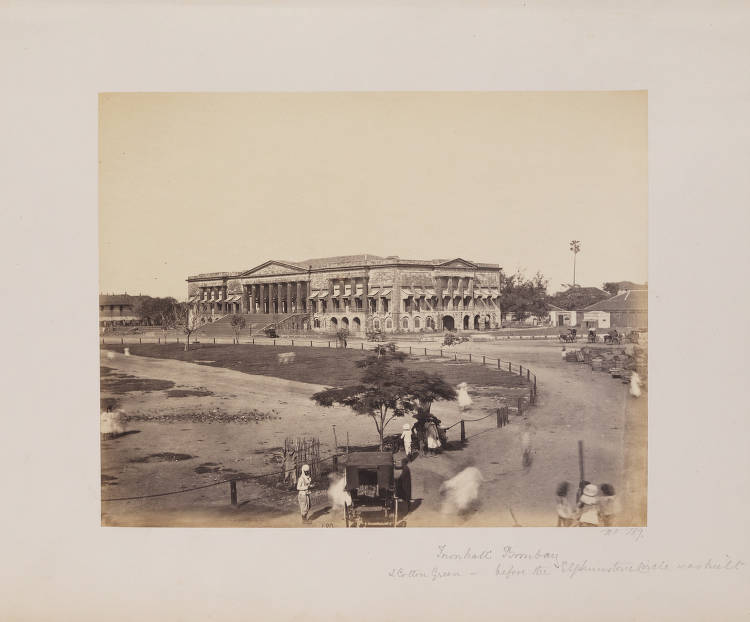
Photographs of Western India. Volume III. Scenery, Public Buildings &c.,
ca. 1855-1862, William Johnson.
Known today as Horniman Circle was once called Elphinstone Circle – on Forjett’s suggestion the central part of the old Green was turned into Elphinstone Circle. Forjett left Bombay before the work was completed
 Mutiny Reflections
The events of that tumultuous year brought out the best and worst in people. What we can learn now is what many have forgotten – the resilience of humanity.
LikeLike
I love these posts. An insight into ages gone by, but somehow relevant to the current day and age. We could learn how to better govern ourselves I think, if everyone went through this site page by page.
LikeLiked by 1 person
I agree with Peter, fascinating. Thanks.
LikeLiked by 1 person
As ever, many thanks for these; they really are a great read! It often seems that there is little mention of what was happening in either Bombay or Madras during the Mutiny, so this was fascinating to read.
LikeLiked by 1 person
Bombay is fascinating and much neglected since most of the action was in Bengal. This the 2nd of a series of three posts and one VC, so there is more to come! I will tackle Madras as well.
LikeLiked by 1 person