Rattray’s Sikhs
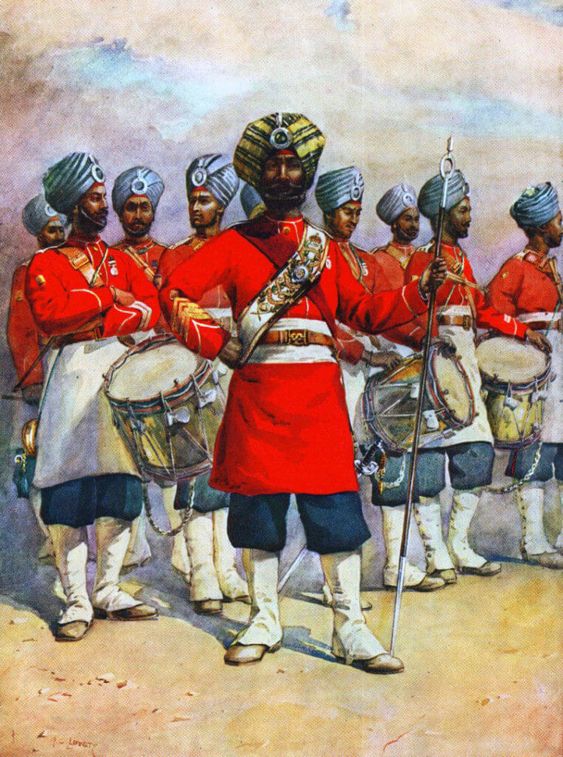
A few words must be spared for this illustrious regiment.
The 1st Bengal Military Police Battalion, or as they were better known, Rattray’s Sikhs, was raised in Lahore in 1856 by Captain Thomas Rattray (of the 64th BNI) as an answer to policing the Santhal Parganas of Bihar following the 1855 mutiny. Legend has it that Rattray went through the villages, challenging men to wrestle with him. The Sikhs couldn’t resist the offer, but the condition was that they had to join up. One such story is as follows:
‘On three successive mornings on the right of the line of hopefuls stood a tall, muscular bearded Sikh about 35 years of age. Three times was he passed over; this apparent contempt at last riled the gallant Sikh, and he exclaimed aloud to the inspecting officer, “Am I not worth taking?” ” You are too old; look at your beard.” “Are you any the worse for your beard?” was the indignant and unanswerable retort. “Take me into your room,” continued he, ” and I think you will write down my name.” The Sikh was accordingly taken inside the bungalow, and not forgetful of the fancied insult that he was not deemed fit for a soldier on account of his age, he, with considerable warmth and pride, pointed to three scars on his martial body. “These”, said he, ” are wounds received at Ferozeshah and Muridki, fighting against you. I was faithful to my salt then; do you think I would be false to you now; Take me, and you will never regret it.” He was enlisted, and whether the scars he showed were the result of honourable wounds received in the battlefield or of boils, which his friends in the regiment always declared them to be, it was never proven. But one thing is for sure, that the commandant never regretted giving service to Hookum Singh, now a much-respected Subadar (Sergeant) in No 1 Battalion of whose acts and doings more honourable mention shall be made hereafter.
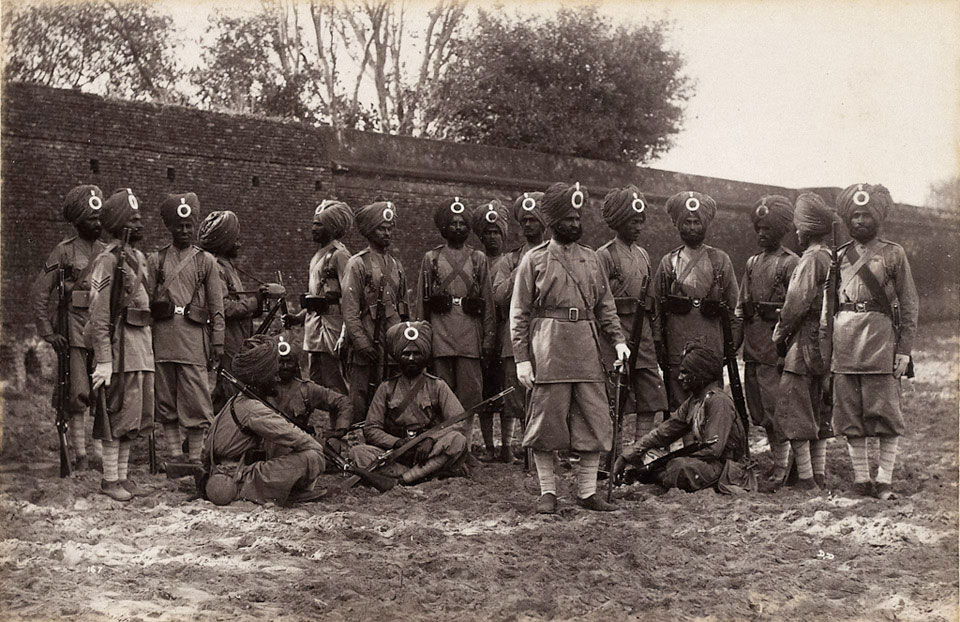
They were trained as an elite corps, consisting of 100 cavalry and 500 infantry, divided as a class regiment with 50% Sikhs and 50% Dogras, Rajputs and Muslims from the Punjab and the North-West Frontier. They would do outstanding service during the mutiny, earning the battle honour Defence of Arrah and Lieutenant Charles George Baker, commandant of cavalry for Rattray’s Sikhs, would receive a VC in 1858. Their history did not end with the mutiny. They would participate in several campaigns in the Northwest Frontier Provinces in the latter part of the 19th century and early 20th century and then in both World Wars. Today, the Battalion is the 3rd Battalion Sikh Regiment (Rattrays Sikhs) and remains an active battalion in the service of the Indian Government.
In 1862 the regiment petitioned the government to be allowed to keep their name “Rattray’s Sikhs”
“Sir, – When the order of His Excellency the Govenor-General in Council was received, stating that the services of this corps, which has been known as “Rattray’s Sikhs,” would never be forgotten and that publicity should be given them in General Orders ………………………this embolded us to present the following petition, which we hope the Government will of their great Kindness be pleased to grant, namely that when the Regiment becomes a Line Corps, we may still continue to bear the name of “Rattray’s Sikhs.” Our reason for making such a request is that from the time Major Rattray raised the Corps, he has always treated us well and considered our comforts; we bear him great love on this account and gladly followed him to Bengal, when the Mutiny broke out, volunteered to fight the rebels and were faithful to our salt. Our humble petition now is that the Regiment may be allowed to bear his name, the hearing will always be a source of pleasure to us, and we shall consider that, in granting our request, the Government has showered fresh favour on us.”
The petition fell on favourable ears, and the name was kept. It must be well remember that Captain Rattray’s son, Haldane Burney Rattray would command the battalion (then the 45th Rattrays Sikhs) from 1916 to 1917 and his grandson, Peter Hugh Rattray would be the last British commanding officer of the battalion and had the honour of handing over command to the the first Indian commanding officer in 1947.
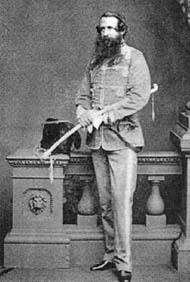
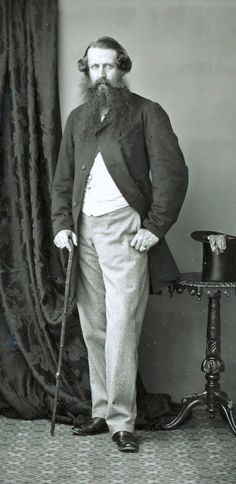
The fifth son of the late Dr. Rattray, of Daventry, Thomas received his first commission into the EICo in 1839. He joined the 64th Bengal Native Infantry seeing active service in Afghanistain under Major-General Sir G. Pollock in 1841. In 1842 the regiment served under Sir Charles Napier in Scinde. Rattray commanded the Ramgurh Irregular Cavalry in the Burma campaign, returning to Calcutta in 1853. As a reward for his services in Burma, Rattray was selected by Lord Dalhousie to officiate as Commandant of his Lordship’s Bodyguard.
On the 1st of March, 1858, Captain Rattray was promoted to the rank of Major in the army, and on the 10th of November in the same yea,r was, as a reward for his services, appointed Inspector General of the Military Police Battalions in the Lower Provinces. Sickness forced Rattray to return to England on medical certificate, but in 186,1 he returned to India and took up his post again as Inspector of Police Battalions.
In 1864-Rattray’s Sikhs “were added to the Bengal Army as the’ ‘”46th Regiment of Native Infantry'” and Major Rattray attained the rank of Brevet Colonel in 1870. For his gallant service,s he was rewarded by the Companionship of the Order of the Star of India, and later by the Companionship of the Bath. In 1876 Col. Rattray, C.B., C.S.I, returned to England. He died at Sherborne, Dorset, on the 21st October, 1880.
In the next post, we shall continue to follow the work of Mr Tayler in Patna and that of his maligners in the Government at Calcutta, leading, as it would, to his completely undeserved disgrace.
Sources:
All About Sikhs. “Rattray’s Sikhs.” Biographies: Sikh Warriors. https://www.allaboutsikhs.com/biographies/sikh-warriors/rattrays-sikhs/.
Luscombe, Stephen. “Indian Infantry: 45th Sikhs.” The British Empire. https://www.britishempire.co.uk/forces/armyunits/indianinfantry/45thsikhs.htm.
Malleson, G. B. The Indian Mutiny of 1857. London: Seeley and Co., 1891.
Neutral Singh. “History Of Rattrays Sikhs.” Sikh Philosophy Network Discussion Forum, July 6, 2005. https://www.sikhphilosophy.net/threads/history-of-rattrays-sikhs.4801/.
Tayler, William. 38 Years in India. 2 vols. London: W. H. Allen & Co., 1881–1882.
Tayler, William. The Patna Crisis; or, Three Months at Patna During the Insurrection of 1857. London: James Nisbet and Co., 1858.
 Mutiny Reflections
What an interesting read Eva!
LikeLiked by 1 person
Thank you Shifa!
I will finish the history of Mr Tayler in the next few days, it is rather wretched what happened to him.
LikeLike
I’m excited!!
LikeLike