William Tayler at Patna
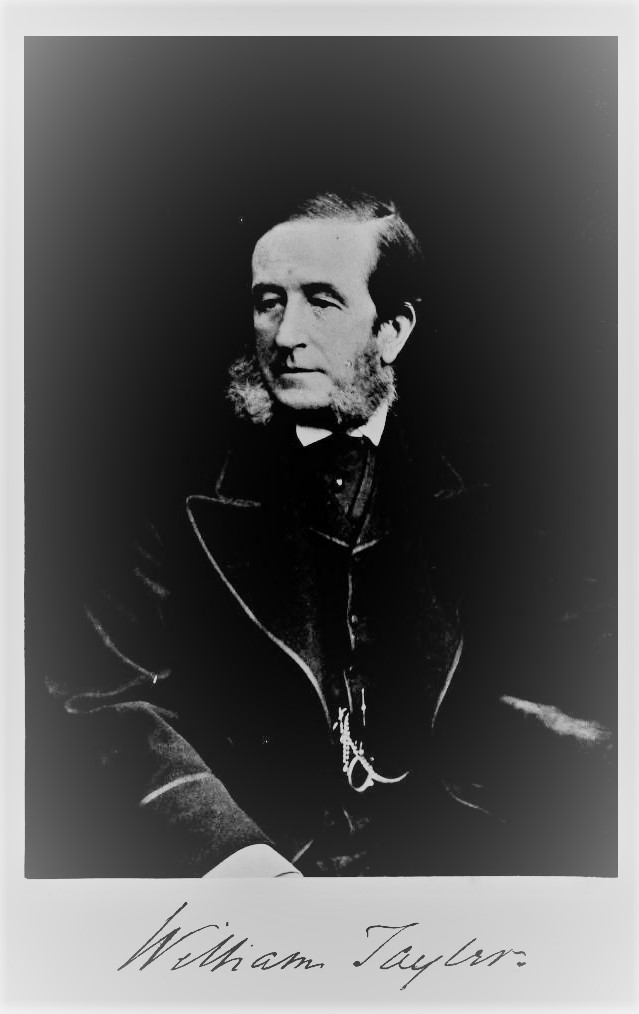
On the 28th of April, 1853, the Lieutenant-Governor of India, one Mr William Tayler received the following letter from Mr. Frederick James Halliday, Lieutenant-Governor to the Government:
” Alipore, 20th April 1855. ”
My dear Tayler,
” I have written to Dampier to come down as early as possible. He is, perhaps, somewhat unwilling to move just yet. But this unwillingness will doubtless give way when he knows that the public service requires him here. Should he move earlier, I shall appoint you to act till Stainforth arrives, which may be some time. You are at liberty to communicate with Dampier on the subject.
Yours sincerely, ” Fred. Jas. Halliday
This little letter would change Tayler’s life. He had, in effect, been promoted to Commissioner of Patna.
Due to the very nature of the Patna Crisis and the subsequent ill-treatment of Mr Tayler (by the self-same Mr. Halliday) and who to this day has not received his due praise, it is only fitting now, 164 years later, to give him the accolades he so rightly deserves.
William Tayler had not intended to go to India and received his writership in 1829 as, of all things, a passing joke. While visiting a friend in Devonshire who was on the eve of travelling to India, it happened to pass his friend’s father died. Leaving the young man a substantial fortune of £800, and thus relieving him of the necessity to travel to India to be “devoured by mosquitoes and killed by cholera,” the friend offered, in a passing remark, if Tayler would like to have his appointment instead. Seeing Tayler thought he was joking, the young man fetched his mother. “He then left the room, and in a minutes returned with his good mother, who confirmed what he had said; but added, that if I wished to accept the appointment I must make up my mind at ounce, as she considered it a point of honour to inform the Director who had given it, without delay of her son’s decision.”
The decision would change Tayler’s life forever.
“Often have I amused myself with the reflection that, but for this, which most would call, accident, had I not been at that house at that particular moment; had not my volatile friend been imbued with horror at the idea of mosquitoes and cholera, and not the appointment been held by the mother on conditions which enabled her to transfer it, I should never have seen India; never have met the wife with whom I have passed more than fifty years of uninterrupted happiness; the forty grandchildren whom I know possess would never have seen the light, and Patna would not have been endangered by my “violent an unwise proceedings” in the Mutiny of 1857.” The last sentence, as we shall later see, is meant ironically.
As soon as the Director’s consent was received, Tayler proceeded to London, where he was duly expected to sit an examination in lieu of going to Haileybury. The criteria was the same as if he were applying for admission to the college. Only 20 such slots were open a year for candidates who had not attended Haileybury but wished to join the Indian civil service and thus were highly sought after. To Tayler’s advantage, perspective writers were expected to be scholars of Greek and Latin, not that a knowledge of the classics would prepare them for life in India, but would ensure they were men of good status and character, in other words, “gentlemen.”
“Each candidate shall be examined in the Four Gospels of the Greek Testament and shall not be deemed duly qualified for admission to Haileybury College unless he be found to possess a competent knowledge thereof nor unless he be able to render into English some portion of the works of one of the following:
Greek authors
—Homer, Hcrodotus, Xenophon, Thucydides, Sophocles, and Euripides;
nor unless he can render into English some portion of the works of one of the following Latin authors
—Livy, Terence, Cicero, Tacitus, Virgil, and Horace; and this part of the examination will include questions in ancient history, geography, and philosophy.
Each candidate shall also be examined in English history and geography and in the elements of mathematical science, including the common rules of arithmetic, vulgar and decimal fractions, and the first four books of Euclid. He shall also be examined in the first part of Paley’s ‘ Evidences of Christianity.’ It is, however, to be understood that superior attainments in one of the departments of literature or science, comprised in the foregoing plan of examination, shall, at the discretion of the examiners, be considered to compensate for comparative deficiency in other qualifications.” (From “Real Life in India,” 1847)
Tayler himself had been educated at the Charterhouse. Although it is now a highly prestigious school, during Tayler’s tenure, it would appear the emphasis had been on the classics (his mother had hoped he would pursue a career in the clergy) with practically nothing given over to mundane subjects such as algebra. “Having reached a somewhat advanced stage in Greek and Latin, my list of Classics was alarming, and it was hinted that, to some extent, I was humbugging the examiners. The consequence was that I was subjected to an extra ordeal…In the test list was a paper in algebra. Now, I had been educated at the Charterhouse and had never learned either mathematics or algebra, and some thought on this account I might be spun. There was no help for it, however – algebra could not be learned in a day – so, when the paper came before me, I wrote, with many misgivings, on a seperate piece – ” I have never learned algebra;” then, underneath, I drew some absurd charicatures, and left the papers all together.”
The charictures left the examiners in fits of laughter, and Tayler received his writership.
A few weeks later, outfit procured and passage booked on the fine ship Victory, 21-year-old William Tayler left England for his new life in India. On board ship was the lovely Miss Charlotte Palmer (daughter of J. Palmer, one of the original “nabobs” of the EICo who would warrant a book of his own) who in a few short months would be William’s wife.
Ill-prepared as he was for life in India, William was not without some connections. His eldest brother (William was the youngest of 17 children; his father had died when he was four years old) Archdale Wilson Tayler had been chaplain in India for some years and had returned to England when William was still a boy – but he gave William no practical advice and William was only struck by Archdale’s extreme politeness to women when he returned from his sojourn in the East! Another brother, Tom, had gone out to India as a cadet in 1823 – but his eccentricities were “fabulous and he injured all his prospects in life by incessant practical jokes…He never wrote home to our mother for years after his departure for India, but suddenly one day, without the slightest warning, made his appearance in Hinde Street, where we then lived, and in answer to the general exclamation of astonishment, gravely said that the heat was oppressive, and the mosquitoes, so troublesome, he really could not stay in India! In reality, he had served through the first Burmese War, in which he was wounded.”
From the first, young William was given privileges seldom bestowed on a young writer. He lived the first few months with John Elliot, the nephew of Lord Minto, who happened to be on intimate terms with Lord William Bentinck – the Governor-General – and his wife, and his friend often took William with him to Government House, where he made a splash in society as fine amateur portrait painter. So pleased was Lady William with the young man’s drawings and his singularly polite character that,commissioned several pictures not just of herself and her husband but of the viceregal staff and even requested a full-length portrait of William himself. Her “kind and considerate sympathy” allowed William to marry his beloved Charlotte, for, as her father had recently been ruined by the fall of the great house of Palmer and Co., he was unable to fund his daughter’s wedding. On his own salary, William could not dream of paying for a wedding, much less supporting a wife. The Bentnicks not only gave him £200 to keep William from taking a loan from a moneylender he would have been unable to pay back, Lady Bentinck procured them a house in Fort William, having already allowed them the use of a bungalow in the Government park at Barrackpore for their honeymoon. Lord Bentnick then informed William he would lend him “any sum of money required for extra expenses incurred by our marriage, without interest…” They married on the 17th of July, 1830, at St. John’s Church in Calcutta.
William’s first appointment, after the obligatory language examinations and a stint of work as a writer in Calcutta, was to Cuttack as Head Assistant. His career progressed through India – from Cuttack to Burdwan, where he took the position of Magistrate and Collector (he would return to Cuttack 2 more times in his career), then to Howrah as First Magistrate, to Midnapore, then to an appointment as a magistrate in Kishnaghur. He left the outstations for an appointment as Postmaster General in Calcutta in 1845, and he then took up the position of judge in Shahabad, which eventually led to his appointment to Patna in 1855. The young man who had arrived 25 years ago in India armed with Latin and Greek had formed himself into a competent civil servant, a master of Indian languages and above all, had found in India a country he now called home. His children had grown and had duly been sent to England to be educated before they returned to the land of their birth, two of his sons taking positions in the civil service and his daughters marrying civil servants and army officers. His eldest son, Skipwith, would play his part in the mutiny, but no participation would be as controversial as that of his father, the much-maligned William Tayler.
 Mutiny Reflections
What an interesting read Eva!
LikeLiked by 1 person
Thank you Shifa!
I will finish the history of Mr Tayler in the next few days, it is rather wretched what happened to him.
LikeLike
I’m excited!!
LikeLike