William Tayler at Patna
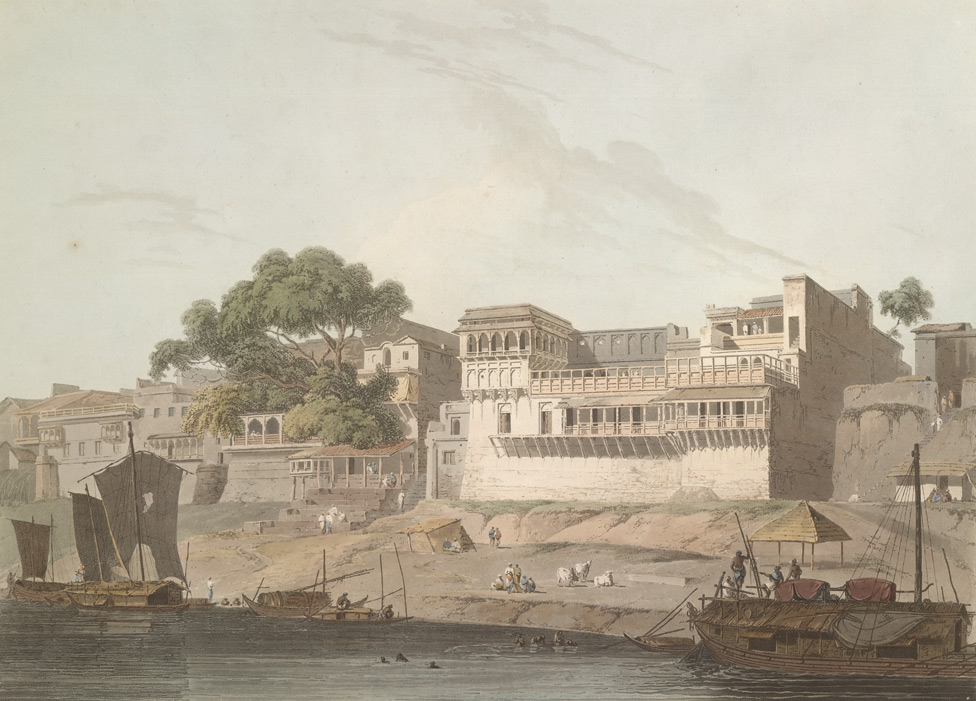
When William and his wife arrived in Patna, they found the city a warren of small houses, narrow streets. It was in his estimation, “slovenly…and choked with dirt.” It was considered “a very sink of dissaffection and intrigue” yet all this said, William had finally acheived the most coveted position any civil servant could aspire to – he had his own division.
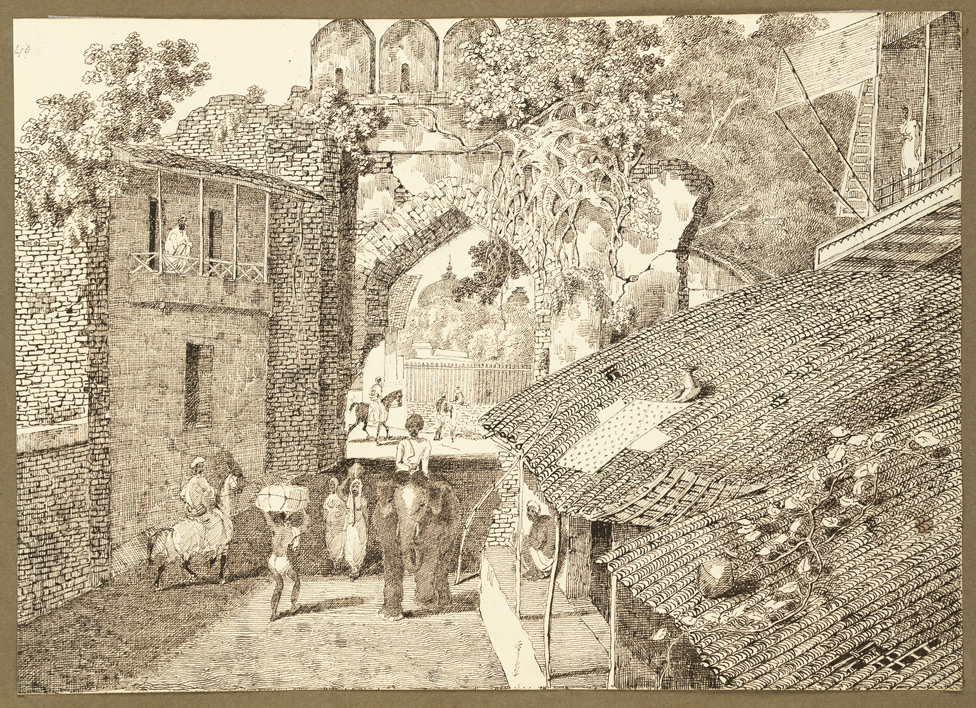
Patna was one of the largest cities in India, some six miles in length and boasted a population of more than 300’000. The Taylers were not expected to live in Patna itself – like the other European residents, they set up home west of the city proper, in Bankipore.
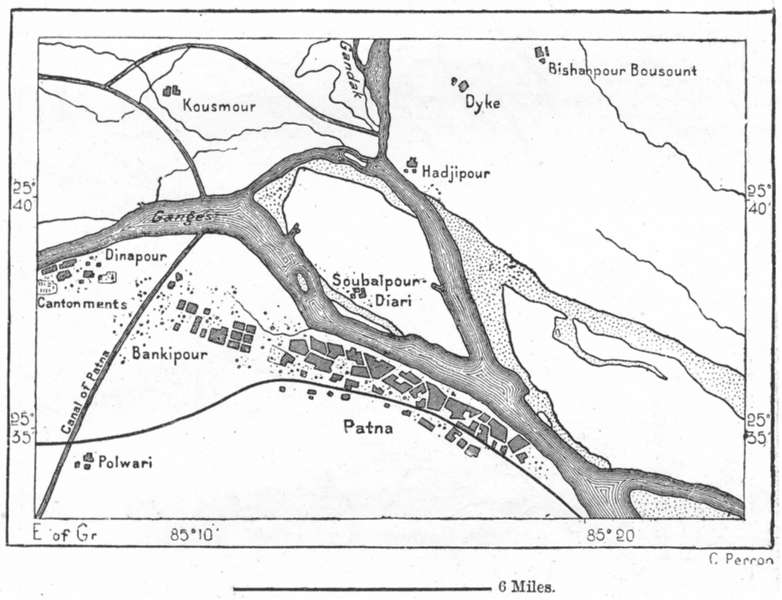
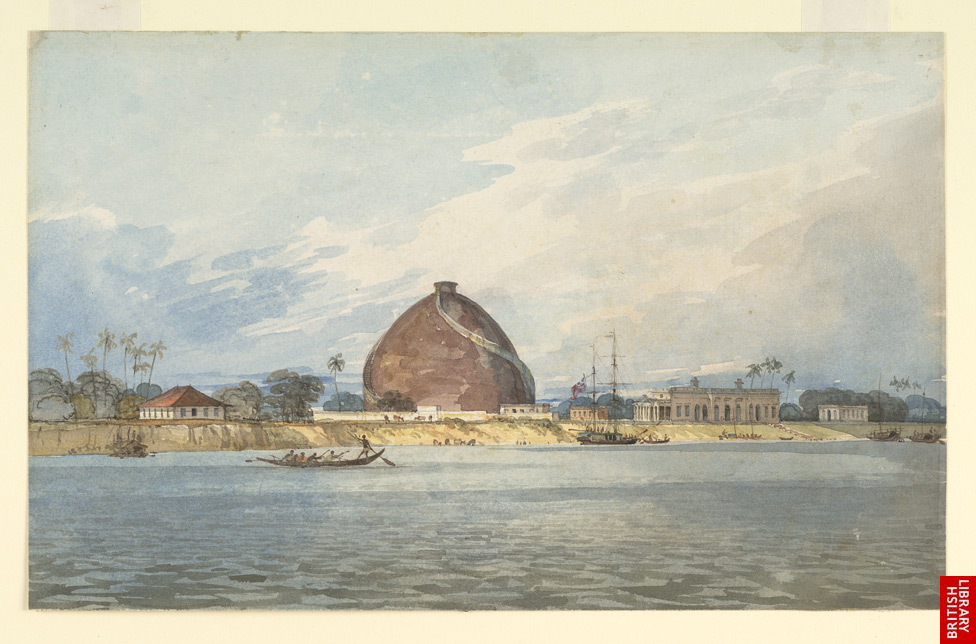
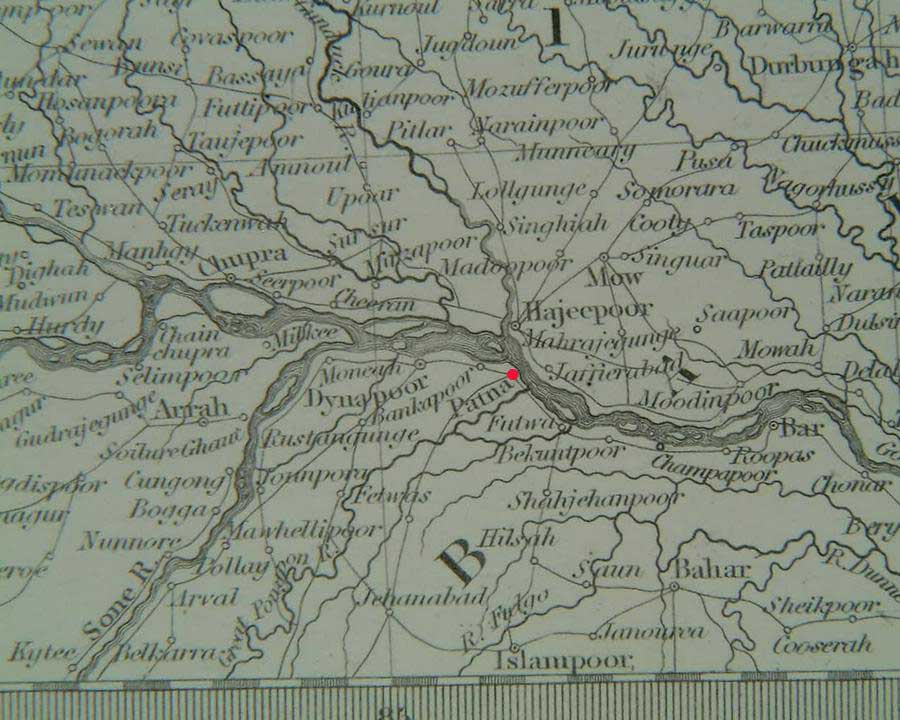
As Commissioner he would have control over all the districts in the Patna Division of which these are follows:
The Patna Division, it’s Districts and their Capitals (2nd column)
| Patna | Patna |
| Behar | Gya |
| Sarun | Chuprah |
| Shahabad | Arrah |
| Tirhoot | Mozufferpore |
| Chumparun | Moteeharee |
The size of the division at the time was 24’000 square miles and housed a population of over 5 million people.
All the civil offices except for those under the judiciary, were under the orders and supervision of William Tayler, who also served as superintendent of the police and was “generally answerable for everything that occurs.” Should an emergency arise, his authority reigned supreme, even superceding that of the judges. He was charged with providing for the safety of all public property and for very lives of the civil servants in the districts – “In every crisis, in each emergency as it arose, all looked to me for instruction and counsel, any symptoms of causeless panic exhibited by me, would, under the circumstances, communicate itself to the entire province; any serious mismanagement might raise a district, or involve the inhabitants in destruction.” Only a man of considerable experience could take on such duties; as we have seen, not all were equal to the task, however, William Tayler certainly was.
Unusually, William Tayler viewed the incidents in Barrackpore and Berhampore in early 1857 with much trepidation. Although India was still months away from an out mutiny, Tayler saw these two events as a precursor of things to come. He did not subscribe to Cecil Beadon’s theory of a “passing and groundless panic”, and as the months passed, Tayler noticed a change in Patna. There was a strange restlessness in the air, particularly as Patna was the headquarters of some notable Wahabi chiefs; he felt he had some valid reasons to worry. He viewed the mutiny at Barrackpore particularly as “the germs of a very political disease”, and if not caught at the outbreak, it would more likely than not spread to his division. Sympathy in Patna for the sepoys at Barrackpore was high – yet what even Tayler could not foresee was just how quickly he would find himself in the thick of things.
When the catastrophe that was Meerut occurred, Tayler realised, after the initial surprise, he would need to use what means he had at his disposal to secure his division. It was the 20th of May.
On that afternoon, Tayler received a letter from the Judge, Mr. R.N. Farquharson, that Major Nation, commanding the Behar Station Guards, had just returned from Dinapore and had found the situation in the countryside most unsatisfactory. The judge proposed that Tayler immediately send all the treasure of Patna with all haste to Dinapore and inform all the Europeans of Patna Division to prepare “to rendezvous there, on the first real alarm, under the protection of the H.M.’s 10th Regiment and guns.”
This would have meant that Tayler would have had to abandon Patna, a move which would have undoubtedly produced a fatal panic at a time when, in Tayler’s estimation, Patna was still secure.
Not willing to trust just Farquharson in this matter, Tayler called Major Nation to a meeting that very evening. Major North acquiesced to Tayler’s opinion, and as such, Patna would not be abandoned.
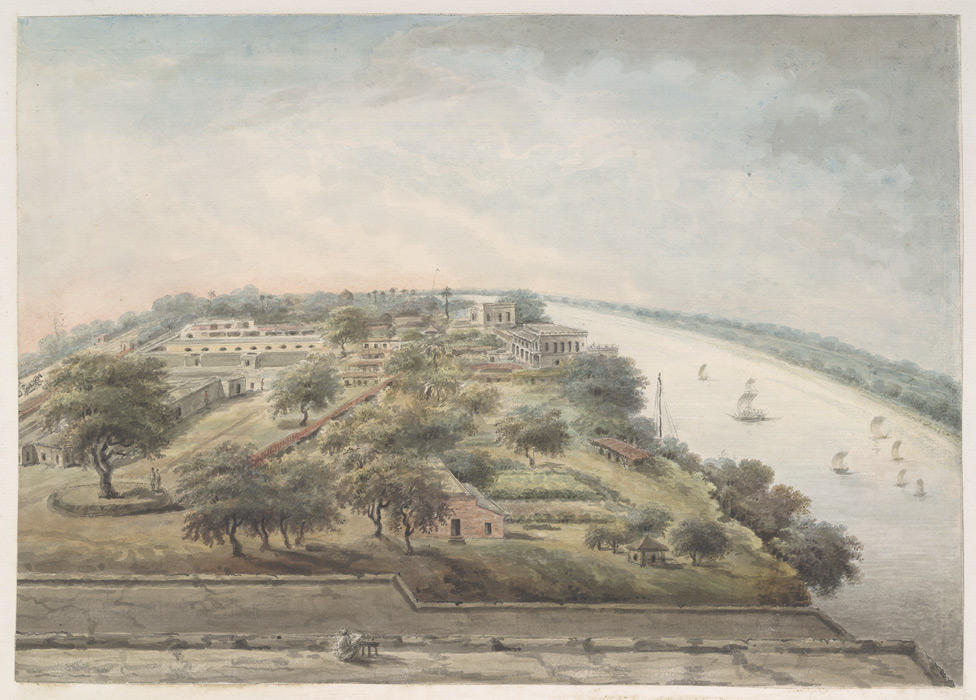
Tayler proposed garrisoning his own house and appointing it as the place for a general rendezvous should the situation require. Situated on an open ground at a considerable distance from the bazaar, it had an extensive flat roof that could easily be adapted for defense. Over the next few days, several other proposals came through for this house and that house, and even the overly large opium godown was considered; however, this was eventually abandoned, and finally, Tayler’s house was selected as the final meeting point.
In the meantime, Tayler was contending with opposition from Calcutta. A dispute which had started two years previously over a proposal for national educational reforms for which Tayler had gained much support for had been turned into a vendetta, spurred on by none other than the Lieutenant-Governor and a very unstable individual, Mr. Samuells Judge of the Sudder Court. It had been a trifling argument in regard to how Mr Tayler had managed to gain such wide support for his proposed reforms, with certain people insinuating Tayler had coerced rather than allowed free support for his plans. Halliday never bothered to check if there was any truth to the accusations; he simply went along with what he was told by whoever said it. It had escalated to the point where, in 1857, Halliday proposed removing Tayler from the Commissionership – he was, in his estimation, a civilian who thought too much about the people of India. Tayler rightly complained of the obvious character assassination that was being perpetrated against him in Calcutta. In May, Tayler wrote to Cecil Beadon:
“But here is the screw. In the midst of all this, I hear, though not from the Lieutenant-Governor himself, that I have been, or am to be, removed to Burdwan. As this has been told to me, I doubt not it has been told to others, and will soon be bruited about. On what ground this removal is to be made God knows (though from the fact of Mr Garrett’s unfounded attack upon me I can guess), but putting aside all personal consideration, I deem it my positive duty to protest against any weakening of my authority or prestige at the present moment, when life, property, and all our dearest interests are at stake. However I may, in the estimation of some, have sinned by enthusiasm in a great cause, no one doubts the extent of my influence among the natives or their regard and respect for me, and I think I may appeal to all in the division, official and non-official, covenanted and un-covenanted (always excepting the small knot which has maligned me), for the assurance that, at this trying moment, I have their respect and confidence, and from my knowledge of the native character, my acquaintance and intimacy with so many of them, and the notorious fact that I have always striven to prevent any interference with their religious and social customs, I am in a position peculiarly suited to carry this great and now restless province through this present crisis. This is not the time for false delicacy or mock humility, and what I say I say under a deep and solemn sense of the gravity of the case.”
Cecil Beadon quickly replied that although that it had been contemplated, in the light of the current crisis, Tayler would remain in Patna. However, the vendetta was far from over.
On the 7th of June, Tayler received a letter from the Deputy-Adjutant General at Dinapore, informing him there was “great excitement” in the lines and warning Tayler to be on his guard. Tayler quickly gave notice to all the European residents of Patna, with their families and servants, to collect at his house. Some, including Farquharson, preferred the Opium Godown nothwithstanding its undenfensible position. Towards evening, Major Nation arrived, bringing with him a letter he had been given by one his men who had been handed it by 2 sepoys from Dinapore. The man, providentially loyal to Major Nation, had given it to him, who in turn brought it to Tayler.
The letter was from the sepoys and Dinapore and addressed to the police under Nation’s command, in effect telling them they were on their way to Patna and should with all haste prepare themselves and make ready the contents of the treasury. Had the letter been delivered elsewhere, this particular moment of history may have been turned out very different. The police were Patna’s only defensive force in an uprising and all told, had the 700 men turned against Tayler and the Europeans, slaughter would have been the inevitable outcome.
“However laudible the act of the men who brought these letters to their commanding officer, we could not help feeling that the letters themselves bore internal and unmistakable evidence of a previous understanding between the Nujeebs (native police) and the Sepoys. Such a proposal would never have been made off-hand and with previous concert; the delivery of the letter to Major Nation might have been caused by mistake, by the exceptional loyalty of a single man, by individual fear, or hopelessness caused by our preparations for defence….still the unpleasent sensation was left, communication had taken place with the Nujeebs! their support and cooperation was evidently expected by the mutineers and our lives were in their hands.”
Whether it was the general disquiet that unnerved Tayler in the last few days, he had, several days before the letter from the Deputy-Adjutant General at Dinapore, already sent off an urgent message to Captain Rattray and his Sikhs, then some thirty miles from Patna, to hasten to his aid. As soon as the letter was brought by Nation, Tayler once again sent off messages to Rattray, urging him to hurry.
 Mutiny Reflections
What an interesting read Eva!
LikeLiked by 1 person
Thank you Shifa!
I will finish the history of Mr Tayler in the next few days, it is rather wretched what happened to him.
LikeLike
I’m excited!!
LikeLike