What was the Gwalior Contingent?
The Gwalior Contingent was formed in 1844 after the disbanding of Scindia’s army. This arrangement was made in the scope of the treaty signed by Scindia and the EICo following his defeat near Dholpur.
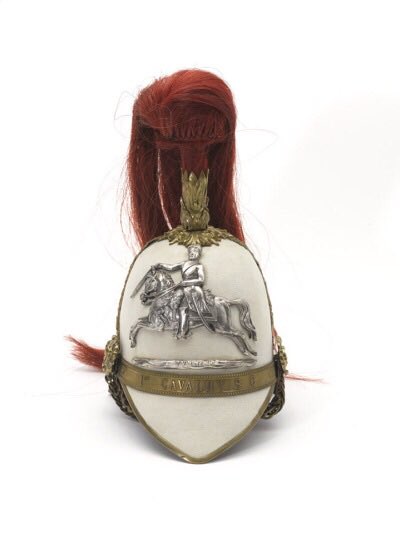
Originally, the Contingent consisted of 400 cavalry and 200 Marhatta Horse, 52 gulandaze, 2 nine-pounders, and two 24-pounders, a howitzer and a regiment of 600 infantry.
All this was placed under seven English officers – a brigadier and 6 others – 2 of cavalry, 3 of infantry and one of artillery. Additionally, commissioned and non-commissioned Indian officers were recruited from the regular corps of the Bengal Army. The distinct feature of the contingent was their pay, the highest among any given to sepoys. They were paid thirty Chanderi rupees per month for cavalry and seven for infantry; it was a way to ensure the officers had a stronger hold over their men.
The expenses of maintaining the contingent were to be met by Scindia, but the command and management were entirely by the English, headed by the brigadier. The brigadier took his orders in turn from the Commander-in-Chief and ran the daily affairs of the contingent in consultation with the political agent residing at Gwalior. Scindia had further ceded several districts under the treaty, including Chanderi, Kachwahagarh, Shander and Orai, the revenues of which were used to pay for the Contingent.
From 1844 onwards, Scindia was not allowed to increase the numbers serving in the contingent, especially infantry; however, when it was felt necessary that a larger force of infantry was needed, the strength was increased, and as such, more revenue was needed to maintain them. Although it had been the unwritten policy of the EICo to disallow any increases to the contingent, between 1844 and 1857, the contingent grew significantly. By 1857, the cavalry and infantry had grown from 600 each to 1158 and 6412, respectively. The number of gunners too increased – from 52 to 74 and the number of guns from 4 to 26. As a result, a general increase in both Indian and English officers was needed.
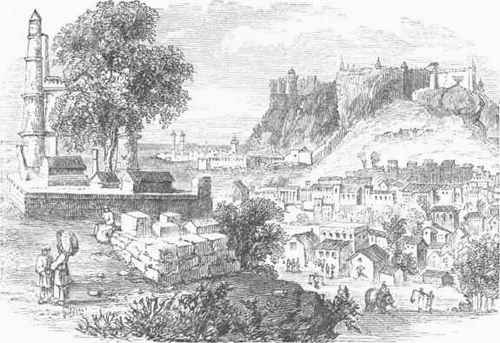
The religious make-up of the contingent was mixed – a good majority of the cavalry was Muslim, and they were represented in the ranks of the commissioned and non-commissioned officers as well. However, the majority of the artillery and infantry sepoys were Hindus – mainly Brahmins and Thakurs – recruited from eastern Oudh and the adjoining Bihar districts. A percentage of the cavalry in the contingent were of the Kychee caste. Unlike the Bengal Army, the Gwalior Contingent was not exclusively recruited from high caste people.
In 1857, there were present, in addition to the Contingent, three other bodies of troops in the Gwalior territory, and these were as follows:
– Scindia’s regular troops – limited by the treaty to 3000 infantry, 6000 cavalry, including bodyguards and 200 policemen. A large number of officers commanding these troops were Scindia’s Mahratta sardars. In his cavalry were a large number of Muslim horsemen recruited mainly from Rohilkhand
-Troops attached to Baiza Bai, widow of Daulat Rao Scindia. Some 800 of her troops were Wilayatis or Afghan mercenaries from northwestern India.
-Irregular troops, maintained by the mostly Rajput chiefs subjugated by Scindia. These amounted to some 17540 men. They were dispersed throughout Gwalior, and their role was restricted by their parochial outlook and lack of organisation, making them fit for only serving as watchmen and as escorts for travelling parties.
The English officers were as follows:
Brigadier Ramsay
Major Hennessy
Major Sheriff
Major Black
Major Hawkins
Major Stewart
Captain Meade
Captain Murray
Captain Alexander
Captain Ferris
Captain Hills
Captain Campbell
Lieutenant Proctor
Lieutenant Tomkinson
Lieutenant Pearson
Lieutenant Pierson
Lieutenant Cockburn
Doctor Mackellar
Doctor Kirke
Regimental Chaplain George Coopland
And at the very top of this very long list, is Major Samuel Charters Macpherson, Political Agent and Resident.
 Mutiny Reflections