The Sindh Question
The Sindh Question was debated at the Court of Proprietors of East India Stock in London in 1844 when a petition on behalf of the Mirs was presented by nine civil servants in the employ of the EICo. They proposed resolutions that the seizing of Sindh, the dethronement, imprisonment and exile of the Mirs was unjust and the introduction of subversion as a tactic of policy was unpolitic and dangerous to British interests in India. For their part, the Company did nothing – they had just gained a new province, and regardless of how it had been done, their territory had just been expanded. In their minds, their borders were now secure, they had gained the thriving port of Karachi and above all, unlimited passage on the Indus River. The means had been nefarious, but as long as Ellenborough and Napier were there to take the blame, the rest was just noise.
With the publication of William Napier’s book “The Conquest of Sindh”, the clamour for justice for the Mirs became even louder as officers, particularly James Outram, published their commentaries, wrote letters and sent petitions to the government on their behalf. Civil servants, surgeons, and military officers who had served in Sindh before Ellenborough sent them all away wrote testimonials of character for the Mirs. If the Napier brothers, Charles and William, believed the book would elevate them to heroes, they were wrong and the opposite happened. The dastardly deeds of the EICo and the nauseous behaviour of Napier did nothing to turn opinion in their favour, for the book merely exposed just how revolting the whole affair had been.
Until 1858, the question was still being raised:
A speech delivered at the Court of Proprietors of the East India Stock, on 26th January, 1844, known as ‘The Amir of Sind’.
(b) A speech delivered at Court of Proprietors of East India Stock, on 23rd March, 1853, known as ‘The Sinde Question’.
(c) A speech delivered on the occasion of the Banquet at Manchester to Sir H. Pottinger, ‘East India Company Services’.
(d) A speech delivered at the Court of Proprietors of East India Stock on 3rd June 1858. ‘Sir James Outram’s Services’.
(e) A speech delivered at the Court of Proprietors of the East India Stock on 25th August 1858. ‘Sir John Lawrence’s Services’.
(f) A speech delivered at an Adjourned special Court of Proprietors of the East India Stock, held at the India House on 20th January 1858.
All the speeches spoke in favour of returning the Mirs to Sindh – as late as 1863, the issue had still not died down for Smith, Elder & Co. compiled the speeches and made them available to the public.
Even the wives of the Mirs wrote a petition to Queen Victoria in 1844 which was delivered by the Mirs envoys to England. However, no matter how heartfelt was their plea, it did not change the fact their husbands would remain in exile.
Translation of the PETITION of the Wives of the dethroned Ameers of Sind transmitted
through their accredited Envoys, to Her Majesty Queen Victoria.
May the shadow of Queen Victoria increase, the pure, and the magnificent as Balkis (Queen of Sheba).
It is almost two years since Sir Charles Napier came to Hydrabad, In Sinde, with an army and artillery, and plundered our habitations of all our money, ornaments, jewels, and of everything of value. And at the same time he took from us the Ameers and our children, and sent them to Hindostan as captives. We helpless women, devoid of power, were, when Sir Charles Napier arrived, seated in our houses. What manner of custom is this, that he should enter our dwellings, and plunder us of our valuable, leaving us not sufficient for our support? Two years have elapsed since he tore us from our houses, and native city, and compelled us to dwell outside the town of Hydrabad, in huts, like the destitute. God knows the hardships we suffer for our food and raiment; and through our separation from the Ameers, we endure such distress and despair, that life is distasteful to us. That one should die when God wills it, is no calamity; but we endure with each successive day the torment of a new death; wherefore we cherish the hope, that you yourself being a Queen, as we were once, will sympathize with us, and will take compassion upon us, and cause restoration of those things of which Sir Charles Napier has robbed us; and since our hearts are lacerated with grief at being separated from the Ameers, and from our sons— by which, indeed, we are brought to the brink of despair—
you will remove this cause of distress, otherwise we should reckon it the greatest favour to put an end to our existence. May your days be lengthened!
Signatures of the Begums of.—
Meer Kurm Ali Khan.
Meer Noor Mahomed Khan.
Meer Mahomed Nusseer Khan.
Meer Sobdar Khan.
Meer Meer Mahomed Khan.
The ladies continued to live in an enclosure close to Hyderabad, subsisting on the kindness of their servants and the local people. Displaced from their palaces, the majority of the Talpur women moved into modest, private mud houses scattered across Hyderabad or took refuge with sympathetic local Sindhi tribal chiefs who still respected the old dynasty. Eventually, due to political pressure and out of shame for the widespread destitution of the royal family, the British colonial administration agreed to allocate small, modest monthly stipends to the remaining women. However, these allowances were barely enough to maintain basic living standards and were a fraction of their former wealth. Under Napier, they were allowed Rs 550 a month, which he believed would suffice to not only run their households, but feed and clothe themselves and pay for their servants. It must be recalled, that while Napier might have viewed them as nothing more than a collection of dancing girls, the ladies of Hyderabad were the wives and relations of the Mirs. They had been accustomed to a life behind closed doors and everything had been catered for them. Some had never even left the sanctity of the fort in their entire lives. To be thrown into hovels to fend for themselves was cruel and inhumane, to say the least, deprived of everything except the clothes they wore. The Prize Agents had stolen everything else.
Despite losing their palaces, the women fiercely guarded their privacy. They continued to practice strict purdah inside their new, humble homes, refusing to assimilate into the new colonial societal structure.
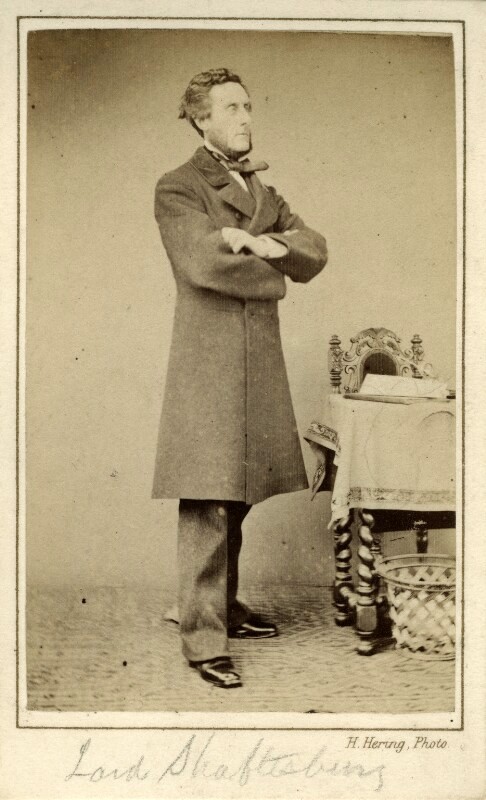
Among their supporters in Britain was Lord Ashley (later Lord Shaftsbury). who raised the question of the Talpur ladies in the House of Commons and the House of Lords between 1843 and 1844. Ashley concluded his speech on 8 February 1844 in the House of Commons by asking how Great Britain could claim a moral or Christian right to rule the East when its actions, driven by “injustice” and plunder, forced the conquered to lament that “there is no hope for us… until God Almighty shall sit in the last great adawlut (court of justice).”
Anyone who had travelled in Sindh in the years before the annexation found that, in comparison to other areas in India, Sindh was peaceful. The villages had no fortifications; there was no fear of theft or dacoity, and thugs and banditry were unknown. The fields were lush, and crops were in abundance. They found the Mirs administration of justice was forgiving rather than harsh. All of this vanished under Napier – crops began to fail, British martial law was imposed, revenue was only grudgingly paid, when under the Mirs it had been given without objection, and discontent reigned. By the time Napier left in 1847, the sum and substance of his rule as governor was seen in the proof – not a single new road or public work had been embarked upon, and the British now needed 16’000 soldiers to garrison Sindh. He had also appointed to his Administration men of his ilk. They could not speak any of the local languages, let alone Sindhi and conducted business in “bad Hindustani” with orders then translated to the Sindhi people in “mongrel Persian.” Napier left behind him little more than a military post with a well-run police force. It would be left up to Robert Keith Pringle to untangle all the things Napier had neglected to do in the four years Sindh had been completely under his personal control. Napier went home a wealthy man. Even for Pringle, the work in Sindh proved to much for him – he resigned in 1850, and Sir Bartle Frere took up the post. From here on out, Sindh would be ruled by a man who bore no ill-will towards the Sindhis and set to work to make the province stable, secure and prosperous. But it was a long road, and until it came to pass, the people of Sindh would be subjected to misrule, lawlessness, ever enshrined in the loss of the last Mirs of Talpur.
Sources:
Eastwick, J.B. Dry Leaves from Young Egypt, being a Glance at Sindh before the Arrival of Sir Charles Napier. London: James Madder, 1843
Edwards, William. Sketches in Scind. London: Henry Graves, 1846
Napier, W.F.P. The Conquest of Sindh, in Two Volumes. London. T. & W. Boone. 1845.
Napier, W.F.P. The History of General Sir Charles Napier’s Conquest of Scinde. London: Charles Westerton, 1857
Outram, James. The Conquest of Scinde: a Commentary. In Two Parts. London: William Blackwood & Sons, 1846
Postans, Thomas. Personal Observations on Sindh: the Manners and Customs of its Inhabitants and its Productive Capabilities. London: Longman, Brown, Green & Longman, 1843.
Panhwar, Sani H. comp. ed. Talpur Era in Sindh. Selected Articles and Opinions of the Period of Talpur Rule in the Sindh and Wars with the British. Los Angeles, California, 2022
Verma, Esha (2016). Sindh in Transition: From Mughal Rule to British Annexation, Early Eighteenth Century to 1843. Open Access Te Herenga Waka-Victoria University of Wellington. Thesis. https://doi.org/10.26686/wgtn.17143394.v1
Downfall of Talpur dynasty and British annexation of Sindh: A Critical Review of British-Talpur Treaties.
Bashir Ahmed , Summer Sultana, Department of Political Science, University Karachi, Karachi, Sindh, Pakistan. WALIA journal 35(1): 132-139, 2019. Available online at www.Waliaj.com
Links:
The Ameers of Scinde -House of Commons 1844
https://sindhishaan.com/article/history/hist_02_02.html
https://www.sahapedia.org/east-india-company-and-the-growth-of-sindhi-multinational-trade
 Mutiny Reflections