General The Rt Hon Sir Edward Lugard, GCB
As Brigadier Lugard now leaves our narrative, never to return again, we shall take a moment to look at the career of this most interesting of officers.
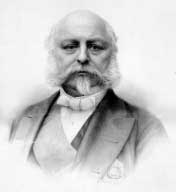
Born in 1810, the son of Captain John Lugard of the 6th (Inniskilling) Dragoons and his wife Jane Llewellyn née Trewman, Edward was one of three sons born to the family. The eldest brother, Frederick, was destined for the clergy, while Edward and his brother Henry took up the call of the military. Henry would find his way into the Corps of Royal Engineers, pursuing a successful career as an architect and engineer for various public works not only on home shores but in Australia, New Zealand and Ireland. His life came to an untimely end in November 1857 in Hong Kong. For Edward, there would be a few more years to add on.
Commissioned as an ensign in the 31st Regiment of Foot in 1828, it was not long before Edward found himself in India, and this young man would fight his way through not only the Battle of Kabul in 1842 but also see out the First Sikh War and not only Mudki where he was wounded but after which he was promoted to brevet-major, but Aliwal and Sobraon. After Aliwal, Sir Harry Smith noted his staff officer, Captain Lugard in dispatches, writing, ‘To Captain Lugard I am deeply indebted, and the service still more so; a more cool, intrepid, and trustworthy officer cannot be brought forward.”
,Since war was the mainstay of most officers in India at the time, Lugard fought through the Second Sikh War and gained for himself the post of Adjutant General to the Punjab District. In 1854, he moved to Bombay as Deputy Adjutant General of the army, before serving as Chief of Staff to Sir James Outram during the Persian Campaign. From July 1857, he was still collecting positions and served as Adjutant General in India in July 1857. During the mutiny, he commanded not only the 2nd Division at the Capture of Lucknow, but took up the reins of the Azamgarh Field Force, as we have seen, on their relentlessly gruelling march through Bihar. After nearly 30 years on India’s shores, with his health all but ruined, Brigadier Edward Lugard finally handed over his command to Brigadier Douglas and went home. Sailing on the steamship Hindustan, he left Calcutta for the last time on 29 July 1858 and disembarked at Marseille.
In 1859, now a Major General and a K.C.B., he went back to work, but this time in England. Between 1859 and 1861, he served as the Secretary for Military Correspondence in the War Department, before taking up the position of Permanent Under Secretary of State at the War Office (1861-1871). It seems there would always be a place for Edward Lugard in the military.
It was in 1862 that he became Colonel of the 31st Regiment of Foot, so it was fitting that he should have been appointed to the same post for The East Surrey Regiment upon its formation in 1881. He had retired in the previous year to his home in Notting Hill, London, but continued to take an active role in the affairs of his old regiment’s successor until his death, still in command, in 1898. By then, he was eighty-eight years of age. His combined service as Colonel of the old 31st Regiment, and subsequently The East Surrey Regiment amounted to the remarkable total of thirty-six years.
In 1871, he served as Privy Councillor and as the Commissioner for the Abolition of Army Purchase and in 1880, Edward Lugard, with the final rank of General and a G.C.B. (1872), retired. He died nine years later on 1 November 1898 and lies buried in Kensal Green Cemetery. Sadly, both his daughters died in India in 1838 and 184o respectively, both in infancy, and his first wife, Isabella Mowbray (nèe Hart), had found her grave in 1868. Their marriage had lasted 31 years. However, Lugard did marry again, in 1871, to Martha Fulbrook (a lady noticeably younger than himself, having been born in 1846!), the daughter of one Joseph Fullbrook of Chelsea. They had no children.
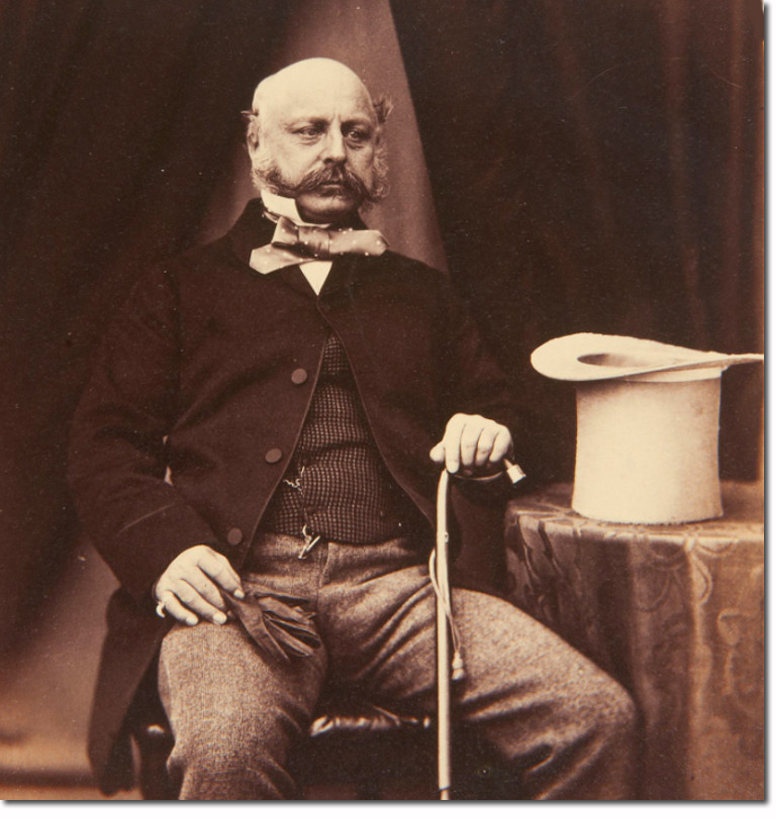
So ended the life of a fine man, a leader of men, without a single scandal attached to his name, who had fought his battles and ended his life with honour.
Sources:
Behan, T. L., ed. Bulletins and Other State Intelligence for the Year 1858. Part III. London: Harrison & Sons, 1860.
Caine, Caesar, ed. Barracks and Battlefields; or, The Experiences of a Soldier of the 10th Foot in the Sikh Wars and Sepoy Mutiny. London: C. H. Kelly, 1891.
Dodd, George. The History of the Indian Revolt and of the Expeditions to Persia, China, and Japan, 1856-7-8. London: W. & R. Chambers, 1859.
Find a Grave. Database and images. Memorial page for Sir Edward Lugard (8 May 1810–31 Oct 1898). Find a Grave Memorial ID 102864794, citing Kensal Green Cemetery, Royal Borough of Kensington and Chelsea, Greater London, England. https://www.findagrave.com/memorial/102864794/edward-lugard.
Forrest, George William. A History of the Indian Mutiny. Vol. 3. Edinburgh: William Blackwood & Sons, 1902.
Kaye, John William, and George Bruce Malleson. Kaye’s and Malleson’s History of the Indian Mutiny of 1857–8. Edited by G. B. Malleson. Vol. 4. London: W.H. Allen & Co., 1889.
Kingsford, Charles Lethbridge. The Story of the Royal Warwickshire Regiment (Formerly the 6th Foot). London: “Country Life” Ltd., 1921.
Lee, Albert. The History of the Tenth Foot (The Lincolnshire Regiment). Vol. 2. Aldershot: Gale & Polden, 1911.
Lundy, Darryl, comp. “General Rt. Hon. Sir Edward Lugard.” The Peerage. Last modified August 19, 2012. https://www.thepeerage.com/p23766.htm#i237660.
Luscombe, Stephen. “Rt Hon Sir Edward Lugard GCB.” The East Surrey Regiment. The British Empire. Accessed May 26, 2026. https://www.britishempire.co.uk/forces/eastsurreyslugard.htm.
Malleson, George Bruce. History of the Indian Mutiny, 1857–1858. Vol. 2. London: William H. Allen & Co., 1879.
Queen’s Royal Surrey Regimental Association. “General The Rt Hon Sir Edward Lugard GCB.” Colonels & Commanding Officers. https://queensroyalsurreys.org.uk/colonels-and-co/colonels/east-surrey-regiment/general-sir-edward-lugard.html.
 Mutiny Reflections