Kalah Dungee (Kaladhungi)
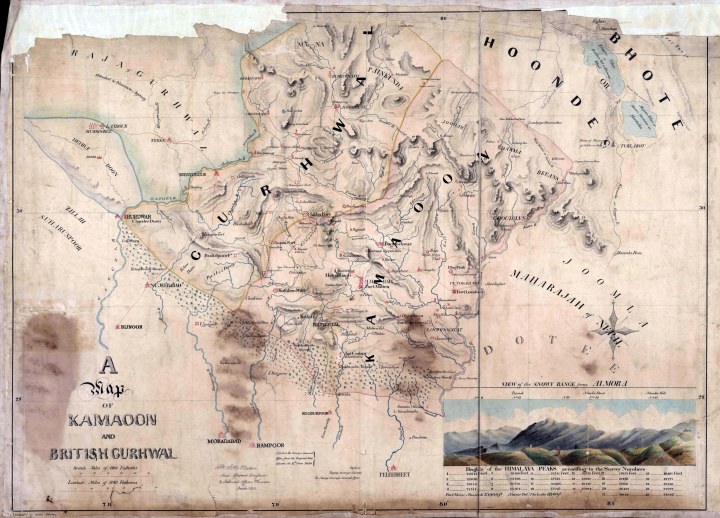
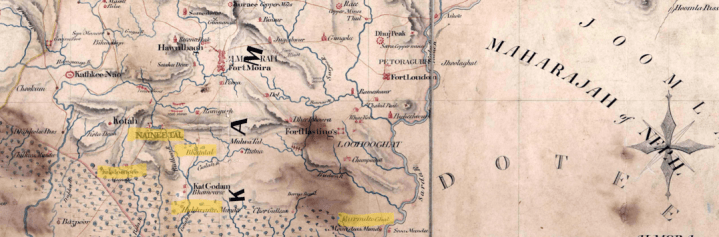
On 18 December, part of the detachment at Naini Tal moved down under Captain Phillpotts to a strong position on a ridge with a view of the plains. The rest remained in Naini Tal under Captain Ross. As for Lieutenant Gepp, he was ordered down to Brokerie Fort, at the foot of the hills, to take temporary command. His sojourn, however, was brief – “some rascals who infest the foot of the hills” had made a successful raid on the Kalah Dungee thana (police post), on the Moradabad Road. As such, a newly raised regiment of cavalry was sent to Kalah Dungee to ensure it remained in British possession; McCausland ordered two vedettes posted on the road leading to the thana to ensure the safety of the thanadar, who was feeling rather apprehensive of his position. What McCausland did not anticipate was Kahn Bahadur Khan’s sowars.
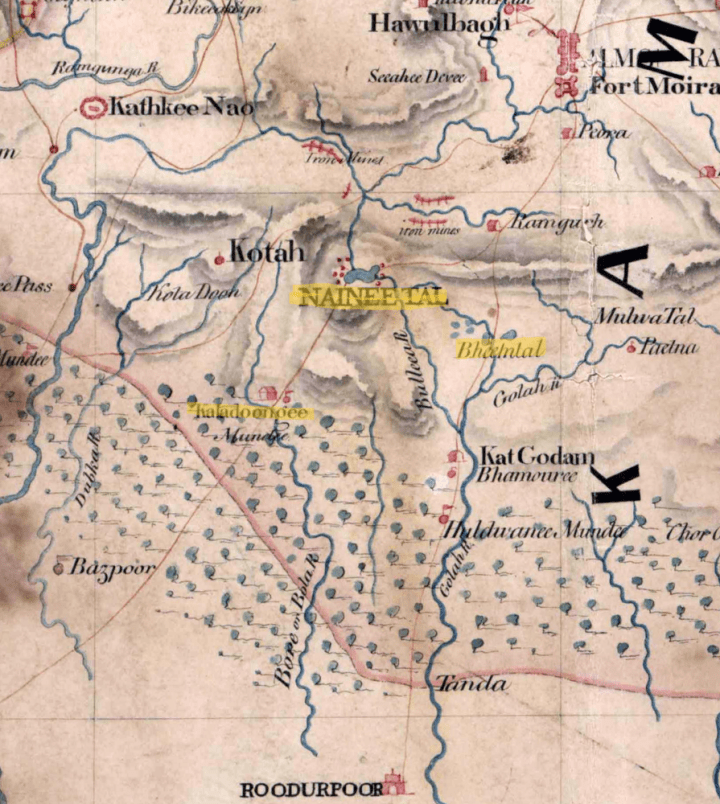
Fifty of them suddenly came upon the vedettes and shot both of them before they could raise the alarm; they then rushed the thana, beheaded the surprised thanadar, killed eight of his men and galloped off in triumph. The men of the newly raised cavalry regiment happened to be on the parade ground while the sowars were wielding their swords and had no idea they were under attack until bullets were fairly whizzing over their heads. As “the greater number of them were learning how to ride at the time and unarmed, but considering that there were about three hundred of them on parade and that the enemy were only about forty strong, they certainly must have behaved very badly in not endeavouring to overtake and punish these scoundrels.” McCausland was forced to send a company of Gurkhas to Kalah Dungee to “take care of these brave and valuable sowars,” but if they expected sympathy from the Gurkhas, they were sorely mistaken “…the sowars called our men their “Bhai bunds” (brethren), but that our little fellows indignantly repudiated this endearing epithet, and not wishing to be included in the fellowship of such a genus of soldiers…” It fell on Gepp to command the Gurkhas at Kalah Dungee until he was relieved and sent back to Naini Tal.
However, things were about to change.
In December, Jung Bahadur dispatched his brother with a large body of Nepalese Gurkhas to protect his territory along the border, four marches from Brokerie Fort. Jung Bahadur offered Ramsay 500 Gurkhas; Ramsay requested 1000 and sent Lieutenant John Adam Tytler to Burmdheo Ghat, on the Nepalese border, to fetch them. Macintyre’s untiring efforts to turn his new Gurkha regiment into a fighting force had proved so successful that they were able to take over many of the duties at Almora and could be sent in short order to guard the Eastern passes. However, before Tytler returned with the reinforcements, the rebels had decided to mount an attack on Haldwani.
Sources:
Dodwell, Messrs., and Miles, Messrs. Alphabetical List of the Medical Officers of the Indian Army 1764-1838. London: Longman, Orme, Brown & Co., 1839.
Hodson, V. C. P. List of the Officers of the Bengal Army 1758-1834, Part III. London: Phillimore & Co., 1946.
Holmes, T. R. E. A History of the Indian Mutiny. London: W.H. Allen & Co., 1891.
Kaye, John William. A History of the Sepoy War in India 1857-1858. Vol. 3. London: Longmans, Green & Co., 1896.
Malleson, G. B. History of the Indian Mutiny 1857-1858, Commencing from the close of the Second Volume of Sir John Kaye’s History of the Sepoy War. Vol. 1. London: W.H. Allen & Co., 1878.
Petrie, Francis Loraine. The 1st King George’s Own Gurkha Rifles, the Malaun Regiment. London: Royal United Service Institution, 1925.
Great Britain. Parliament. Further Papers (No. 7), Relative to the Mutinies in the East Indies. London: Harrison & Sons, n.d.
Links:
https://thegurkhamuseum.co.uk/john-tytler/
https://swetenham.org/familygroup.php?familyID=F51117&tree=1
https://www.thestatesman.com/opinion/the-passionate-scientist-with-a-rebellious-mind-1503348456.html
https://johnrogers.com.au/pocklington/familytree2/gp684.html
https://historyofadderbury.co.uk/henry-gepp-the-importance-of-the-pre-adderbury-years
 Mutiny Reflections