The Column Arrives
Initially, the column had been under Colonel Woodburn and deputed to march to Durand’s relief at Indore. Instead, on the assistance of the Hyderabad Resident Colonel Davidson and with Lord Elphinstone’s approval, they had been diverted to Aurangabad. On the 27th of June, they were still there. General Woodburn was under the orders of the Commander-in-Chief of the Bombay Army Sir Henry Somerset — however it had been the opinion of Lord Elphinstone any mutterings of mutiny in Aurangabad were too serious to ignore — a successful uprising in that district, so close to Bombay, would bode evil for not just Bombay but for South India. It was the weighing up of two evils, and unfortunately, Indore and, consequently, Mhow came up short. Elphinstone, in his turn, could not accept Woodburn’s delay.
“I am persuaded,” he wrote to Woodburn on the 22nd of June, “that the local officers greatly exaggerate the danger of a rising in our own provinces. I have no fear of anything of the sort, and, if it should happen, I trust that we should be able to put it down speedily. But I feel confident that it will not happen — at all events, for the present. If you allow the insurrection to come down to our borders without attempting to check it, we shall almost deserve our fate; but if by a rapid advance, you are able to secure Mau, you will also, in all probability, save Mehidpur, Sagar, Hoshangabad…” Not one to waste the momentum of his words, Elphinstone wrote a very pointed hint to Somerset,
“I am very much obliged to you,” he wrote, ” for the perusal of General Woodburn’s letter. I conclude that since it was written, he has received his orders to continue his march to Mau with all possible expedition.“
However, General Woodburn, convinced of his own importance at Aurangabad, wrote back on the 25th of June. His reasoning, though sound in his eyes, was tossed through with trivial worries. Explaining the contingent “might” mutiny if his force left Aurangabad any time soon, he was determined to stay where he was and conclude the court-martial of 64 prisoners. Elphinstone was not very impressed, and his reply was as close to a wigging as Woodburn would get.
I wish you to remember, ” he wrote to him on the 27th of June, ” that it was for the object of relieving Mau, and not for the purpose of chastising a mutinous regiment at Aurangabad, that the field force was formed. The latter is an incidental duty, which it was hoped would not interfere with the main object. I am perfectly aware that, in these times, circumstances may occur to divert your force from its original destination, but I do not think they have yet occurred...To allow twenty days for the trial of sixty-four prisoners is out of the question in these times.”
Nor was all well with Woodburn, at 54, he was not the youngest commander in the army and had spent most of his life on some duty or the other, mostly in the commissariat department. He was, in fact, exceedingly unwell and ready to relinquish his command to return to Puna. In the interim, command of the field force devolved to Major Follett while Colonel C.S. Stuart of the Bombay Army, appointed by the government, made haste to join the force. Major Follett could have become, in the minds of many, a sterling commander — all he had to do was move forward. Instead, like Woodburn, he insisted the situation in Aurangabad was too precarious — he simply had to stay put. He had backing, to Lord Elphinstone’s dismay, from the Commander-in-Chief, Sir Henry Somerset. All the while, Durand was sweating it out in Indore, hoping above hope, someone would finally turn up.
It was only on the 7th of July, a week after Durand had been forced to abandon his post at Indore, with Platt dead in Mhow and Hungerford held up in the fort there, that Major Follett “convinced himself and the chief who supported him of a hasty and premature decision.” He would march after all but would leave behind, as a precaution, a troop of cavalry and 2 guns and by the 12th of July, with the road to the Chowkar Pass made ready for the artillery, they were on the road to Mhow by way of Asirgarh but with Colonel C.S. Stuart in command in Follet’s place.
Crossing the pass, the bullock battery of the Hyderabad Contingent caused mayhem, with the seeming unwillingness of the bullocks to march, tipping their loads and sending “gun, tumbrel, ammunition wagon” and themselves tumbling headlong over the side of the road into a gully below. “The biles backed, snorted, and looked wild, when they ought to have done the reverse; at this moment their drivers, who sit upon the yokes, jumped off and ran away, while the biles turned round, got their heads out of the yokes and their legs into them, and otherwise tied themselves into most perplexing knots, and down went the whole, gun, and bullocks together.” Then followed the unyoking, unchaining, “patting and coaxing and gentling and re-yoking” of the recalcitrant bullocks before the march could resume. Barring further mishaps, the column progressed to Ajanta on the 15th of July and to Edulabad on the 19th. Captain Keatinge was waiting for them – he had already organised their camping ground on the banks of the river Poorna, tents were already pitched, and a bazaar of sorts was awaiting their business. Here, they met “a mutinous company of the Gwalior Infantry which was disarmed and the men were allowed to proceed wherever it pleased them. ” Some more critical minds added, “to take arms against us in Hindustan.”
After a quiet night and with Captain Keatinge now a part of the force, they marched the next day to Anthuli. Unfortunately, cholera broke out among the men and, within a few hours, played havoc on Europeans and Indians alike. Major Follet died within a few hours. At 1 a.m., they were on the road to Burhanpur, but they would have to cross the river Tapti first. They were lucky – the river, although it was the height of the rainy season, was barely knee-deep, causing little more than wet feet for men and bullocks alike.
“Once upon the shingle at the water’s edge, the infantry commence taking off shoes and stockings to cross, some mount upon each other’s backs like school boys, having tossed up for the ride over. Then there’s the joke; hundreds stay to drink of the clear, cold water, native and Europeans mingling together, quietly wade across and form up upon on the opposite bank; then down comes the artillery, gun after gun, dashing the stream in a thousand rainbows as they pass through; there are dragoons and gaudily dressed irregulars, in groups quietly watering their horses, there dhooly-bearers carrying sick men across, sprinkling their heads and dhoolies with the precious water as they go; yonder is a long line of camels jingling with bells, stalking over; and there is the great unwieldy elephant sucking up gallons of water for his capacious stomach or blowing it over his heated body and limbs…“
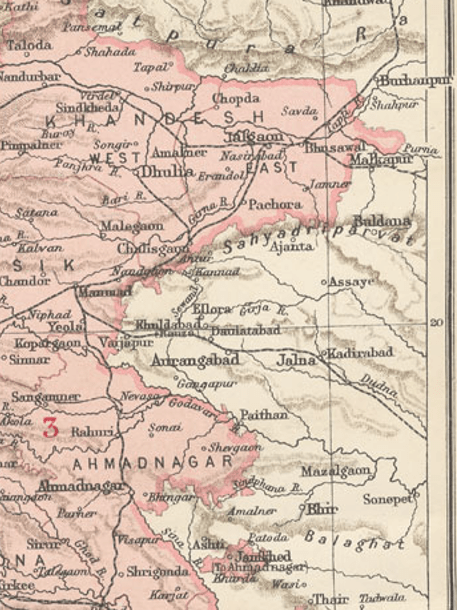
They passed through Burhanpur and encamped on the other side. Major Follet was buried here; the men of his regiment – the 25th Bombay Native Infantry – carried the body to its grave themselves and heaped a mound of stones to mark his final resting place. By the 22nd of July, Stuart’s Column had reached Asirgarh, where they encamped on a small plateau, surrounded by dense jungle just north of the fort. The same evening, Colonel Durand arrived with his wife Annie and Mrs Keatinge in tow.
The Malwa Field Force assembled at Asirgarh, comprised of 5 troops of the 14th Light Dragoons but lately returned from Persia, Woolcombe’s Horse Battery, 4/2 Bombay Artillery, 25th Bombay Native Infantry and a pontoon train. On the 23rd of July, the troops were paraded at 6 a.m. to witness the execution of three men of the 6th Infantry, Gwalior Contingent, found guilty of mutiny the night before by drumhead court-martial. They were the havildar, a sepoy and, unusually, the regimental bheestie. It was a quick affair – all three were placed near a hill while twelve Dragoons dismounted and formed the execution squad. The men were blindfolded and, without any further mention, were shot. As soon as the rattle of the carabiniers had died away, the men were startled by a scream – it was the wife of the havildar. She broke through the line, in terrible grief to grasp, for one final time, the body of her dead husband. Where she would find her peace, no one could say.
The next day, the force moved out of Asiragarh to the Berwai Ferry on the river Narbada. Their march had taken them through a thick jungle which abounded with game – antelope and hares became a part of the camp dinner pot, with the occasional stray peacock turning any dull meal into a princely feast.
As they camped on the south bank of the river, they were joined by a “little fellow of the telegraph department (who) had been beaten about the head sorely,” while those who had escaped with him looked “woebegone and anxious.” Captain Waterman of the Bhil Corps and Mr Theobalds of the Geological Survey Department had had a rum time of it, arriving in camp with the clothes on their backs. This little band joined the force until it reached Mhow.
Meanwhile, it was with some dismay the force watched the river rising – several feet in a matter of hours. Before things could take on an even more precarious position, the 14th Dragoons were obliged, as best they could, to swim across while large boats were prepared for the infantry, the baggage and the guns at the Mortakka Ford. It was just as well they crossed when they did – the current tore at the banks, and the water quickly submerged high boulders that had but hours ago been visible, trees, bushes and logs of wood crashed in the swirling water that now showed no sign of subsiding. The quicker the army crossed, the better, as the rain waters from the hills would soon aid its strength to the already angry river. Back on dry land and with no casualties to mention, the force quickly ascended the Vindhya Mountains and were joined, on the 28th of July, at the Simrol Pass at the top of the ghats by the 3rd Cavalry, Hyderabad Contingent, under Major S.G.G. Orr.
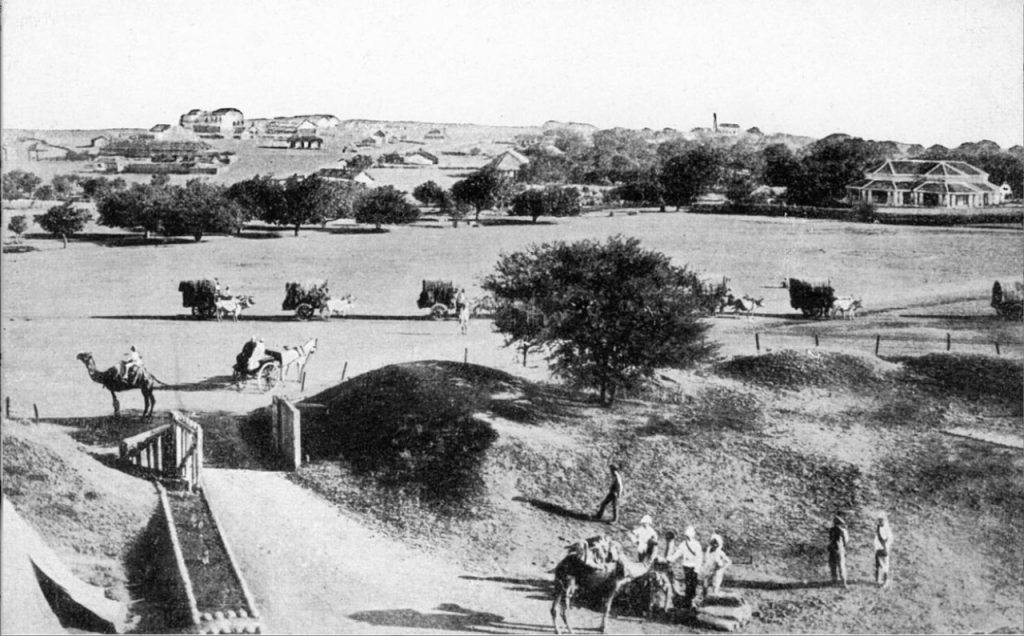
On the 2nd of August, the Malwa Field Force arrived to relieve Mhow. Captain Hungerford and his men had been holding the fort since the mutiny on the 1st of July – the officers had formed themselves into a volunteer corps and relieved the artillery of the night watches, sleeping and eating only when time allowed. The women were kept in the innermost part of the fort where they remained, ” huddled together and they had to do everything for themselves and employ all their time in sewing bags for powder for the guns.” They had sufficient stores – Hungerford had seen to that, but he did not have the means to leave Mhow, nor could he, without orders as in Durand’s absence, he was defacto now acting as the political agent to Holkar. For a month, he had waited patiently for Colonel Woodburn to arrive. By the 23rd of July, only the Mohammedan drum major and five Christian drummers remained with their officers and the fort of Mhow was held by 91 officers and NCOs. Hungerford swiftly declared martial law in Mhow and waited.
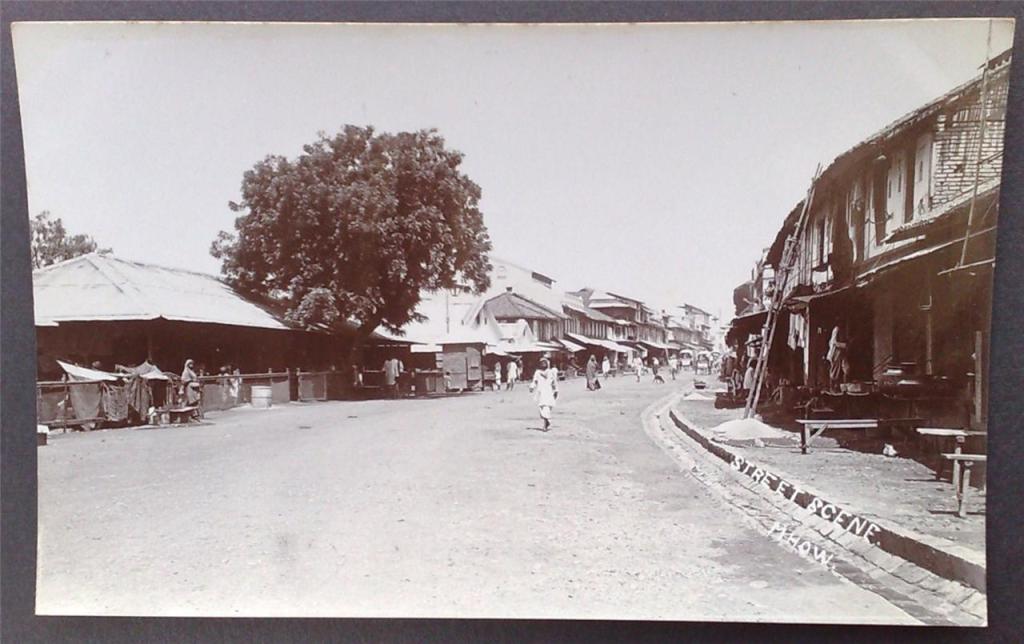
On the 2nd of August, the force came in sight of Mhow – the cantonment was nothing but a mass of ruins, although the church and the library had missed the worst of the destruction; the 1st Cavalry mess house was strewn with broken glass, plates, dishes and other such things the mutineers had found useless to carry away, but they had carried away the green billiard table cloth to make a flag. It was a depressing sight.
As they drew nearer to the fort, Hungerford sent out fresh horses to drag in the guns that Stuart’s exhausted horses could no longer pull – and then, to the astonishment of everyone, ordered a 21-gun salute – not for the fall of Delhi has many surmised at the moment, but for the relief of Mhow.
“So they fired a salute, and rushed out of the fort, like prisoners whose chains had been loosed, and we marched into Mhow, the 25th band playing rejoicingly and severally took up our quarters in such bungalows as were not burned, glad that a period of rest had at length arrived.”
That rest would a long one, as the men soon discovered.
The rains had set in; it would appear without abatement, making further marching impossible. It was determined, therefore, to remain at Mhow; only 12 miles from Indore, it was hoped that the mere presence of the troops would serve as a deterrent to the very capricious troops of Holkar’s guard, and matters were not helped by Holkar’s indecision. While the column lay at Simrole, Holkar’s ministers had requested help – they were informed the column could march to Indore instead of Mhow, but suddenly word came that the troops had decided to desist from molestation; help was not needed. As soon as the column reached Mhow, urgent pleadings came again from Indore; however, it is likely the presence of Durand, who did not hold much stock in Holkar’s loyalty – wrongly so – that Holkar once again changed his mind to allow a British force to disarm his state troops. As long as the rains held, Holkar believed his troops would remain quiet, but this did not help the situation in Mhow.
“There were -constant alarms in camp, and an uneasy watchfulness was apparent. People said the guns were always loaded and battery horses saddled: inlying pickets were doubled, and the great men in
camp spoke mysteriously. The native element of the Force was stronger than the European, the bazaar was reported full of arms, and men of a fighting cast prowled in numbers about the streets. Holkar’s troops at Indore, close by, were in open mutiny, and the Maharajah had, or reported he had, lost all control over them and confined himself to the upper stories of his palace. Holkar’s troops constantly reported they would join the Mhow bazaar and attack us, and on one occasion, so much cannonading was heard in the Indore direction that we believed they were about to do so.”
On the 6th of August, four companies of the 86th Regiment of Foot marched into Mhow and, like the others well up for a fight with Holkar’s troops. The night the cannonading was heard was the 19th of September and was
“…excessively dark. We were all dressed and armed, our horses saddled and in readiness. Every ear was strained to catch the first sound of the enemy’s approach when a dragoon from the picket on the Indore bridge galloped in and, on being challenged, replied, as we understood him, “Turn out the picket” (inlying). We were in our saddles in a moment, congratulating ourselves that at last, the temerity of the rebels had led them on. Our trumpets had alarmed the whole station: the batteries, HM’s 86th, the 25th Regt., and Madras Sappers, had all come to the front. The illusion was dispelled by again questioning the vidette, who replied, he had “come in from the picket,” to tell us of the proximity of guns and cannonading, and, disappointed, we unsaddled again.” There would be no encounter with Holkar’s troops, and the men would have to remain vigilant but, as some noted, rather bored in Mhow. The firing, it transpired, was to mark the beginning of a Hindu festival.
There was work enough for some. As Mhow had been relegated as the basis for further military operations, it was found necessary to give it at least an “air of military strength and the wretched thing that had gloried for years in the name of The Fort had to undergo extensive alterations.” An earthwork was thrown up around it while deep, wide ditches were dug and batteries built. One faced the gateway looking towards the cantonment, while others were built to cover the south and west approaches to the fort. A covered walkway was run out from the fort wall to the only well as the fort did not have a well of its own; while the crumbling walls were rebuilt to double their strength to carry heavy guns that now looked out over the cantonment, the town and the surrounding countryside; the walls too were loopholes and heightened so by the time the work was done, it had finally assumed the appearance of a rather imposing fort.
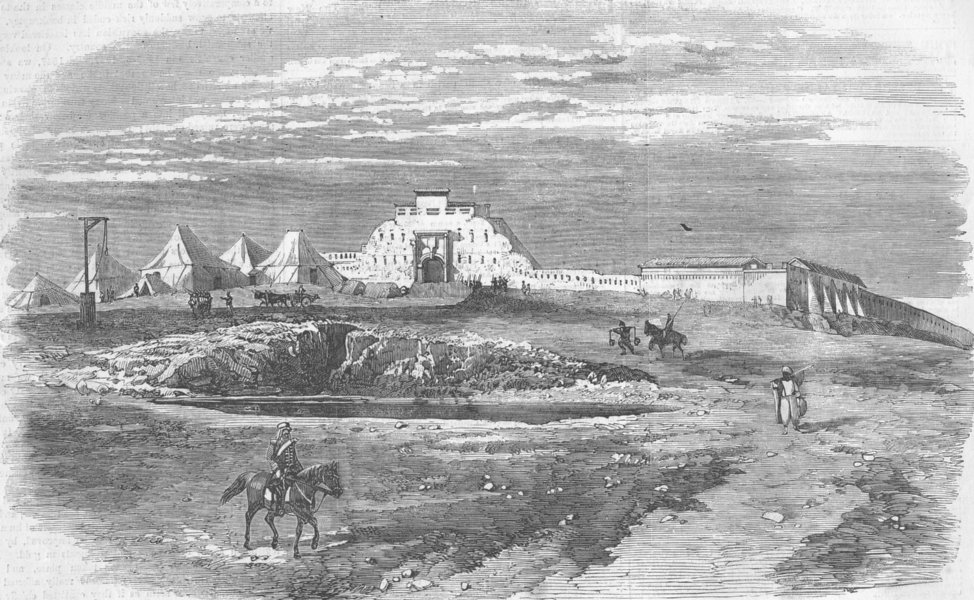
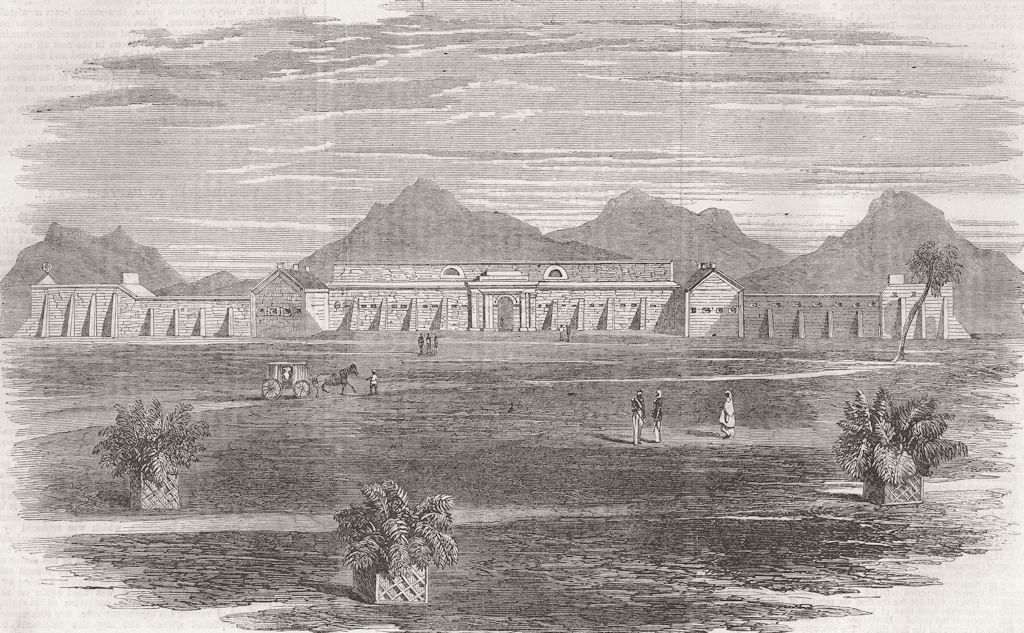
While the rains continued, the hammer and forge were kept busy making gear for the elephants and the siege guns, untrained bullocks were put to the draught and commissariat stores were prepared -but Durand was feeling far from optimistic:
The Gwalior Contingent had thrown off its last pretence of loyalty; the Malwa Contingent had lost its cavalry, and its infantry had so misbehaved in Indore that it was no longer possible to hold them without suspicion, although the European officers at Mahidpur were still holding the infantry and artillery together. The Bhopal Contingent was in open mutiny at Sehore while the Bhil Corps had to begun to become so restless that a gradual thinning out of their native officers was deemed necessary before they could be reassembled; he was not particularly pleased the what he called “Stuart’s weak column” as they mustered only 700 Europeans and 1200 Native troops of all arms. Considering Holkar had five battalions of infantry, 30 guns of various calibres and 1400 cavalry, besides a city that would like no better than to cut his throat, Durand was worried. To make matters worse, one Firoze Shah, related to the Delhi family, who was now calling himself Shahzada Humayun, had raised the Muslim standard at Mundsaur, just 120 miles west of Indore. His followers were enthusiastic ex-soldiers of the Gwalior Contingent and also came from far fields -turbulent Afghans and foreign mercenaries – until they amounted to no less than 20’000 men. While the force sat chaffing in Mhow, this rapacious force plundered Bhopawar and Sirdapur and, on the 31st of August, marched on Dhar.
Then, to the north-east, as Havelock broke the Nana Sahib’s forces in Cawnpore, there was a definite worry that the dispersed troops might make their way south towards Bundelkhand and align themselves with the Gwalior and Banda mutineers before setting their sights on Central India where there was no one to stop them but the troops at Mhow. Besides this, Tantia Topi was intriguing in Jhansi while just east of Mhow, a body of foreign mercenaries, the Weliyatis, were menacing Nimar and, thus, with the force at Dhar, were able to menace the Bombay road below Mhow.
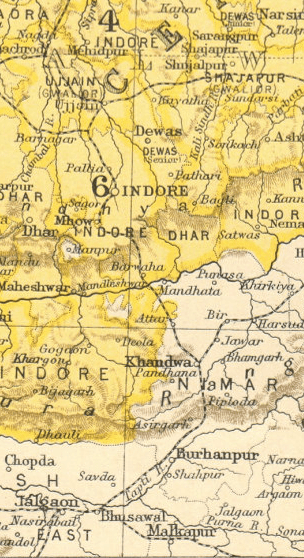
In August, the uprising at Mandsaur threatened to engulf not just all of western Malwa but Neemuch as well. “Impressed with confidence” at the obvious lack of resistance put up by the British in their quarters, they now began to show a definite and most aggressive temperament, far worse than the sullen rumblings of Holkar’s men. The more active of these had long since left Indore and had proceeded to Gwalior, but the progress of the Mandsaur rebellion was so rapid it became of absolute necessity to hold the line of the Narbada and, in effect, when the time came to finally disarm Holkar’s troops. Meanwhile, Durand received letters towards the end of September, intercepted by stealth from Hyderabad, Nagpur, Surat, Gwalior and Mandsaur, all telling the same story – a general uprising would take place at the close of the great festival of Dusshera, which, fortunately, corresponded with the end of the rainy season. Early in October, as if to make their plans a reality, the troops of Feroz Shah advanced on the Bombay road to close off Durand’s communications with Bombay and to command the line of the Narbada along the Bombay front and, with all purpose to attack Neemuch. So emboldened by their progress, the rebel leaders sent invitations to Holkar’s troops to join them.
Meanwhile, the Nana Sahib had been chased away from his grounds in Cawnpore and Bithur and was seen “hovering” in the vicinity of Kalpi, where now the worry was that he might actually send his troops to Central India, hoping to bring himself one step closer to the Maratha Empire he so desperately wanted. The question now was how quickly the Malwa Field Force could strike.
Sources:
Durand, H. M. The Life of Major-General Sir Henry Marion Durand. Vol. I. London: W. H. Allen & Co., 1883.
Intelligence Branch, comp. The Revolt in Central India 1857-59. Simla: Government Monotype Press, 1908.
Lowe, Thomas. Central India during the Rebellion of 1857-1858. London: Longman, Green, Longman & Roberts, 1860.
Malleson, G. B. History of the Indian Mutiny, commencing from the close of the 2nd Volume of Sir John Kaye’s History of the Sepoy War. Vol. I (1878); Vol. III (1888). London: Wm. H. Allen & Co.
Srivastava, Khushalilal. The Revolt of 1857 in Central India – Malwa. Bombay: Allied Publishers, 1966.
Sylvester, John Henry. Recollections of the Campaign in Malwa and Central India under Major General Sir Hugh Rose. Bombay: Smith, Taylor & Co., 1860.
 Mutiny Reflections