Asirgarh Fort, June 1857
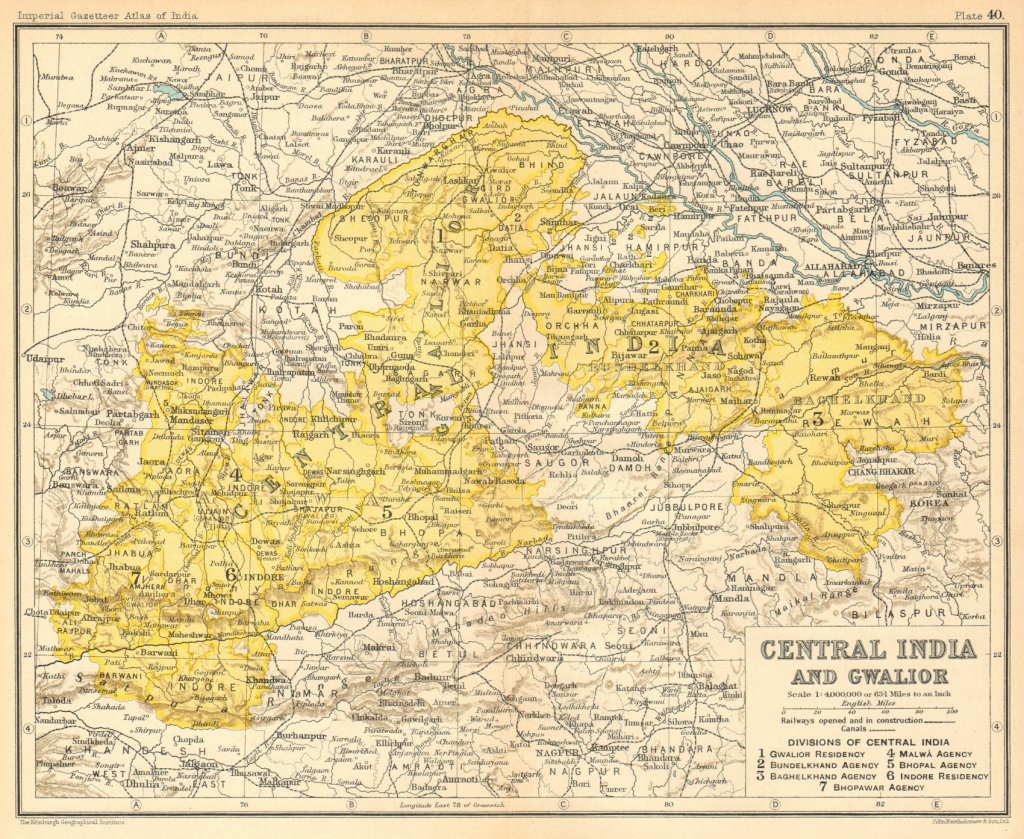
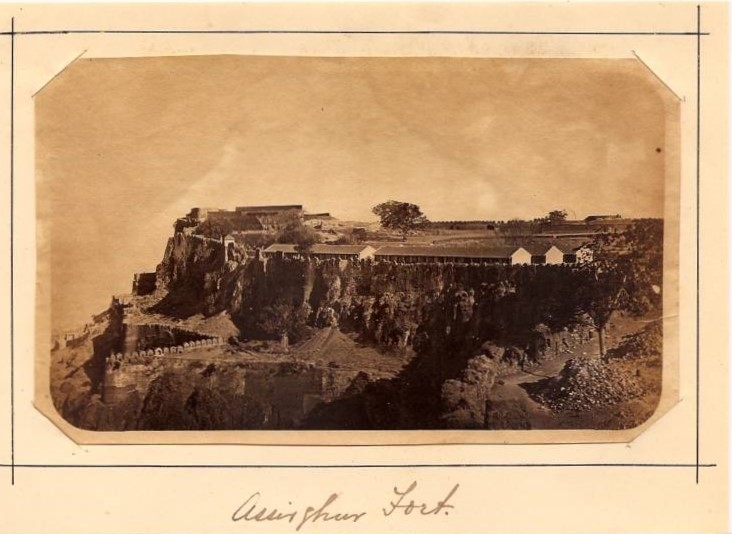
Asirgarh Fort, some 290 miles (ca. 467 km) north-east of Bombay and 99 miles (ca. 159 km) south-east of Mhow, had been held as a British garrison since 1819 when, towards the end of the Third Mahratha War, it had been one of the last forts to hold its own. The 1,200-strong garrison under Qiladar Jaswant Rao Lar had given Colonel Doveton considerable trouble before the garrison finally surrendered on the 9th of April — since then, it had remained in British hands.
It was truly a hill fort — its summit a full 500 feet (0.15 km) above the jungle below. The northern entrance was protected by a deep ravine and defended by outer ramparts, while the southern entrance comprised of 5 gateways, each protected by double lines of fortifications that could be blockaded at a moment’s notice. Constructed in the 15th century, it has never lost its strategic importance in the past 300 years. It was the only pass through the Satpura Range that connected the Narmada and Tapti river valleys and the most important route from north India and was known as the Key to the Deccan. As such, its once formidable title as one of the seven unconquerable forts in India was not lost on the British. The village below was of little importance, housing mostly shepherds, their flocks, and cultivators. Everything at Asirgarh was centred around the fort on the hill.
In 1857, it was garrisoned by a wing of the 6th Regiment, Gwalior Contingent — they were on loan, so to speak, until the 19th Bombay Native Infantry returned from Persia. As it was, the 19th never left India. Colonel Le Mesurier had command of the fort and the adjutant was Lieutenant John Gordon of the 19th.
With the events that unfolded in Gwalior, the Europeans at Asirgarh needed little convincing that the 6th Regiment Gwalior Contingent was hardly likely to have their best interests at heart. Before they could show just how disloyal they planned to be, Lieutenant Gordon quietly formed his own volunteer force — 90 men, enlisted from the villagers in the town, were charged to watch the 6th Regiment; with the mutinies in Neemuch and Nasirabad, it became clear the 6th Regiment had to leave the fort. However, Gordon and Le Mesurier decided that, instead of attempting to disarm the regiment or allow them to give in to any supposed panic, they would move off one company of the regiment and detach it to Burhanpur, 12 miles (ca. 19 km) distant. They would mutiny there in July and march onto Asirgarh. Their hopes of taking the fort were thwarted by the havildar-major of the remaining 6th Regiment. Under Gordon’s directions and with a brave escort of two sepoys, he rode out to meet the mutineers and, by clever haranguing, persuaded them to return to Burhanpur. To everyone’s relief, they agreed.
The following morning, the remaining four companies were ordered, without ceremony, out of the fort to a new camping ground just beneath the guns. Although they retained their arms, they were sternly warned that with any sign of mischief, the guns would open fire on their heads. Gordon’s Volunteers now marched in and took their place. How long Asirgarh could have held out is questionable, and fortunately, they never had to find out. The next day, Lieutenant Birch, with a party of Bhil Infantry, surprised and disarmed the Burhanpur mutineers, bringing their arms into the fort. In their wake came Captain Blair with two companies of the 19th Bombay Infantry and a body of the 3rd Cavalry, Hyderabad Contingent, who speedily disarmed the remaining Gwalior men outside the fort. All that was left was to secure Asirgarh and wait for the arrival of Colonel Stuart’s column.
 Mutiny Reflections