Jagdishpur
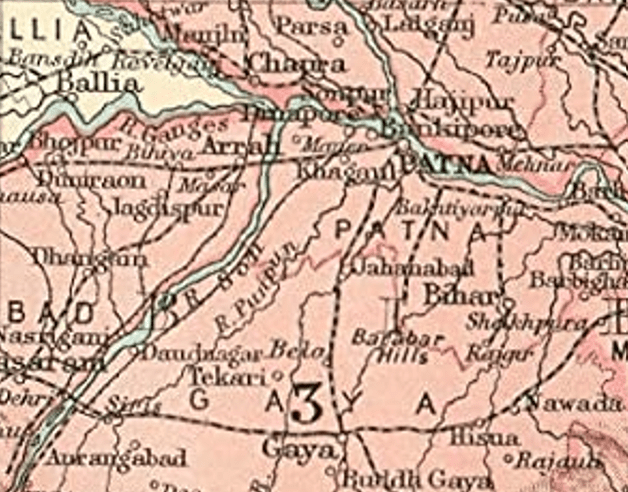
Situated 12 miles southwest of Arrah, the stronghold of Kunwar Singh could only be accessed through dense jungle. Eyre wrote in his despatch that he believed that the chieftain had taken 100 sepoys with him from Arrah, but could not ascertain, due to a lack of “correct information”, what force Kunwar Singh had, nor could he be sure of either the position or the garrison. However, Eyre would proceed as,
“It is, of course highly desirable that he should be followed up and punished otherwise he will return to
Arrah, when the Force is removed, and will become the ” de facto” ruler. If, therefore, this part of the
country is to be kept by us, he must be crushed, and my force strengthened whenever troops can be
spared.”
Writing to Lydiard, the Assistant Adjutant General of the Dinapore Division, Eyre requested ammunition to replace what he had expended on reaching Arrah, and Lydiard was swift to reply
“Concerning the ammunition you require, all will be speedily in readiness, but it is known that
the Kaemnuggur bridge between Arrah and the Soane, is broken down, and it would not be expedient
to send out the ammunition to be detained en route; wherefore do you concert measures for rendering the above bridge passable. Send out information to me when the measure will be effected; at the same time, have a guard ready at the bridge to take over the ammunition, and everything shall be there at the time appointed.”
Eyre, in the meantime, was waiting in Arrah. Mr. Boyle, who so lately had defended the Arrah house, was back on duty repairing the bridge at Kaemnuggur, and Captain Lane of the ship Lady Thackwell was ordered by Eyre to be available at the ghat nearest Arrah to land one more gun and the remainder of the Artillery Company. Intelligence reached Eyre that Kunwar Singh was indeed at Jagdishpur and a “mass of fugitive sepoys.” So he further requested Lydiard for rum and tea for the European troops and, when possible, one or two 5 1/2 inch mortars if they could be spared. Lydiard confirmed the ammunition was on the way, and on the 6th, he wrote to Eyre that a detachment of HM’s 10th Foot – 200 men and 4 officers were marching for Arrah. When they arrived, the commanding officer was instructed to place himself under Eyre’s orders. A further detachment of 100 Sikhs under a European officer was on their way – but Lydiard noted they could not arrive at Arrah before the 10th of August.
A day earlier than expected, the men of the H.M.’s 10th arrived at Arrah, but much to Eyre’s astonishment, they had but lately received the Enfield rifle and were lacking training; it was left up to Eyre: “Captain Patterson, Commanding Detachment, Her Majesty’s 10th Regiment, is requested to
take prompt measures for the instruction of his men in the use of the Enfield Rifle, and Captain
L’Estrange Commanding detachment, Her Majesty’s 5th Fusiliers, will be pleased to furnish four of his
best Drill Instructors for the purpose, in communication with Captain Patterson.”
Eyre had planned to march with all haste to Jagdishpur, but now he was beset with 200 men who could not fire an Enfield, his additional gun was still somewhere on a flat, and the 100 Sikhs from Patna had not materialised. Yet Eyre would march anyway. On 10 August, he gave his field force the following order:
“OFFICERS and others in authority are urgently requested to reduce their marching baggage within
the smallest possible compass (both public and private) . For a brief period it may be necessary to dispense altogether with the camp equipage, taking advantage of such casual shelter as the country may afford.
The Commanding Officer trusts the troops will cheerfully exercise this temporary self- denial for
the sake of the great object in view. The camp equipage and surplus baggage of the force will be immediately collected into one spot, which will be pointed out by the Staff Officer previously to being dispatched to a place of safety.”
At the last hour, Rattray’s Sikhs arrived, and on the 11th of August, Eyre marched to Jugdishpur. His force consisted of
Regiments and Men
Artillery – 3 light Field guns, 36 men
H.M’s 5th, 140 men
H.M’s 10th, 190 men
Rattray’s Sikhs, 140 men – augmented by 40 Sikhs of the Arrah House garrison
Yeomanry, 16 men
Total: 522
And this, to face Kunwar Singh and his 5’000 men of which 1’200 were sepoys, lately in the employ of Bengal Army. It had been found that the men who had flocked to Singh’s banner were not just the mutineers from Dinapore – in all accoutrements of no less than nine regiments had been found on the field after the battle with Eyre; men who had been home on furlough and even old pensioners who were living on the “bounty of the Company” in Bihar had joined under Singh’s standard.
Eyre Advances
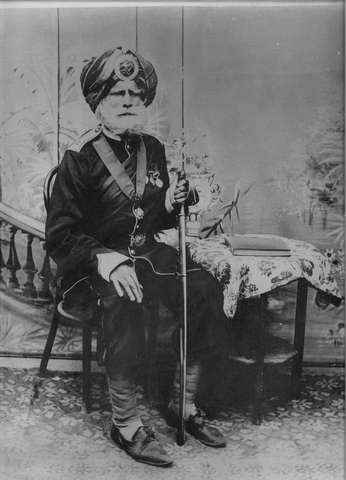
Eight days had passed since the sepoys had retreated from Arrah, and in that time, no force had been sent in pursuit. As such, it is little wonder a false sense of security set in, and they believed the British were most likely consolidating their position at Arrah. Kunwar Singh was not so sure. He sent out small parties in the direction of Buksar to gather information and intercept any Europeans they might meet, but he found his best intelligence lay at his doorstep. The country people informed him faster than his detachments that Eyre had received reinforcements, and he rightly surmised that this could only mean Eyre had set his sights on Jagdishpur after all.
Kunwar Singh called in the detachments within his reach and occupied the village of Daloar, just under two miles in advance of Jagdishpur, to await Eyre. The village was covered partly by a river, and he had enough time to cause the rest to be entrenched. The way to Jagdishpur was nothing more than a track through a thick jungle, where his men, who knew the way, had the advantage over Eyre. Then, apparently not content with setting up his strong position at Daloar, Singh decided to split his forces and sent a strong body of both cavalry and infantry across the river to occupy the village of Tola Narainpur on the left bank. Now, believing his position secure, Kunwar Singh waited.
Eyre advanced only eight miles on the 11th and encamped for the night on the banks of the Gaggar. After a peaceful night’s sleep, they resumed their march at 6.30 in the morning with the following order of march:
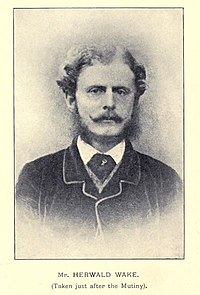
An advanced guard of 50 men of the 5th Fusiliers, commanded by Captain Scott, and 50 Seikhs,
commanded by R. Wake, Esquire, Magistrate of Arrah
The two 9-pounder guns flanked on either sile, by the remainder of the 5th Fusiliers in single file.
A division of 100 men, Her Majesty’s 10th Regiment, formed up in column of sections.
The baggage elephants, &c .;
The 24-pounder howitzer, defended by the remainder of the 10th and Seikhs.
The rear-guard, consisting of the Patna Seikhs under command of Lieutenant Robertson, late 7th
Bengal Native Infantry.
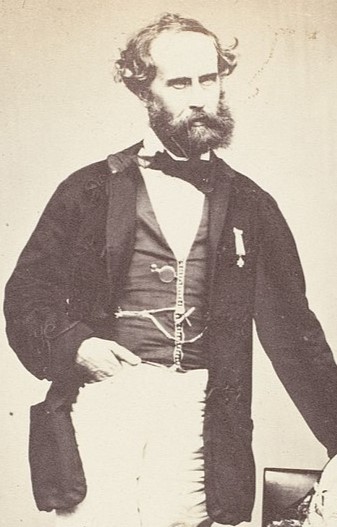
It was Eyre’s luck the rain had held off – for two miles on the march, the road passed over rice fields and was in places well under water; had there been heavy deluge, it would have been impassable for Eyre’s guns. At 9 am Eyre halted his force again, this time for refreshments for his men and the animals. After an hour the march was called and they advanced. Half an hour later, his forward party detected the force at Tola Narainpur who could be plainly seen moving about through the woods. If Kunwar Singh had expected them to dispute Eyre’s passage across the river, he was sorely mistaken.
Eyre immediately pushed up skirmishing parties of the 5th Fusiliers and Wake’s Sikhs, backed up by the volunteer yeomanry under Lieutenant Jackson. The skirmishers rushed forward and opened a brisk fire on the rebels who occupied the jungle to the front and right. They were soon forced to “right incline” and join up with one of their reserves that was entrenched behind a parapet four feet high and 60 yards in length.A sharp firing commenced, “which was maintained on both sides with great spirit;” Eyre advanced two of his guns and opened fire with grape on a party of the rebels, whose heads he could just see in ambush, only 300 yards distant.
“This body of men was completely hidden in dense jungle, and protected in front by the nullah which I have before observed was between us and the village of Daloar, and had they remained concealed a short time longer until our main body had reached this nullah, our loss must have been very great. Our skirmishers brought right shoulders forward and charged the entrenchment. I immediately gave notice to our main body of the position of the enemy, which very soon indicated itself by a tremendous fire upon us all, while our skirmishers rushed upon the rebels in front; the divisions in column of sections, of Her Majesty’s 10th Regeiment attacked them in flank and rear, and I ordered my men, who were protecting the guns, to contribute their fire at long ranges, as occasion might require.”
With “loud and continued shouts”, the 10th advanced and charged and drove the rebels before them back to Daloar. As the 10th charged, the 5th Fusiliers, assisted by a field howitzer, had held in check the enemy’s left, consisting of irregulars, horse and foot, who gave way under the sudden onslaught. The rebels fled back over the river with Eyre’s force behind them. They made their stand at Daloar.
“The rebels, whose number I estimate at about 1,200 men, stood their ground with unexpected obstinacy, but our charge could not be resisted, and we soon saw them flying through the jungle and making for the villages, closely pursued by the skirmishers; our main body then crossed the nullah, advanced through the village, and previous to re – entering the jungle, I reinforced the skirmishers, who effectually cleared the way for us, although the enemy kept up a dropping fire upon us until we arrived in the heart of the city…”
Within an hour, both the sepoys at Daloar and Singh’s Irregulars were in full retreat upon Jagdishpur.
Although the road was through a thick jungle and the rebels had the advantage of knowing the territory, Eyre immediately sent his infantry onwards in skirmishing order and forced his way through the jungle, driving the rebels before him. In their retreat, they left behind two guns; by the time they reached Kunwar Singh’s stronghold at Jagdishpur, there was no fight left in the rebels. After a feeble attempt at defence, they bundled up their leader and fled into the jungle, leaving Jagdishpur to Eyre. At 1 o’clock in the afternoon, Eyre took possession of the fort, and the battle of Jagdishpur was over, leaving 300 dead on the field who had fought for Kunwar Singh.
The question now was, where was he?
On 13 August, Eyre was informed that Singh had fled to his other stronghold at Jataora some eight miles from Jagdishpur. The next day, Eyre detached a company of the 5th Fusiliers and 100 Sikhs with the Yeomanry Volunteers, all under Captain L’Estrange, but here, Kunwar Singh had the advantage. Knowing the paths and routes through the jungle as well as he did and well supported by informants from Jagdishpur, he was able to evade L’Estrange – by the time the captain arrived, Jataoara had been abandoned and Singh was on his way to Rhotas; accompanied, according to the L’Estrange’s information by the remanent of the 40th BNI; the rest of his force had dispersed. L’Estrange destroyed Singh’s fort and returned to Jagdishpur. On their way back, Jackson and the volunteers set fire to the residences of Singh’s brothers – if he planned to come back to Jagdishpur, his stay would hardly be comfortable, for Eyre had other plans for Jagdishpur.
He undermined all the main buildings in and around the fort; while the work was going on, he depleted the fort of all its supplies of grain and distributed it to the villagers. The commissariat officers calculated it amounted to no less than 45’000 maunds or 1’679’589 kilograms, enough to supply 20’000 men for six months. Kunwar Singh, the villagers complained, had seized all their stores, leaving them with nothing.
Any arms and munitions that were found in the fort and deemed impracticable to transport, Eyre had destroyed. On the 15th of August, the train was lit, and several mines blew Kunwar Singh’s fort into oblivion, leaving it a heap of ruins.
Then there was the case of a temple.
It was not an old and venerable edifice that had withstood the sands of time. The temple had recently been erected at great expense by Kunwar Singh; when Eyre blew it up, it was not to smite religion but to insult the man himself. The move was not met with general approval – Sir Colin Campbell found it abhorrant, but Eyre himself had this to say,
“It was curious to see how the Hindoos in my camp seemed rather to delight than otherwise in the sacrilege of its destruction. I suppose the fact is that they care as a rule only for public fanes such as Juggernauth and are indifferent as to the fate of private ones, built like this one for self-glorification. I regarded the act at the time as necessary to injure Kower Singh’s prestige, and I think it had that effect.”
Campbell remained unmoved by Eyre’s explanation; while he praised him for his military proceedings, he would not extend it to the destruction of the temple. Meanwhile, Eyre was not letting Kunwar Singh out of his sights quite yet.
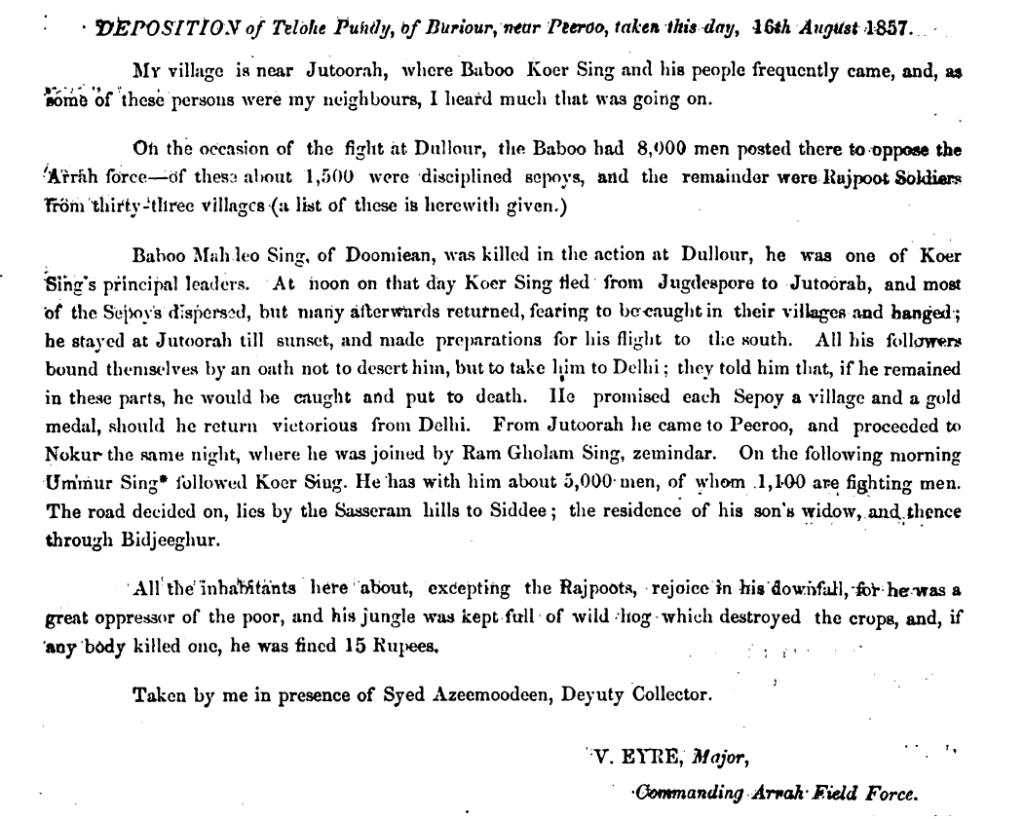
Eyre set off in pursuit in the direction of Sasseram as far as Peeroo – but he left off. While Kunwar Singh proceeded via Bijeegurh towards Rewah in an attempt to make for Delhi, Eyre had received new instructions. Sir James Outram ordered him back to Arrah.
On August 19, Eyre reached Arrah and on the same night sent the detachment of H.M.’s 10th back to Dinapore; nine days later, Eyre marched his remaining force to Buxar where he arrived on the 23rd where he found H.M.’s 90th Light Infantry – on the evening of the 24th, Sir James Outram arrived, en route to take up command at Cawnpore from Sir Henry Havelock. Eyre would now proceed to Oudh under Outram’s command – his expedition was over.
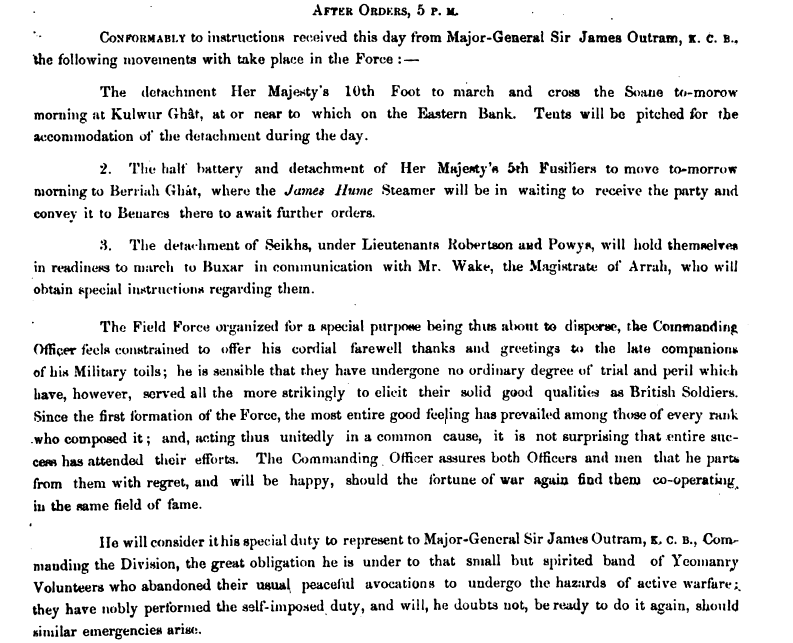
Not so Kunwar Singh – we shall meet him again at another battle in the not-so-distant future. For now, he is proceeding towards Delhi.
Sources:
Caine, Caesar, ed. Barracks and Battlefields in India: The Experiences of a Soldier of the 10th Foot. York: J. Sampson, 1891.
[Eyre, Vincent]. Letters and Despatches Connected with the Relief of Arrah in August 1857 and with Subsequent Operations in the Doab and Lucknow under Colonel V. Eyre. N.p., 1867.
Gubbins, Martin Richard. An Account of the Mutinies in Oudh, and of the Siege of the Lucknow Residency. London: Richard Bentley, 1858.
Kaye, John William. A History of the Sepoy War in India, 1857-1858. Vol. III. London: W. H. Allen & Co., 1876.
Kumar, S. Purushottam. “Kunwar Singh’s Failure in 1857.” Proceedings of the Indian History Congress 44 (1983): 360–67. jstor.org.
Majumdar, R. C. The Sepoy Mutiny and the Revolt of 1857. Calcutta: Firma K. L. Mukhopadhyay, 1957.
Malleson, G. B. History of the Indian Mutiny, 1857-1858, Commencing from the Close of the Second Volume of Sir John Kaye’s History of the Sepoy War. Vol. I. London: Wm. H. Allen & Co., 1878.
Sieveking, I. Giberne. A Turning Point in the Indian Mutiny. London: David Nutt, 1910.
Trevelyan, George Otto. The Competition Wallah. London: Macmillan and Co., 1864
 Mutiny Reflections
Beautiful post! I didn’t know anything about it.
LikeLiked by 1 person