Enter Captain Charles Lionel Showers
Described by Sir John Kaye as a a man “in whom some fine qualities were united, but who, lacking others essential to a political officer, marred what might have made a brilliant career. He had high courage, unquestionable ability, and a rare gift of speech. But he wanted judgement and discretion – especially that kind of discretion which recognises subordination as the main principle of all service and never gives way to the practical egotism, which men of strong convictions are, in defiance of authority, so prone to indulge.”
In other words, he was a good officer but, as he would prove, not one who enjoyed taking orders. While he would have a moment to shine during the mutiny, he would eventually be dismissed from the service. He had, up until he butted heads with George Lawrence, a good record and came from a fine military background. The son of Lieutenant Colonel Howe Daniel Showers of the 72nd BNI, Charles Lionel was the second generation of Showers to be born in India – his father had been born in Fatehgarh in 1786; his grandfather, Samuel Howe Showers had arrived in India in 1764, seen service with the 1st Bengal European Fusiliers in 1765, served in the 1st Mahratta War and had commanded successive native and European regiments. He had obtained a cadetship for no less than 6 of his sons, one of whom was the father of Charles Lionel.
Nor was he the only son of Howe Daniel to be in India. There were two other brothers: Edward Henry, who unfortunately died of cholera in Berhampore at the age of 23, never having seen active service. The other, however, was already making a name for himself, and as the eldest of the three, he would also be the best known of the brothers. He was none other than St. George Daniel Showers of the 2nd European Bengal Fusiliers, who would fight his way through a different field – from Badli-ki-Serai, the Siege of Delhi and then as commander of the Moveable Column in the Delhi district after the capture of the city. Of the three, Charles Lionel was the youngest, and the shadow of his formidable elder sibling possibly weighed heavily on his shoulders.
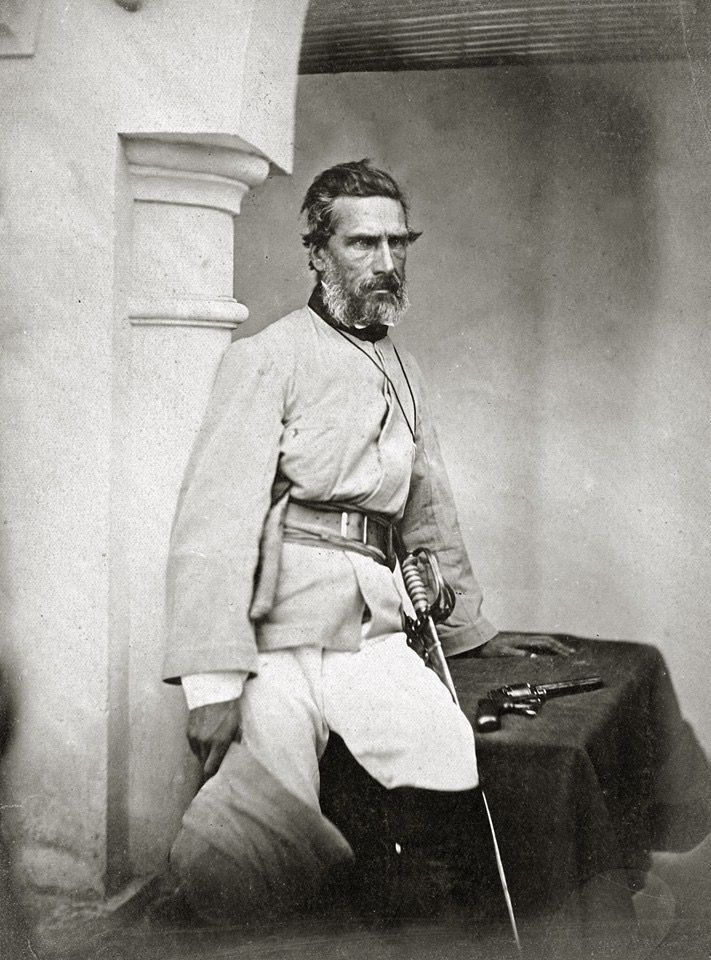
“‘Despite his severity as a disciplinarian, during the Mutiny he displayed an aversion to inflicting retribution.”
While Captain Charles Showers’ career was plagued by sickness, being absent from the service no less than three times between 1838 and 1855, it had started brightly enough. He had started as an ensign with the 58th NI, transferred to the 14th NI, came back from sick leave to take part in the capture of Kot Kangra in 1846, and then on to the campaign in western Rajputana in 1847, where he commanded in the attack and reduction of Garsesur. This opened a door for Showers as an assistant to the Rajputana agent. He went to serve in the 2nd Sikh War, earning a clasp for Guzerat on Sir H. Gough’s staff and in 1857, was back in Rajputana as the acting political agent for Mewar. This should have been the start of a brilliant career, but unfortunately, Showers’ opinions were larger than the man himself.
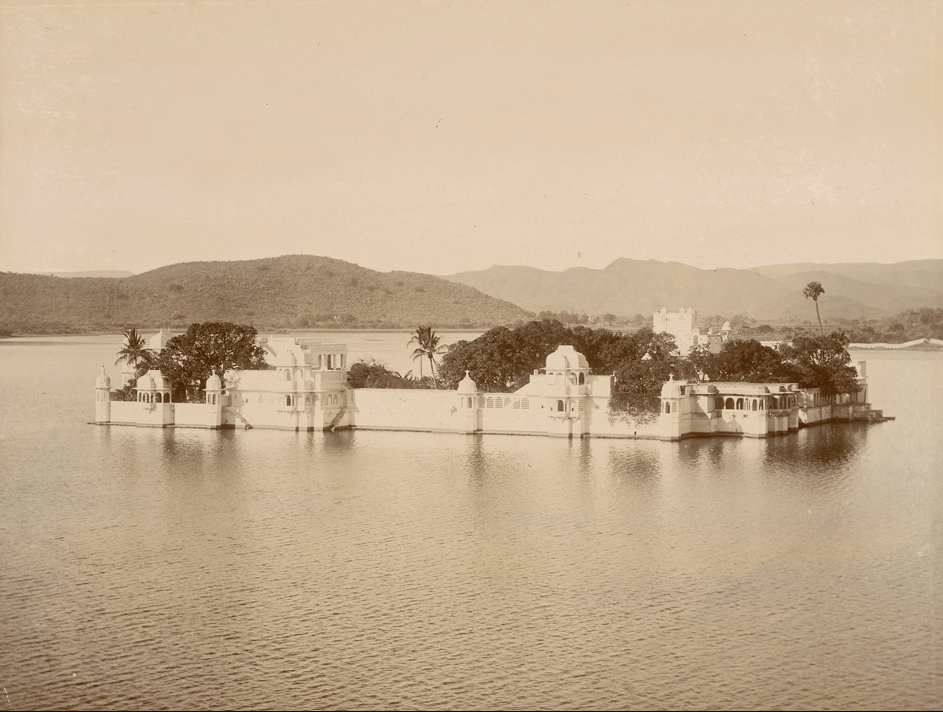
When news of the mutiny came to Mount Abu, Showers was a guest of George Lawrence – when all the other officers scrambled to leave his hospitality with all haste to return to their stations, Showers remained behind and continued, according to Lawrence, to loiter about the place. When he finally deigned to leave for Udaipur as Lawrence had ordered, Showers took the scenic route across the Aravalli Mountains and did not arrive outside the capital until the 29th of May, a full 11 days after news of Meerut had reached Mount Abu. By the time he actually rode into the city to figure out if he should stay in the poorly defended residency or take up the accommodation the Maharana offered him – the Lake Palace of Udaipur, no less – Nasirabad was already in flames.
Meanwhile, expresses were arriving “at all hours, day and night” from Neemuch. According to Showers, the messages were contradictory and puzzling. “Now, that they were on the brink of revolt, again, that the crisis had passed over, and confidence was reviving. At one moment, urging me to march with the Raj troops on Neemuch; at the next, begging me on no account to bring a Raj soldier within sight of the Cantonment.” Finally, the day before the revolt, Shower’s finally decided he should really go to Neemuch to see things for himself – he wrote to Colonel Abbott with his intentions and suggested Abbott send him an escort of his regular cavalry to meet him, “…if he thought such exhibition of confidence in his men would tend to keep them steady.”
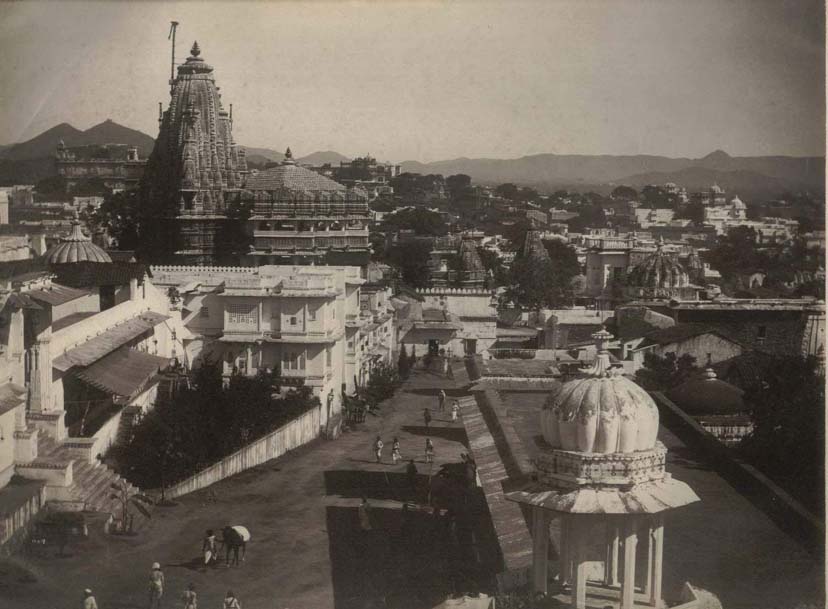
On the 2nd of June, Showers received a hurried and incomplete express from Lloyd that announced the affairs at Neemuch were practically out of control, and the troops were on the verge of rising. So Showers, instead of leaving Udaipur on the 3rd of June, now thought it prudent to sit tight. In his defence, he believed acting without the Raj troops now was impossible, but he also felt leaving the Maharana undefended and surrounded by disgruntled chiefs was not the wisest course either. So, on the 6th of June, Showers was still in Udaipur, holding talks and eliciting the support of the Maharana, who, in turn, was calling all the loyal chiefs and district officers to aid in whatever Showers would propose. They were to obey Showers as readily as they would the Maharana. While they were all paying obeisance to the Maharana, Neemuch was in flames.
While in Udaipur, Showers was informed that Neemuch was lost. The news, to Showers’s surprise, did not come from Lloyd or Abbott but “through native channels,” leaving him believing the worst. By now, the column that Showers would eventually lead was finally ready, and he could finally march off somewhere. Certainly too late for Nasirabad, and as it looked, Neemuch wasn’t on the cards anymore.
While still pondering his options, two officers from Neemuch rode into Udaipur – Barnes of the artillery and Rose of the infantry. They reported that over 40 fugitives were gathered at the village of Dungala, 50 miles from Udaipur – they brought a message from Captain Macdonald, who described the position as “most critical” and said they needed aid. While Rose was too exhausted by the ride to be of any use momentarily, Barnes volunteered at once to join Showers. He could have saved his enthusiasm.
Showers suddenly decided that before leaving Udaipur, he needed to “take thought for the maintenance of general tranquillity in Meywar.” So he did what he did best – talk. He issued a proclamation notifying the chiefs who had not rushed to the Maharana’s banner that as soon as he was back în Udaipur, he “would enquire personally into their grievances, and that his Highness had promised to act on my counsel in each and every case, and advising them to rest upon my assurance and be patient. At the same time, I warned all that since general tranquillity in Meywar was essential at that juncture, anyone, high or low, who ventured to disturb the public peace should be denounced as a rebel equally against the British Government as by his own Sovereign.* However, for the proclamation to work, he needed to take counsel with the Maharana first. This had kept Showers busy in the past days, but it was not the only problem he suddenly thought to address and this on the eve of leaving Udaipur.
At Kherwarra, there was, in conjunction with the Mewar Bhil Corps, a troop of the 1st Bengal Cavalry. As they were a wing of the very troops that had mutinied in Neemuch, Showers believed they would probably not be able to resist the call to join their comrades. He should have trusted the Commandant of the Bhil Corps, Captain J.C. Brookes, Captain Annesley, second in command and Captain Ellice commanding the wing, a little more. They had already made their arrangements, closing the passes out of the hills and posting guards, all the while, Ellice was keeping the 1st under his control. Although the cavalry attempted “from time to time” to desert, the Bhils always brought them back.
Only now did Showers report to Colonel Lawrence what he had been doing and even gave his thoroughly competent chief, who had been in the saddle for days already, some advice about how Lawrence should proceed. It is hardly surprising his commander was annoyed.
As soon as news of Nasirabad reached Lawrence at Mount Abu, he wasted no time in taking to the field. By carriage post and with two assistants – Hardcastle and Impey – in tow, Lawrence set off for Beawar. On his arrival, on 5 June, he received a warrant from John Colvin at Agra, which nominated him Brigadier-General, thus giving him free hand to command all the troops in Rajputana; all military and political matters were to be decided by Lawrence alone. On the same day, he was informed of events at Neemuch. No longer able to wait for Showers, Lloyd and his assistant returned to Neemuch the day after the outbreak and “re-established the civil government, which had then only been in abeyance a few hours, and by this prompt and resolute conduct they prevented the spread of disorder any further at that time.”
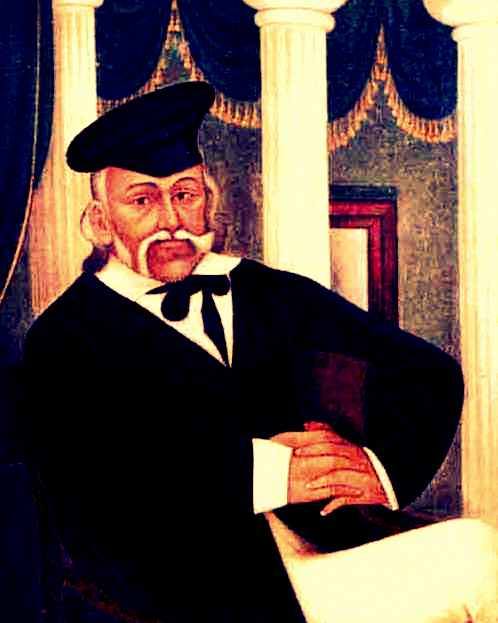
In his opinion, Neemuch could look after itself for the moment – Lawrence had to take care of matters in Beawar. Colonel Dixon had died, and Colvin requested Lawrence to remain at the station to carry on duties ” just as in times of profound peace.” The court was opened, and the government offices continued to run; “confidence in the district and the authority of the government” were maintained by Lawrence as if nothing at all had happened. He would alternately change his position between Beawar, Ajmer and Nusirabad during June and July, going where he deemed his “…presence necessary at each place with reference to my military as well as my civil and political duties.” At Ajmer Lawrence held open court and visited the city daily whenever he was there – despite the occasional panics that arose, for the most part, things would remain calm.
While Lawrence was grappling with the fate of the state, on 7 June, Showers was finally riding to Dangala. Barnes rode with him, as did the Rao of Bedla. Transportation for the fugitives had been hastily organised by the Rao and consisted of everything from palanquins for the women, children and the sick, pad elephants and horses for the officers and their servants and a long line of carts and camels in case anyone from Neemuch had any luggage. Besides this, some Raj troops accompanied the calvacade. Since bullocks are notoriously slow, and Showers, taking the adage, “no news is good news”, when he did not receive any further messages from Dangala, proceeded at something of a leisurely pace. The procession halted at Khyroda for a few hours to water the horses and bullocks, and they did not reach the vicinity of Dangala until 10 the next evening. Half a mile from the village, a halt was called to allow the straggling train to catch up to the rest of the column – only when it was reported that everything was “right in the rear,” Showers called out in rather misplaced military precision, “Forward at the walk, march!”
In a rather melodramatic recollection, Showers writes:
“Soon the grey walls of the village loomed into view: but all was still as death. Nearer, nearer, we cautiously advanced at a slow, measured walk to guard against a surprise. Not a man of the enemy appeared in view—not a sound of horse, foot, or guns. Sweeping up then at a rapid trot under the walls, a feeble shout from the interior told that they had seen us, and the next moment, Macdonald and Walker, Murray and others came rushing out of the gateway.”
The rebels had been looming in the vicinity, but the report that the Maharana’s troops had taken to the field preceded Showers’ arrival, and they were long gone. As for the fugitives, help arrived not a moment too soon. Cholera had broken out, and Ensign Davenport was deathly ill; Mrs. Walker had lost her senses, and she had taken to sleep walking.
“…she glided barefooted, noiselessly and swiftly across the terrace, and throwing her arms around her startled husband’s neck, gasped out in agitated accents, ‘Edward! dear Edward! the guns have fired.’ Alas! poor sufferer! The shock of that terrible incident, with its accompanying conflagration, had burned down upon her brain and even in sleep recalled the fearful reality. Walker rose, reassuring her, and led her back to her trouble-tossed couch.”
Their accommodation was no more than rough cow sheds; they had had little food and scarecely a night had passed without an alarm. They had no change of clothes, and no one had had the time to pack any belongings. Eager to spare the fugitives any hardship on the long road to Udaipur, Showers insisted they start after dark to avoid the blistering June sun. Leaving Dangala on the 9th of June, they would finally set their eyes on Udaipur three days later, where they were generously given the Lake Palace as their place of refuge by the Maharana of Udaipur.
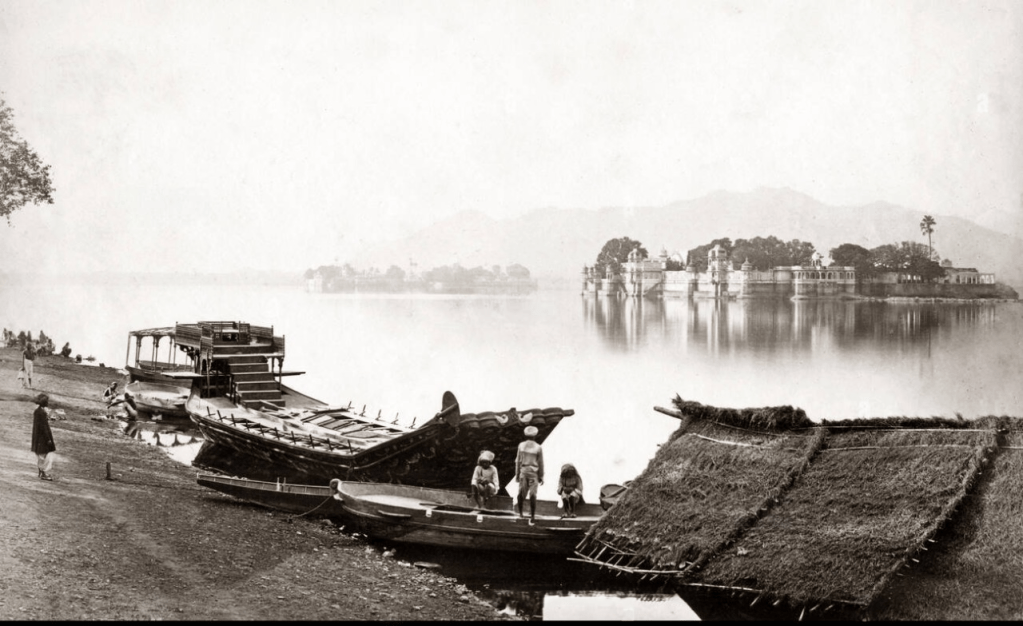
Here they remained until the 22nd, receiving all kindness imaginable with the children much fussed over and pampered by court; Davenport recovered from cholera, and even Mrs. Walker had regained some of her composure. It was deemed better for them now to proceed to Mount Abu; the ladies and children along with Lieutenant Walker, Dr. Clarke and Dr. Cotes made their way hence, while Lieutenant Gordon, Ensign Davenport and Dr. Gane left the same day, escorted by the Maharana’s men, to Kairwarrah.
When the fugitives left Dangala, it was without Captain Showers. He left them in the trusty hands of the Rao. Showers had decided it was high time to give chase to the mutineers, and the first stop would be Neemuch.
Sources:
Chick, Noah Alfred. Annals of the Indian Rebellion. Calcutta: Sanders, Cones, and Co., 1859.
Cochrane, J., comp. Narrative of the Indian Mutinies of 1857, Compiled for the Madras Military Male Orphan Asylum. Madras: Military Male Orphan Asylum Press, 1858
Intelligence Branch, comp. The Revolt in Central India 1857-59. Simla: Government Monotype Press, 1908.
Malleson, G. B. History of the Indian Mutiny, 1857-1858, Commencing from the Close of the Second Volume of Sir John Kaye’s History of the Sepoy War. Vol. III (1889). London: Wm. H. Allen & Co.
Prichard, Iltudus Thomas. The Mutinies in Rajpootana: A Personal Narrative. London: John W. Parker and Son, 1860.
Showers, Charles Lionel. A Missing Chapter of the Indian Mutiny. London: Longmans, Green, and Co., 1888.
Rajputana (Agency). The Rajputana Gazetteer. Vol. 1. Calcutta: Office of the Superintendent of Government Printing, 1879
 Mutiny Reflections