Mount Abu
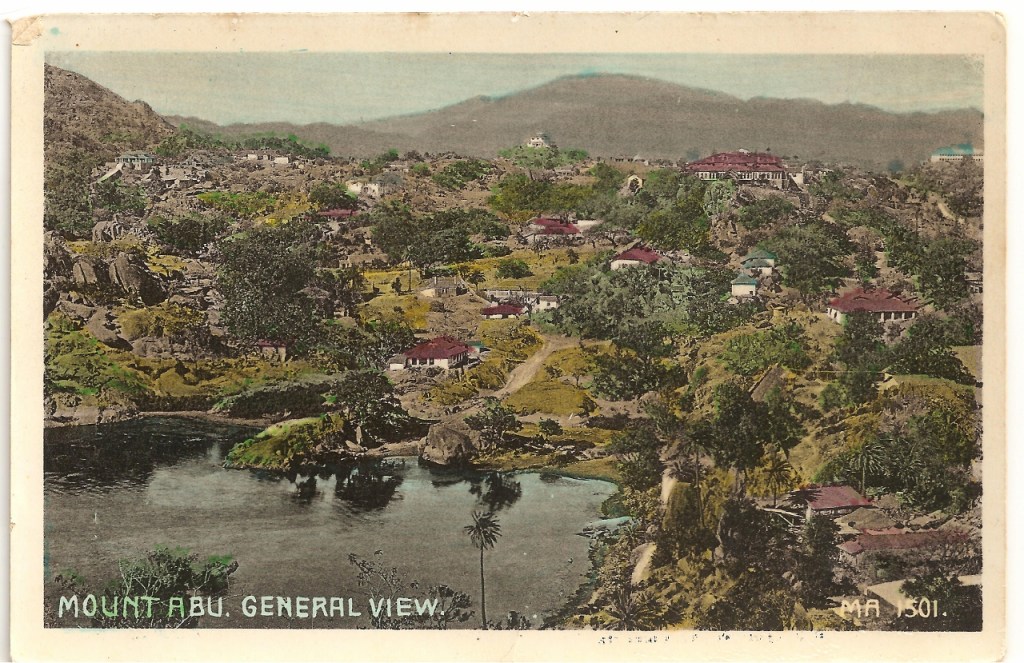
At 4’000 feet (or 1’219.2 meters) above sea level, Mount Abu is a detached hill in the Aravalli range of mountains, rather southeast of the centre of the Sirohi State – the station was built on an irregular plateau, surrounded by several peaks. Abu Lake is sacred to the Hindus and, indeed, to Hindu mythology as it is believed that Sage Vashistha performed a yagna ( fire ritual) at Mount Abu and created Nandi, the divine cow. Gaumukh Temple, where the sage performed the ritual, features a natural spring which emerges from a rock said to resemble a cow’s mouth. Awash with temples and Guru Shikhar, the highest point in Rajputana, Mount Abu continues to be a place of spiritual retreat and serenity.
Owing to its religious significance, it would not seem to be the best choice for the British to establish a sanitorium, but it all came about due to a treaty. Too weak to protect his subjects from repeated raids from Bhils and the wild Minas tribes, financially destroyed through repeated wars with Marwar, Rao Udai Bhan Singh sought the protection of the British in 1817, facing as he was almost complete annihilation by very recalcitrant Thakurs, all eager to throw off their allegiance to the Sirohi throne – Captain Tod was placed in charge of leading an inquiry and at his behest, in 1823, a treaty disallowing the pretensions of Jodhpur to take suzerainty over the state and Sirohi became a self-governing princely state and part of the Rajputana Agency.
Between 1824 and 1832, the only European to regularly visit Mount Abu was the Political Superintendent of Sirohi who had built himself a small house – from 1836, on the formation of the Jodhpur Legion most of the officers taking advantage of the nearness of Abu to Erinpura, betook themselves of the station and built their hill homes close to the lake. From 1840, mostly invalid soldiers from Disa were already being sent to Abu for their health – in 1843, the Rao granted the British permission to set up their summer headquarters in Mount Abu. The road from Disa to Mount Abu was scarcely more than a sandy cart track and a “military march of four or five days “, but Anadra, two miles from the foot of the hills, though “narrow, steep and winding”, posed hardly any hindrance. From there, it was hardly a ride for the legion’s officers back to headquarters at Erinpura.
Sir Henry Lawrence, who had served in Rajputana before his brother took the reins, had established one of his famed asylums at Mount Abu for the children of the army in 1853; he had also buried his beloved wife Honoria here. The station had the usual accoutrements – a racket court, a club and a church. It was hardly a glamorous station like Simla, but it was the only respite the British had from the unrelenting heat of a Rajputana summer.
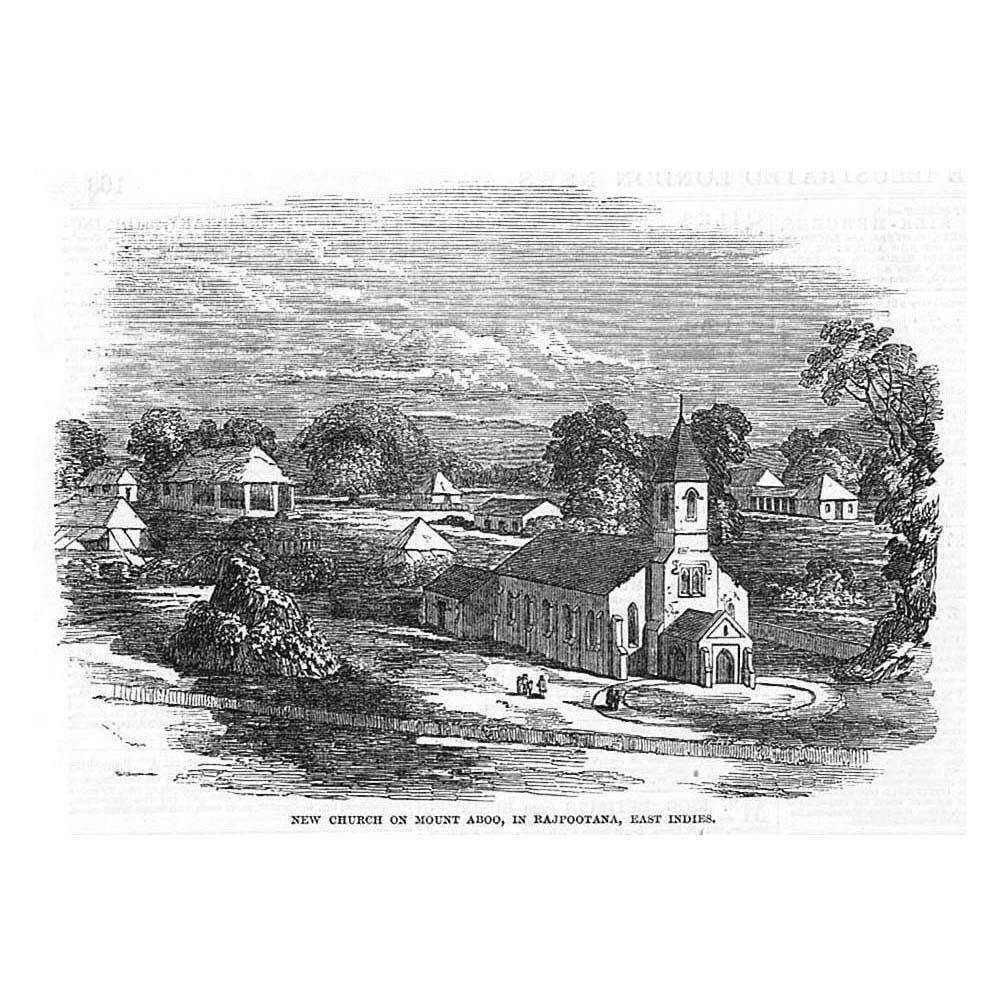
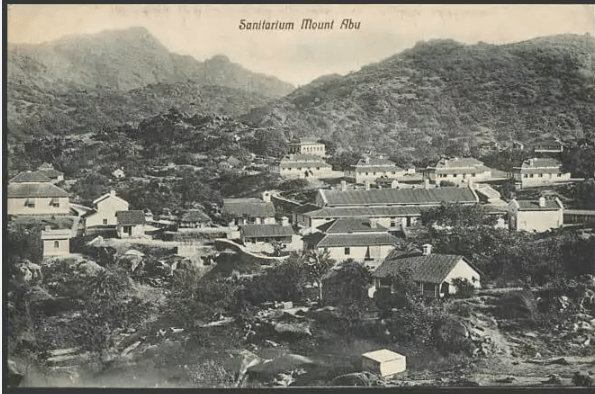
It was also sparsely defended – besides a guard provided by the Jodhpur Legion consisting of 70 men, the European barracks had 30 convalescent soldiers of the HM’s 83rd, sent from Disa to recover in the bracing climate. A corporal and four men were posted at the school while the rest remained in barracks. The barracks had been positioned to provide comfort but were at a distance from the rest of the settlement, “out of sight of any of the houses, and in bad weather, out of hearing.” However, Captain Hall had taken up his residence for the summer along with Alexander Lawrence, the son of the brigadier, recently arrived from England to join the Bengal Civil Service. It was not uncommon to find hill stations unduly populated by women and children during the summer months, and Mount Abu was no exception. When George Lawrence had left Mount Abu his wife and daughters had stayed behind as had the wives of all the officers hurrying off to their duties in the plains. No one it would seem, precipitated an attack on Mount Abu, least of all, George Lawrence.
The 21st of August
The morning of the 21st of August arose and found Mount Abu thickly veiled in fog, common during the monsoon season. At 3 o’clock in the morning as the station slept, the men of the Jodhpur Legion, after their climb from Anadra, crept up unobserved to the windows of the European barracks.
Peering through the windows, they could see the invalids fast asleep in their beds. Raising their muskets, they “poked” the muzzles through the windows and fired. Their conduct at that moment was hardly any credit to their training – their aim was too high and passed harmlessly over the sleepers’ heads. The racket, however, was enough to start the soldiers awake – without hesitation, they leapt from their warm beds, seized their muskets and started to load. Another volley rained through the windows but, like its predecessor, proved harmless. By this time, the soldiers had time to load their muskets, and they rushed out, ready to reply. The result, however, was “singular, but satisfactory; one mutineer fell – the rest ran away.”
While the barracks were being attacked, another party of mutineers, led by Subadar Mihrwan Singh, had marched to Captain Hall’s house “to dispose, if possible, of a man whom they knew to be capable and resolute and whose influence they dreaded.” They extended in line in front of the house and “by word of command,” fired a volley at the windows and doors. The house, fortunately, was set on a slight hill, and once again, the shots were high. Hall, startled by the sound of smashing glass and splintering wood, quickly gathered up his family and rushed out the back door. His compound adjoined the school, which had, if need be, been set up as a place of defence. Although only sparsely defended by four men of the 83rd, at the first sound of gunfire, they turned out and loaded. Other Europeans arrived at the schoolhouse, including Dr Young, the medical officer of the station, the family of George Lawrence and his wounded son, Alexander. He had been unfortunate in his choice of direction and had first run to Captain Hall’s house – here he met the only mutineer who could shoot straight, and the shot went through his thigh.
Curiously, the mutineers did not attack the school house – instead, they went off to plunder the bazaar, release the only five prisoners in the gaol and dismantle the post office. In the meantime, Captain Hall had gathered together the men of the 83rd and, with Dr. Young, made his counterattack. After some smart firing, the mutineers were driven out of Mount Abu and back down the hill.
“The dense fog prevented much loss being inflicted, and the damp caused many of the muskets to misfire. Owing to the small number of men present, any attempt at pursuit was deemed useless and unadvisable, but measures were immediately taken to collect all the English residents at the sanitarium in the school, the church hard by being used as a hospital. It was probable that the mutiny would extend to Deesa and that another attempt would be made upon the little isolated band of Europeans on Mount Aboo, so they lost no time in fortifying the school and making the best of their position, determined to fight it out to the last.”
Baffled by their own failure to take Abu and surprised that Hall had put up such a fight, the mutineers did not return again to Mount Abu.
Their line of march would take them back to Anadra where the rest of their comrades were waiting, including those that had been posted on the Disa Road. Execept the few Bhils who swiftly left, the mutineers gathered up as many bullock carts as they could and made off towards Sirohi. Rao Shiv Singh however, on hearing that they had attacked Mount Abu which happened to be in his territory, stationed two guns to greet them in case they were foolhardy enough to march on his capital. A quick change of heart and the mutineers made instead for headquarters – “but the fame of their glorious deeds preceded them, and what was more probable, their comrades at Erinpoora were aware beforehand of their intentions and prepared to co-operate.” They would arrive on the 23rd of August.
 Mutiny Reflections