The Next Generation of Browns
The children of George Francis Brown, at the time of his problems in Santhal, they were well on their way to making their own lives. There is only a little information on some of them, while the eldest sister, Fann is merely noted as Mrs. Farquharson.
George James Cowley (1832-1924) would have been a man after his grandfather’s heart as an Anglican clergyman who served not just the Church of England but the Scottish Episcopal Church. The author of several works, it is little surprise two of his sons would become authors, carrying on, in some way Uncle Charles’ tradition.
His second daughter, Hannah Maria married John Henry Pratt (1809-1871), a man somewhat older than herself but with a fine reputation as the Archdeacon of Calcutta, an astronomer and a mathematician – they married in Bhagalpur in 1850. It is unclear if his other daughter, Lucy Gisborne married: in 1871 at the time of her father’s death, she was, according to the London Gazette announcement of his will, “a spinster” at the age of 35.
There is a little confusion regarding George’s youngest son, who was named oddly enough, George Peploe (1840-1909). During his lifetime he was called “Pep” by Francis Millet and it would appear George was redundant. There was a full 12 years between Peploe but his eldest brother would outlive him by 15 years. However, the elder George never set foot in India while the youngest tried his hand at a career in the army, enrolling in Addiscombe and joining the Royal Artillery. However, the army life would not be for him.
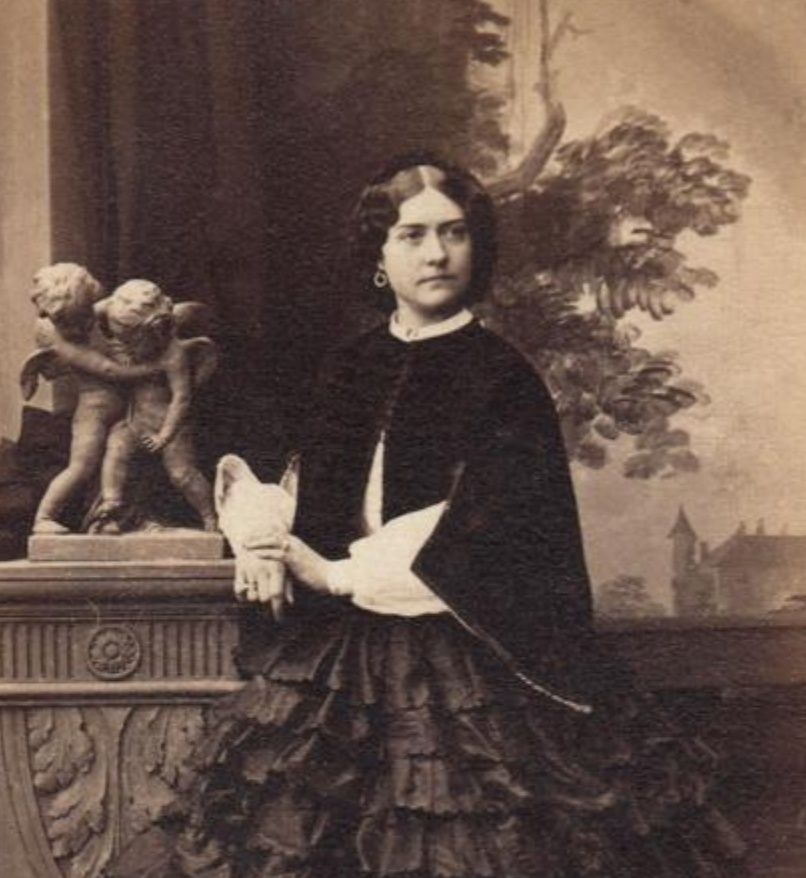
He married, on the 4th of February 1863, Harriette Wilberforce Bird, (who also happened to be his cousin), the daughter of William Wilberforce, and Peploe’s aunt, Hannah Elizabeth. It should have been a long and happy marriage.
Unfortunately, Harriette died barely 3 months after her wedding day on the 10th of May, of “brain fever” with her widowed mother succumbing to “‘pleuropneumonia” two days later. Peploe never recovered from the shock; he left the army two years later after an accident (he was dragged by his horse) had left him blind. When is eyesight partially recovered, he began his career as an artist roaming the world and adopting “Bohemian ways.” While his sculptures found their way into the home of Sir James Hills and the painter Keeley Halswelle, his paintings found little commercial success. Her death tormented George for the rest of his life. In 1902, his friend Wilfred Blunt observed,
“Yesterday I went to see poor Peploe Brown (the painter) and found him strangely altered. He has been paralysed for some years and is now a little wizened old man, quite helpless in his chair, but preserving all his old powers of talk. He sits there a pathetic figure in his studio in York Place surrounded by canvasses of gigantic size, the monuments of ancient failures in his art, blind and alone but for the devotion of a manservant who waits always within call. This man, Fred, deserves a medal of gold if ever a servant did, for he puts his whole soul into his service, and 1 fancy even without wages, for Brown is almost penniless. Poor Brown, what a terrible life! yet he does not complain because he can still see light out of the corner of one eye, also he suffers no pain, and he sleeps well.”
In 1909 he died alone in his flat, found by his manservant Fred and his brother George – “He had been left to sleep one evening, and when Fred and the brother came back in the morning they had found him sleeping still, but he was dead.” To their surprise, despite his growing poverty, Peploe had paid for a storage room for the past 46 years where he had kept all of his dead wife’s things – her jewellery, crinolines and ornaments, right down to the very furniture they had kept in their first and only home together. A worn-out photograph of her was found next to his heart and he was buried “with a number of small treasures” in Kensal Green Cemetery.
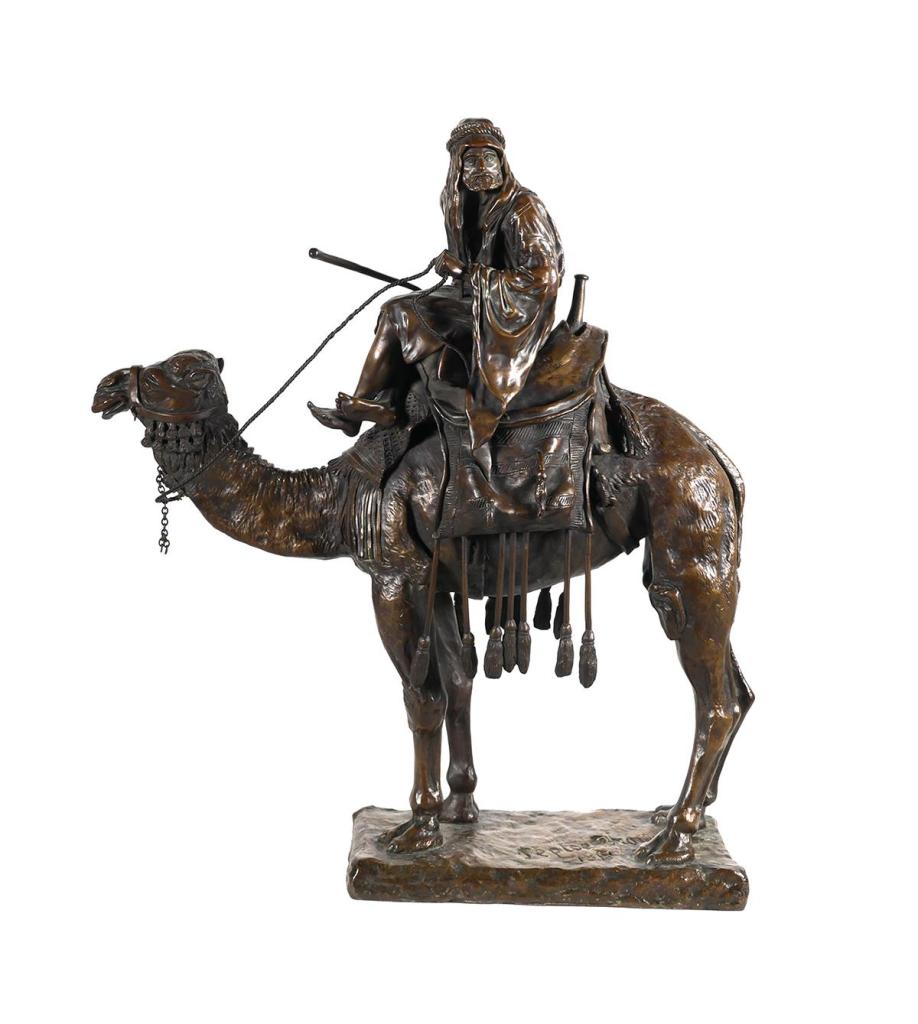
Horace Cowley, (Addiscombe, 1855 to 1857) was by all estimation, an artist like Peploe, but would never see the realisation of his work. The Mountain Battery, to whom Horace was attached in 1873 was involved in some rather precarious work:
“March 14th on the Sind Frontier from injuries caused by an explosion whilst blasting a rock in the narrow Pass between Deyra and Sowee Point, Captain Horace Cowley Brown Royal Artillery and Assistant-Surgeon S. Carswell 3rd Regt Sind Horse, deeply regretted. “
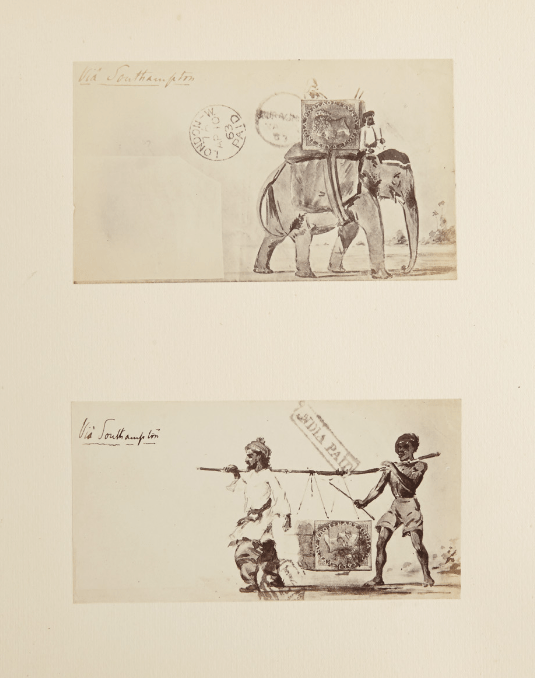
Into this ecelectic mix of artists, civil servants, linguists, authors and clergymen, comes Francis David Millet Brown, the second son of George Francis, just 3 years older than poor Peploe, but perhaps his inspiration to join Addiscombe. Afterall, at the age of 20, Francis would win the Victoria Cross.
Sources:
Annand, A. McKenzie. “Colonel Francis David Millett Brown V.C.” Journal of the Society for Army Historical Research 50, no. 201 (Spring 1972): 29–41. https://www.jstor.org/stable/44223020.
Blunt, Wilfrid Scawen. My Diaries: Being a Personal Narrative of Events, 1888-1914. London: Martin Secker, 1919.
Cave-Browne, J. The Venerable John Henry Pratt, Archdeacon of Calcutta: A Sketch. Calcutta: Thomas S. Smith, City Press, 1872.
Chowdhury, Subhankar. “Tale of Neglect at Cradle of Education in Bengal.” The Telegraph India, January 3, 2019. https://www.telegraphindia.com/west-bengal/tale-of-neglect-at-serampore-cradle-of-education-in-bengal/cid/1680800.
De Rozario, M. The Complete Monumental Register: Containing All the Epitaphs, Inscriptions, &c. &c. in the Different Churches and Burial-Grounds, in and about Calcutta. Calcutta: Printed by P. Ferris, 1815.
Dictionary of National Biography. Vol. 7. London: Smith, Elder & Co., 1886.
Gott, Richard. Britain’s Empire: Resistance, Repression and Revolt. London: Verso, 2011.
Hodson, V. C. P. List of the Officers of the Bengal Army, 1758–1834. Part I. London: Constable & Co., 1927.
Innes, P. R. The History of the Bengal European Regiment, Now the Royal Munster Fusiliers, and How It Helped to Win India. London: Simpkin, Marshall & Co., 1885.
Long, James. Handbook of Bengal Missions, in Connection with the Church of England in the Presidency of Bengal. London: John Farquhar Shaw, 1848.
Mukherjee, Subhadip. “Henry Martyn’s Pagoda.” Indian Vagabond (blog). September 24, 2021. https://indianvagabond.com/2021/09/24/henry-martyns-pagoda/.
Mukherjee, Subhadip. “Serampore College.” Indian Vagabond (blog). October 9, 2021. https://indianvagabond.com/2021/10/09/serampore-college/.
O’Connor, Daniel. Chaplains of the East India Company, 1601–1858. London: Continuum, 2012.
Prinsep, H. T. A General Register of the Hon’ble East India Company’s Civil Servants of the Bengal Establishment from 1790 to 1842. Calcutta: Ramchunder Doss, 1844.
Stocqueler, J. H. Memoirs and Correspondence of Major-General Sir William Nott, G.C.B. 2 vols. London: Hurst and Blackett, 1854.
[Thomas, J., comp.] The Bengal Obituary: Or, a Record to Perpetuate the Memory of Departed Worth. Calcutta: W. Thacker & Co., 1851.
 Mutiny Reflections
The photograph of Harriette Wilberforce Bird suggests she was determined.
LikeLiked by 1 person
It is always interesting to find photographs of people we write about. Although I have not done much about the Birds as yet, there is so much more to discover and explore. She came from very out-spoken people, I wonder what her life would have been, had she and Peploe been allowed to have a future.
LikeLike