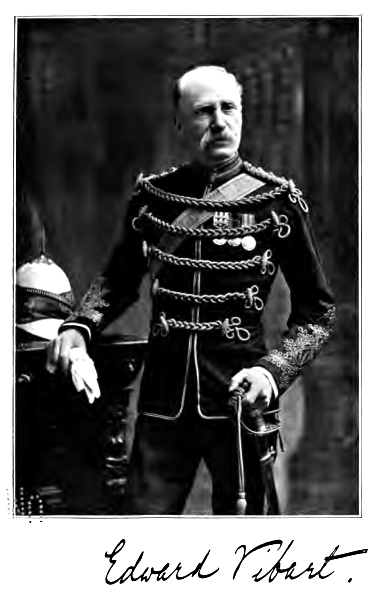
“This action was one of the prettiest engagements I have ever witnessed, as it was fought on one of those bright November days so typical of the commencement of the cold season in the North-West Provinces of India, with a crisp, invigorating feeling in the air, and a perfectly cloudless sky. As there was no dust to obscure the view previous to the collision, the contending forces could be distinctly seen approaching each other from either side of the plain, an interval of less than a mile separating one from the other…” (Vibart)
As soon as this cloud of dust appeared, Gerrard immediately formed up his column behind a hill; the Carabineers formed to the right, next the Guide cavalry; then moved on a wing of the 7th Sikh infantry, next six light-artillery guns; in the centre up formed the 1st Fusiliers and heavy 18-pounders, followed by a company of the Guide infantry and the 23rd Sikh infantry; again four light Sikh guns, while still to the left was Lieutenant J.B. Lind commanding the Multani Horse. When Gerrard directed them to form up on the left of the line, there was not enough room to do this at first, and Lind was ordered to go around the hill on the left and cross it with all haste. Seeing this was impossible, Lind hastily returned and formed his men into position.
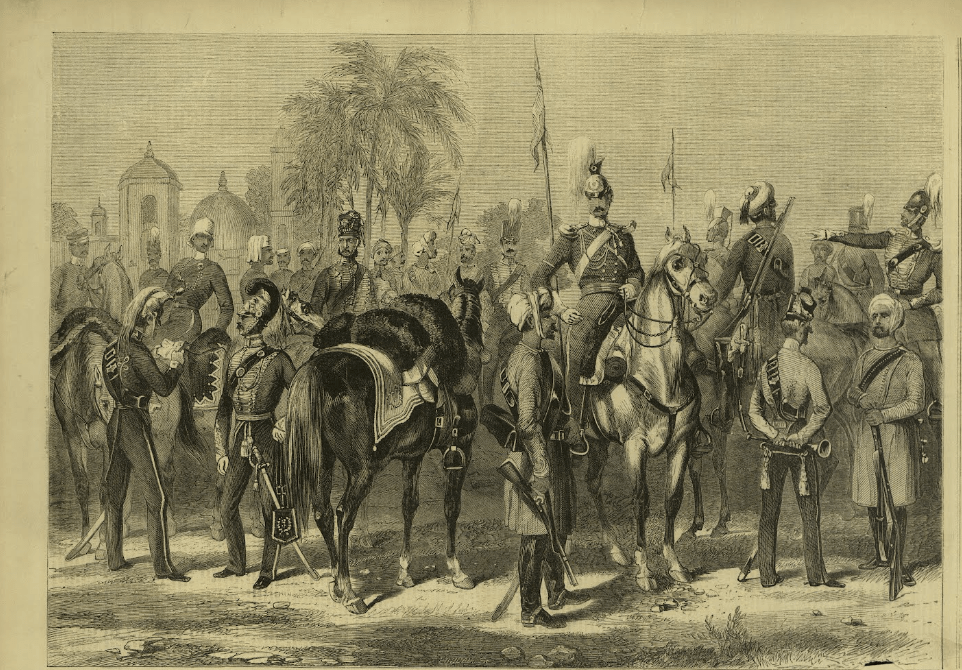
In this order they advanced, the infantry in quarter distance column, at deploying distance, Gerrard riding in front of the of the left flank of the 1st Fusiliers.
“Ah! There goes a vidette. He was one of the Guides, an upright rider with a firm seat and fine cast of countenance for a fighting man, by the name Shah Pussund Khan. On he goes, cantering quietly, as if for a pleasant morning ride; now he halts, rides a little to the right and left, and seems as though he saw enough to enable him to bring a correct report. Something now strikes the ground near him and raises a little cloud of dust. Ah! Here, he comes back without any hurry and says his say. In the meantime, numerous horsemen could be seen at the edge of the dust moving across our front from left to right; and about this time, bang goes the first gun of the enemy- high, high! None hurt, God be thanked! Again and again. Ah! There some of our brave artillery are down, and that grape was fearfully close to the Carabineers. But now begin our little pounders to reply, three to one of the enemy, so quickly are they worked. There goes the grape, crashing amongst their horse, and at last outspeak the eighteens and nice little 8-inch howitzer ( Gillespie’s pets ) in voice of thunder. “
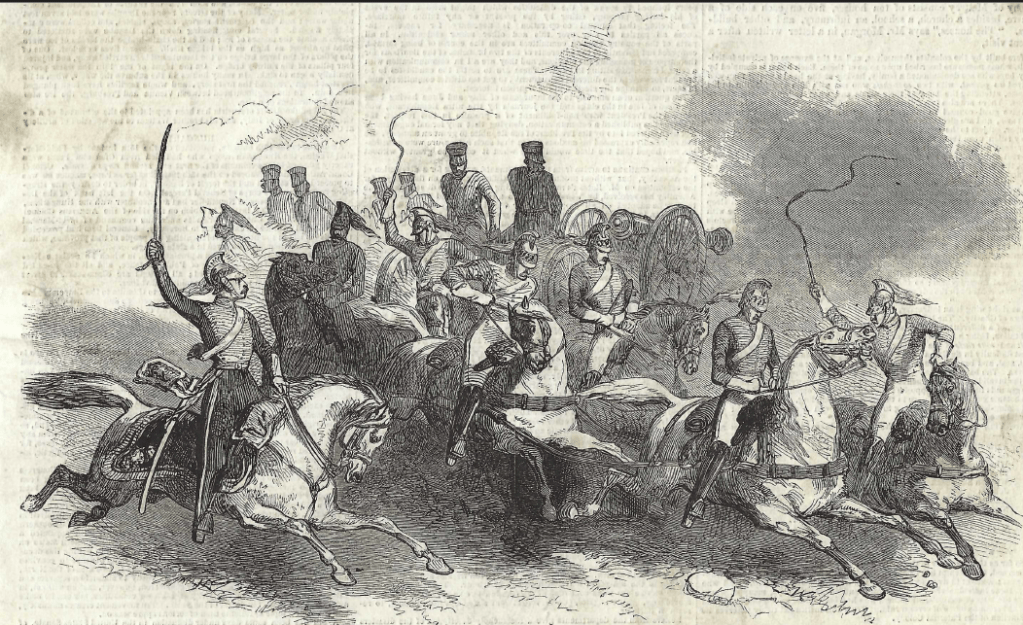
After going 100 yards, the rebels saluted Gerrard with a volley from three guns, with round shot, grape and shrapnel. Gerrard gave the order to deploy into line on the double and for the guns on both flanks to advance, while the heavy guns immediately returned fire. After five minutes, when the firing had slackened a little, the Carabineers and the Guides were ordered to charge by Captain Wardlaw, while the whole line continued a rapid advance, and then the infantry was ordered to lie down until the cavalry returned.
“But what is going on to the right? Ah! There go the Carabineers and Guides. What a charge of horse! How the dust rises, and now the two clouds mingle; the enemy charging down to meet our men, and nothing can be seen for dust except a strange sparkling in the air…The tulwar alone is used, and the expert must be the sabreur who comes back scatheless. The charge was commenced by Mahomed Khan Ressildar, a man who has gained for himself the “Order of Merit” and who, seeing a warrior ride out ahead of the enemy, at once advanced to meet him. On the dash- bright flash the sabres – they pass…’Shabash-hurrah! ‘- shout the Guides as they gallop forward, led by Kennedy, who this day proved himself the worthy son of a worthy sire. The Carabineers are now at work, sweeping up, a wall of horse under Wardlaw; on the go, with momentum sufficient to break all before them, and do so, for the enemy evidently don’t like such customers in such a line, and so avoid them as much as they are able, paying more attention to the Guides.”
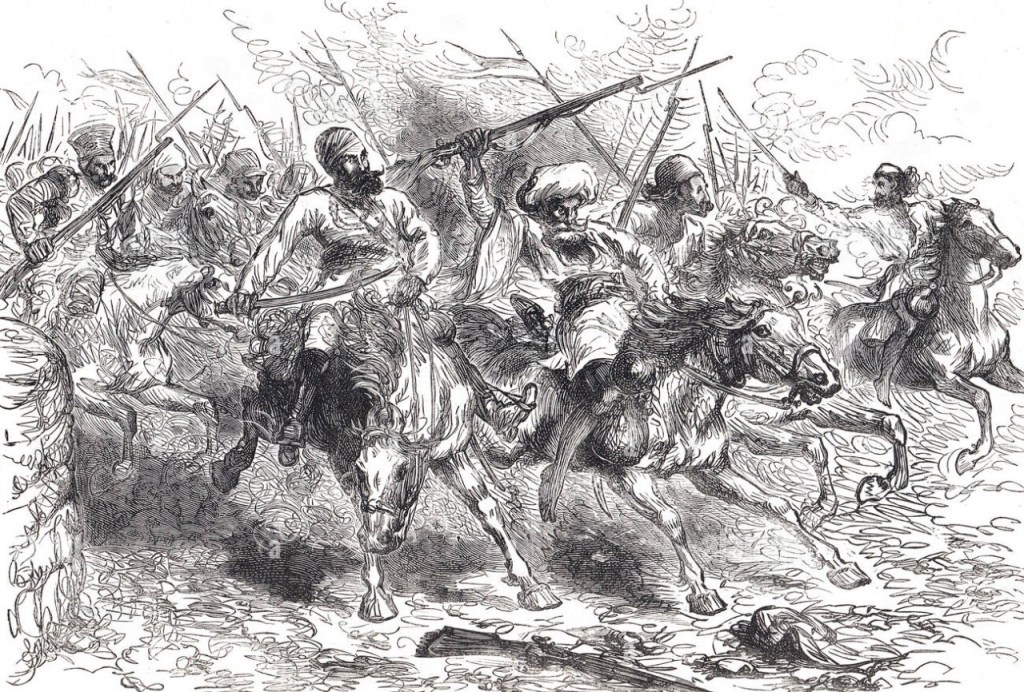
Kennedy, injured in the bridle hand and unable to guide his horse with the mastery needed in a clash of this nature, still managed to turn his horse’s head in the right direction just as he was attacked by a rebel cavalryman – Kennedy swept his sword up and unhorsed his foe. The sowar jumped to his feet without a moment’s hesitation and dashed at Kennedy, but a Carabineer, at the ready, came up from behind and knocked the sowar down with the hilt of his sword, flooring the man senseless, saving Kennedy.
The rebel cavalry met the shock of the Guides and Carbineers with all gallantry but, notwithstanding their bravery, were overpowered and pushed back; the Guides and the Carabineers wheeled around after their pursuit and swept along the whole front, charged through the guns, and cut down any gunner who still held their ground. Then, in perfect order, they returned to their position. The rebels had
“fought with the courage of despair, though they exposed their lives with resolution which forbade the thought of yielding, they were fairly borne down.” The infantry leapt to their feet. The cavalry had but momentarily disconcerted the rebel artillery, but their infantry was seen advancing on the left flank – they quickly retook the guns and opened fire on the advancing 1st Bengal Fusiliers, greeting them with grape that wounded Lieutenant Wallace and three other men and killed one man named Griffith. However, the Fusiliers now came up with a run, reached the guns after two rounds had been fired and recaptured them.
Meanwhile, Lind on the left had advanced in line to within 200 yards of the rebels. He then ordered the Multani Horse to charge, but to Lind’s surprise, his men did not advance and held back. He suddenly found himself amid the rebels with no support. “Lieutenant Humphrey, Field Engineer, who this day acted as aide-decamp to Gerrard, on joining these men on the left, and finding this hesitation at coming to conclusions with the enemy to exist, to encourage them rode ahead, and, single-handed, was quickly in contact with the rebel horse; then the Mooltanees charged, and a sharp contest ensued. Humphrey was, however, cut down, receiving a severe wound in his right arm, one slight one on the left side of the body, while a third entirely divided his leather helmet and thick turban which covered it, fortunately without injuring his head.” Only the advance of the Multanis saved him from death, and they captured two 9-pounders with their limbers.
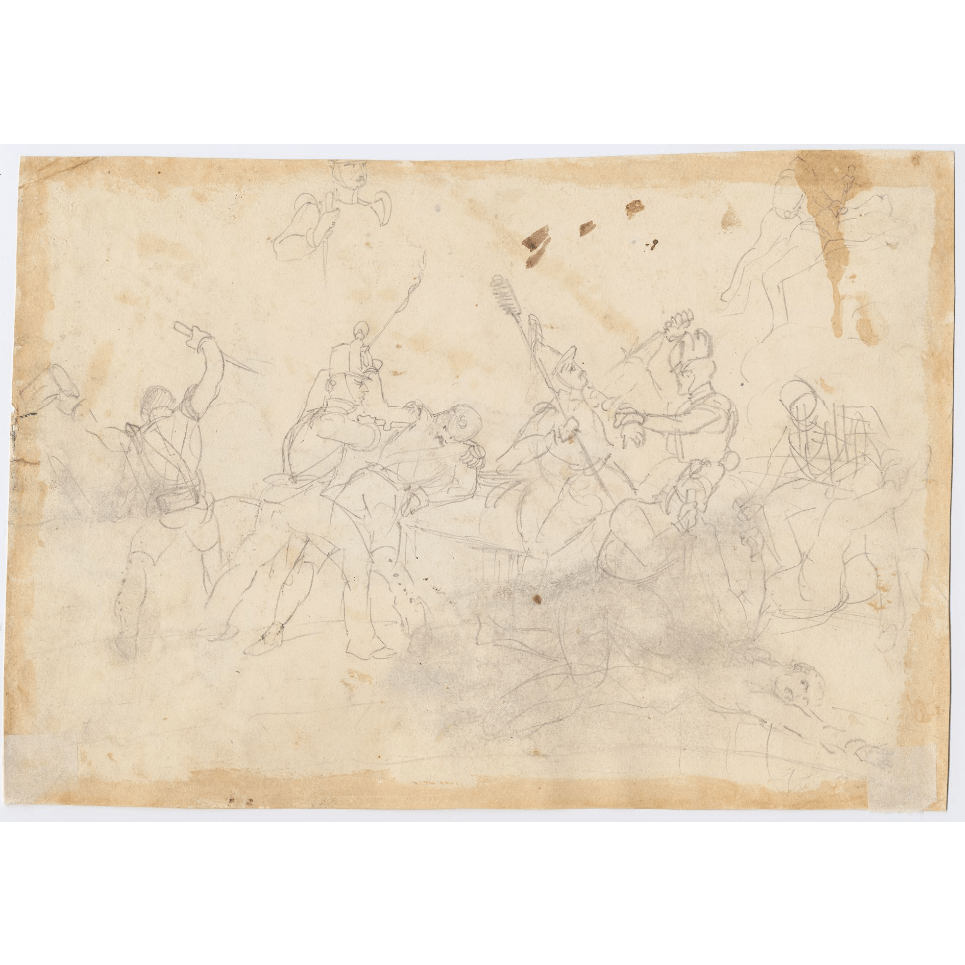
The whole force now advanced, and the fight, which had until now been a show of cavalry, became a general melee. The Horse Artillery pushed to the front and poured volley after volley of round shot, grape and shrapnel and the rapidly disintegrating rebel force who now scrambled to find shelter behind the walls of gardens and broken ground off to the left under cover of which they were attempting to return to their camp. As the force advanced, it was seen that the ground was monumentally uneven, caused by steam that ran through the gardens with the banks covered with brushwood and trees.
At the nullah, Lieutenant G.G. Pearse, commanding cavalry of the Haryana Field Force, was wounded in two places, and command now devolved to Lieutenant Hamilton. The guns could not cross the nullah diverged to the right and took up a position near the Horse Artillery guns, while the 23rd Punjabis and Patiala Infantry, in company with the 1st Fusiliers, crossed and advanced towards the rebel camp.
“On turning up from the left, the Artillery got into a ploughed field, which was separated from the road by a mud wall fully three feet high. At this, Dawes’s troop, this day commanded by Captain Cookworthy, rode at full gallop. On they come over to the leaders, nicely both together, next follow the centre pair, and lastly, the wheelers take the leap; then, with a sort of kick and a bump, over goes the gun onto the hard road.”
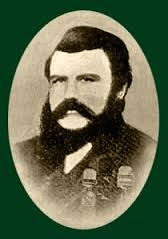
Colonel Gerrard, who had ridden in front the whole time, was the only man – except his orderly, Captain Osborn – who was dressed in red; everyone else had opted for khaki. Here he sat on his white Arab, his coat resplendent with medals, his grey hair and handsome face pointing towards the battle – he pushed forward, watching his men, until he came to the stream and the wooded bank. On this bank, he drew up his horse, still directing his men to the other side. Suddenly, Lieutenant Hogg, seated on his horse next to Gerrard, pointed out a man on the opposite bank who was just then taking aim at Gerrard’s rather conspicuous figure. He fired, but the shot went wide. Hogg entreated the colonel to move back – Gerrard replied he would, in a minute, but he had to see what was going on. His Brigadier-Major, G.N. Money of the 1st Fusiliers, who had just had his horse shot under him, was standing close to the colonel. The first shot had passed over Money’s head and, thinking it was a careless shot from one of the Sikh regiments, called out, “Look out where you are firing! You nearly hit us!”
Meanwhile, the man had reloaded and fired again. The shot struck true, and Gerrard, turning around, his arms hanging by his side, looked about to fall from his horse. Money grabbed the colonel and lowered him to the ground. Gerrard only whispered, “I’ve got it, I’m afraid I’m done, it’s gone clean through me.” Money laid Gerrard down on the ground, mounted his horse and went to fetch the doctor. Dr. Broughman arrived and looked over Gerrard’s wounds – as Gerrard had said, the shot had gone straight through his side, ripping him to shreds. There was no hope of recovery and nothing the doctor could do. Gerrard died two hours later.
“Only a few minutes previous…Colonel Gerrard, highly elated at his success, had been engaged in animated conversation with Captain Cookworthy regarding the able manner in which the officer had handled his battery throughout the engagement, and then, having given some further directions for its advance in pursuit of the fleeing rebels, he was in the act of cantering off, when, turning around in his saddle, he shouted to Cookworthy, ‘This will be a C.B. for me; and anyhow, you may depend upon my not forgetting you!‘
On Gerrard’s death, command of the column devolved upon Captain Caulfield (3rd BNI, doing duty with the 1st Fusiliers), who, as the next senior officer, took charge. The 1st Fusiliers would be commanded by Lieutenant MacFarlane, a young officer of only six years of service. Caulfield, however, was too busy to take his sudden promotion too much to heart. He was leading the 1st Fusiliers, charging the rebel camp and followed by the Punjab Infantry, captured two more guns – the rebels, however, returned in force and took back not just the guns but the camp and again opened fire on the advancing column. Lind’s Multani Horse, unsupported, tried to bring the two guns off but failed as the rebels now opened fire off to the left. One man was severely wounded, and Lieutenant Ellis was struck by grapeshot, which “fortunately turned upon the handkerchief in his breast.” Amid the fracas, an elephant was struck by a six-pounder shot; the ball did not penetrate its hide, but it rampaged, trumpeting in rage through the increasingly confused field.
“The Indians fought back furiously and stood their ground. The British artillery fire nevertheless broke their backbone and split their force into two parts – engaged in the close-quarter battle and the other fleeing to go out of the range of the British guns. Meanwhile, Kishan Singh and Ram Lai, the two best Indian commanders, received musket shots and died. This disheartened the Indians, and they retreated.” (Yadav)
Caulfield immediately sent up two companies of the 1st Fusiliers and two companies of the Punjab Infantry, with a party of the Carabineers and Guides to take the guns back.
“From some mistake, we were all ordered back to the Horse Artillery guns out of the enemy camp, when we were surprised by a round shot, coming thud amongst us, fired from one of the guns we had just taken, and the enemy seeing we had left it had come out and took it again, upon which I was ordered to command 2 companies of ours to go and take it and as the only officer with 2 companies, I thought this was a rather grand command. However, it happened it was not a very difficult thing to do, as I advanced under cover of a large mound without their seeing me, and when I appeared and poured a volley at them from 50 yards off, they all cut like blazes into the serai…” (Warner)
They had managed to grapple one into their control, but the rebels pushed off the other one and withdrew it to a well-built serai with strong walls. Warner remained behind now to guard the gun.
Caulfield was not that easily thwarted. He ordered the Guide Infantry under Lieutenant Ward to advance “gradually upon them,” occupying as they moved along the tops of the interceding houses, with the heavy guns taking up the rear. Caulfield waited to move up the light guns to the left- he had seen a large body of men suddenly appear on the right – not certain if they were “friends or enemies” he fortunately held off – the men proved to be on his side.
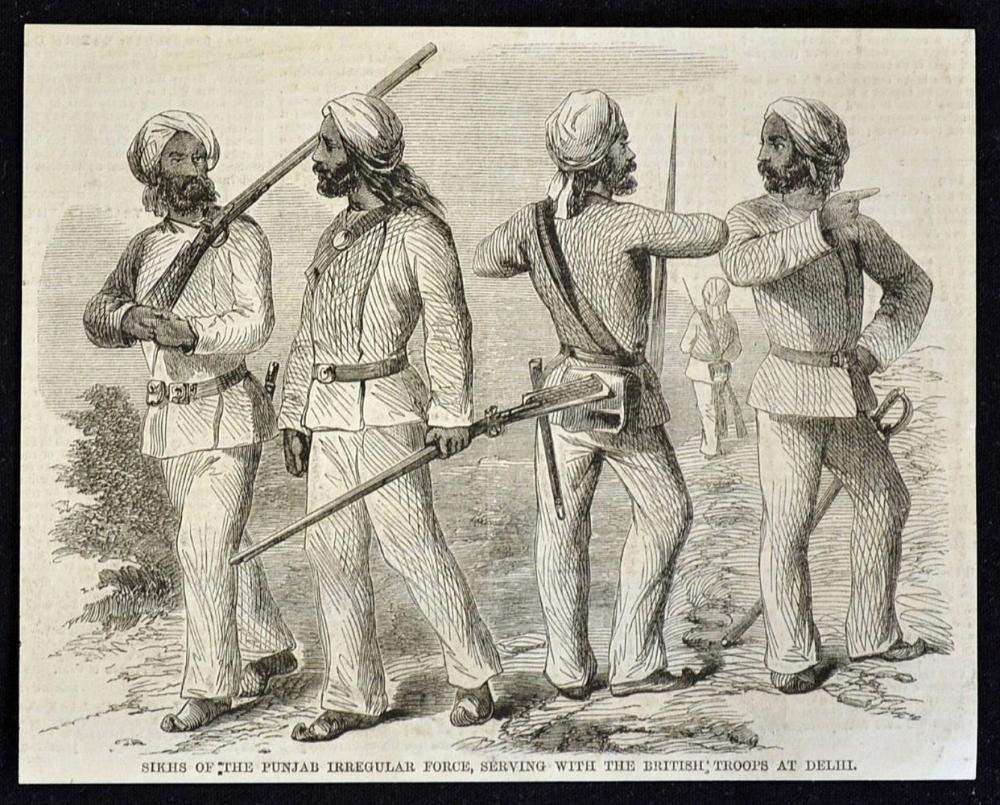
The cavalry detachments under Captain Wardlaw were ordered to protect the right flank while the attack on the serai and the camp were going on; rebel cavalry continued to show up intermittently in the rear and to Wardlaw’s right, but as soon as he made a charge, they turned off. Caulfield ordered Wardlaw to support the attack on the camp – as soon as it was taken, Wardlaw sent Lieutenant Vyse and Captain Hamilton with a body of the Irregulars in pursuit of the errant rebel cavalry – the Multani Horse off the left, having gotten over their fright, fought now with renewed vigour, and Lind was able to report his men had taken down 30 rebel sowars, the rest were in full flight leaving Narnaul, their baggage, stores and camp, behind them.
“The heavy artillery and infantry fire confused the Indians, and they ran pell-mell in all directions. Mostly, they retreated to the town and hid in the buildings. The pursuit of the fleeing soldiers was quick and inexorable, and they were very soon driven out of the town after a little fighting.” (Yadav)
The light guns Caulfield ordered around to the left of the serai where there was only a single door; the other one, which opened out onto the streets, was a strong, double one. By the time the guns were in position, the Guides had taken possession of a high roof that commanded the serai and opened fire. The rebels now rushed out, rapidly abandoning their last position. With their concentrated fire, they obliged the rebels to quit the serai.
As soon as Caulfield received the news, he ordered the guns to cease firing, allowing the Fusiliers and the 7th Punjab Infantry to advance on the serai, take the gun at the door and kill anyone left inside the enclosure. One man, lagging behind his fleeing compatriots, was shot down by Lieutenant Frank Brown while three others sought refuge in a small turret on the wall.
“Orders were given to the Sergeant-Major to send up some of our men to despatch the Sepahis in the turret: when Private McGovern, who was standing near, said, ‘I’ll go Sir, by myself;’ and, suiting the action to the word, ascended a little staircase at the main gate. The Officer then told the Sergeant-Major to send at least half a dozen men. but he replied, ‘ Oh, never mind, sir; he’ll be no loss.’ McGovern, it seems, heard this remark and determined to do the work by himself: so he mounted the narrow staircase and reached the top of the wall, where the three Sepahis were waiting for him. These fired at once, but McGovern, jumping down a couple of the steps, escaped unhurt, and, before the enemy could reload, he, mounting the steps, shot the man in front and, rushing on the other two, bayoneted them without giving them time to recover. Private McGovern, who had already won the Victoria Cross on June 23rd, 1857, was a well-known character in the Regiment, his reckless, dare-devil acts being the talk of the Army; and had he been as abstemious as he was brave, he would have been of sterling worth.”
The column had advanced three miles during the day – by the time the serai was taken, it was late, and darkness had fallen. Seeing pursuit was now impossible, Caulfield ordered the Fusiliers, the Guide Infantry and the Punjab Infantry to hold the serai overnight, while Captain Stafford with his force was ordered to bivouac in the abandoned rebel camp. The Battle of Narnaul was over. Early the following morning, Caulfield cleared the city with a party of Fusiliers, but it was deserted. They found three dismantled guns, one of which was so old, he ordered it destroyed. The rebels, in the meantime, had dispersed and fled – Caulfield sent a party in pursuit under Captain Wardlaw, who followed them nearly as far as Kanti in the Muzaffurpur district, but he never came across a single man who had been at Narnaul.
Malleson wrote,
“It was a gallant conflict. Never did the enemy (Indians) fight better. There was neither shirking nor flinching. Never was there a charge more gallant, and certainly, never were the British cavalry met so fairly or in so full a swing by the rebel force.”
It was the end of the Jodhpur Legion. Their last fight had been a valiant one, and they had fought hard in a battle that would prove to be their most gallant- but ultimately, they were dispersed. The finest irregular troop ever seen, once the envy of officers throughout India for their excellent discipline and their marvellous horses, vanished out of existence. After the battle, the men who had fought so valiantly on the 16th of November 1857 and survived disappeared, never to be seen again.
As for the column – they returned to Delhi and reformed. The 1st Fusiliers had not seen their last battle – they were off to join Sir Colin Campbell on his final assault of that much-belaboured city, Lucknow.
Sources:
Behan, T. L. Bulletins and Other State Intelligence for the Year 1858. Vol. I. London: Harrison & Sons, London Gazette Office, 1860.
Buckland, C. E. Dictionary of Indian Biography. London: Swan Sonnenschein & Co., Lim., 1906.
Bush, June. The Warner Letters: The Experiences of Two English Brothers in India, 1833-1857. London: Joseph Biddulph, 2008.
“The First Bengal European Fusiliers.” Blackwood’s Edinburgh Magazine 83, no. 512 (June 1858): 719–40.
Hodson, V. C. P. List of the Officers of the Bengal Army, 1758–1834. Part II. London: Constable & Co., 1928.
Holmes, T. Rice. A History of the Indian Mutiny. 2nd ed. London: W. H. Allen & Co., 1885.
Innes, P. R. The History of the Bengal European Regiment, Now the Royal Munster Fusiliers, and How It Helped to Win India. London: Simpkin, Marshall & Co., 1885.
Malleson, G. B. History of the Indian Mutiny, 1857-1858, Commencing from the Close of the Second Volume of Sir John Kaye’s History of the Sepoy War. Vol. II. London: Wm. H. Allen & Co., 1879.
Vibart, Edward. The Sepoy Mutiny as Seen by a Subaltern, from Delhi to Lucknow. London: Smith, Elder & Co., 1898.
Yadav, K. C. The Revolt of 1857 in Haryana. New Delhi: Manohar Book Service, 1977.
 Mutiny Reflections