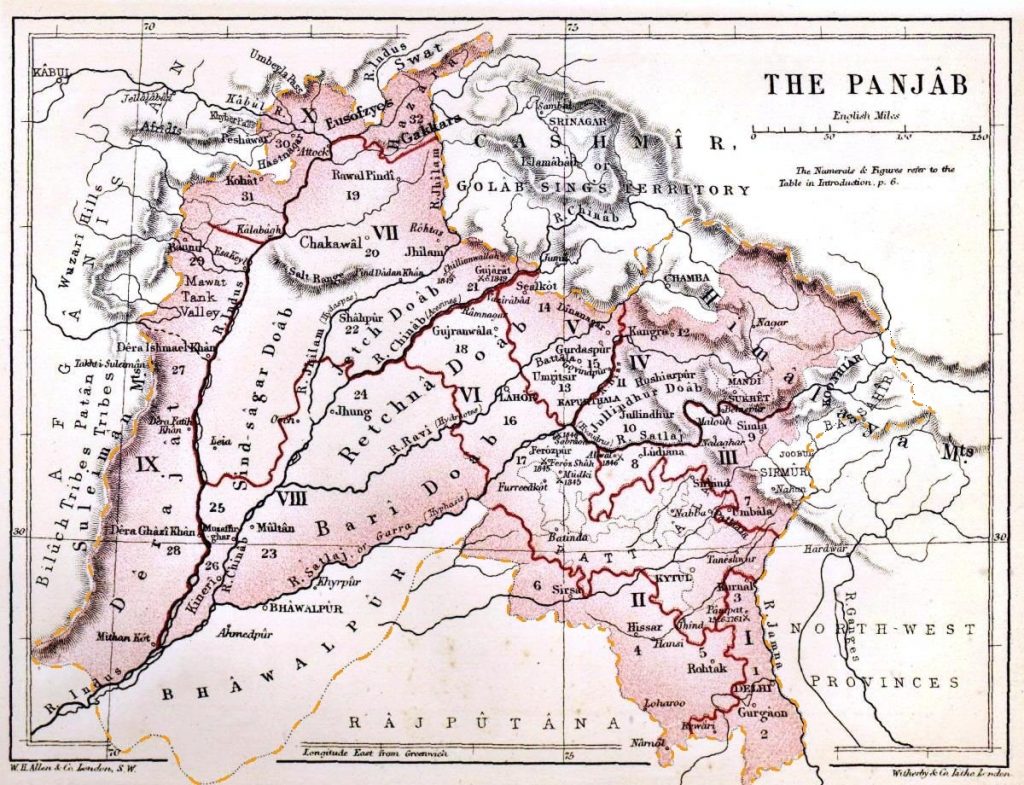
The Moveable Column under John Nicholson was in Phillour, 200 miles distant from Rawalpindi. Towards the end of June, on intelligence received, Lawrence called on Nicholson to bring the column back up – on the 28th of June, with two corps, the 33rd BNI and the 35th BNI were disarmed at Phillour. He then left the 33rd, under the watchful eye of Tulloh’s newly raised 21st Punjab Infantry at Jallandar, along with some men of the Karputhala Raja. He then took the 35th LI over the Beas River and dropped them at Jundhiala, one march away from Amritsar, thus bringing the Column to Amritsar. As such, no one could understand what Lawrence was doing, and he was condemned for wasting valuable time. The Column should have been well on their way to Delhi, instead, they were hopping around the Punjab at Lawrence’s behest. Fortunately, John Lawrence was not a man who particularly cared for the opinions of other mortals. His word, where the Punjab was concerned, was law in itself.
At the start of July, Lawrence still had the 58th at Rawalpindi, the 14th at Jhelum, the 46th at Sealkote with a wing of the 9th Cavalry ( the other wing had been sent with the Moveable Column), the 59th at Amritsar, the 4th at Kangra and Nurpur, the 2nd Irregular Cavalry at Gurdaspur – against these armed regiments all he had was HM’s 24th at Rawalpindi with a battery, the 52nd Light Infantry was off with the Moveable Column and a few locally raised Punjabi levies. He could not move HM’s 81st as they were tied down in Lahore keeping an eye on the disarmed corps, and the troops at Peshawar were otherwise occupied. A further Moveable Column composed of detachments of HM’s 24th, Captain Miller’s Police Battalion Horse and Foot was hastily organised to be despatched should any regiments in the Jhelum area mutiny. To relieve the companies of the 58th at Rawalpindi from temptation, the treasury and jail were taken from their control and handed over to the Police Battalion.
Their Fate is Sealed
To bring some relief to Jhelum, it was decided that the 39th Regiment needed to be moved away from the station. In the middle of June, they were sent by a very circuitous route, following the left bank of the river, where all communication with the station was cut off, and the dak link did not exist. The regiment was told they were to be engaged against a petty but lawless chieftain and, as such, marched without a murmur. To prevent any junction with the mutinous 46th BNI, who were guarding the treasury at Shahpore, the Shahpore detachment was sent out of the way before the 39th reached the station, thus ensuring the 39th continued to march to their intended destination, Dera Ismail Khan. A small party of 33 men had been left behind at Jhelum; while they would subsequently follow the example of the 14th NI, the rest of the regiment quietly gave up their arms to their commander, Colonel MacDonald, without a murmur.
Shortly after the departure of the 39th, the small party of Europeans arrived in Jhelum. They only remained a short time, but it appeared to have a good effect, and they were able to remove the native battery to Lahore, where they would shortly after be disarmed. All that was left now in Jhelum was the 14th Bengal Native Regiment. Regardless of what the officers of the 14th believed, Major Clement Brown did not believe in any remonstrances of fidelity from the 14th. Intelligence from various sources, each independent of the other, that there were two parties in the regiment. One, harking after the mutiny, the other, for biding their time.
“Then came the nightly meetings at which first one and the other opinion prevailed the debate; the turbulent party were ready to seize and pretext for flinging the regiment into mutiny, and at one time nearly succeeded in doing so, because there was some delay in the issue of pay from the non-receipt of the abstracts…”
Major Brown informed Colonel Gerrard to apply immediately for the pay in anticipation – however, the state of affairs could not continue, and finally, John Lawrence deemed it necessary, well before any overt act of mutiny had been committed, to disarm the regiment.
Unlike in other stations, this too was not done in haste. Firstly, the 14th was weakened. Two companies were sent to Rawalpindi on detachment duty, and then, in one stroke, the intention was to disarm both the 58th and the 14th simultaneously. However, before this could be achieved, on the 1st of July, John Lawrence sent a little force, consisting of three companies of the HM’s 24th (260 strong) under Lieutenant-Colonel Ellice, three horse-artillery guns under Captain Cookes and 150 of Miller’s Police Battalion, with sealed orders. Their orders were to proceed down from Rawalpindi, where they would form a junction on the 3rd of July with the Multani levies under Lieutantn Lind (460 cavalry and 250 infantry). Lind was then to place himself and his men under Ellice’s command. On the morning of the 6th of July, they reached Deenah, one march from Jhelum. Here, Ellice opened the sealed orders – he was to proceed to Jhelum and disarm the 14th NI. Colonel Ellice wasted no time in detaching half of the Multani Horse, sending them off in advance with orders to proceed through the cantonments and then over the river to dispel any suspicion; they were then to guard the opposite bank. Ellice then rode into Jhelum himself to consult with Colonel Gerrard to make arrangements for the disarming of the 14th the next day.
HM’s 24th had been having a hard time of things. At the beginning of the outbreak, they had been ordered to march Wazirabad from Peshawar, but owing to the state of things in Peshawar, they were ordered back on the 8th of June. Then, three companies under Major Woodhouse were ordered off the Attock, possibly the least hospitable place in India in terms of heat, where they boiled and kicked up their heels for nearly a month. As soon as the detachment left with Ellice, the remainder were shifted to Rawalpindi by forced marches. On the first night, they marched 30 miles, but with no carriage available, 12 men died of apoplexy and heat stroke before they reached their first camp. The detachment was fairing only little better, and as things would show, their appearance in Jhelum would not have the effect anyone hoped for.
The Disarming of the 58th and the 14th at Rawalpindi
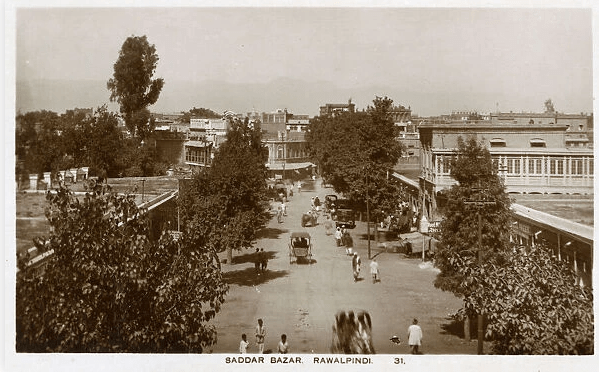
At Rawalpindi, the 7th of July dawned, harsh and bright.
“There was a brigade of all arms – four companies of the HM 24th, the three remaining guns of the Horse-Artillery, some of Captain Miller’s Mounted Police, and the 58th NI with 2 companies of the 14th NI all drawn up in the open space between the European barracks and the church…”
The men had been told they were to hear a general order read – “that the heirs of soldiers killed in action would receive pensions “- the secrecy of the disarming was so complete that not even the native officers suspected the parade was anything more than had been implied. The order was read.
“The Brigadier (Colonel Campbell of the Artillery) gave the word for the infantry and artillery to wheel to the left. Round went the 24th, round thundered the guns, down crashed the trails of the limbers – and off broke the sepoys!”
At the risk of their lives, the European officers dashed after their men, trying to stop any panic and to persuade them to lay down their arms peacefully. Thoroughly shocked, the 58th complied, and as soon as they arrived in their lines, at the behest of their officers, the sepoys gave up their arms. Not so the two companies of the 14th.
They took to their heels and were soon seen fleeing towards the city, muskets in hand. Miller’s Mounted Police went in pursuit, and Captain Miller was injured, a musket ball breaking his arm. Several sepoys were cut down by the horsemen, yet the rest managed to escape from Rawalpindi. Unfortunately for them, by previous arrangement with the surrounding villages, a price had been set for just this case – by the morning of the 8th of July, their heads were brought in expeditiously for the collection of the promised reward. If any of the men of the 14 survived, they were never seen or heard from again.
If the men of the 14th at Rawalpindi are anything to go by, it can only be apprehended that the disarming at Jhelum would hardly be a simple affair.
 Mutiny Reflections
Hi Jason. Thank you for your comment, unfortunately it appears a little odd – is this what you meant to send? Best wishes, Eva
LikeLike
Hello Eva
<
div style=”-webkit-text-size-adjust: auto;”>
<
div>I
LikeLike