William Connolly at Jhelum
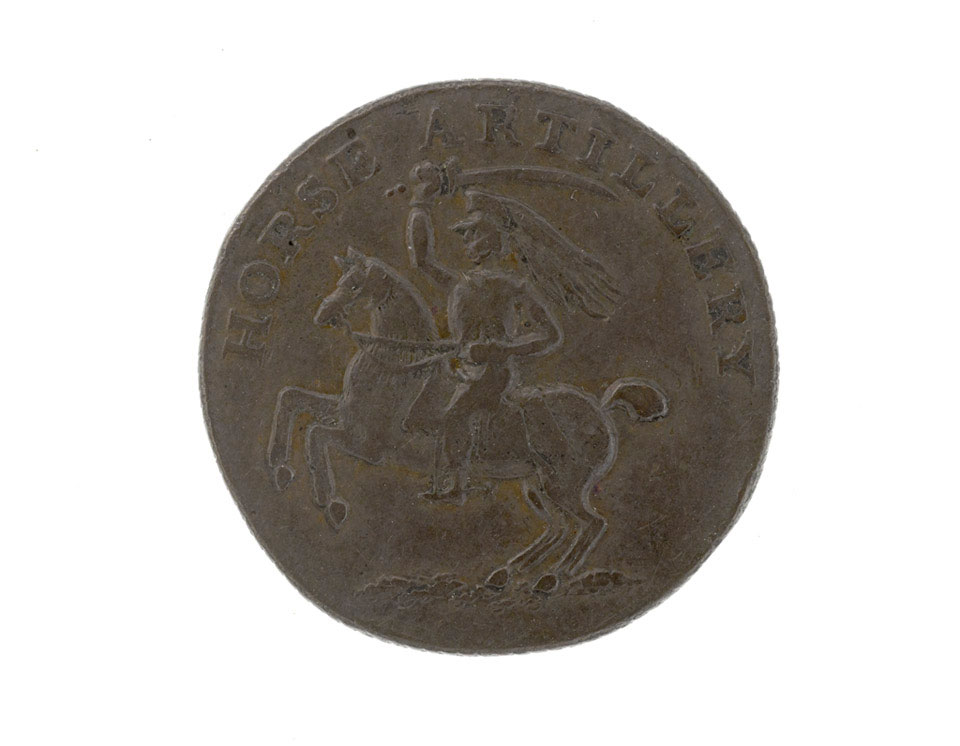
https://collection.nam.ac.uk/detail.php?acc=1982-03-48-1
In 1816 in Liverpool, a child was born — his family history is unknown, and no baptismal record exists for him. His parents, who might have been Irish, named him William.
William Connolly likely came from humble beginnings, but he was employed as a stableman at the time of his enlistment At the age of 21 in the Bengal Horse Artillery. Whether it was a rush for adventure or perhaps the want for a better life, we cannot know what led William Connolly to board the Exmouth the same year and sail off to India. As a gunner, William Connolly began his 21-year army career far from home.
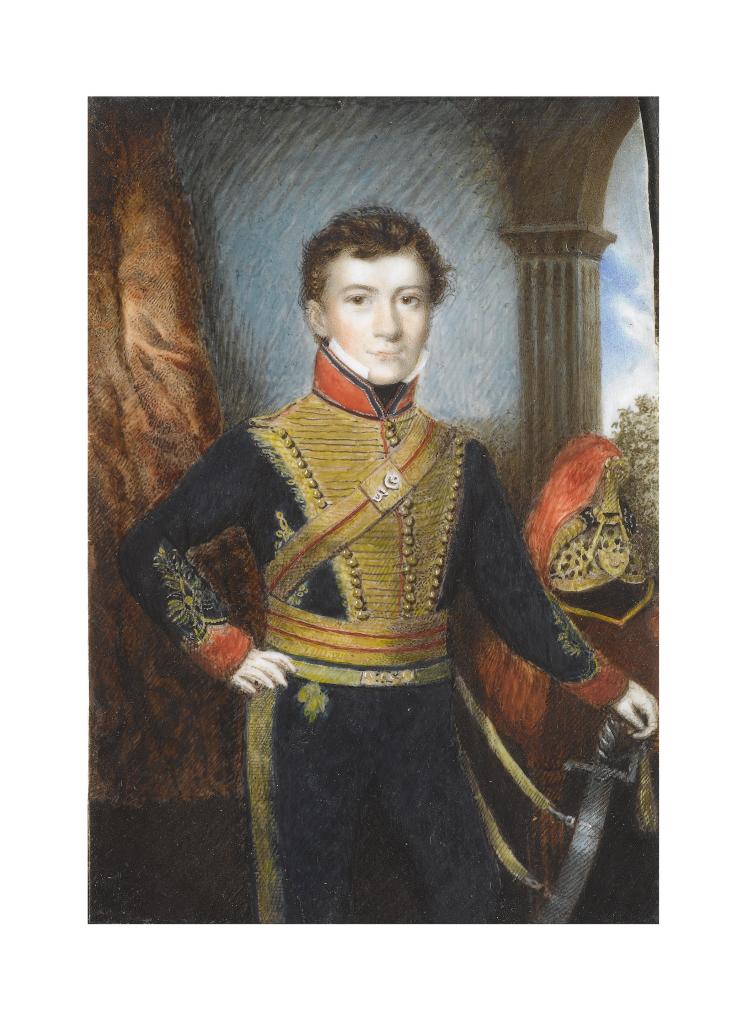
The first troop of Bengal Horse Artillery had been raised in 1800 as an “experimental brigade” that was intended to accompany the expedition against Napoleon in Egypt the same year. The 2nd Troop was formed in 1809 at Agra and, unusually for the time, the majority of the other ranks were Europeans and the Battery was mounted “to ensure greater manoeuvrability.” Shortly after, the Bengal Rocket Troop was raised in 1816. The Rocket Troop initially was a camel-mounted unit that carried a total of 912 six-pound rockets drawn on horse trolleys or on buckets on camels. Perhaps realising the rather reluctant nature of the average camel, in 1817 they switched back to horses. The 3rd Brigade, to which William would eventually belong, was formed as the 3rd Troop around 1809.
The Bengal Horse Artillery had been formed to give quick fire support to the EICo armies, and in the first half of the 19th century, they were to be found doing just that in every form of warfare conceived. Their service included the 2nd Maratha War, the Gurkha War, the Siege of Hathras in 1817 in the Pindari Campaign, the 1st Burma War, the 1842 Retreat from Kabul to Gandamak in the 1st Afghan War and both Sikh Wars.
“Armed with the lightest of guns, which were effective only at very short ranges, and exploiting their super mobility, they could be seen galloping into action in front of the long scarlet-clad line of Bengal Infantry. Resplendent in their laced jackets and brass-mounted Roman helmets, the Troops of the Horse Artillery would gallop forward with the cavalry and come into action, shattering an enemy countercharge with deadly salvos of case shot. It was the age of panache on the battlefield, when men fought and died in their guilded accoutrements. It was the age of rigid discipline in close-order drills and great lines of battle drawn up to face each other 100 yards apart. It was one in which battlefields were shrouded in drifting powder smoke and the balance hung on the ability of soldiers to endure a sudden and daunting number of casualties and still retaliate with parade ground precision.” (History of L (Néry) Battery, https://www.lneryoca.org.uk/page_322792.html)
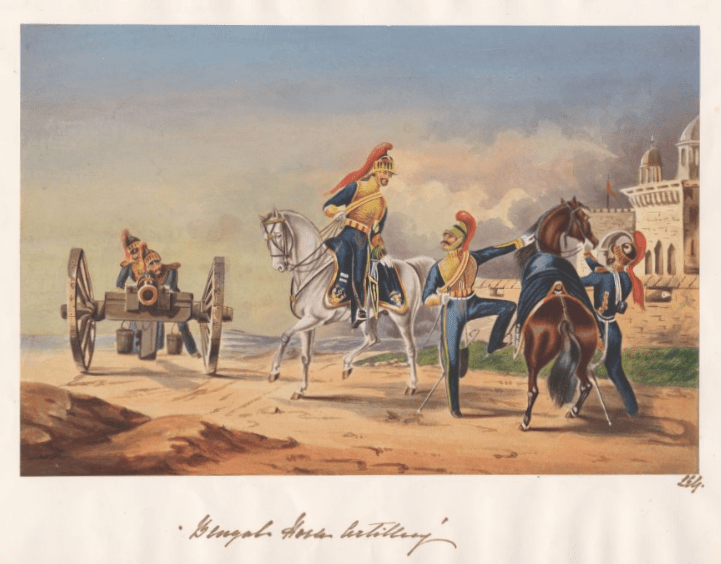
When Lord Roberts, then in the Bengal Artillery and serving as ADC to his father, first came across the Bengal Horse Artillery in 1852, their appearance impressed him so much that he resolved “to leave no stone unturned in the endeavour to become a horse gunner.” In Roberts’ estimation, “…its esprit was great, and officers were proud to belong to this corps d’elite. It certainly was a splendid service; the men were the pick of those recruited by the East India Company; they were of magnificent physique, and their uniform was singularly handsome.” In 1854, he transferred to the Bengal Horse Artillery. Perhaps one of the men he had seen was William Connolly, but that, of course, is mere speculation.
In 1857, the Bengal Horse Artillery would be found in practically every conflict through the next 2 years — on the 7th of July 1857, 3rd Brigade, 1st Troop, was at Jhelum and with them was Gunner William Connolly.
The battle as we have seen, was not the overwhelming triumph it could have been — Ellice had underestimated the 14th NI and all but ignored John Lawrence’s plan of a surprise disarmament, Gerrard, until the very moment his men opened fire on him, implicitly believed the 14th would go quietly, the 24th quickly lost their commander, a captain and three lieutenants to injury, part of the Multani troops were raw recruits armed with matchlocks and in the midst of this, the artillery was trying to do what they did best. The sepoys of the 14th were seemingly prepared for just such an event — they had positioned themselves well; they had loopholed the walls of their huts, had secured the quarter-guard and took advantage of any cover the walls of the surrounding buildings afforded them. As such, the grapeshot hardly told on their defences, and the sepoys were picking off not just the infantry but the artillery with frightening precision.
In his report, Lieutenant Cookes wrote:
“…about daybreak on that day I advanced my half troop at a gallop and engaged the enemy within easy musket range. The spongeman of one of my guns having been shot during the advance, gunner Connolly assumed the duties of second spongeman…”
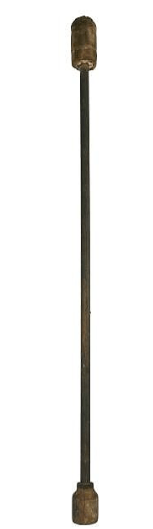
The duty of a spongeman was to clear away any burning fragments from the gun, to prevent it from exploding while it was being reloaded. For this, he would have had a sponge-rammer – a long pole – one end of which was covered with lambswool, which would be soaked with water from the sponge bucket and inserted into the cannon for putting out the remaining embers. The other end was the rammer, which was used to place the artillery round all the way to the breech of the barrel. The firing of the gun was in itself a rather complicated procedure but a well-trained gun crew knew their place and purpose.
“…and he had barely assisted in two discharges of the gun when a musket ball through the left thigh felled him to the ground.; nothing daunted by pain and loss of blood, he was endeavouring to resume his post when I ordered a movement in retirement and, though severely wounded, he was mounted on his horse in the gun team and rose to the next position which the guns took up and manfully declined to go to the rear…”
Wounded, Connolly continued to man the gun.
“About 11 o’clock, when the guns were still in action, the same gunner, while sponging, was again knocked down by a musket ball striking him on the hip, thereby causing great faintness and partial unconsciousness for the pain appeared excessive, and the blood flowed fast. On seeing this I gave directions for his removal out of action; but this brave man, hearing me, staggered to his feet and said, “No, sir, I’ll not go there whilst I can work here” and he again resumed his post as spongeman.”
During the fight, the sepoys were flushed out of the lines and the quarter guard, but they were far from defeated. They now took up a new position, still 300 strong, in the village of Saemlee. Again the guns were brought up. Cookes quickly remonstrated that the guns were too close to the walls and “the sepoys, safe behind the walls and houses, picking off the gunners with fatal precision, while the grape spent itself on the mud walls or passed over their heads.” However, there was nothing for it. The fight went on.
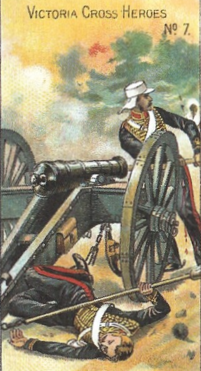
“Late in the afternoon of the same day, my three guns were engaged at 100 yards from the walls of a village with the defenders, namely, the 14th native infantry — mutineers — amidst a storm of bullets which did great execution. Gunner Connolly, though suffering severely from his two previous wounds, was wielding his sponge with an energy and courage which attracted the admiration of his comrades, and while cheerfully encouraging a wounded man to hasten in bringing up the ammunition a musket ball tore through the muscles of his right leg; but with the most undaunted bravery he struggled on, and not till he had loaded six times did this man give way, when, from loss of blood, he fell in my arms and I placed him on a waggon, which shortly afterwards bore him in a state of unconsciousness from the fight.”
It is with some astonishment that Gunner William Connolly survived not only his wounds but retained his limbs – no amputation was required, and he eventually recovered. He was gazetted for the Victoria Cross on the 3rd of September 1858 for his gallantry in action. He received his medical discharge in 1859, the same year he received his VC, at the age of 43, having completed 21 years and 3 months of service. He returned to England onboard the ship “Alfred” and went back to Liverpool. When he retired, he was noted as being 5’7” tall, with brown hair and eyes, possessing a “fresh complexion” and an “indifferent character.”

It is here the story of William Connolly becomes rather confused. Unfortunately, in later history, he was misidentified as an impoverished labourer ( who was named William CONNELL) and resigned to the annals of history as a beggar who died in the Walton Workhouse. It is time, then, to change the story of William Connolly VC.
Instead of the poverty-stricken beggar, or even worse, “out-of-work cripple” (Brian Best) William Connolly lodged with relatives and could live comfortably enough on his army pension. He never married and had no children; selling his VC was a way of improving his financial standing rather than a cry of desperation. It was bought by Charles Winter at an auction in 1886 for £10. In a quest for a remedy for the effects of his wounds sustained at Jhelum, William Connolly endorsed a remedy in 1883, as seen here:
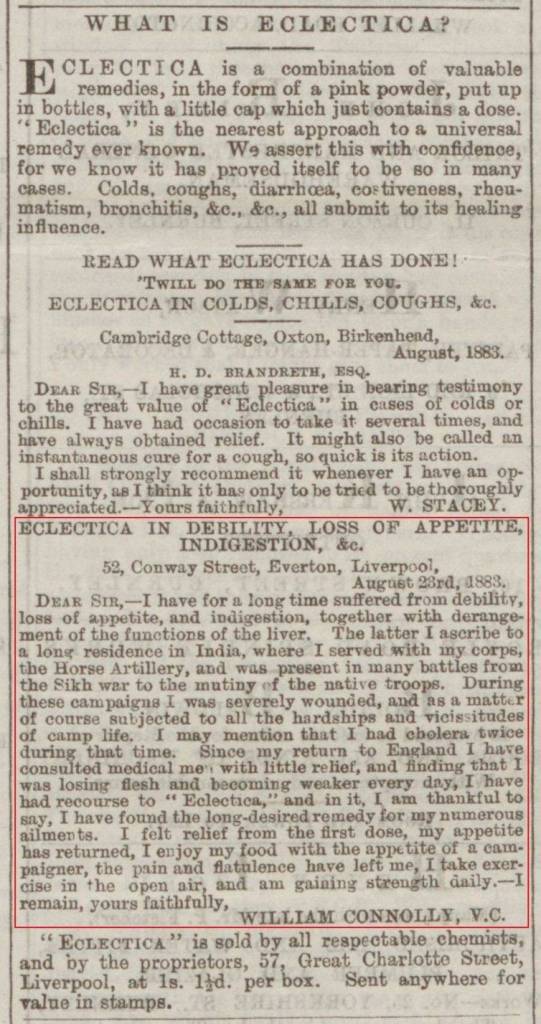
It is hardly likely an impoverished, crippled beggar would have been writing endorsements. When he died in 1891 of bronchitis, William Connolly was living with the Johnson family at 14, Westminster Road, Kirkdale, Liverpool. He had a deposit at Great Homer Street Post Office Saving Bank and a will (yes, William left a will) in which he made provisions for his own funeral and left £37 12s to his friend and doctor, Thomas Hill. William Connolly, it would appear, even at the end of his life, had his connections in place. The solicitor in his probate was none other than Henry Quilliam, who had been in practice in Liverpool since 1878. This is the same Quilliam who would embrace Islam in 1887 during his travels to Morocco while recovering from an illness. He changed his name to Abdullah Quilliam. In 1889, he established Britain’s first Muslim institute and mosque in Liverpool.
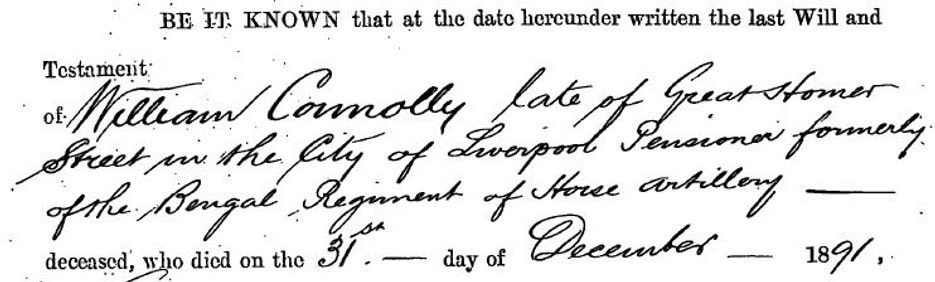

William Connolly was buried in a public grave, which has unfortunately been misconstrued as a pauper’s grave. It is important to note that these are not the same. A public or common grave is where the right to burial cannot be purchased and requires only the payment of the internment fee. A pauper’s grave, on the other hand, was a funeral for a person with no or limited financial means and was paid for under the Poor Law. William paid for his internment and, prudent to the end, he saved the money a private grave would have cost him and chose a common grave.
Sadly, the tale continues to be spun that William was left in poverty without a penny to rub together – it seems unfortunate that the man who shone so brightly on the field in Jhelum should be resigned to a history that does not do justice to the man. So, in the spirit of change, let us remember William Connolly, the prudent pensioner living in Liverpool who died a decent death, and not the myth.
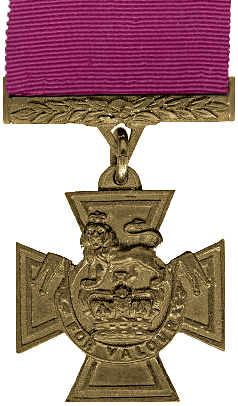
His medal resides comfortably at the British in India Museum in Nelson, Lancashire, England.
This post would not have been possible without the kind support of Colin Holland at
https://merseysidebiographypages.weebly.com/william-connolly-vc.html and his wonderful research into the life of William Connolly. Mr. Holland takes an in-depth look into the available records and asks questions that historians, who have been spinning the Connolly in poverty tale ad infinitum, should have taken the pains to introduce into their writing. I am indebted to Mr. Holland for the extracts thus published in this work (probate, will and Eclectica endorsement)- these can be found on the site linked above.
Sources:
https://merseysidebiographypages.weebly.com/william-connolly-vc.html
Buckle, E. Memoirs of Service in the Bengal Artillery from the Formation of the Corps to the Present Time. Edited by J. W. Kaye. London: W. H. Allen & Co., 1852.
Cave-Browne, J. The Punjab and Delhi in 1857. Vol. 2. Edinburgh: William Blackwood and Sons, 1861.
Cooper, Frederic. The Crisis in the Punjab: From the 10th of May until the Fall of Delhi. London: Smith, Elder and Co., 1858.
Punjab Government. Mutiny Reports: Reports on Events in the Cis-Sutlej Division. Vol. 8, Part 1 of Selections from the Punjab Government Records. Lahore: Punjab Government Press, 1911.
https://wiki.fibis.org/w/Bengal_Horse_Artillery
https://www.lneryoca.org.uk/page_322792.html
https://rigarcwmuseum.tripod.com/BatteryPages/cannondrill.html
https://vcgca.org/our-people/profile/1004/william – The London Gazette of 3 September 1858, Numb. 22179, pp. 4014-15
https://www.memorialstovalour.co.uk/vc135.html
https://www.bbc.com/news/uk-england-merseyside-33024686
https://www.liverpoolfootprint.co.uk/connolly-w
https://liverpoolexpress.co.uk/search-for-vc-heros-family/
For the gallery of the placing of a memorial stone for Gunner William Connolly at Kirkdale Cemetery:
https://www.liverpoolecho.co.uk/news/liverpool-news/gallery/forgotten-liverpool-vc-hero-william-10076599
placement
 Mutiny Reflections