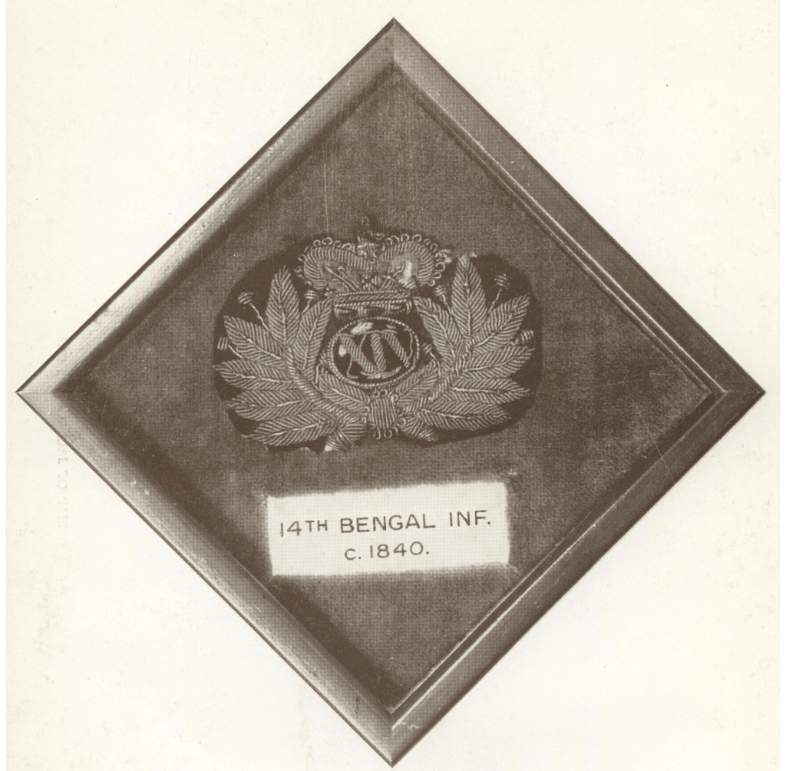
14th Regiment of Bengal Native Infantry, it is made of gold wire
on to black cloth and styled somewhat in the manner of a naval officer’s
cap-badge, the constituent parts being a wreath of laurel leaves, a roundel
bearing the Roman numerals XIV, and (surmounting the whole) the
Victorian crown.
With a view to preservation, the badge has been mounted on buff
velvet (this colour having been that of the regimental facings) and
enclosed in a diamond-shaped wall-frame painted scarlet. (https://www.jstor.org/stable/44230521)
The 14th Bengal Native Infantry – Escottan-ki-Pultan
Battle Honours : Seringapatam, Maharajpur, Ferozeshur.
- 1764 raised 20th Battalion by Captain Scotland
- 1764 ranked as 16th Battalion
- 1765 posted to the 2nd Brigade
- 1775 renumbered the 11th Battalion of Bengal Native Infantry
- 1781 became the 5th Regiment of Bengal Native Infantry
- 1784 became the 10th Regiment of Bengal Native Infantry
- 1796 became the 1st Battalion 10th Regiment of Bengal Native Infantry
- 1824 became the 14th Regiment of Bengal Native Infantry
- 1857 mutinied at Jhelum 7 July
In 1861, the title was handed to the Regiment of Ferozepore, which became the 14th (The Ferozepore) Regiment of Bengal Native Infantry in 1864. They would later be known as the 14th (Ferozepore) Regiment of Sikh Infantry.
The 14th BNI had been raised as the 20th Battalion in 1764 as a consequence of the Nawab of Oudh supporting Mir Mohammad Kasim. It was deemed necessary to form two further battalions of sepoys – the 20th was raised at Jellasore (Jaleswar) in Orrisa by Captain James Scotland in March 1764. Scotland had only received his captaincy 4 months earlier and had first visited India as a midshipman. On a second voyage to Calcutta, he joined the army. While it is possible he was present as an ensign during the Manipur expedition of 1762 and at the capture of Patna in 1763, Scotland was not a long-lived soldier. The honour of raising a regiment would be one of his last exploits. He resigned his commission in 1766 and returned home. He died “near Edinburgh” on the 8th of June 1772.
However, his regiment lived on. In 1775, they were renumbered the 11th and then only 6 years later, the 5th Regiment. Three years later, the designation was changed again, and they became the 10th Regiment and, in 1786, the 10th Battalion. Ten years later, this, too, changed. Until 1824, they would be known as the 1st Battalion, 10th Regiment; coupled battalions of the Bengal Army were then reshuffled into distinctive one-battalion regiments, and until they mutinied Jhelum, they were known as the 14th Regiment of Bengal Native Infantry. Throughout it all, and much to the honour of Scotland, the corps continued to be known as Escotten-ki-Paltan, or Scotland’s Regiment. They had fought far and wide in their short history, as the 1/10th they gained their first battle honour at Seringapatam in 1799 for which they were allowed to embroider a star of their Colour. As the 14th, they were present at Maharajpur during the 1843 Gwalior War and at Ferozeshur during the 1st Anglo-Sikh War. These, too, were subsequently added to their regimental colours.
In July 1857, the 14th BNI was stationed at Jhelum, Rawalpindi Division, in the Punjab.
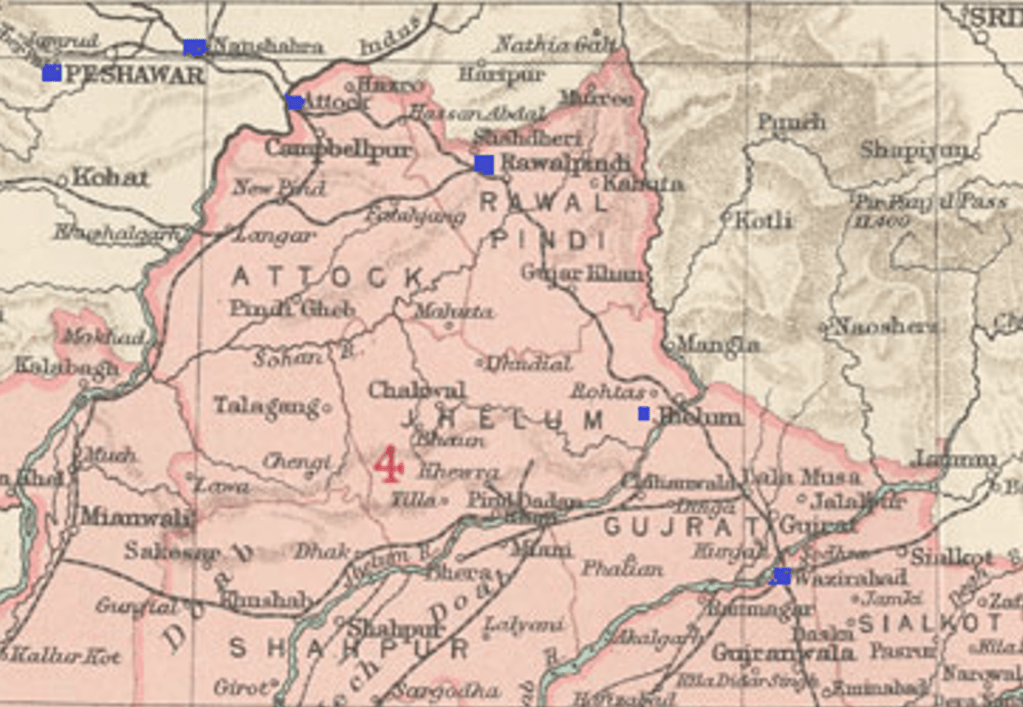
Of all these regiments, the 14th had been eyed with suspicion for some time – already in May, Lawrence’s spies had been actively at work, bringing him worrying reports about the state of the 14th. They were, in his estimation, not to be trusted. As far as the station was concerned, resistance would have led to swift capitulation; had the 14th decided to rise, there was not a single building in Jhelum capable of resisting cannon and only a handful of European officers.
The troops at Jhelum were almost entirely Poorbeahs and consisted of the 14th and 39th NI and Major Knatchbull’s native field battery. The first intelligence of the outbreaks at Meerut and Delhi reached Jhelum on the 13th of May. However, not the ones to despair, Major Knatchbull was completely convinced of the fidelity of his men, Colonel Gerrard was assured the 14th BNI harboured no mutinous desires, and Colonel Macdonald of the 39th, with a little more reserve, firmly believed his men would never fire on their European officers. The Deputy-Commissioner, Major Clement Browne, tried to send away the ladies; they refused to go; he then proposed the letters of the 14th should be intercepted as this move could force the hand of the 14th. As such, Browne ordered the Magazine be kept as a rendezvous, situated midway between the civil and military stations. If the 14th did mutiny, at least the remaining officers could hope to find some safety in the only defendable building in the station, although it too was hardly built to withstand a determined artillery attack. As such, “anxiety was the order of the day…” and all eyes turned to the government.
Before we can move further into the events in Jhelum, we need to understand the affairs in Punjab.
The State of Affairs: May- July
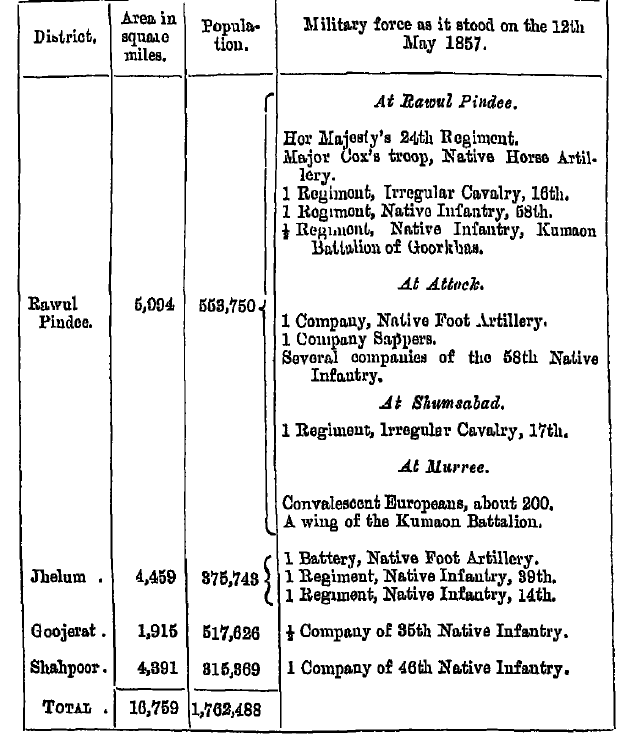
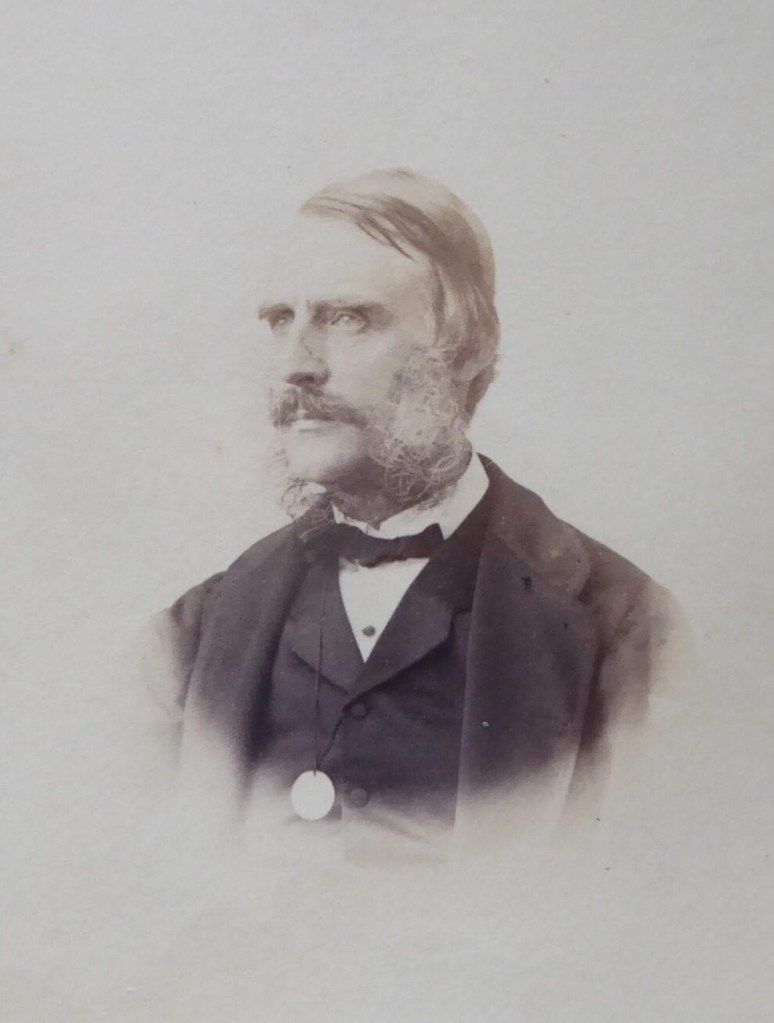
Sir John Lawrence was under no illusions where the troops of the Bengal army were concerned, particularly those in the Punjab. He had managed to outwit them in Lahore; other regiments had felt the wrath of retribution at Peshawar.
 Mutiny Reflections
Hi Jason. Thank you for your comment, unfortunately it appears a little odd – is this what you meant to send? Best wishes, Eva
LikeLike
Hello Eva
<
div style=”-webkit-text-size-adjust: auto;”>
<
div>I
LikeLike