The Southern Maratha Country
““If you allow the insurrection to come down to our borders without attempting to check it, we shall almost deserve our fate.” – So wrote Lord Elphinstone on the 22nd of June.
The Southern Maratha Country comprised the area between Satara and the Madras Presidency to the north and south and between the Nizam of Hyderabad’s territories and the western ghats to the east and west, an area of some 14000 square miles and a population of three million. Within this space were the collectorates of Belgaum and Dharwar, the native state of Kolhapur and several other semi-independent states, the principal of these being Sangli, Miraj, Savanur, Kurandwar, Jamkhandi, Nargund and Mudhol. The political charge of this country was in the hands of George Berkley Seton-Karr, a strong advocate for the native princes. He believed in their right to adopt and firmly believed that the less interference the EICo made in the local customs and traditions, the better. Unlike many of his contemporaries, Seton-Karr was “… one of those men who, whilst possessed of a firm and decided character, yet preferred to try to their fullest extent the arts of persuasion before having recourse to intimidation or violence.” He had, however, only been commissioner of the southern Maratha country for barely a year, having taken up his appointment in May 1856. When he arrived, he found a general sense of discontent and anger. Act XI of 1852 was striding its way across the southern Maratha country as well, in which all landed proprietors had to produce title deeds of their estates. What the government failed to (or not, as the case may be) recognise was that the landholders, besides being unacquainted with the law and still accustomed to considering a thirty-year possession of a holding was as good as outright ownership, were now suddenly being forced to produce documents, which they simply did not have.
“Chiefs who, in the anarchy which prevailed in India subsequent to the death of Aurangzib, had won their estates by the sword, had not been careful to fence them in with a paper barrier—in that age utterly valueless—but they had transmitted to their descendants the arms and the retainers who had constituted their right to possession, and with whose aid they had learned to consider mere titles superfluous, as without it they were contemptible.”
Some had acquired land in the mad rush that followed the fall of the last Peshwa -they had passed their acquisitions into the names of their children, but for proof had nothing more than an entry in a village account book. In either case, the overseeing commission, known as the Inam Commission, made it simple – confiscation was the only outcome, and they went ahead with it. In the southern Maratha country, 35000 estates, both large and small, had been called in front of the commission, and their cases would be seen by a tribunal. 21000 estates were summarily confiscated, and when Seton-Karr arrived, he was faced with thousands of as-yet un-evicted landowners whose cases were still pending. Considering the fate of their neighbours, it was no wonder they viewed the Inam Commission as an instrument of EICo tyranny. However, in their excuse, it can be said the commission was attempting to right a few wrongs too; thousands of landowners who had been forced to relinquish their possessions through violence and fraud in the chaos which followed the collapse of the Peshwa’s government were also looking for justice and hoping the commission would restore what had been stolen from them. Into this rampant mess stepped Seton-Karr.
He also had to contend with angry princes facing annexation, with the government stoutly refusing to accept adopted sons. Dalhousie was alive and well in the southern Maratha states; what the Inam Commission did not manage to confiscate, outright annexation would take care of the rest. A common dread, observed Seton-Kerr, was producing common sympathy, and the country was ripe for rebellion.
Within a few weeks of his arrival, it was clear that discontent was rampant in the country, and it did not take Seton-Karr much longer than that to figure out the cause.
“He found, in fact, that in almost every instance the landowners had been grievously wronged. The influential chief of Nargund had been denied the rights of adoption in terms which—owing to the faultiness of the translation of the original English—added insult to injury. Other landowners of ancient lineage, and possessing weight in the country, were found by Mr Seton-Karr estranged from their loyalty by the causes to which I have adverted—the Inam Commission and the withholding of the right of adoption—and plunged in moody mistrust of the Government.”
Unfortunately, it was not in his power to rein in the Inam Commission or restore the right of adoption; all he could hope for was reconciliation. Embarking on an extended tour, he visited every landowner and listened to their complaints. More than that, he could not do; he met them with explanations of what the government was doing, and for those who had been particularly hard hit by the tribunals, Seton-Karr went out of his way to express his profound sympathy. Although it did little in the way of changing their lot, he tried to make them understand that there was a commissioner who was willing at least to listen; a friend of sorts in a government that had done nothing but cause them grief. Seton-Karr managed to stave off a war with diplomacy, and had he had the time, he might have been able to address the government itself; however, he would soon have the mutiny to contend with.
The news of the mutiny had an electric effect on the southern Maratha country. The Mohammedan landowners were quick to band together, believing the wretched government was gone; the Hindus were not quite convinced and, for a time, held back. Seton-Kerr realised he was sitting on a proverbial powder keg.
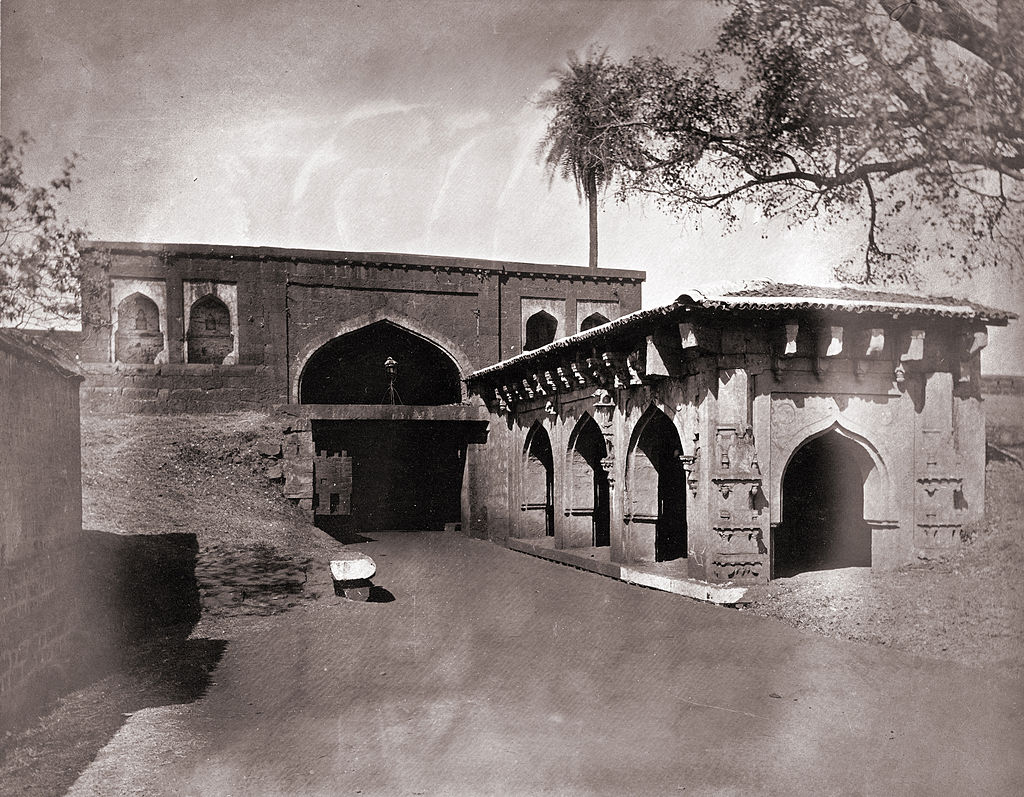
The force at Belgaum was pitifully small – the 29th regiment of the Bombay Native Infantry, a weak European artillery battery, and depot of 64th Foot consisting of exactly 30 men fit enough to fight and protect a garrison of upwards of 400 women and children. In all, exclusive of the artillery, there were no more than 100 Europeans capable of shouldering arms. to make matters worse, between Belgaon, Puna and Sholapur there were more than 2000 native troops and only 120 European soldiers. The Belgaon Fort had not been repaired in years, the ramparts crumbling and presenting so many breaches it was for all intents and purposes, untenable, yet it was the only place in which 500 non-combatant Europeans could find refuge – had things gone wrong, the resulting massacre would have been dreadful.
As it was, Seton-Karr, together with Major Lester (who had only arrived on the 11th of May 1857 to assume command at Belgaon) at once commenced affecting such improvements to the for to make it practicable for defence.
To increase his problems, in the early part of June, Seton-Karr was informed an emissary from Oudh had arrived in the territory who had promptly put himself in contact with the excitable Mohamendan landowners. Not a man prone to violence, Seton-Karr had the intruder arrested.
Meanwhile, the insolence of the sepoys increased. Many of them were natives of Oudh and it appeared they were only waiting for their time to join their brethren in the Bengal Presidency.
“In the proportion in which their insolence displayed itself did the peril of Mr. Seton-Karr’s position increase. It was still further augmented by the action of Nana Sahib at Kanhpur towards the end of June. To understand this it is requisite only to remember that Nana Sahib claimed to be, and in the eyes of his countrymen actually was, the adopted heir of the last of the Peshwas; and that some of the most important estates in the southern Maratha country—the estates of Sangli, of Jamkhandi, of Miraj and of Kurandwar—were held by branches of the great Patwardhan family, the most illustrious of the dependants of the Peshwa. The fact that Nana Sahib was married to the first cousin of the chief of Sangli; that his most active lieutenant was that chiefs uncle; and that the chief himself, on the verge of his majority, had evinced a taste for low and intriguing associates, did not certainly lessen the danger of the position.”
If a troublesome Nana Sahib in far-off Cawnpore declaring himself Peshwa was not enough to contend with, Seton-Karr had the surly Desai of Nipani to deal with. The chieftain had lost a large portion of his estates to the Inam Commission and due to the position of his station, was more than capable of cutting off communication with Bombay. He further had to consider the furious Desai off Jamboti who had lost most of his forest kingdom to the Inam Commission and could effectively cut off communication with the sea and the disgruntled, adopted son of the late Desai of Kittur who, on principle had nothing to lose by open rebellion.
On the 20th of June, Seton-Karr finally decided his position was becoming so troublesome he brought the situation of the southern Maratha country to the attention of the Bombay government. Interstingly, Seton-Karr did not ask for troops or aid in any form; he merely requested Elphinstone to extend his powers and asked that the entire responsibility of facing the crisis be cast on him alone. It was a mad request but the government readily approved it. Seton-Karr now had all the freedom he needed to act.
He did not have the means open to him to resort to force but decided instead to fall back on all-out diplomacy. The friendships he had spent the whole year cultivating were now called for; to his relief, many of the chiefs were open to conciliation and in their turn now provided Seton-Kerr with
“…in the most cases with the happiest results, valuable information was placed at his disposal; the intercommunication of the disaffected was prevented; a vigilant watch upon their movements was secured. In this way, and by a show of confidence towards all, by impressing upon each chief the idea that his neighbour was loyal, and by the expression of confidence, really felt, that the scare would soon pass away, leaving the British complete master of the situation, Mr. Seton-Karr succeeded in staving off the fatal day and in averting the dreaded explosion.”
Yet his problems were far from over. While by sheer force of goodwill and confidence, he could hold the chiefs less inclined to rebellion, he still had no means to stop a mutiny.
 Mutiny Reflections