The Bombay Presidency in 1857
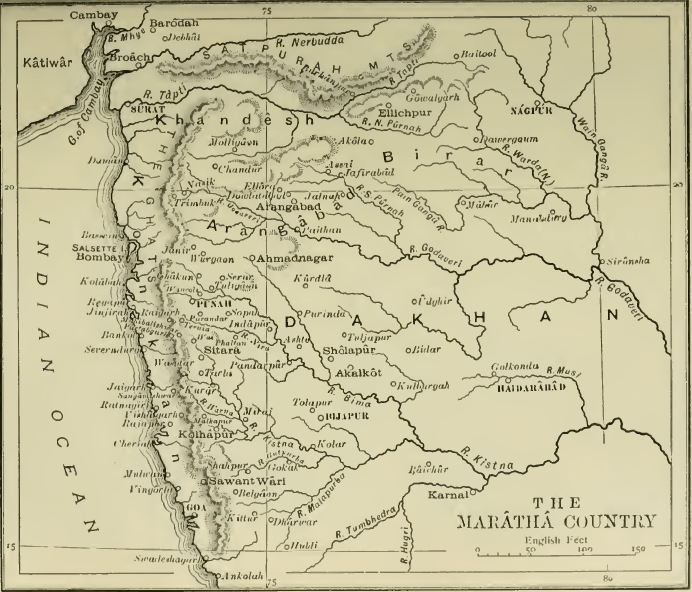
The Bombay Presidency occupied the western coast of India from the mouth of the river Indus to the northernmost point of Goa and to the borders of Mysore. Bounded on the west by the Arabian Sea and Baluchistan, to the south by Mysore and to the east by the Madras Presidency and the states of the Central India Agency and Rajputana. At the same time, on the north by the Punjab, Bhawalpur and Baluchistan, this vast area covered a staggering one hundred and thirty-four thousand, one hundred and thirty-five square miles with 14 million inhabitants. In 1857 there were nine native states subordinate to the Bombay Presidency and these together were home to a further 6 million people and covered seventy-one thousand square miles. It was in all, four times the size of England.
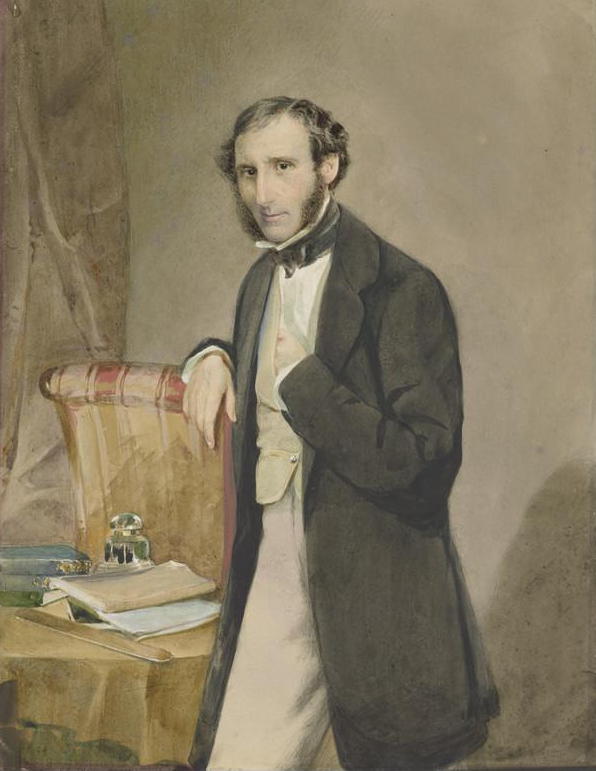
Overseeing it all was Lord John Elphinstone, Governor of Bombay. His appointment was not universally admired and a zealous official was heard to remark,
“We want a Governor and they send us a guardsman; we want a statesman, and they send us a dancer.”
The statement, though rather sour, had some truth to it. Lord John Elphinstone’s career almost needed 1857 to make it a tale worth telling. Starting his career as a cornet in 1826 in the Royal Horse Guards, Elphinstone would eventually find himself as lord in waiting to William IV and in 1837, upon leaving the Horse Guards, he was appointed Governor of Madras. Returning to England in 1845, he would now be lord in-waiting to the queen. 1853 saw Elphinstone back in India as the Governor of Bombay.
While his qualifications for the position were questionable, Elphinstone was not a fool. He had tact and was a good judge of character; he knew when and how to rebuke a subordinate but equally understood when to restrain him and when to let him get his way.
His years of experience in India had given Elphinstone at least something of a wiser viewpoint than the eminent wise men of Calcutta. Upon hearing the news of the uprising in Meerut and Delhi, he was quick to act and was “constitutionally fit” to cope with the crisis, though far from his presidency.
As luck would have it, Elphinstone had a house guest in May 1857 – General Ashburnham, commanding the expeditionary force bound for China. So convinced was Elphinstone that the events in Bengal would soon hit him in Bombay, he ordered Ashburner to abandon China and proceed to Calcutta instead to offer his services to Lord Canning. Authorising Sir Bartle Frere, Commissioner of Sindh to transfer the 1st Bombay Fusiliers from Karachi to the Punjab to support John Lawrence, Elphinstone then arranged for the 64th and 78th regiments returning from Persia to skip stopping at Bombay altogether and proceed directly to Calcutta. He despatched a company of Madras Artillery who happened to be in Bombay at the time off to Calcutta and in their wake, sent instructions to the officer commanding at Disa to hold back the 83rd regiment and horse artillery “on the sole condition that in the opinion of the local authorities, the departure of the only European troops in the vicinity of Ahmadabad and Gujrat might be hazarded without the absolute certainty of an outbreak.” Then, on his responsibility, Elphinstone chartered two P&O steamers and despatched them without delay to Mauritius and the Cape with letters to their erstwhile governors, requesting them to send any troops to India they might see fit to spare. The steamers had been fitted up with all stores and provisions necessary – all the troops needed to do was sail.
Elphinstone had done well. The Governor of Mauritius, Sir James Higginson, sent as many men of the 33rd as the steamer, the Pottinger could carry. In turn, Elphinstone sent yet another steamer to Maurtitus to gather up the rest of the regiment, a battery of artillery and as much money as Higginson saw fit to spare from the island’s treasury for the earnest campaign in India. The Governor of the Cape, Sir George Grey, would not be outdone by either Higginson or Elphinstone – he would send off the 89th and the 95th regiments to Bombay, the 6th, the 1st battalion 13th, the 2nd battalion 60th, the 73rd, the 80th and the 31st to Calcutta, all who happened to be at the Cape. In their wake, Grey would organise transport for as many horses as he could procure and they too would be sent off to India.
“The despatch of Lord Elphinstone to Sir George Grey had painted the urgency of India’s needs in terms so glowing that that able Governor considered himself justified to stretch his powers. He did not hesitate assumed by to direct the commanders of the transports conveying the China expeditionary army so far to divert from their course as to call at Singapor for orders…The intelligence which met these transports at Singapor induced their commanders, in every case, to bear up for Calcutta.”
Eager to have reinforcements come from England via the overland route, Elphinstone telegraphed Lord Canning, imparting on him the necessity for swift action and the need to send a special steamer to England solely to bring the news of the outbreak so the home troops could start their journey to India with the least delay – Canning was not convinced the crisis was sufficiently serious to disrupt the regular mail service for and Elphinstone’s wise idea was dropped.
While all of this might seem to have been jumping the gun, especially in the early days of the mutiny when everything in Bengal was chaos and no one was sure what the next day would bring, Elphinstone had managed to secure a base of operations against central India and Rajputana which in turn preserved the line of communication not only between those provinces but those further on and the seaboard. However, this would only work if Elphinstone could ensure the Bombay Presidency was free of mutiny. On this point too he would succeed, with few exceptions.
The first sign of trouble was in May but it had nothing to do with the mutiny in Bengal. Although this instance of rioting in Bahrotch between Mohamedans and Parsis would under normal circumstances be worrying, Elphinstone would not allow this breach of the law to go unchecked for any longer than needed, in case it sparked off further troubles – acting with his usual promptness, he sent 150 men of the 86th of Surat to prevent the spread of any disaffection, and though seriously depleting his European troops in Bombay, it was a calculated show of strength, making it clear that the EICo was still very much in control.
His next move was the formation of a column to secure and hold the connecting road between Bombay and Agra, not only to facilitate later operations but to strike a moral advantage.
“To check the approach of evil, the surest mode was to go forth and meet it. A column marching towards the northwest would encounter the elements which, having brewed there disturbance, were eager to prevent it spread it, and, encountering, would annihilate them. The presence of such a column, marching confidently to the front, would, moreover, go far to check, perhaps even to suppress, any disloyal feelings which might have been engendered in the minds of the native princes whose statcs bordered on this line of communication.”
The column was duly sent under Major-General Woodburn – the consequences of which we have already seen.
The Bombay of the 19th century was a city rapidly growing in all sectors – business was on the rise and the infrastructure of the city was improving. People came from all walks of life to try their luck in the bustling city and by 1857, it was a veritable hive of a myriad of cultures, religions and languages. Though not always harmonious, Bombay took changes in its stride. Even Elphinstone, for all his worries about troops, was not particularly concerned at first that anything would happen in the city itself. He had some European troops, but the officers of the native regiments were convinced their men were staunch. The Bombay army had not suffered from the same mismanagement as that of Bengal; there had been no talk of tainted cartridges – if there had been the officers were unaware of it. If there was any dissatisfaction among the sepoys, they were certainly better at keeping to themselves than the Bengal sepoys had been. Not so in the southern Maratha country.
 Mutiny Reflections