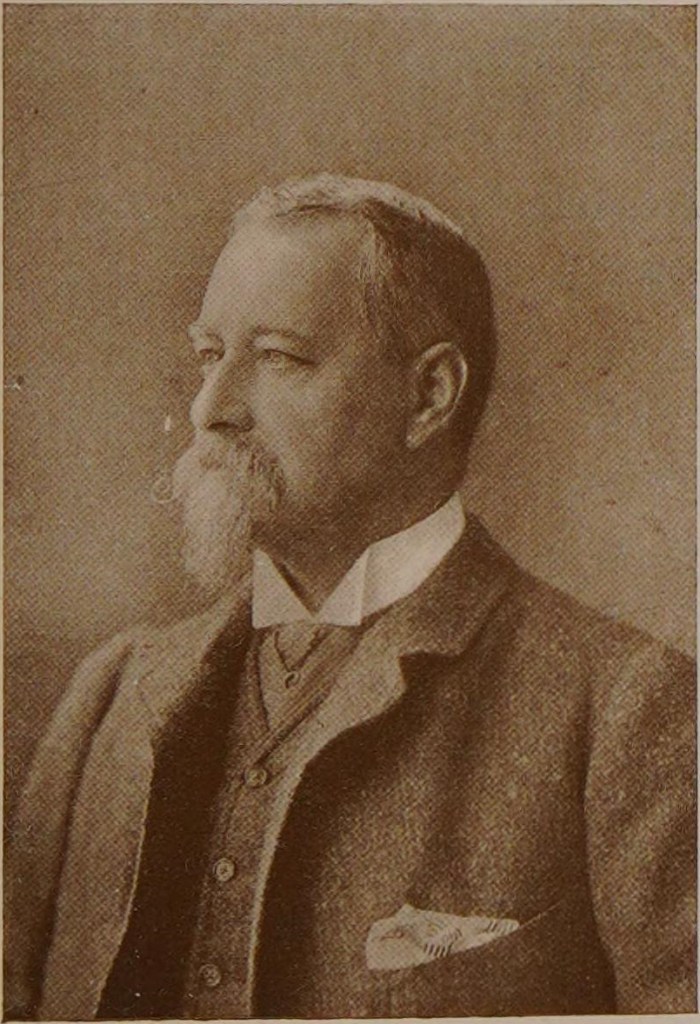
Lieutenant William Alexander Kerr
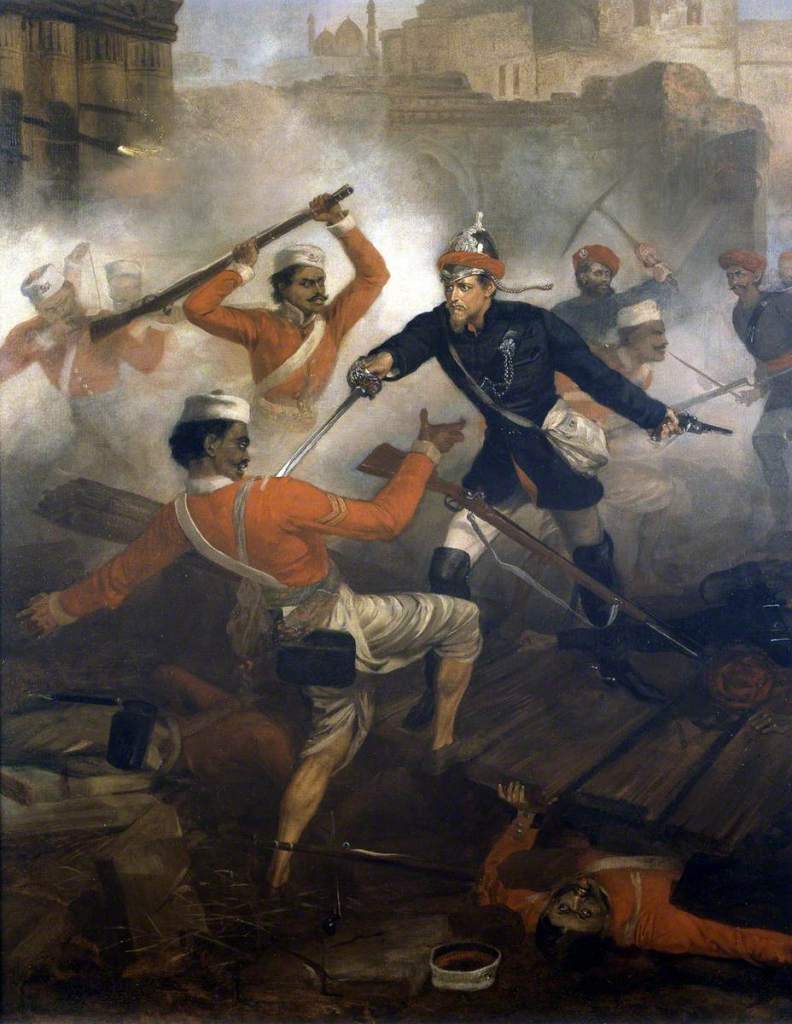
Of the 182 VCs awarded for acts of valour during the mutiny, very few were awarded to men serving in the Bombay regiments, and of the six who received the VC, only one was for actions in the Bombay Presidency itself. The worthy recipient was none other than 26-year-old Lieutenant William Alexander Kerr.
Born in 1831 at “The Holmes” near Melrose, Scotland, the son of Loraine McDowell Kerr and Marianne White, (the daughter of Admiral White) William was educated at the Loretto School in Musselburgh and appeared to have taken its motto, ” Spartam nactus es, hanc exorna” (“You have obtained Sparta: embellish it”), to heart. He joined the 24th Bombay Native Infantry in 1849 but soon transferred to the newly formed Southern Maratha Horse. Raised in 1850 at the end of the Second Sikh War to serve the Bombay Presidency, the regiment was formed initially as an armed civil corps, but by 1857, it had been converted to a military one.
Stationed at Satara in 1857, Lieutenant Kerr had full confidence in his men, and they, in turn, trusted their officer who had impressed them with his firmness and fair justice. The broad-shouldered Scotchman had already led them on a wild ride into action in June 1857. Rumours had been afoot in Satara for some months of an uprising when, on the 10th of June, Mr. Rose, the District Magistrate, was informed by one of his agents that a group of armed Marathas had gathered in a village near Bhor to incite the population in the area in revolt to attack Satara. Although this incident was not related to the mutiny of 1857 in the Bengal Presidency and had its roots in the discontentment of the former rulers of the annexed province trying to restore their rights, it was still a worrying sign of trouble the turbulent Presidency could ill-afford. Lieutenant Kerr and thirty of his men were sent out to intercept them. With First Assistant Commissioner Sandford in tow, the men rode the forty-five miles over rough terrain in sixteen hours. Their approach, however, was seen and reported, causing a great number of the men to flee to the hills. Only thirteen of the would-be rabble-rousers were captured, and they all confessed the plan had been to attack Satara. With one uprising thwarted, Kerr would soon need to be ready for another.
On the 1st of August, as the officers sat around the mess table in Satara, discussing the gloomy news that had come to them from the Bengal Presidency, an orderly arrived with a telegram. When the commanding officer had read it, he immediately ordered the servants to retire and the doors of the mess shut.
He then turned to the assembled officers and read the message out loud – the 27th Bombay Native Infantry had suddenly mutinied in Kolhapur, and the Europeans were now besieged in the Residency, without provisions. Their situation was dire, and they could not hold for long. Kolhapur needed aid.
“ By gad, gentlemen,” said the chief in a low voice, “ this is a bad business; I cannot trust my fellows, and you are all in the same boat. What is to be done ?”
Kerr bent over the table, where the candles were allowed to gutter, and the wine was left unheeded.
“ I can trust my men,” he said impressively, “ and I’m ready to go now.”
And in half an hour, fifty troopers, all that could be spared, with Kerr at their head, filed away into
the darkness and the rain.
Setting their sights south, the party rode away from Satara, and for the next 81 miles, they would find themselves at the mercy of the monsoon. Water had flooded the country, and the rivers were in full rage, but Kerr was undaunted. The fifty men would swim their horses over five swollen torrents, cross seven flooded nullahs, stumble through drowned paddy fields and wade up to their hocks in mud, reaching Kolhapur in just 26 hours. Not once had it stopped raining when they arrived at the station, wet, tired and covered in mud. To Kerr’s surprise, the Residency was in a state of siege, but it was hardly clear from whom. The paga or stronghold in which the rebels had first barricaded themselves was practically empty. With its thick stone walls further strengthened by circular bastions which could only be entered through the low, thick teak door, it was an impressive fortress. Without artillery, there was little Kerr could have done at a moment’s notice, had it been alive with mutineers.
Many of the sepoys had changed their minds and returned to their lines. As tired as he and his men were, they were still up for a fight. Kerr tried to persuade the station commander that an attack on the retreating mutineers or those left in the paga would be the best option, but he was overruled. It was feared, should Kerr not be successful, it would have induced other regiments to mutiny, and the remaining sepoys, still trying to work out their loyalties, would have been impossible to stop.
Those mutineers that had left the station with the hope to meet up with their comrades at Ratnagharry. To their surprise, as they came down from the Ghats, Elphinstone’s Europeans were already disembarking from ships on the coast, sending the mutineers into a panic – while most of them fled to the hills, 40 of them returned to Kolhapur. Kerr was ready for them.
On the 9th of August, information was received that the mutineers were in full march on Kolhapur. Kerr was given sanction to ride out and meet them. So that the remaining men of the 27th would not be aware that the position was weak, Kerr rode out after dark. With his 50 men, he took up his position close to the road by which it was reported they were coming and, covering his flanks with mounted sentries, he waited. Towards daybreak, a shot to his left told Kerr that something was up. Riding off at a gallop, he found his sentries engaged in a fight with three mutineers – the rest, to his horror, had managed to creep into the stronghold. One of the prisoners told Kerr they had gotten there not half an hour before Kerr had left the Residency. The darkness and the rain had been on their side, too. In went the spurs, and within half an hour, Kerr and his men were in front of the paga. The mutineers were still busying themselves, putting the place in a state of defence – Kerr immediately closed off any route they might have used to escape and rode back to the Residency to ask Colonel Maughan for infantry and ladders. Kerr had managed to procure some artillery from the town, but it was useless – the balls were too small and hit anywhere except where they were aimed.
Colonel Maughan still held the station and thought rather wary of the 27th Regiment was determined, regardless, to ask for volunteers from their ranks. To his surprise, many came forward, and he finally chose 60 of them to join in on the attack of the paga. The Kolahpur Local Infantry, along with the volunteers of the 27th, followed into the battle led by Lieutenant Innes and Major Rolland. It was not going to be an easy victory – for the next nine hours of fighting, neither party was able to gain the upper hand. But the end would secure Kerr’s place in legend.
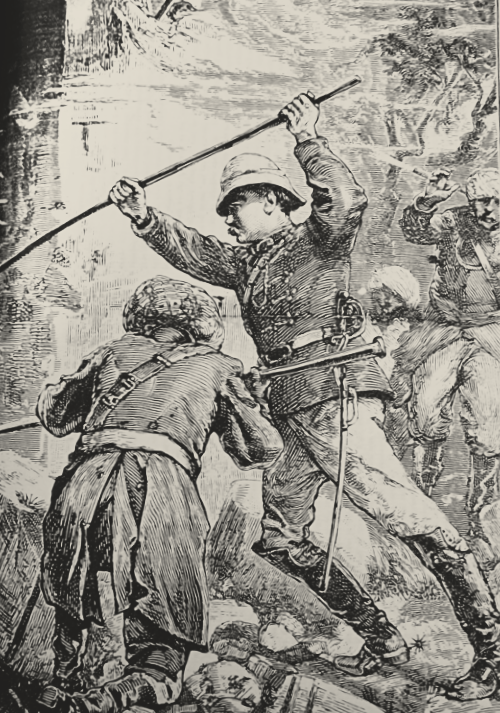
Under a veritable storm of bullets, a small, unassuming door was pointed out to Kerr on the side of one of the bastions – Kerr dismounted, taking seventeen of his men with him. With the bullets whistling, Duffadar Gunput Rao Deokar and Kerr, after realising the door was barricaded, swiftly put crowbars to it. Meanwhile Lieutenant Innes with a party of the 27th kept the mutineers busy at the rear.
Kerr and the duffadar managed to break open but a small portion of the door – just enough for one man to get through, but in they went, Kerr in the lead. As he and Gunput Rao emerged from the hole, bullets flew over their heads – having had to crawl through the door had saved their lives, and the shots smashed into the walls around them. By now, the rest of the storming party had joined them, and the fight was on. Kerr, with his sword drawn, led the charge.
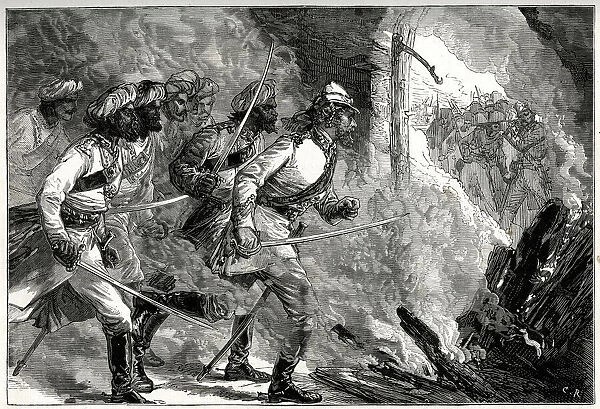
The first courtyard was quickly taken, the gate opened, and the men of the 27th, Innes at their lead, dashed in. The mutineers, however, retreated further into the stronghold, barricading themselves in a room with loopholes just next to a large door. Not wasting any time, Kerr ordered the room to be set on fire. The rest of the rebels quickly retreated through the nearby door and, in a frantic haste, began barricading it from the inside.
Wielding their crowbars again, Kerr and Gunput Rao made quick work of it. As the door splintered and gave way, the sepoys in the room greeted them with a volley at 12 paces. Some of the men of the 27th and Kerr’s men were hit, but before the rebels could reload, Kerr and the Maratha Horse were on them, shooting and stabbing as they drove the rebels out of every corner and out into the open. It was a fight to the death.
A bullet cut the chain on the Kerr’s helmet, and a musket, fired close to his face, temporarily blinded him, but, through stinging eyes, he managed to strike at his attacker so violently he could not withdraw his sword. Thus encumbered, a rifle butt came down soundly on Kerr’s head causing him to stagger and nearly lose conciousness; the quick thinking of Gunput Rao, seeing Kerr was on the point of being bayonetted, he himself wounded, sprang to Kerr’s defence, grabbing a musket from another rebel and shooting his commander’s attacker dead. As the man fell, Kerr cut down one more assailant.
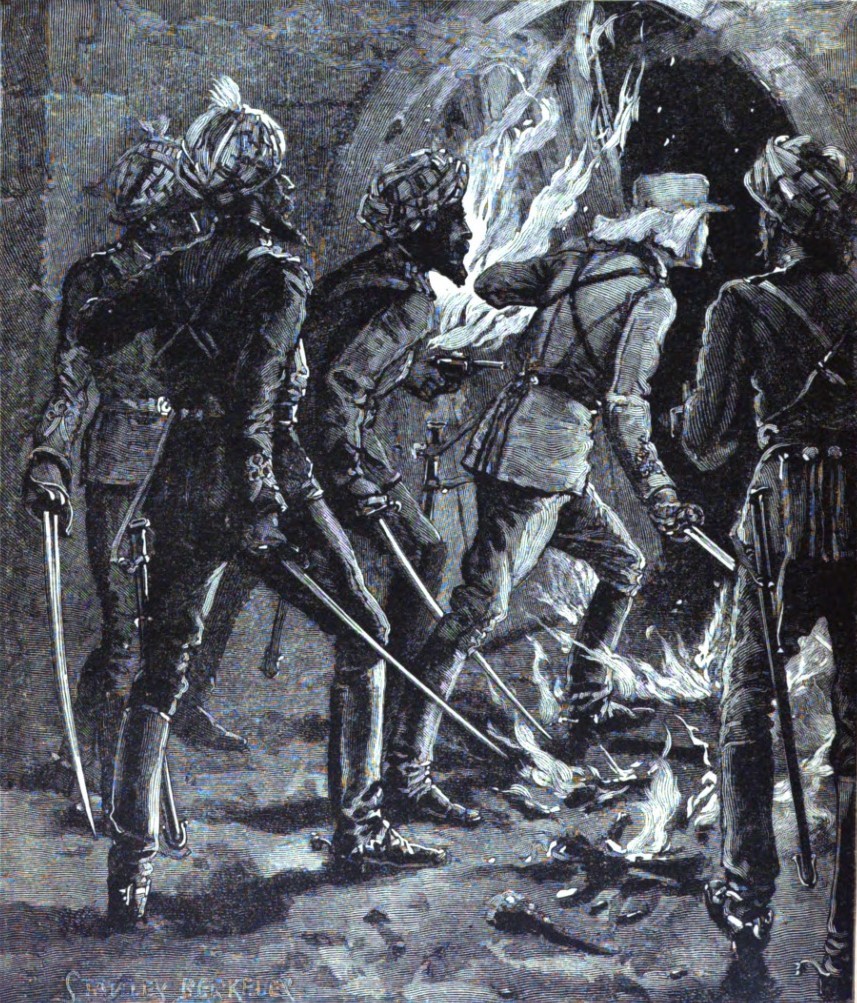
Meanwhile, the remaining rebels made their last stand in a small temple. They again barricaded the door and kept up a heavy fire on Kerr and his seven remaining men. This time, the crowbar was of no use as they had bolted the door with an iron bar from the inside, so Kerr resorted again to fire. In the ensuing blaze, Gunput’s trousers were suddenly ablaze. He had just enough time to throw himself into a puddle where he sat for a moment, laughing. He then stood up, ready for the next fight. While they waited for the flames to do their work, the men bound up their wounds as well as they could, trying to staunch the bleeding.
“See sahib,” said Gunput, pointing to the door, “We can go in now.” Kicking in the charred planks, and through the sparks and smoke, with fiery embers blazing around them, Kerr’s men rushed in and put to sword the last of the mutineers. Only three were taken out of the temple, and all of them were wounded.
One officer, who was present through the fighting, said,
“I must do them credit to say that I never saw men display such determined bravery in my life; they fought with the rope around their necks.”
Of Kerr’s 17 men, eight were killed, and four more died of their wounds. The remaining five and Kerr were wounded. For Gunput Rao Deokar, the Kolhapur affair would secure for him the highest honour which could be bestowed on an Indian officer, the Order of Merit and a promotion to jemadar. As for Kerr, he had earned his Victoria Cross, and his citation in the Gazette stated,
“The attack was completely “successful, and the defenders were either “killed, wounded, or captured, a result that “may with perfect justice be attributed to “Lieutenant Kerr’s dashing and devoted bravery.”
The award was presented to him in September 1858 at the Review Order parade in Belgaum by Major-General Farrell.
As for the Southern Maratha Horse, they would continue to work through the mutiny, gaining six Orders of Merit for “conspicuous gallantry in action.” In 1860, Kerr came to know the regiment was to be disbanded – as their Captain and Second-in-Command, he resigned and left the army in protest. Gunput Rao Deokar transferred out to the Poona Horse, and finally, in 1865, the Southern Maratha Horse would cease to exist.
A Final Note
It is necessary to add:
The mutiny at Kolhapur occurred on the 31st of July. Kerr arrived in Kolhapur on the 2nd or 3rd of August. Although the London Gazette states Kerr won his VC for the events at Kolhapur, it also states the 10th of July, a full month earlier. (Publication date:27 April 1858 Issue:22131 Page:2050)
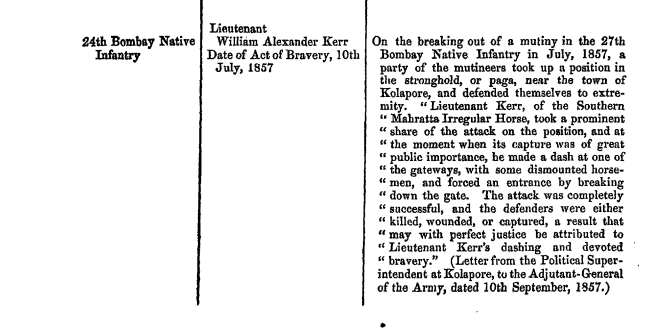
This date has been carried through history, including
https://victoriacrossonline.co.uk/william-alexander-kerr-vc/ and https://www.lordashcroftmedals.com/collection/william-alexander-kerr-vc/
including Brian Best’s book, printed in 2016.
There is a further discrepancy – unless the service was very slow, the telegram which arrived in Satara was either read out on the 31st of July or the 1st of August. Kerr determined to leave immediately, and he had a 24 or 26-hour ride ahead of him, traversing anything between 75 and 81 miles. He would have arrived in Kolhapur no later than the 3rd. The mutineers had left Kolhapur in the meantime, and they had to return before Kerr could attack them – they were heading to the coast and then back again, so they could not have been back in Kolhapur before the 9th, considering the distance. Hence, Kerr did not arrive in Kolhapur and immediately attack anyone if the date of the attack on the paga was indeed the 10th of August. I have based my writing on these particulars, which I have taken from different sources as mentioned below. Not all of them plead to accuracy, (Chatterbox was a series of books for children, but the account of Kerr at Kolhapur is quite vivid and ties in with the 52 Stories and even Britain’s Roll of Glory!) but at least the works of history and the newspapers agree that the mutiny occurred on the 31st of July.
Sources:
Benalla Standard (Vic.). “A Long Ride.” June 1, 1909, 1. https://trove.nla.gov.au/.
Best, Brian. The Victoria Crosses that Saved an Empire: The Story of the VCs of the Indian Mutiny. Barnsley: Frontline Books, 2016.
Chatterbox. “Victoria Cross Heroes.” London: Wells Gardner, Darton & Co., 1908.
Holmes, T. Rice. A History of the Indian Mutiny. London: W. H. Allen & Co., 1883.
Jacob, George Le Grand. Western India Before and During the Mutinies: Pictures Drawn from Life. London: Henry S. King & Co., 1872.
Kaye, John William, and G. B. Malleson. Kaye’s and Malleson’s History of the Indian Mutiny of 1857-58. Edited by G. B. Malleson. Vol. V. London: Longmans, Green, & Co., 1907.
Maharashtra State Gazetteers. “History: British Rule.” Satara District Gazetteer. Department of Archaeology and Museums, Government of Maharashtra. Accessed May 26, 2026. https://cultural.maharashtra.gov.in/english/gazetteer/SATARA/his_british_rule.html.
Miles, Alfred H., and Arthur George Pattle. 52 Stories of the Indian Mutiny and the Men Who Saved India. London: Hutchinson & Co., 1895.
Parry, D. H. Britain’s Roll of Glory; or, The Victoria Cross, Its Heroes and Their Valour. London: Cassell and Company, Limited, 1898.
The Perth Gazette and Independent Journal of Politics and News (WA). “The Mutiny at Kolapoor.” November 6, 1857, 3. https://trove.nla.gov.au/.
With many thanks to Mr. Andrew Kerr and Mr. James Kerr.
 Mutiny Reflections
Dear Eva
Great work 👏 👍 👌. I had always wondered why he resigned and your explanation makes sense. Do you know which or if any of the successor Regiments have claimed the VC as part of their own illustrious history.
The medal itself is now part of the Ashcroft collection.
thank you for your great efforts to find somewhere near the truth
Andrew
LikeLiked by 1 person
Thank you! I read his books looking for clues as to why he left or if he wrote anything about his experiences but besides learning he was 5’8″ tall (Practical Horsemanship), he very much avoided the subject of India and his VC. I think he was above anything, a perfect gentleman of the Victorian mould – his writing is witty (and can deliver an insult without being rude,) a brave, determined and resourceful man who would fight to the end. The school motto sums him up – you have been taught now use it, is a rather loose interpretation. I am glad to have met a bit of William Alexander Kerr on this journey and look forward to tracing him through the rest of this wild ride.
LikeLike
No I have not come across any regiment claiming it. The SMH was disbanded and did become part of the Imperial bodyguard which in turn were also disbanded. If anyone could claim it, it would be the 24th Bombay NI who in turn became the 124th Baluchistan Infantry (The Duke of Connaught’s Own). On partition they were allocated to Pakistan.
LikeLike
Perhaps it belongs to the successor Bodyguard Regiment that eventually emerged from the three Presidencies – would that be the 61 Cavalry?
LikeLiked by 1 person
I will need to look it up. I seriously hope a regiment claimed it. It is such an honor.
LikeLiked by 1 person