Flight to Agra
Thornhill had prepared a boat – it was moored below the Seth’s house – while most of the party insisted on taking it, Thornhill felt it was safer to go over land. While they were still arguing, Thornhill became aware of a throng of people collecting in the courtyard – they consisted of attendants and heads of office, each saying the news of their departure had gotten abroad, and they wanted to know if it was true. Amongst them was an old man, who after clasping Thornhill by the knees, begged him not to step foot in the boat.
“On your horse,” he said, you can ride to the right or the left, but once in the boat, you can go only where the stream may carry you…” It was the same argument Thornhill had used with the others – and now he was determined to take the road. The only one who would join him now on the ride was Mr. Joyce, the clerk who had stood by him through so many dangers and was now determined to follow Thornhill no matter where the road went.
Putting on native clothes (not women’s clothes as has often and incorrectly been stated), they tied long purses full of money around their waists and stuffed biscuits into their pockets. Two hours later, the boat was ready to depart, and Thornhill’s horses and escort were waiting outside the gate. Bidding the others goodbye “like those, who, on this earth, might not meet again,” Thornhill and Joyce waited – the Seths had promised to escort them to the outside of the city.
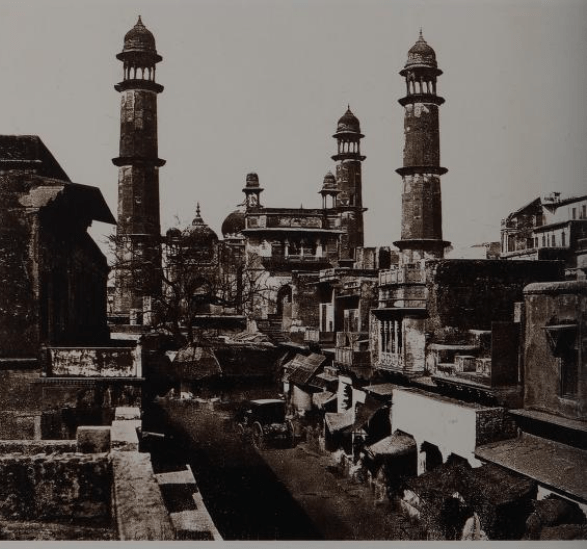
In his ignorance, Thornhill thought this was merely from politeness and, as such, started feeling anxious. Two of the Seths appeared, bringing with them 2 more men of the escort, a landlord and his son, to whom Thornhill had lately done a small kindness, and the man wished to show his gratitude by accompanying him to Agra. The Seths, however, appeared desperate for Thornhill to wait for an additional escort and spare horses. What he did not know, the delay was deliberate. That afternoon, the Seth’s manager had overheard a plot by the guard to murder all the Englishmen as they sat on the terrace. Terrified by what he had heard, he immediately reported to the Seths. He warned them if the Englishmen fell so would the Seths – the government would hardly find themselves disposed to mercy. Urged by their manager, they had gone down to the guards and by threats, persuasion and force had induced the men to give up their plan. However, they were not quite finished.
Their plot uncovered, they then proposed to kill Thornhill and Joyce as they left the house, arranging to cut them down as they passed through the doorway of the barricade. On hearing of this new dissent, the Seths insisted on accompanying Thornhill and Joyce to the street and “lest the men should follow us…they sent some of their most trustworthy servants to see us safely out of the city.” What Thornhill had thought as mere politeness and irksome delay was the Seth’s desperate negotiations to save his life.
The Seths accompanied Thornhill and Joyce, keeping close to them and placing some of their most confidential servants on either side. They had with them a sizeable escort, including the chief of Thornhill’s horsemen, Dilwar Khan. Armed with a sword and revolver, with a dagger and three guns safely tucked up around him, Thornhill gave one of the guns to Khan and the other two to the landlord and his son; he then bid them to ride close together. When they arrived at the barricade, Thornhill wished the Seths goodbye, thanking them profusely for all their kindness and passed through the wicket.
Thornhill and Joyce rode side by side; two men took the advance while the rest followed in double file. The streets of Muttra were silent; above them, storm clouds were rumbling, and they could barely see in the gathering darkness. Of the full moon, there was no sight at all. As they rode through the final gate of the city, the rain began to fall.
All along the road, at short intervals, Thornhill had placed parties of police who were under the strictest orders to patrol the road incessantly – since leaving Muttra, not a single policeman was to be seen. Their promises had vanished almost as quickly as they had uttered them, and the road was empty. On the horizon, Mr. Joyce perceived a dull glow – he thought it might be coming from Agra, but with that city still 30 miles distant, Thornhill thought not.
After another mile, they became aware of the clatter of horses’ hoofs and a tinkling bell behind them. Thornhill called an halt. Presently, the additional escort the Seths had promised arrived – with them came more of Thornhill’s horsemen and a camel rider of the Seths. It was the bell they had heard. The party was now over 40 in all. Thornhill was confident they were strong enough to ward off any attacks by villagers and straggling mutineers – it seemed the ride to Agra would be easier than he thought.
At the next village of Badh, which was known to be a place of some dissent, Thornhill had placed a small picquet of horse to patrol the road, at the end of the village. They had not left their post but were fast asleep – Thornhill woke them and insisted they accompany him. The men made excuses; with no time to argue, he urged them to follow on as best they could. The party rode on.
The rain was falling harder than before, but through the darkness, they could still make out the same glow they had seen before; this time, there was no doubt it was coming from Agra. Mr. Joyce whispered to Thornhill it was best they proceed as if they had not noticed the light, for fear of alarming the horsemen – he then moved his horse a little way back to talk to the men. They had noticed the light too and were deliberating what was causing it. As Joyce moved forward to rejoin Thornhill, some of the men began lagging behind.
Half a mile later, they were startled by the sudden appearance of a camel, mounted by two men. They were servants of the Seths of Muttra, they said, who had been sent out to gather news – they were now returning home. The road, they said, was quiet but full of mutineers. A detachment of 120 horsemen was heading for Futtah – it would be best to avoid it, but getting past the various sepoy piquets might prove a bigger challenge. The riders moved on, and the men in Thornhill’s escort started pleading with him to return to Muttra.
Going back was not an option as he well knew, but proceeding onward did not seem possible. On the suggestion of Dilwar Khan, they decided instead to leave the main road and proceed along a long-neglected track, which though dangerous to ride on in the dark due to the holes and ruts, would at least take them away from any unwanted confrontations. It was a circuitous route but would eventually lead them back to the Agra road.
After some miles, Thornhill called a halt in an open plain to gather the men. To his surprise, besides Dilwar Khan the two guides, only 6 men appeared. They shouted and presently two more appeared. The rest had vanished, among them the landlord and his son carrying off 2 of Thornhill’s guns. There was nothing for it but to proceed.
Unable to cross the river as the bridge had been destroyed, they continued along the road. Behind them, they heard shouts – the landlord, his son and four other men appeared, full of excuses which Thornhill could only imagine might have been true. The party continued on. The rain had stopped but now the clouds broke to reveal the moon – and the light it cast was strangely red – there was not doubt now that Agra was in flames. For the next hours, Thornhill continued to watch the clouds and the moon – a break in the clouds at an inopportune moment would reveal their position to the rebels; without it, they would stumble on in the dark. Suddenly, torrents of rain burst over their heads just as Dilwar Khan announced they had reached the high road.
Before them loomed a village – they passed by as quietly as they could, keeping in the shade and to the side of the road where the ground was soft – if there were any piquets, they were sound asleep. The road had by now become flooded and resembled a canal, leaving the riders drenched to the saddle but the horses at least were refreshed while the rain cooled the air.
While they walked their horses, Mr. Joyce remarked he had been, for some time now, hearing strange noises.
“As he spoke he turned sharply in his saddle and, addressing Dilwar Khan, exclaimed, “There it is again! Surly you hear it? Dilwar Khan made no reply for a second or two, all the while listening attentively. Then he answered,”Yes, I hear he noise; it is like that of sheep.” “Sheep,” I said, where are they…” Joyce quickly explained Khan had said chains, not sheep.
The sound appeared to come from the right of the party – halting for a moment, they tried to see where it was coming from, but the noise stopped. Proceeding a little further, they heard it again, this time more distinctly, the clear clanking of chains. As they stopped again, they became aware of figures moving through the darkness, slowly and in single file. The ground was soft, and their footsteps were muffled, but with each step came the sound of the chains.
Thornhill tried to draw his pistol but had trouble getting it out of the holster -by the time he managed, the figures had moved past them; “they did not appear to see us; they neither turned their heads or quickened their pace. They moved on with the same slow, silent steps and vanished in the darkness.” They were the prisoners from Agra gaol – and the sight terrified Thornhill’s escort, like to so many ghosts. Thornhill quickly explained they had been released by the rebels and would soon be back in the government’s custody but the explanation did not appear to satisfy them, nor did it, Thornhill. The rebels would surely have removed the fetters – something terrible had happened in Agra, he thought, he just did not know what. As they rode on, more of these ghostly figures appeared, some passing so close that Thornhill could have touched them. They never spoke nor turned from their path – all that could be heard was the clanking of their chains as they passed by, unearthly spirits from another world.
“Soon after this, we came to a place where there was a gap in the avenue. In the midst of this open space rose a square black mass. It was a mound…on the summit a small fire was burning; clustered around it was a group of the same dark figures….as we rode past we saw the outlines of a still larger crowd…they must have seen us but for any notice they took we might have been invisible: none moved, none rose, none spoke.”
All along the road, as they rode on, they met more and more of these groups, some as large as twenty, others only pairs. The horrible clanking of the chains, the rain and the black sky, now faintly white, through which tall streaks of red light shot up towards the heavens, around them showers of sparks. Their chances of reaching Agra alive had been slim but what they would find when they arrived was anyone’s guess.
They passed another village beyond, which was a hut, and its door was open, with light streamed out of it. Thornhill noted it was full of men who all appeared to be drinking. In front of it were tethered several horses – he had had barely time to notice the saddles were all English, with a high pommel and cantle, when Dilwar Khan exclaimed, “Gallop for your lives! For your lives gallop your horses!” As he spoke he put the whip to his own horse and sailed off. Thornhill and Joyce did the same – the noise of their horses tramping onwards reached the men in the hut, some of whom rushed out and demanded to know who they were – Dilwar Khan turned his head and shouted back they were agents of the Emperor, proceeding to Agra on urgent business. Thornhill heard shouts, a clatter of horses and a rush of men, but by the time they were saddled, they were well ahead of them. After half a mile, Thornhill called to Dilwar Khan to pull up and walk, but the wise old soldier turned to Thornhill and replied, “Use the whip! use the whip and push on for your life!”After another half mile and his horse blown, Thornhill pulled up. Dilwar Khan raised no protest, and the party halted. There was no sound coming from behind them; all they could hear was the rain and the constant clanking of fetters.
Dilwar Khan now explained he had recognised the saddle from his time in the army and it belonged to the regular cavalry- the men in the hut had been mutineers and they were now well in the lines of the rebel army. As they waited for the rest of their party to join them, it became clear no one was coming – all that was left of the 40 men that had left Muttra was Dilwar Khan and two guides.
At the next village, they were stopped by a sowar, who, placing himself across the road, demanded to know who they were. By his confident manner, Thornhill deduced his companions were not far behind – Dilwar Khan, without any hesitation, dashed forward and, calling on Thornhill and Joyce to do the same, shouted at the trooper they were the Emperor’s horsemen carrying dispatches and demanded to know what right the trooper had to challenge them. Taken by surprise and seeing the party galloping in a fury straight at him, he just managed to get his horse to the side to avoid being run over. They heard him shout, but as no one followed, it appeared his comrades were not interested in taking up the chase. For the next mile, they kept to the side of the road, keeping to the shade of the trees. Two parties of mutineer cavalry passed them, but no one stopped or asked where they were going, and when one finally did ask, Dilwar Khan ignored him and rode on.
Beyond the next village, Dilwar Khan proposed halting for a moment at the hut of a fakir who lived on the road and subsisted from alms given him by travellers – Khan sent one of the guides forward, directing him to tell the fakir he was a messenger of the Emperor and to ask for a drink of water and some tobacco. While the rest of the party hung back, the guide proceeded forward as instructed. After a few moments, they could see the glow of the coal from a hookah as the fakir handed it to him and then listened as the guide asked for news from the front. The fakir told he could proceed with safety – the enemy, he said, had been routed and the road was clear all the way to Agra. A battle had been fought, and the English had fled into the fort. Eagerly, he continued that the army was now besieging the fort, and already, the bastions had been knocked down.
The news was not particularly encouraging but there was nothing for it but to advance towards Agra. Dilwar Khan proposed they leave the road again and by following a longer track, avoid the city but advance directly to the fort. Thornhill objected – they would stay on the road. They approached the town of Secundra shortly after – only to find the work of plunder and burning was still in full swing. All around them, the houses were burning, and the square was full of prisoners; some were still setting fire to houses, others were cooking food, while still more were drying their clothes. While the town was illuminated with fire, outside it, the darkness enveloped them again. Four miles ahead was Agra.
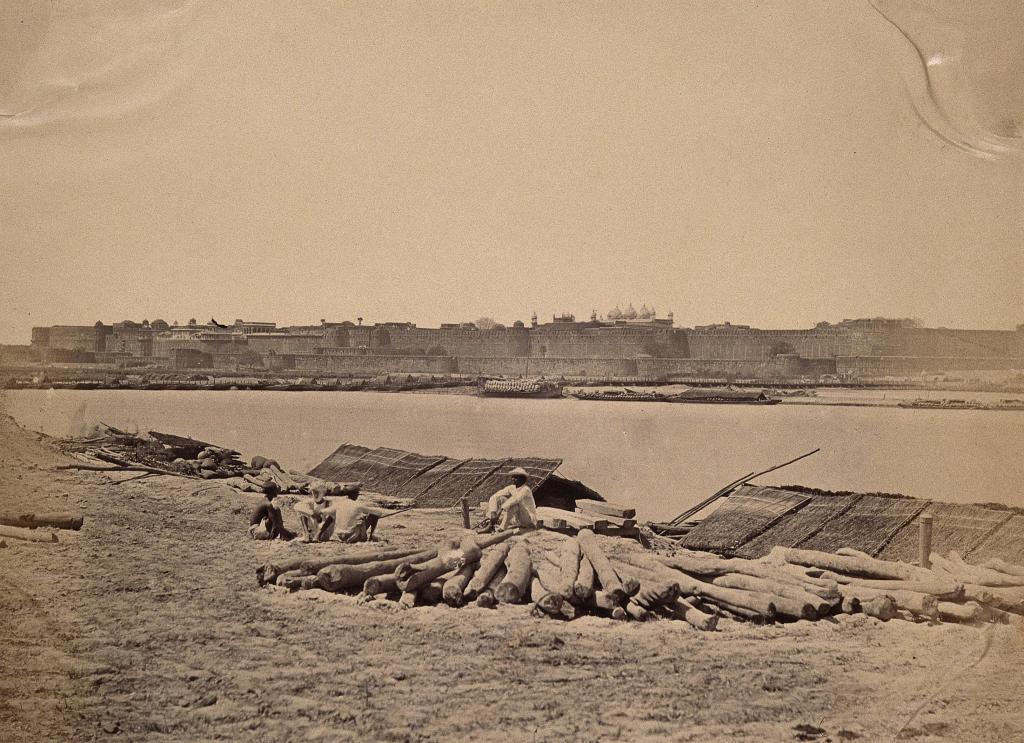
They rode on some distance and were approaching Agra station when they were confronted by what appeared to be cages of fire. “Before we had advanced a hundred yards, a second burning cage appeared, and soon after another and another. Our wonder was becoming extreme…The cage which had imagined to be near the horizon was really close at hand; a turn in the road brought up beside it. We saw it was nothing more than the glowing rafters of a burning bungalow.” The guides took fright and tried to desert them; Thornhill and Joyce threatened to shoot them. With Thornhill ahead, the guides in the middle and Joyce with Dilwar Khan making up the rear, they continued their journey through the streets of Agra.
Past the gaol, they rode and stumbled upon a group of men sleeping in the street. Dilwar Khan approached them, the sound of his horse waking them out of their slumber. He politely told them he was the Emperor’s messenger and asked what news they had of the battle the day before. The men ignored him and refused to answer. At this, the guides lost their patience and took up the conversation in their own manner.
“Commencing a torrent of abuse, they next told the men they knew very well who they were and what they had been doing and advised them to answer at once the questions put to them or it would be the worse for them…The men at once changed their tone and promised to tell all they knew…” They started by explaining they were poor labourers, so poor they had to sleep in the streets. The guides jeered at their answers, replying, “Labourers indeed! Nice work you have been at, burning houses! ” With threats of beating them with their whips, they continued,” Do you take us for fools, you wretches? Speak the truth at once or see what will happen!”
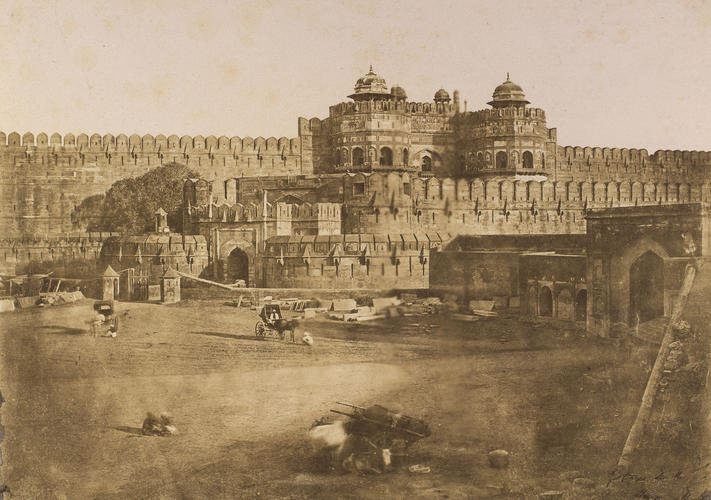
They quickly confirmed more or less the same story the fakir had told them earlier regarding the battle but could give them no further information. At the next turn, they met more sleeping groups, and as they rode on, even more. The last replied they could move on through the city safely and they would find no one to bar their way to the fort. The streets beyond were dark and silent, although from behind the shuttered windows of the houses, they could see little streams of light – they passed the police station unawares, but no one came out to stop them as there was no one there. Suddenly, passing through a narrow street and under an archway into an open space, they found themselves in front of Agra Fort, standing quite unwittingly on the bridge that spanned the outer ditch and before them was the main entrance.
Mr. Joyce walked forward and shouted. From the darkness, they heard a voice asking who they were. Mr. Joyce answered and asked to be let in. The guard replied that no one was allowed in until dawn – they could come back later. Thornhill now strode forward and demanded a message be sent to his brother; he would vouch for their identities. The guard replied that his brother was housed well inside the fort, it would take some time to get a message to him, and in the meantime, they should sit where they were and wait.
After half an hour, Thornhill heard his brother calling to him – the gate could not be opened before dawn, but they could proceed to the south entrance; they would be admitted there. So, after their long ride and daybreak rapidly approaching, the little party rode together one last time, along the road under the walls of the fort, to a rough palisade formed of stakes and bushes where a sleepy English soldier bade them halt. He would let them in, he said, the Dilwar Khan and the guides would have to remain outside. Distressed, Thornhill was about the remonstrate with the guard when Dilwar Khan stepped forward and said he should “be under no anxiety on their account, ” they would find lodgings in the city and wait until they heard from him. With that, Dilwar Khan and the men moved off, bidding Thornhill and Joyce farewell, and the two Englishmen entered the fort. Nothing had saved them, wrote Thornhill, but “the darkness of the night, the torrents of rain, and the fidelity of Dilawar Khan.”
As for Muttra, it passed for a time into the hands of the Seths and rendered further service by despatching intelligence to Agra – along with their prudent management, Muttra remained quiet and order in the city was maintained by the tahsildar of Kosi, Mir Imdad Ali Khan who was appointed deputy collector. The mutineers for their part had only remained 2 days in the city before moving on. Mark Thornhill would not return until October. He did not forget Dilwar Khan, who would receive, once the mutiny was over, a piece of land on the Brindaban road just outside Muttra, called Dudbadhari.
Sources:
Growse, Frederic Salmon. Mathurá: A District Memoir. Allahabad: North-Western Provinces and Oudh Government Press, 1882
Kaye, John William. A History of the Sepoy War in India, 1857–1858. Vol. 3. London: W.H. Allen & Co., 1876.
Thornhill, Mark. The Personal Adventures and Experiences of a Magistrate during the Rise, Progress, and Suppression of the Indian Mutiny. London: John Murray, 1884
 Mutiny Reflections
Fascinating! I read this with a coffee; it was that absorbing a read!! Thanks for the work you put in on this!!
LikeLiked by 1 person
I wish I had a picture of Mark Thornhill. He isn’t perhaps the most fascinating person but certainly a unique one! Glad you enjoyed the read!
LikeLiked by 1 person
I did, very much! :-)
Good luck with your photo hunt!! 🤞
LikeLiked by 1 person
Always enjoyable. Nice. Thanks.
LikeLiked by 1 person