Thornhill Prepares
The next morning, Thornhill paraded the men. He found, instead of a strong fighting force, they were “timid villagers; none of the men had uniforms, only a portion had firearms, and their firearms were the commonest kind of matchlock; their powder was damp and would not explode, and their bullets were old battered musket balls, dug out of targets.” They did possess one virtue with Thornhill had not expected, and that was complete obedience. Nixon had told them to remain in Muttra, and until that order was countermanded, they were to stay there. After much persuasion and a careful inspection of the defences, the Bharatpur troops consented to garrison the empty entrance – Thornhill noted that after a few days, emboldened by the strength of the position, they proclaimed to Thornhill they could easily beat off any enemy that would attack them and would even pursue them if they had to. Fortunately, no one came to put their courage to the test.
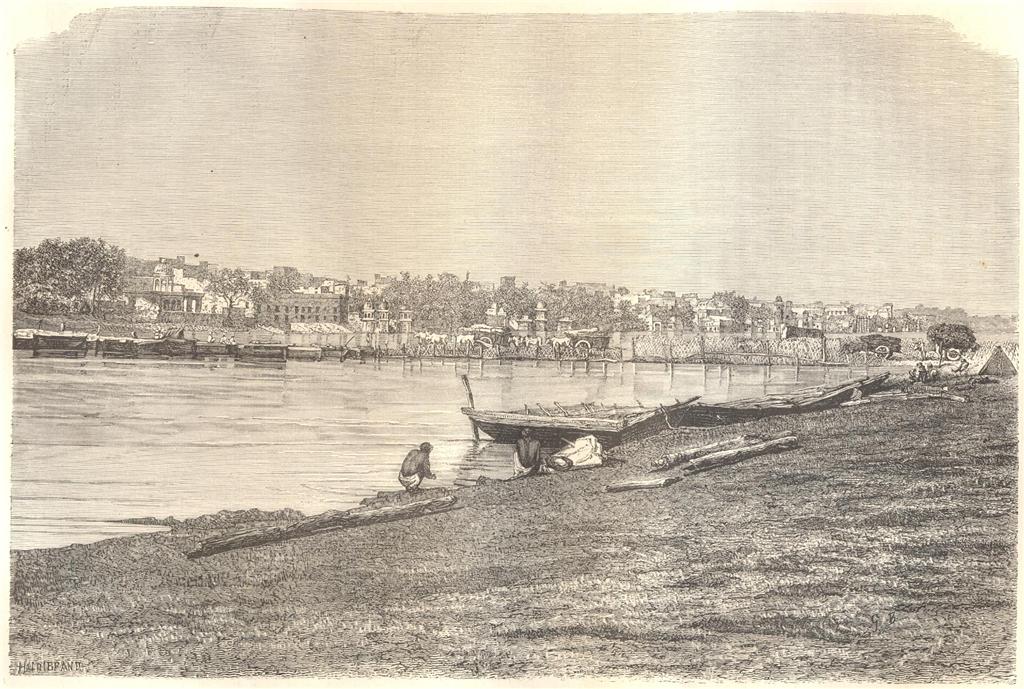
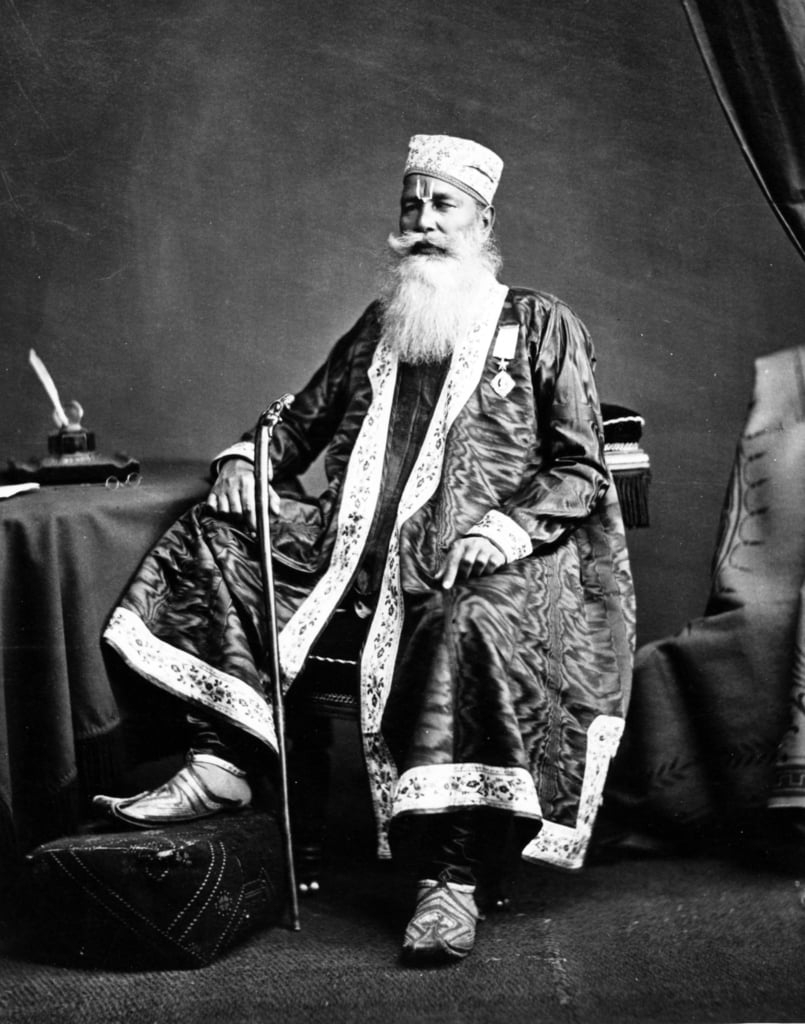
A short word must be made here of the Seths. While the term would nominally mean bankers, they were not mere money lenders or accountants. They were a powerful force on their own. Their ancestors had come from the Deccan in the past century; theirs was an old bank, but their family was unfortunately not as proficient as their business. Many of them died without leaving an heir, and as such, their managers were adopted to fill the vacant positions, ensuring the business could still pass from family to family. At the end of the 18th century, it came into the hands of Seth Gokul Paruk. He had the good fortune to not just inherit his master’s wealth, but he had obtained the position of treasurer to the Gwalior State. As the Mahrata armies swept through India, half of the wealth of India found itself in Gwalior, their capital. However, while keen on enriching themselves, the rulers were less interested in paying their armies; subsequently, the soldiers were irregularly paid – often only the threat of mutiny forced their employers to part with some of their wealth. Seth Gokul Paruk, who undoubtedly had enriched himself in the deal, put an end to the pay problems – while the Raja coughed up less than he owed, the Seths took over the rest. It still did not prevent Seth Gokul Paruk from becoming the richest man in India, his fortune estimated at the time to be 14 million in pounds sterling. He had a personal income of 40’000 a year from the sums he had invested in the EICo securities alone, which was but a small proportion of what he kept aside.
Gokul, known for his extremes of prudence, demanded nothing for himself but a domicile in Muttra as soon as it passed under British rule – and when he died, childless, his manager, Seth Munnee Ram inherited not just his fortune but his position in the Gwalior court.
Munee Ram, unfortunately, had not inherited Seth Gokul Paruk’s wisdom. Accused in open darbar by Maharaja Scindia of absconding with a sizeable fortune of the state, he refused the advice of one Colonel Skinner, then a commander in the Mahrata army, who had prudently advised him to make a present of “…shawls and jewels, ever so many trays of them, and five million of silver rupees…” Munee Ram, insulted by Skinner’s suggestion, presented Scindia instead with his account books. He pointed out to the erstwhile ruler it was he and not Munnee Ram, who owed him 10 million rupees. In his fury, the raja demanded the Seth be tied to a gun and blown from it for his insolence. Skinner interceded and saved his life. After a brief confinement, Munee Ram was convinced to give Scindia the amount he claimed the raja owed him in exchange for his life.
The raja, pleased with the amount offered, took Munee Ram back into his favour. As for Skinner, Munee Ram never forgot his timely intervention – in later years when Skinner faced financial problems of his own, the Seth made him a loan of 60 thousand pounds without interest. In time Munee Ram died and his ashes were placed next to those of Seth Gokul Paruk. Although his descendants would no longer serve the Gwalior State, their position in Muttra remained unquestioned.
Thornhill noted, during his residence at their house, he saw neither open displays of wealth nor anything that would have led him to suspect they had any money at all. Their house was but sparsely furnished, and they ate the simplest food. However, their vaults were filled with gold and silver, and their wives were bedecked in jewels. They kept several English carriages with horses to match, and their elephant appeared, on state occasions, caparisoned in silver. It was, in his estimation, a strangely frugal life for men who could have bought India and EICo if they had so chosen.
We can now return to Mark Thornhill.
Despite his efforts to fortify the city, on one occasion, mutinied sepoys still managed to enter the city and twice, more worryingly, the Seth’s guard attempted to murder Thornhill and the other Europeans. The villagers, too, recommenced their aggressions against Muttra, leading Thornhill to gather a small force and burn some of their villages in retaliation. Along the river, several villagers had formed a pact and nominated Dayby Singh as their raja, who, in his turn, was determined to run Thornhill out of Muttra. At this juncture, the Kotah Contingent, under the command of Captain Dennys, arrived one morning. By the afternoon, the villagers “sent in to make their submissions,” but the contingent was recalled to Agra before anything substantial could be made of this. Thornhill’s messengers, who were conveying his answer to Dayby Singh, were shot at, and Thornhill put together the bridge of boats, intending to attack the fledgling raja before the contingent left. Dayby Singh sent a message to Thornhill to remove the bridge, or he would save him the trouble by coming to burn it down. Thornhill had intended to remove the bridge, but with what was now an open threat from the raja, he determined to leave it where it was – with the support of Captain Dennys, he resolved to dash over it and capture the raja before the contingent left.
After a long march, Thornhill, who had joined Dennys in the field, arrived at the village of Dayby Singh. It was not an imposing fortress, or indeed a fortress at all, but a collection of mud huts in an open plain, surrounded by groves of trees. To make their approach known, the contingent had burned an insurgent village along the way, allowing the inhabitants to flee while the smoke signalled to Dayby Singh they were not far off. Just outside the village, surmising that Dayby Singh was probably no longer there, Dennys took the precaution of forming his men in a line while the cavalry galloped off to the right and left to cut off any fugitives. The guns were ordered to the front and, on Denny’s order, opened fire.
The first shot sailed over the village, but the second exploded in the confines. When the smoke cleared, Thornhill could see crowds streaming out from the village across the fields. The cavalry closed in, cutting off their escape, and forced them back into the village. In half an hour, the whole population was seated on the ground, virtual prisoners – while the shots had terrified them, they had not succeeded in injuring anyone. To Thornhill’s surprise, among those assembled sat Dayby Singh.
He had initially denied his identity, but “a score of his subjects deposed to it, as also did his wife.” He looked so forlorn and miserable that Thornhill felt sorry for him. The Kotah Contingent were less compassionate and mocked him, addressing him as “His Highness” and paying mock salaams to his wife. Captain Dennys, on seeing his men’s behaviour, had her removed to a safe distance while he and Thornhill deliberated what to do next. Accordingly, the village was burned to the ground, and any man, including Dayby Singh, found to be carrying arms was taken prisoner. The rest, including the women, were released.
They were marched to a nearby town, where Thornhill remained for a few days while the Contingent brought order to the surrounding countryside. In the meantime, he became acquainted with Dayby Singh. In the past, the 14 villages that had pledged their loyalty to him had been part of a single estate, but during the past 50 years of EICo rule, these had been sold and resold until the proprietors, once wealthy men, had been reduced to the status of mere cultivators. On the outbreak of the mutiny, they saw an opportunity to regain what they had lost and rallied under the banner of Dayby Singh. He led them in a battle of his own, plundering and destroying other villages, wounding many farmers and killing more. The result of his victory was the re-establishment of the lost estate, and he elected himself raja. He then turned his attention to “his neighbours, to our Government and to the Bunniahs.”
The Bunniahs, a class of traders who functioned as grain dealers, grocers and money-lenders, were neither well-liked nor particularly respected, as their practices, especially regarding money lending, were extortionate and pitiless. They resided close to the town where Thornhill now found himself, but when Dayby Singh had marched in earlier with his army, he had plundered the Bunniahs. He then set up a provisional government, appointed a board of revenue, a judicial court, a commissioner, and a magistrate and formed a police force. Since he did not trust his own people to act in that last position, he sent messages to the previous superintendent who had fled on Singh’s approach and appealed to him to return and take up his position anew. Having constructed his government, he diligently set out to administer it. As for the Bunniahs, he now had time to deal with them – plunder them he did, but not in a raid or in a sudden attack. Instead, one after another was brought before him, forced to give up their bonds and mortgage deeds and relinquish their fortunes. Those who refused to comply were tortured until they changed their minds. Thornhill investigated the cases of torture and found the Bunniahs, though much afraid and injured, none of them had been seriously hurt.
Their houses were systematically pulled apart by Singh’s men, and anything found inside was distributed, while any papers and account books were burned. When all was done, the bunniah was released. By the time the Kotah Contingent arrived, Dayby Singh had nearly completed his work with the bunniahs – he had been warned the army was coming to attack his village and arrived just ahead of the contingent.
He continued to expound to Thornhill that he had not only driven out the police from the town but had brought the EICo to their knees – they were vain boasts from a man who, for his part, had achieved a small victory, but by no means had he won the war. As for the magistrate, he found, as he rode through the town, the same signs of destruction were evident; only one house had escaped intact; the rest had been consigned to the flames. Everywhere, people flocked to the streets to proclaim their grievances, of which there was little he could do to set them right – as it was, for now, Dayby Singh’s days as raja were over. The Kotah Contingent remained in the district for some more days to come – it was, however, a pointless effort. As soon as they had succeeded in putting down one insurrection or settling a squabble between villages, the order remained only as long as they did. As soon as they moved on, the same state of lawlessness ensued. However, they persisted as far as Aligarh when the news of the advance of the Neemuch Brigade forced their recall to Agra.
Thornhill accompanied them back to the city, bringing with him some of the revenue he had managed to collect and then, accompanied by another one of his assistants, Mr Clifford, he went back the next day to Muttra. This time, Thornhill had collected a force of his own, consisting of men supplied by landholders in the district. They could hardly be described as an army; their weapons looked as if they had “plundered a museum”, and they had no concept of obedience or discipline, but it was all he had. The guards slept at their posts, regularly threw messages away, not out of spite but because they could not be bothered to deliver them and generally spent their time sleeping, smoking and deserting their posts as the fancy took them. The horsemen were remarkably better and would be in the future, transferred to the government, forming a part of De Kantzow’s Horse. Had this been all Thornhill had to face – belligerent villages, errant landowners and a few self-proclaimed rajas- he could have held his post, ill-equipped as he was for men, and it would have been enough to ensure peace around Muttra. Unfortunately, he would be threatened by far more dangerous enemies. Before he could return to his station, several things happened.
Some 12 miles down the road from Muttra was stationed a detachment of the Gwalior Contingent. Thornhill knew he could fight them off should they march on his station – he applied to Agra for reinforcements, only to be told there were none, but Colvin sent him a small detachment of the Gwalior Contingent’s cavalry that were stationed at Agra; they were to be under his immediate orders, but how likely they were to obey him when they arrived was a different matter. They arrived at dawn, and their entrance was not designed to instil much confidence.
“…their native officers came to report themselves; I had been up late and was asleep. “The Sahib is asleep, is he?” they replied to the servant; “then we will try and awaken him,” and so saying they walked into the verandah and discharged their pistols before my bedroom door.”
Three days later, he received a note from Captain Alexander, who commanded a detachment nearby, warning Thornhill that his men were about to mutiny. In the evening, Alexander arrived, informing him that his men had indeed risen and he was making his way to Agra. Accompanying him were a few of his men who had promised to save his life – Alexander implored Thornhill to join him.
Unfortunately, Thornhill found himself honour-bound behind. His assistants, Mr Dashwood and Mr Colvin, had but lately returned, as had the civil surgeon, and they were already in Muttra; he could not abandon them nor leave without making arrangements for the safety of his station. He shook hands with Alexander and watched as he rode off into the night. Mr Harvey of the Bharatpur army and the other Englishmen had had to abandon their idea of going to Delhi and had managed to return to Muttra – although they would be gone by the time Thornhill returned, it was clear that the situation was becoming dangerous.
The same night, Thornhill made the decision to leave – by midnight, he and Mr Clifford were on their way back to Muttra with their strange body of soldiers and the Gwalior cavalry. They finally arrived back in the station at noon the following day, Thornhill taking the precaution of cutting the bridge of boats as soon as they had all crossed, bringing all the boats to the opposite side – the river was swollen from the monsoon rains, and at least a mile of water now lay between him and any mutineers.
The next day, he received a letter from Agra – the Neemuch Brigade was advancing, and all the women and children had been sent to the Fort. The next news was that the Kotah Contingent, after crossing the river to Agra, had mutinied and were now a part of the mutineer army. The next letter was from the rebels themselves. They had written to the Seths, directing them to “prepare supplies for the army, which they might expect to arrive at Muttra in the course of a day or two.” Already, their cavalry had been seen hovering around the town.
With the rebel army on one side of the river and a mutinous cavalry on the other, Thornhill felt the best thing to do was retreat. He could have left Muttra while the roads were open, but he had chosen instead to wait for orders from Agra – none came. Barely arrived at Seth’s residence, the brothers themselves came and implored him to fly. When the army arrived, they would be powerless to protect Thornhill and his party; their presence now was putting them in danger as well.
The only question now was whether they should leave by river or by land.
 Mutiny Reflections
Fascinating! I read this with a coffee; it was that absorbing a read!! Thanks for the work you put in on this!!
LikeLiked by 1 person
I wish I had a picture of Mark Thornhill. He isn’t perhaps the most fascinating person but certainly a unique one! Glad you enjoyed the read!
LikeLiked by 1 person
I did, very much! :-)
Good luck with your photo hunt!! 🤞
LikeLiked by 1 person
Always enjoyable. Nice. Thanks.
LikeLiked by 1 person