The 3rd of July and the Bookseller of Patna
It was evening on the 3rd of July – the day had passed off quietly. Tayler had opened his home to the station, and in consequence, several ladies and their children had taken up the habit of sleeping at his house. Volunteers slept on the verandas after they had finished their rounds, and in the midst of this, Tayler found time to settle down to his dinner.
Not that he would be able to enjoy it.
From the garden, he heard the voice of Mr Lowis, calling him out. Tayler obliged and was struck by the excited state of the magistrate. He brought the news that a party of several hundred men had attacked the house of the Roman Catholic priest in the middle of Patna.
Without a moment to lose, Tayler ordered Rattray to march down to the city, with Lowis and 150 Sikhs and see what was happening; he then sent messages to all the residents who were still in their homes to proceed with haste to his, while he rode round himself to the nearest houses to warn the occupants of the events in the city. He then took charge of the rest of the Sikhs and proceeded to post them in different areas around Patna.
Messengers were sent out to the city to bring back news – when it came, it was disheartening.
“…a horseman dashed up the avenue, with a drawn sword in his hand, and called out in a loud and excited voice, ‘“‘Mr Tayler! Where’s Mr Tayler!” On receiving an answer, he said, “Dr Lyell is shot, the city is up, we were too few and have been obliged to retreat.” The man quickly related all he knew and then galloped off. As shocking as the report was, Tayler lost no time. He quickly dispatched one of his servants on his fastest horse to General Lloyd with a written request for 50 European soldiers. For once, Lloyd did not dither – by three in the morning, the soldiers marched into Tayler’s compound, but before they arrived, the uprising was over. It had been a swift and bloody affair.
On the early evening of the 3rd of July, Dr Lyell, assistant agent of the Opium Department was at the godown when he received an alarm there was an uprising in the city. Quick to the mark, Lyell called 50 Najibs to load their guns and together with 6 of Rattray’s Sikhs, marched out to the city.
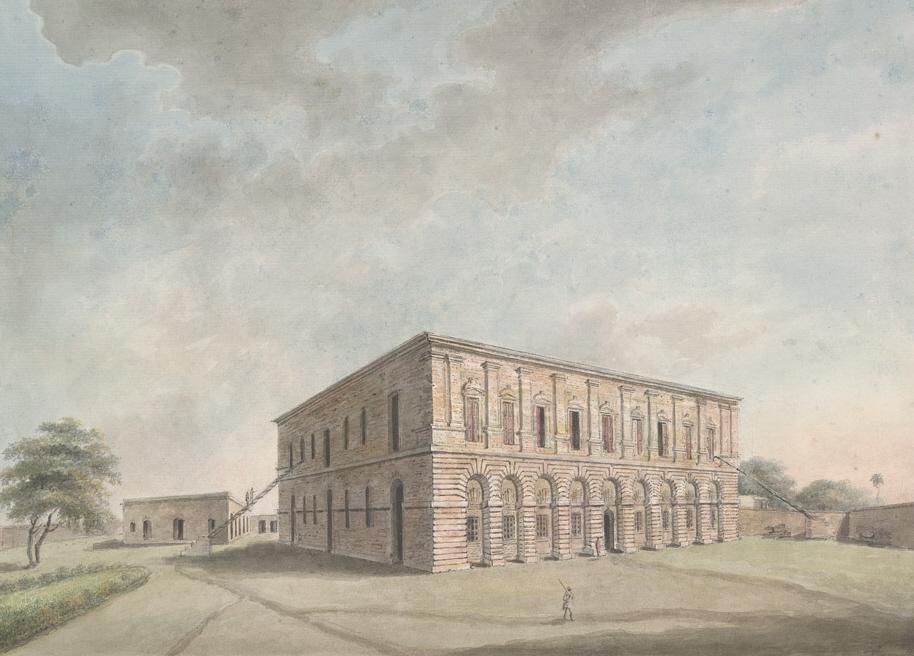
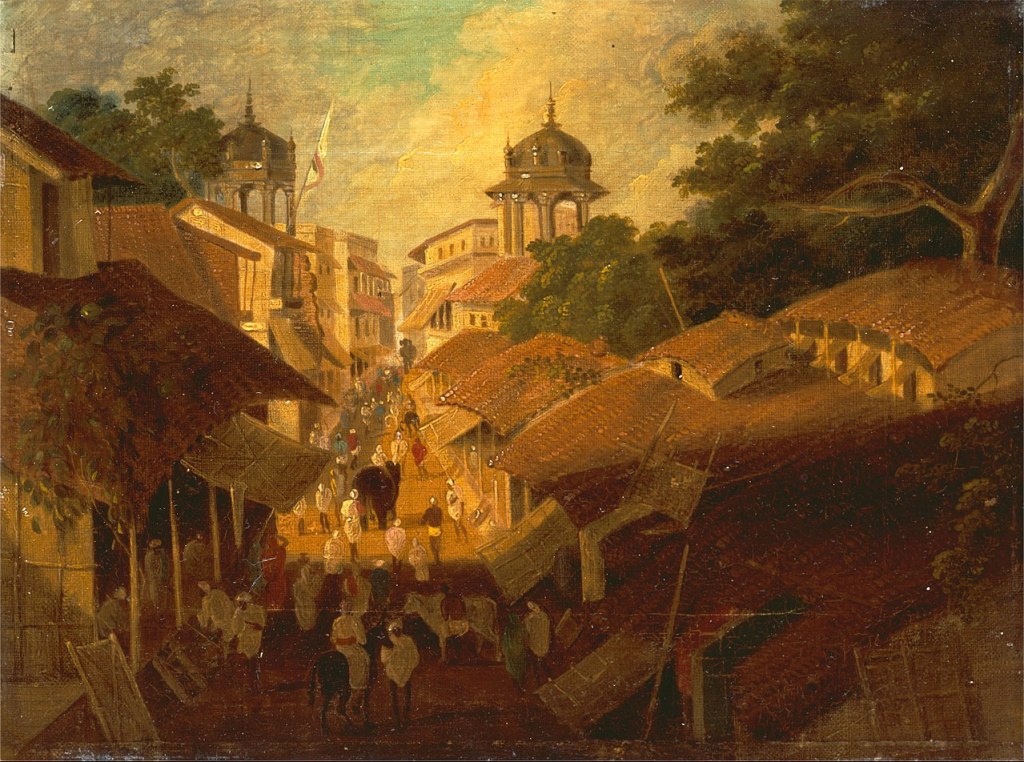
He found, in the central market square, a crowd of people, all apparently in a frenzy, beating drums and waving flags – they were not plundering the market, but their demeanour was anything but friendly. Lyell went forward on his horse in front of his men and made his way towards the crowd. A shot rang out, and Lyell fell from his horse. Before his men could come to his rescue, the crowd surged forward, while some rushed forward and hacked Lyell about the head and face with their swords. The Sikhs and Najibs stood their ground and charged. They captured several guns and took the flags; in the skirmish, one man was shot dead and another severely wounded. For Lyell, however, there was no hope at all, and he died at the scene. When his body was found, the injuries were so terrible that not even his closest friends recognised his face.
If this had been an attempt to excite the city, it failed. The chief instigator was not a Wahabi, it was not a Zamindar or even a sepoy; it was a bookseller named Peer Ali Khan.
Running his own bookbinding business in Patna, Tayler suspected he was using his business to distribute leaflets and pamphlets to the Patna populace, and his store was one of the venues where conspirators met. Yet, Tayler was unable to prove it, and Peer Ali Khan went unchecked. As it turned out, the plan had been for the Patna population to rise on the 3rd of July, kill the Europeans and place Ali Karim as the head of the new establishment. How Tayler found out was not so much his doing but that of Hayedat Ali and the deputy Magistrate, Moula Buksh, whom he appointed to lead the investigation.
The man wounded during the failed uprising had been separated and taken to the Sikh Hospital on Tayler’s orders, where his wounds were treated by Drs. Sutherland and Coates. That the man was still alive was a miracle – his arm had nearly been severed from the shoulder, there was a long gaping gash on his head and “the air was actually whistling through his lungs.” Although Tayler had spoken to him, the conversation was pointless – after a few days, Tayler sent in Hedayat Ali.
It took several conversations and much tact on the side of the Sikh subedar but eventually the man was induced to “give very important information, and, finding he was kindly treated, his wounds cared for, and hopes of exemption from capital punishment held out, he made a clean breast of it and disclosed all he knew.“
The information was corroborated by the confessions of others, though what sealed the fate of Peer Ali Khan was the evidence brought in by Moula Buksh.
Having been placed in charge of investigating the case, the deputy magistrate set to work, tirelessly examining witnesses, sending out spies to the various corners of Patna and listening aptly to everything that was happening in the city. Finally, one afternoon, he appeared in Tayler’s office with an armful of “murderous looking arms and implements (among them was an English fencing mask), and a large pack of letters, all of which had been found in the house of Peer Ali Khan, the leader of the outbreak and captain of the rebels…” Over the next few days, accomplices were ferreted out, and after a short fight in which he was wounded, Peer Ali Khan himself was arrested.
Ample evidence was produced by Moula Buksh to convict not just Peer Ali but 30 other men for their direct involvement in the events on the 3rd of July; it would be Peer Ali Khan who would admit to shooting Lyell.
Following a trial presided over by Dewan Moula Buksh, Tayler and Lowis passed a sentence on 14 men who were found guilty and condemned to death; a further 16 were sent to prison for 10 years.
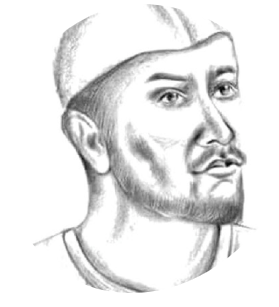
Tayler, although repulsed by what Peer Ali Khan had done, could not help admiring the man. “He was cool and defiant to the last, though manacled and wounded, and with the sentence over him; he showed neither fear, nervousness or shame. He said that there are some occasions on which it was good to give life and that if I sacrificed thousands in every day, others would fill their place. In character, appearance and manners, he was the perfect idea of a brutal, yet brave, fanatic.”
Before his hanging, Peer Ali Khan requested a short interview with Tayler in which he wanted to know what fate would befall his house, his property and his children. Tayler replied that the house would be razed to the ground, and his property would be confiscated. As for his children, who were residing in Oudh, Tayler could not give him anything more than an honest answer. “…all I could tell him was that, under the circumstances of that country, it was impossible to make either guess or promise in regard to them.”
Tayler did not believe that Peer Ali Khan was the ringleader of Patna. He knew the bookseller did not have the means to raise an army, much less feed and pay for one. The letters Moulva Buksh had produced proved without a doubt that Peer Ali Khan had been for some years in close correspondence with a man equally fanatical as himself, a bookseller in Lucknow named Musseoolzuman, whose hatred for the British was all-consuming. They had been plotting together, but it was still not enough to raise an army. A few months before his capture, Peer Ali Khan had been assisted by the banker Lootf Ali Khan’s jemadar, Guseeta, been able to employ numerous men to his cause and pay them: their instructions were quite clear and corroborated by other accomplices, they were to keep themselves ready to fight for the religion and Bahadur Shah. Tayler believed the letters found in Peer Ali Khan’s house were simply the tip of a very large plot to overthrow the EICo. Here was a man without the means to keep men in pay for months, suddenly able to appoint Darogahs and distribute money to coerce people into starting a riot.
There were other people involved. Tayler did not doubt it, but he had no way to stop it. For him, Peer Ali Khan was a dangerous man, but ultimately, he had sacrificed himself for others who would never openly acknowledge the bookseller of Patna.
Tayler, however, could arrest Lootf Ali Khan. This wealthy banker had been a thorn in Tayler’s side for some time – his sudden hobnobbing with the Wahabis was suspicious, and his funding of Peer Ali Khan’s failed riot was infamous but unprovable. However, opportunity comes in strange ways, and Tayler got his chance. Acting on information from one of the town policemen that a sepoy of the mutinied 37th Regiment of Benares was seen loafing about Lootf Ali Khan’s residence, presumably employed as a servant, Tayler arrested not just the mutineer but the banker.
The sepoy was hanged – he had been heard bragging openly about the Benares mutiny and how he had personally dealt with the English – and Lootf Ali Khan was accused of harbouring a mutineer. Unfortunately, Judge Farqhuarson did not think the evidence against the banker was strong enough and acquitted him. The acquittal enraged not just Tayler but many others, including many citizens of Patna who felt, as Tayler did, that the riot had been paid for by the banker, and he was, in effect, responsible for Lyell’s death. However, as we shall later see, Lootf Ali Khan had friends in places higher than those men of Patna.
Sources:
Great Britain Parliament. Appendix (A) to Further Papers (No. 5) Relative to the Mutinies in the East Indies. London: Harrison and Sons, 1857.
Malleson, G. B. The Indian Mutiny of 1857. London: Seeley and Co., 1891.
Tayler, William. 38 Years in India. 2 vols. London: W. H. Allen & Co., 1881–1882.
Tayler, William. Brief Narrative of Events Connected with the Removal of W. Tayler from the Commissionership of Patna. Calcutta: Privately printed, 1858.
Tayler, William. The Patna Crisis; or, Three Months at Patna During the Insurrection of 1857. London: James Nisbet and Co., 1858.
 Mutiny Reflections