Salvation
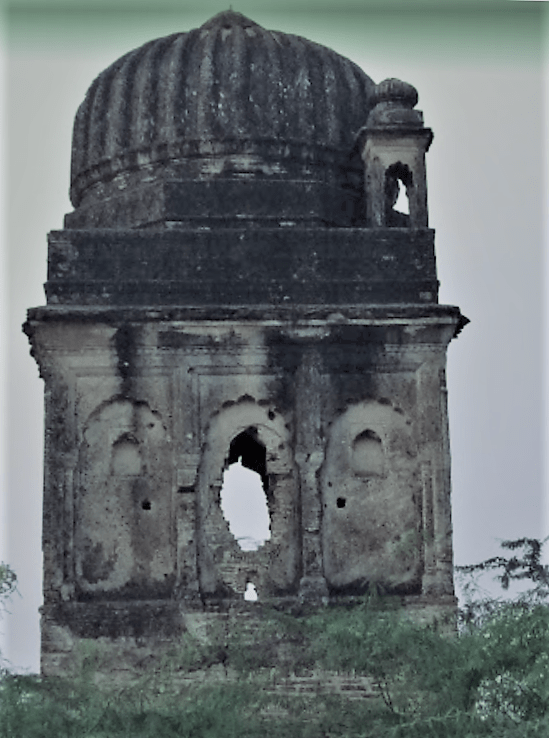
The grove of trees belonged, providentially, for Scot to the zamindar of Goyara Mugali and they would soon make the village’s acquaintance.
“First a wretch of a boy came, and then two men, with massive bamboos and ill-favoured faces. We offered them money to bring us food, and grain, and grass. We had no better way of inducing the men to be silent. We did the same with the lad, meaning to make off when they gave us the food if anything excited suspicion. I believe both meant to be true. If they had gone away empty, they would have told on us, to a certainty. They were hardly gone half-an- hour when we were aware of some thirty men, with matchlocks, &c. , having got close to us, concealed by a hollow and some bushes. The rest got on their horses and began to move off. I got mine ready, brought him beside Lotty, and then determined to let myself be taken. I could not have got on with Lotty before me and have then escaped with a lamed horse. I might have just provoked a matchlock ball, so I took Lotty in my arms and stood still. The others stopped too. The men said they meant to give us food, &c., and then to show us the road, and would do us no harm, and made me mount. They put Lotty in my arms after I was mounted, and off we all set for a village. I felt sure we were about to be murdered in public. I thought and thought and hoped we would be taken to the Newab of Banda, to be killed before him. Various villagers had warned us that all who went there would be killed.
One abominable old man signed with his hand that my head would be chopped off, and he told by his face that he thought I deserved it and that he would, as a religious man, rejoice in and be benefitted by the spectacle.”
They were thus taken as prisoners to the centre of the town where they were greeted by a man Scot took for a rebel cavalry trooper, judging by his horse, saddle and dress, but he welcomed them and muttered “well done..” After much jostling and a feeble attempt at robbery by one of the villagers, they were told to be seated and, of all things, “A tom-tom was sent for, and we were desired to listen (that’s the word) to Zunowar Ali being proclaimed King of Delhi and India. I could not help saying, ‘For how long?’ and was glad I did not suffer for it.”
Food was suddenly brought to them in abundance, and one kindly woman gave Lotty some jam. After the meal, they were told to give up their swords – they were to be taken to the Nawab of Banda. Scot hoped he might find it “unsafe” to kill them, but he found a strange comfort in being murdered in a big city rather than an obscure village in the Indian countryside, to lie buried or not, forgotten and unknown.
Without their swords and with no recourse left but submission, the party had no choice but to part with the remains of their belongings. “I had nothing to lose but an £8 watch and eight rupees. I had on a short shirt, a pair of white trousers, one boot and sock, a golosh on the other foot, and a leather helmet. The others were in the same condition when plundered, but they had more to lose. Mr Smalley, I am glad to say, saved his wife’s marriage ring and a guard one to keep it on. They left me a little volume of the Psalms.” They were allowed to keep their horses.
Their road now lay in the direction of Banda. Their escort surrounded them so closely, making escape impossible but it also prevented anyone else from getting near the party. Village after village was passed without anything worse than a few malevolent glances. Late in the evening, they arrived outside the city of Banda. “When we got near Banda, the two head men of our captors, both nice-looking men, told me that they would, if it were possible, not let us be taken to the Cotwal, who would kill us, but to the Newab, who would set us free. It seemed to me they had a good deal of difficulty in getting us to the Newab, but they and party were bold fellows.”
The escort, with some force, pushed their way through the city and the crowded streets, allowing no one to touch the Europeans until finally they arrived at the gates of the palace. It was the 21st of June. They had been roaming the Bundelkhand countryside for 10 days and had traversed over 130 miles, Scot carrying little Lotty Mawe in his arms, the smallest survivor from Nowgong.
The Nawab in the Rebellion
We have met the Nawab of Banda before – Ali Bahadur II – who had tried so hard to protect F.O. Mayne and his party on their flight. The terrible death of Mr. Cockerell weighed heavily on the Nawab (Cockerell had been murdered by the nawab’s retainers outside the gates, and his body left for the dogs to devour) and he had sent a missive throughout his district, which disallowed the killing of Europeans. Rather than incur the Nawab’s wrath, the zamindars who brought in Scot’s party were following orders.
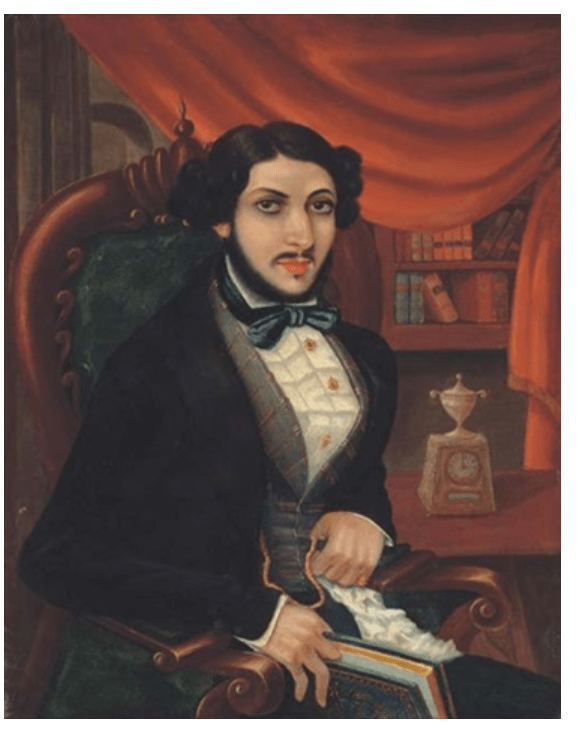
After Mayne had left, the Nawab had proclaimed his own rule and made provisions, utilising the Government police to prevent the town from being plundered. His rule was not, however, uncontested. Various rajas, talukdars and zamindars surrounding Banda were suddenly stepping up to take control of their erstwhile areas, while various emissaries and rebels from the states of Baronda, Panna and Charkhari occupied and overran portions of the district. The tumult is best described by F.O. Mayne.
“In the parganas, the news spread like wildfire, and the villagers rose in every direction and plundered and murdered each other promiscuously. Old enmities and long-smothered wish for revenge were forthwith satisfied. Auction-purchasers and decree-holders were ousted, travellers and merchandise plundered and the servants of Government compelled to fly for their lives; and in all instances, Government property and buildings were plundered and destroyed. Every man’s hand was against his neighbour and the natives revelled in all license and madness of unchecked anarchy and rebellion…Never was revolution more rapid, never more complete.”
Amid the chaos, the Nawab continued trying to save the lives of the fleeing Europeans and curtail the violence in Banda, but he was undermanned and his coffers were rapidly depleting. However as his power increased, his bad advisors did as well and he was eventually coerced to join the rebellion. By fighting pitched battles against other chieftains, reinforcements to his cause now came from rebels from the EICo army, and he made alliances with other nawabs and rajas whose interests lay in the destruction of the British in India, thus embroiling him into the mutiny. His army would be defeated by General Whitlock on the 19th of April 1858 and the Nawab of Banda would be forced to flee. He surrendered in November 1858 and was in exile in Indore with a pension of Rs. 36,000 per annum. This was seen as a reward for the lives he had saved but it broke him as a man, and he died in Indore in 1873.
The Journey Ends
For Scot and his party, their flight ended in Banda. They would remain in the fort under the Nawab’s protection until the 12th of July when it was finally determined safe to send them to Nagode. Lotty became quite the pet of the court at Banda, the Nawab’s mother declared her her own child and insured the little girl wanted for nothing. She was badly blistered from the sun and suffering from dehydration and hunger, sorely in need of a mother’s affection. It must have been with much joy when her mother, Mrs. Mawe was brought in alive to Banda some days later. Captain Ewart, Lieutenant Barber and Mr. Smalley’s baby boy died on the road to Allahabad.
“Poor Barber was very weak. He was as thin as a skeleton, and never equal to two days’ consecutive work. Ewart had just come from England, seemingly perfectly recovered from epilepsy, which left him on the removal of some part of the skull. He was strong and stout…” but the effects of the sun took their toll on him and Ewart, like Barber, succumbed to sunstroke.
The Smalley’s baby did not have much of a chance. He was barely 9 months old, a mere infant, taken on a perilous journey without any chance of obtaining nourishment for him. Young Henry Kirke would be left with the solemn duty of burying his little charge by the wayside. Kirke made his way to Nagode with Lieutenant Jackson and the Kirchoffs both of whom survived, (much to Scot’s surprise) and reached there on the 29th of July.
As for Captain P.G. Scot, although his narrative ends here, he would live to fight another day. He would join the volunteer forces and would be Present at the actions of Mangalwar, Alum Bagh, and entry into Lucknow; the second defence of Lucknow; and in all the attacks on and by the Alum Bagh Force, from November ’57 to the 28th February ’58. He would fight in the battles against the rebels at Kursi and Ruhya; and the actions of Alliganj and Bareilly. For his services, he would receive a mutiny medal and two Clasps and a mention in General Sir Hope Grant’s Despatch.
The rest of his history fades out of time.
Sources:
Chick, Noah Alfred, comp. Annals of the Indian Rebellion, 1857-58. Calcutta: Sanders, Cones and Co., 1859.
Great Britain Parliament. Further Papers (No. 4) Relative to the Mutinies in the East Indies. London: Harrison and Sons, 1857.
Scot, P. G. Personal Narrative of the Escape from Nowgong to Banda and Nagode. Edinburgh: Thomas Constable, 1857.
 Mutiny Reflections