Betrayed
While the lie lasted it was well and good, but as it is, a story like this was bound to be unravelled at the smallest provocation. At sunset, after the people of Kabrai had tired of viewing the prisoners, the sepoys came to Scot and said the secret was out. It also happened to be Scot’s fault in a very twisted way.
The man who betrayed them was one Hajrace Singh, a sepoy of the 12th BNI who had been caught before the mutiny on Mahoba with stolen property on him. Scot told Mr. Carne to imprison him, but as things went when Mahoba mutined, the prison was opened, and Hajrace Singh made his way to, of all places, Kabrai. With some glee, he told the officials of the town that the Europeans were not, in fact, prisoners, and there had been no order from Delhi. As luck would have it, the regimental Munshi and another native officer had taken the Christian Bandsmen and drummers to Kabrai and had offered them their lives if they converted. They backed up Hajrace Singh’s story.
The sepoys, who had so long tried to protect their officers, now said it was hopeless. They had done all they could, but from now on, Scot and the fugitives were on their own “and go where God and hope might lead us. They said the country was too hostile for them to defend us and that they must now try to save themselves.“
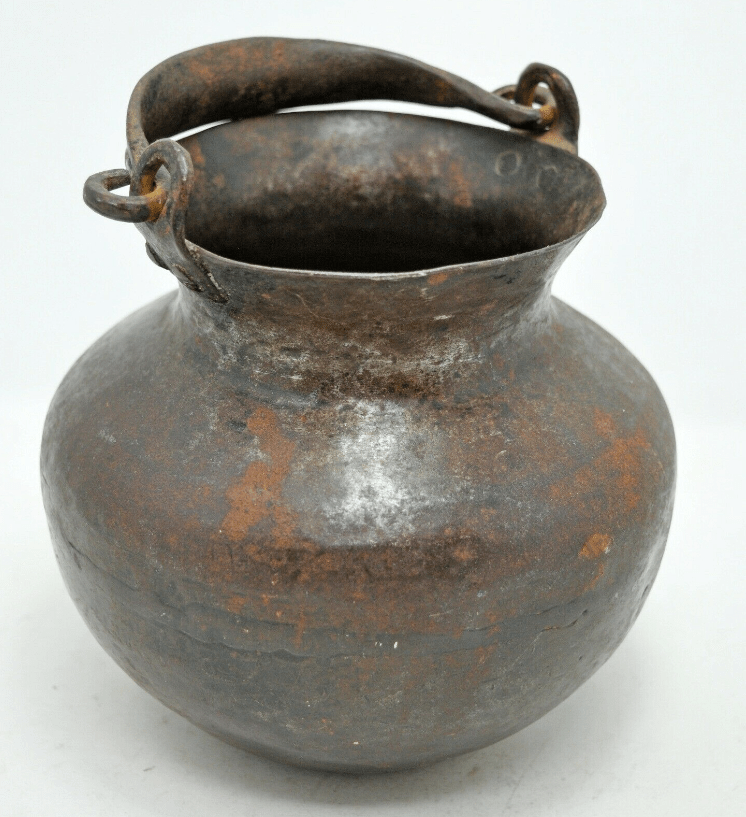
Scot and the remaining officers tried to convince them otherwise, but there was nothing for it. The sepoys, one by one, melted away into the growing darkness. One gave Scot his own lota to draw water from wells and Durga Singh provided Scot with a string for it. It must be mentioned here that this would have been a very personal gift. Hindu sepoys, bound by caste, could not accept water in any cup but their own; hence, they carried their own drinking vessels or lotas. The loss of a lota was quite a heavy one for a sepoy on the march, and it certainly was not given to Scot with anything but the kindest intentions.
Onwards
Seeing there was nothing for it and the sepoys could not be persuaded to continue on with the fugitives, Scot gave the order to move on.
The party now consisted of
Captain Scot
Captain Ewart
Lieutenant Barber
Lieutenant and Adjutant Jackson
Dr. Thomas Mawe, wife and daughter Lotty, aged 2 years and 19 days
Henry Kirke
Mr. Smalley – Bandmaster and his baby boy
Sergeant Kirchoff of the canal department and his wife
Mr. Langdale, writer to Captain Scot
Patrick Johnson, writer to the Adjutant
Mrs. Tiernay and 2 children
Mr. Sturt of the Salt Excise
Artillery Sergeant, unnamed
Mr. Sturt decided to take his chances disguised as a native and set off on his own. Mr. Langdale had disappeared somewhere, presumably, he had joined the other men of the band and was moving on with them. Patrick Johnson was suffering from a rupture (or a hernia, where this was located is not disclosed), which made it impossible for him to carry on with the party. Unable to walk, he determined to go to the city as best he could and make as good as terms as he possibly could. Scot took the chance to hand over Mrs. Tiernay and her children into his care. “He was a faithful fellow. The officers could not have taken him, and he did not make any attempt to force them to do so. He urged us to go. He might have gone with the other men (he was once in the Band), but stuck by us. He could neither help us nor we him.” Scot hoped they would be safe, being in his estimation, most uninteresting and what with Kabrai being a Hindu city, their chances of survival were quite good.
Scot gave Mr. Mawe and his wife poor Townsend’s horse, which they both mounted. He then gave over his own horse to Mr. Smalley, who had no soles on his shoes and Scot started off walking, with a boot on one foot and his other encased in the boot of Major Kirke.
Mr. Jackson, Henry Kirke, Mr. Franks and Mr. Remington had their own horses while Mrs. Kirchoff sat on her husband’s while he walked beside her. Only one sepoy offered to accompany them, but Scot did not really see the point –
“We sent him away, and I told the others of my Company not to take service against the Government but go home and be quiet till the ship righted. I must say the fidelity of these men was amazing. In no other Regiment did men do as these did; and they only left us when they were afraid, and could not help us, because they were so demoralised and disorganised by panic, &c. A great number were Brahmins, three out of the four native officers were; the fourth was a Mussulman.”
 Mutiny Reflections