Lieutenant Jackson’s Ride
Lieutenant Jackson had left Chhatarpur on the night of the 12th, not waiting for Captain Scot and Lieutenant Townsend to return from their fool’s errand to Nowgong as they imagined the two officers dead. News had been given to them to that effect (Scot had been told, on the other hand, that Major Kirke and the others were dead, so neither had any great expectations of a Wiedersehen).
Lieutenant Jackson makes no mention of Major Kirke being off his head; he simply states that on the morning of the 15th, Scot and Townsend arrived in Mahoba with the major. Mr. Carne set off on his own road; Jackson believed him on his way to Mirzapore.
The party which left Mahoba was as follows:
All the officers of the 12th BNI;
Lieutenant Townsend of the artillery
Sergeant Major Lucas of the 12th BNI
a sergeant of the artillery whose name is not known
All the Christian drummers and buglers of the 12th, except one named John Nimrod who chose to follow the mutineers instead
Bugler Roderick of the artillery with his family
Station-staff officer Mr. Langdale
Mr. Patrick Johnson – writer to Lieutenant Jackson,
Dr. Mawe, wife and child
Mr. Smalley – bandmaster of the 12th – with wife and infant
invalided Subadars Doolar Tewarry and Nudhan Missah
Jemadars Emam Bux and Ramdutt Tewarry
ten non-commissioned native officers and 82 sepoys.
Sergeant Kirchoff and his wife made up the rest.
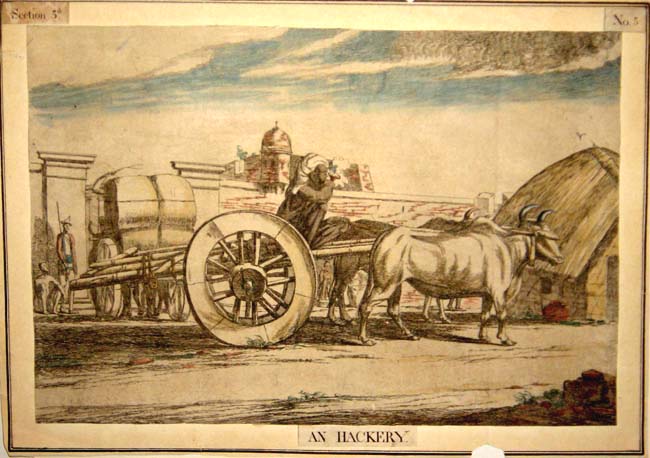
This sizable party was distributed over a variety of conveyances, mostly bullock hackeries and numerous horses. Given the poor state of the roads and the inevitable slowness of the bullocks, they had barely cleared Mahoba by the 18th of June stopped at a village called Joorah. Here, they were found by Mr. Carne, who brought with him money, some 1000 rupees lent to him by the Raja of Chirkari for the express purpose of paying the sepoys their dues for May.
“Towards the afternoon we heard that a number of matchlockmen under the command of a man styling himself Prann Sing intended to dispute passage, or, at any rate attack us, and in fact we saw large numbers of armed men at this time stationed on the hills immediately overlooking the spot on which were encamped..”
The native officers immediately gave Scot and the others to understand they would in no way risk their lives for them (according to Scot, they were not willing to protect the women and children but only their officers), and told them they should pay off the hostile parties that now menaced them, that they might not only leave them unmolested, but also give them safe passage to Kalinjur. The money was duly paid, and an agreement was signed with an oath of supposed fidelity which was meant to be binding (it wasn’t), and the sum of 700 rupees was paid to Prann Singh on the spot with another 300 rupees promised on their safe arrival in Kalinjur (they never went).
The next morning, on the 19th of June, perhaps thinking the Europeans were worth more dead than alive, the matchlock men commenced firing on the party. They were providentially hidden behind some rocks, but it was of no use.
“All order amongst our men (notwithstanding the efforts of their officers) was immediately at an end. With the exception of some twelve or fourteen men who made a stand, the party commenced a disorderly retreat…Lieutenant Townsend, artillery, was shot dead, also one sepoy. Mahdid Subadar Dootah Teewarry was shot in the stomach and died afterwards, and two or three sepoys wounded. The retreat soon became a flight, men fired in the air without any purpose, others threw off their accoutrements and made for the jungle, the remainder made for Mahoba as fast they could, and we the officers had no alternative but to go with them…”
Lieutenant Ewart rode on in advance to make enquiries but came back saying that a sizeable force had gathered at Mahoba, and he had been fired upon. Herewith, Mr. Carne left and made his own way to the Chikari Raja. The remaining sepoys, upon hearing what Ewart had to say, struck off towards Kobrai. They gave their officers every intimation that they no longer considered themselves under any orders whatever, and one or two went even further, lamenting they had ever joined the officers in this madness, for it would certainly lead to their deaths. They did, however allow the party (according to Jackson) to accompany them to Kobrai – a city Scot states they were scared to enter.
On the road to Kobrai, Major Kirke died of sunstroke, shortly followed by Sergeant Major Lucas, Mrs. Smalley, and Mrs. Roderick (mother of the artillery bugler) succumbed to the same cause.
Captain Scot has left a long account of the sojourn in Kobrai and as Jackson’s narrative agrees with it, there is no point going over it again. The Christian drummers and bandsmen had had about as much as they could take for now: in a body they left the fugitives, some making for Kobrai to join the rebel forces in order to save their lives, others staying in the city itself, seeking patronage from an individual who had offered them protection.
The party was getting noticeably smaller and now consisted of :
Captain Scot
Lieutenant Ewart
Lieutenant Barber (Jackson calls him Barker)
Lieutenant Remington
Lieutenant Jackson
Ensign (according to Scot, Lieutenant) Franks
Dr. Mawe, wife and child
Mr. Smalley and child
Sergeant Kirchoff and wife.
They set off from Kobrai with nine horses, and those who could not ride were forced to walk. During the night, they lost their way in the dark and decided to remain in a grove of trees until dawn – Scot says it was the lack of water that caused them to stop; Jackson simply states they no longer knew where they were on the vast Indian plain. By dawn, they set off again, realising they were not more than eight miles outside Banda, and their intention was to cross the Ken River some three or four miles upstream and remain to the right of Banda. Not that they got that far.
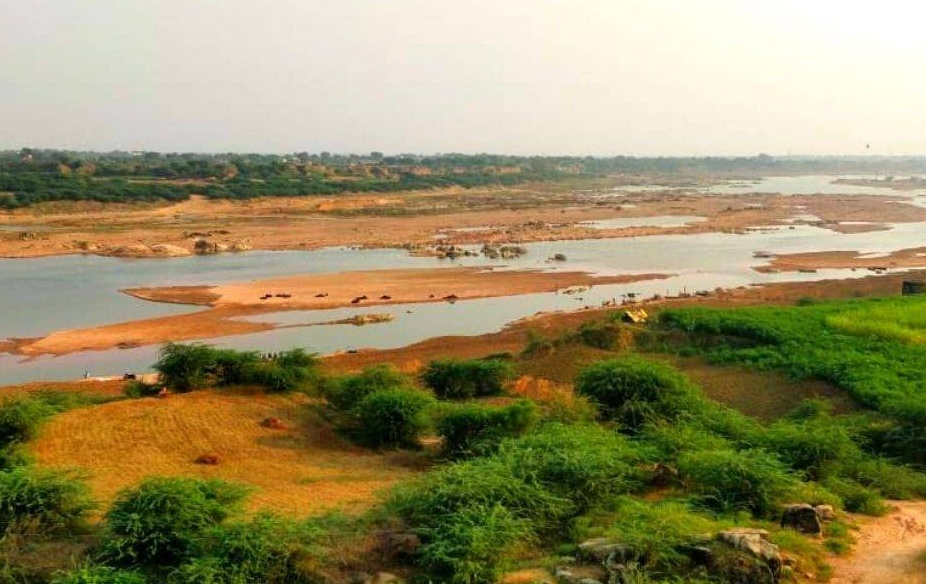
Lieutenant Jackson asked a villager to show them the way to the river (this is where Barber offered 1000 rupees to be taken to Calcutta, which started the whole fracas), but he raised the alarm instead, and within moments, six or seven men came charging after the party, assaulting them with lathis. Although the party was “mostly armed”, Jackson claims they did not shoot as they were “averse to take life without being compelled to do so,” and from fear of bringing even more attackers upon themselves. Scot on the other hand, details how they were hampered – he had a small child in his arms and only one bullet in his pistol, Smalley wasn’t armed at all, Kirke couldn’t use his gun and besides he was holding a baby, Remington fled as soon as Scot’s horse bolted, Franks was suddenly confronted by Mrs. Kirchoff’s terrified horse which attacked his and Jackson suddenly found himself as the only man able to take on their assailants.
After Scot and the others had left, thinking that they were certainly dead, Mrs. Kirchoff, who had fallen from her horse, was struck twice with a lathi. Her would-be murderer was on the point of sticking a spear through the poor woman when her husband interposed and, grabbing the weapon from the man, struck him with it through the chest, thus saving his wife’s life. Henry Kirke managed to shoot one assailant through the head while Jackson pulled Mrs. Kirchoff up behind him. They then commenced a hasty retreat towards the river.
The party had dwindled to nine, including the Smalley’s baby. “We were pursued in every direction by the villagers, and we suffered much from thirst, and had gone again to the river to get some water when some armed men came upon us. We immediately started off as fast as possible, and when we had gone some distance, we found the horse on which Dr Mawe and his wife had been riding following us, but without a rider…” There was no chance to go back to look for the Mawes, and Jackson would only later hear that Mrs. Mawe was safe in Banda.
Lieutenant Barber was the next to go, dying of sunstroke, his weakened frame unable to withstand the stress and the sun. He had lost his senses shortly before, needing Ewart and Kirke to look after him. At one point, he kept shouting, “It’s alright, it’s alright,” and attempted to flee but could not manage but a few steps. That night, the 20th of June, they arrived at a village on the Allahabad road, still 9 miles from Banda. It was sunset, and there was no possibility of going further without food or water. For once, the villagers did not want their heads or their possessions; they took the fugitives in and provided them with food and a place to rest. The next morning, two guides were organised to show them the way to Kallinjur. They were advised once again to avoid Banda but proceed to Nagode, so this was the road they chose to follow. The 21st of June and the days that followed would prove worse than what they had already endured.
“Our sufferings this day from the heat and thirst were intense. We were hunted like dogs wherever we were found, and about, I should say, 2 o’clock, Lieutenant Ewart died from the sun or exhaustion, or both combined. We tried to get water for him but were immediately pursued by the villagers. Shortly after this, Mr. Smalley’s child died.”
Their party had dwindled to Lieutenant Jackson, Henry Kirke, and Mrs. Kirchoff. A little before sunset, they fell in among eight villagers “who had determined to stick by each other and remain faithful to the Government. Had we not thus providentially fallen amongst friends at this moment, we could not have held out much longer, as my horse was scarcely able to get along, as we must have come that day I should say forty-five miles, and a great deal of the distance at a hard gallop.” Finally treated with much kindness, they were able to rest peacefully through the night. The next day, their new friends removed the 3 fugitives to a stronger village, and Lieutenant Jackson was able to send off a message to the Rani of Ajeghar, requesting protection. She immediately granted it, and they arrived at her fort on the 23rd of June. The distance of 12 miles was passed under a strong guard of matchlock men provided by the village that had taken them in. Here, they were reunited shortly after with Sergeant Kirchoff and on the 29th of June, this time riding an elephant, they arrived in Nagode.
There appears here an interesting passage in which Lieutenant Jackson lays the blame for the state of the countryside squarely on the shoulders of the Nawab of Banda, who may, even at this early time been playing a dual role. On one hand, he was moving the earth to save Europeans but at the same time, he had dispersed his troops throughout the district to proclaim the Company’s rule was at an end. He had a vested interest to appear, at least on the outside, a man of his people; he had, after all declared himself regent.
 Mutiny Reflections