Gorakhpur in 1857
This post follows on from Mr. Wingfield Calculates and completes the tale of the fugitives from Fyzabad.
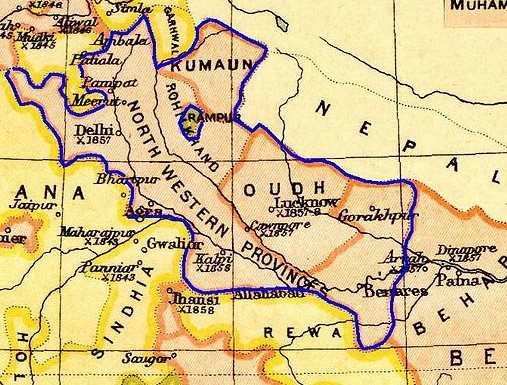
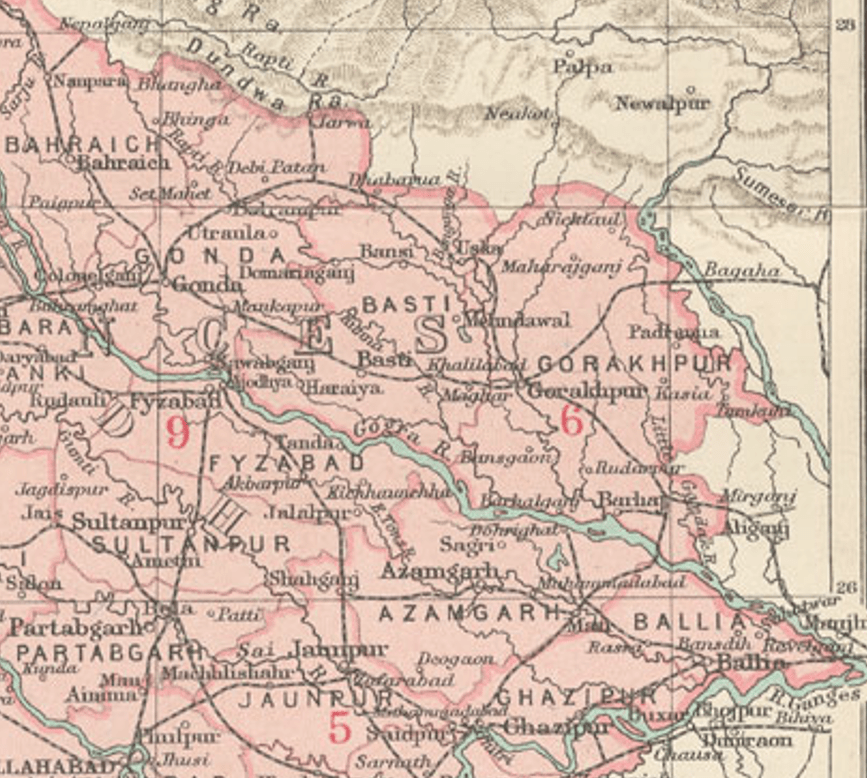
Situated in the far northeast corner of the North Western Provinces, Gorakhpur District comprised a large stretch of country lying to the north of the river Ghagra, which formed the natural boundary of Azamgarh and Ballia to the south. The western border aligned with Basti and, to the east, with the districts of Champaran and Saran in Bengal. To the north lay Nepal.
Gorakhpur was transferred by the Nawab of Awadh, Saadat Ali, to the East India Company in 1801 in return for protection against a perceived threat from the northwest by Zaman Shah Durrani. Besides Gorakhpur, the Nawab ceded the Rohilkhand division, along with the districts of Allahabad, Fatehpur, Cawnpore, Etawah Mainpuri, Etal, the southern portions of Mirzapur, and 10 Parganas of Kumaun. Initially, these were known under the rather ostentatious title of “Ceded and Conquered Provinces” and were ruled directly from Calcutta. However, this inevitably brought with it administrative problems – it would not be until 1836 that the region would be renamed the North Western Provinces and fall under the direct control of Agra.
In 1829, Gorakhpur was made the headquarters of a Division of the same name, comprising the districts of Gorakhpur, Ghazipur and Azamgarh. Mr. R.M. Bird was first appointed Commissioner. Until 1865, Gorakhpur and Basti formed a single district.
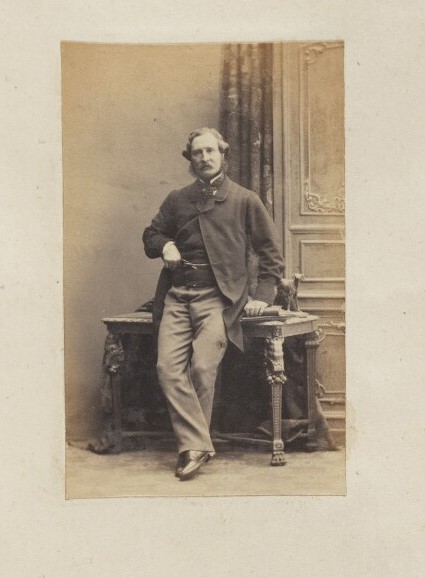
Although predominantly an agricultural area, Gorakhpur was home to some wealthy landowners and was parcelled out among several powerful chieftains. Several land grants were given to well-to-do Europeans, mostly in Basti, to derive a profit from large tracts of wasteland and jungle. However, by 1904, only four of the original 22 grants were still flourishing. The distribution of land to Europeans began in 1830, and it is of little surprise that it was not universally accepted by the local landowners. In 1857, it would become one of the sources of the hostilities that overtook Gorakhpur.
In 1857, Gorakhpur included an area of 7,3466 square miles, and a population somewhat exceeding three million. The judge was one William Wynyard, Mr. W. Paterson served as magistrate and collector, and the joint magistrate was Major Robert Wilberforce Bird, the son of the first Commissioner.
In Basti resided Mr. William Peppe, who was executor of an estate on the Nepal border known as Birdpore. He had originally been hired, together with his brother George, to set up a sugar factory at nearby Belrampore by Messrs. Beale and Sym, who owned just one of the many land grants or “estates” given by the government. In 1848, Peppe took over control of the failing indigo plantation of the now-deceased Mr.Gibbon at Birdpore, married his widow and took to planting rice instead. As a result, he was able to attract a sizeable number of cultivators from querulous Oudh who were only too glad to escape serfdom and obtain land from Mr. Peppe on agreeable terms. Villages sprang up, the jungle unfortunately disappeared, and most of the land was soon under the plough. By 1906, the estate boasted 252 villages and hamlets. We shall shortly meet Mr. Peppe again.
The military at Gorakhpur consisted of 2 1/2 companies of the 17th NI under Captain Steel. Their headquarters were at Azamgarh. A squadron of the 12th Irregular Cavalry from Sagauli made up the rest.
Being off of the main postal line, Gorakhpur did not receive news of the mutiny until the 17th of May. Until then, nothing untoward had happened in Gorakhpur; Mr Paterson’s application for leave had been granted, and he was making his plans. All this suddenly changed. As soon as Wynyard received the news regarding Meerut and Delhi, he immediately put a stop to Mr. Paterson’s departure – it was only to be “until we have heard of the annihilation of the rebels,” something no one thought would take too long. So, Paterson unpacked his bags and went home. Meanwhile, Wynyard received news from Azamgarh that he should put no faith in the 17th NI. True, he still had the 12th Irregulars whose character had never given anyone doubts and Major Holmes, their commander at Sagauli, was supposedly well-liked by his men. To his rescue came Mr. Tucker, commissioner of Benares. Telling him that peace in Benares was shaky at best and there might be an outbreak at any moment, he recommended Wynyard to “act boldly and on his own judgement”, granting him authority to assume any amount of responsibility he needed, both civil and military. Now, unfettered by red tape, Wynyard started to recruit. He enlisted men for the jail and others as local guards and wrote to well-affected local landowners and European planters, authorising them to start their own recruitment drives for the service of the Government. Wynyard then despatched 125 men of the 17th NI and a detachment of 34 men of the 12th Irregulars to act as escort for the Government treasure, which he promptly sent to Benares via Azimgarh at the end of May. It was not his decision – the rather insistent accountant of the North Western Provinces issued the order. It would appear some men truly had their heads in different places.
Wynyard had reduced his number of men to 120 sepoys and 60 sowars. He was still vastly outnumbered, but it was a start. Ever since he first heard the news of the mutiny, he had been receiving nothing but bad news. First, Ferozepore, then the outbreak at Lucknow at the end of May, then came, in swift succession, Nasirabad and Neemuch. Then, he received the ominous news of the mutiny at Azimgarh.
The same day, he instructed Mr. Paterson to write to Mr. Peppe to come to Gorakhput with whatever assistance he could bring. So writes Peppe:
On the 5th of June, 1857, I received a letter from Mr. W.S. Paterson [in manuscript copy as Patterson], Magistrate and Collector of Goruckpore [in manuscript copy as Goruckpoor], informing me that the troops at Azimgurh had mutinied and taken the station, requesting me therefore to come in with whatever assistance I could bring. I got together about 200 men and marched that evening for Goruckpore, reaching the station the next day (a distance of 50 miles)…
While Peppe was preparing, at Gorakhpur, things had taken an ominous turn. It was, of course, the treasure. The detachment of the 17th was commanded by Captain Steel, by all accounts a good and popular officer, and he rose to the occasion by parading his men. Paterson was a little less trusting of Steel’s men, and he surrounded the parade ground with the remaining Irregulars and a levy of local troops, just in case Steel should run into problems. The captain addressed the 17th, and at least outwardly, they did not show any signs of disaffection, only a marked indifference. He intended to march them back to Azimgarh the next day – and they refused his orders. The treasure, they declared, should not have left the station; it was, they claimed, theirs.
On the 7th, things looked even worse. Shortly before Peppe arrived, the prisoners attempted the break out of the gaol but were thwarted by the jail guard, “energetically led by Mr. Bird and Mr. Desmazures, an indigo planter..” In the ensuing ruckus, eight prisoners were killed and a further 12 wounded. As soon as he arrived, Mr. Peppes was put into service.
(I) therefore accompanied Mr. Wynyard, then Judge of Goruckpore, down to the Jail, and all over the station. The prisoners were driven back, and next morning, we had comparative quiet.
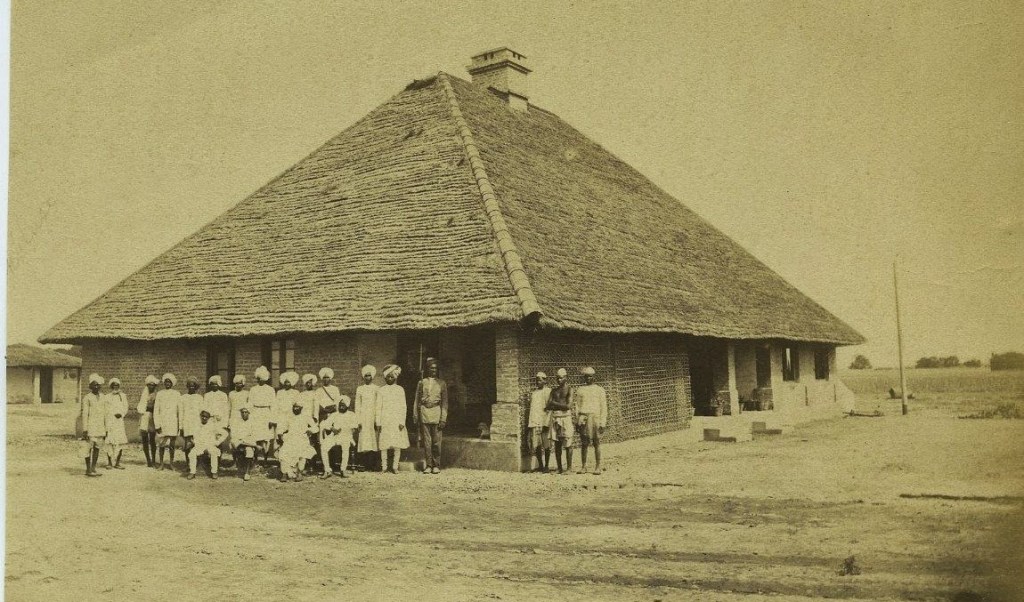
During the night, the 17th resolved they would march, but they would not go empty-handed. In the morning, they seized several carts and marched, fully armed, to the treasury. Aware that something was amiss, Steel and Wynyard caught them as they passed Wynyard’s bungalow. From the relative safety of the verandah, Steel and Wynyard attempted to bring the men to reason. The 12th Irregulars quickly fell into place while Mr. Peppe brought his men up to the house. The haranguing by Steel and Wynyard, along with the determined support of the other troopers, convinced the 17th to return to their lines.
A few days later, Peppe asked Paterson if his men could return home, but Paterson requested they stay, if nothing else for effect.
On the 8th of June, Wynyard received a little bit of heartening news from Henry Ramsay, the British Resident at the court of Kathmandu in Nepal. He promised to send 200 Gurkhas from Palpa, just across the border to Wynyard’s aid. There was at least some hope he could hold the district. However, the Gurkhas would be delayed. Three days later, the 34 men of the 12th Irregulars returned to Gorakhpur. They informed Wynyard what had happened at Azimgarh, of the treacherous behaviour of the 17th NI, that the Government treasure was well and truly in the hands of the mutineers, and the Ghaziapur District was in revolt.
In nearby Patna, William Tytler was still holding fast, providing a buffer for Wynyard to act. As long as Tytler held on, Wynyard did not have to worry about attacks from that side of his border. Trusting the 12th Irregulars, he sent detachments to Azimgarh, Basti, and other parts of the district, either with their officers or volunteers from the European residents, to keep the peace and restore order. He then proclaimed martial law and suspended all ordinary forms of trial, “and showed a zeal, an energy, and a resolution which had an extremely deterring effect upon the disaffected. They argued that no man would act with such boldness unless he had resources of which they knew nothing.“
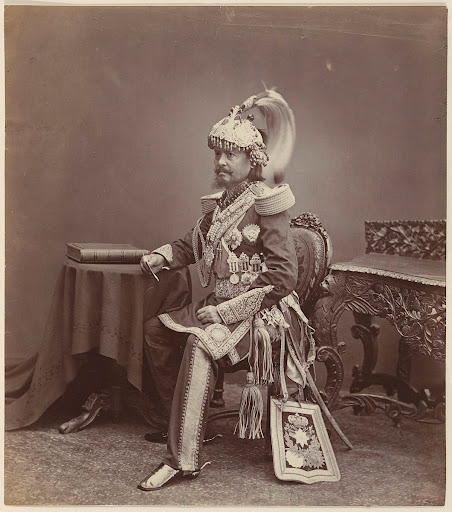
However, Wynyard had very few resources and was hoping his bluff would hold his district long enough for the Gurkhas to arrive. While he had support from Tucker to do as he pleased, Tucker, on the other hand, was preventing him from doing just that because Tucker believed accepting aid from Jung Bahadur Rana, prime minister and virtual ruler of Nepal, was “an evil.”
Jung Bahadur had, in May, placed his entire military force at the disposal of Lord Canning. The Nepalese had decided, as a matter of interest, namely theirs, it was certainly wiser to support the British in India than risk being run over by marauding bands of mutineers, many of whom were precariously dashing about close to the Nepalese border. Jung Bahadur Rana liked what he had seen of the British on his recent tour to Europe; he had a distinct dislike for the recently deposed court of Avadh, had little regard for the duplicity of the Indian rajas and above all, was horrified by the savage killings of the European women and children at Meerut, Delhi and elsewhere. Finally, in June, despite anything Tucker could say, Canning accepted Jung Bahadur’s offer. However, back at Gorakhpur, things were not going so well, and Mr. Peppe was busy.
On the 15th of June, I volunteered to go with 20 troopers of the 12th Irregular Cavalry as a Deputy Magistrate to Bustee (42 miles from the station of Goruckpore), where numbers of the Zemindars were plundering and burning the villages; my own men had then returned to their homes; all the time they remained at the station to support authority, of my own means I supplied them with money and rations.
What Wynyard requested was a little more elaborate.
From W. Wynyard, Officiating Commissioner, to Wm. Peppe Esquire, Goruckpoor … Zillah Goruckpoor, 15th June 1857
I have the honor to offer my thanks and the thanks of Government for the offer you this morning made, volunteering to go in command of a party of sowars to the west end of the District where there are some disturbances among the zumeendars, and where I understand that plundering and quarrelling exists among these classes.
2nd. You are hereby invested with powers of a Magistrate in this District till further notice, subordinate to Mr. Patterson, the Magistrate of the District.- I have requested Captain Steel to put under your command or the party of the 12th Irregular Cavalry noted in the margin:
1 Jemadar, 2 Duffadars, 18 Sowars
and you will find the party at your house at 8 p.m. this evening.
3rd. I request that you will proceed to Bustee and halt there tomorrow.- The Thanadar there will acquaint you with the state of the country.- The principal object of your going is to put a stop to the plundering that I hear is going on in that part of the District, and to strengthen by your presence with the Cavalry, the hands of the Government officials.
4th. From Bustee, I wish you to proceed to Mhoueadabur, taking with you all the available force from the Thana of Bustee, and the Theseelee Thana and Moonsiffee of Captaingunge together with a party of Bayldars and some gunpowder and utterly to burn and destroy that village.
5th. I hear in that Village that 5 of our countrymen were cruelly butchered in cold blood, and I shall be glad to hear that not one stone of it is left upon another. Of course you will be careful not to hurt anybody in the village, unless you are opposed.
6th. I hereby attach the village to Government and request that you will put the Tehseeldar in charge of it, the cattle and crops, and direct him to await orders from the Collector as to the future management of the village.
7th. This work done, I should like you to go to Gaighat and from thence go to Amorha, unless you may think of anything on the spot which makes you think your presence would be more desirable elsewhere.
8th. From Amorha, you can, if all is quiet, return quietly by easy marches to Goruckpoor unless you see reason for making a longer stay in that neighbourhood.
9th. I request that in the event of your finding any parties in the act of plundering you will direct the Cavalry to cut them up at once and to take no prisoners. Any opposition to your orders is to be treated in the same way.
10th. You will no doubt get valuable information from Messrs. Cook and Osborne as to where your presence with the Sowars is most required.
11st. It is possible you may find Mr. Paterson at Bustee tomorrow, if so, show him this, and if he sees fit from what he has heard there to make any alterations in the orders I have given you, he is at liberty to do so, and I will thank you to consider those orders to be the order you are to act upon and not these.
12th. Any expense you may incur for establishment, paper, &c. will be entered in the Magistrate’s Contingent Bill.
13th. A copy of this letter has been sent to the Magistrate and Collector for his information.
14th. I shall be glad to have a daily report of your proceedings.
On the 17th and 19th of June, refugees from Oudh began arriving in Gorakhpur, each with their tales of misery. As a precaution, Wynyard sent the ladies of the station under an escort of 12th Irregulars and 20 men belonging to the Raja of Benares, with two officers and a sergeant who had recently escaped from Oudh to Benares. He failed to convince the wives of the clerks to leave – at the last minute, they opted to remain with their husbands. As it is, the party that left and reached Jaunpore safely – however, there would be a snag. The district was up and swarming with rebels – all the landowners were in the process of throwing off their loyalties, and some of these stopped the party near Janpur and diverted them to Ghazipur.
Wynyard must have been rather affected by the arrival of the refugees and wrote to Peppe:
From W. Wynyard, Officiating Commissioner, to Wm. Peppe Esquire, Goruckpoor … Zillah Goruckpoor, 17th June 1857.
If any of the Pleaders of the Moonsiffe’s Cutchery are the least disobedient to his orders, have the goodness to direct the Sowars to shoot them.
Mr. Peppe reached Basti on 17 June and learned from Cocks and Osbourne that, in effect, the entire countryside was disaffected and several Europeans had been murdered within 12 miles of the place, while retreating from Fyzabad. Sergeant Busher, one of the men on the ill-fated boats, was still alive but very much still a prisoner of Bully Singh. Colonel Lennox and his family, together with a Mr. Haulton, along with another party, were still hidden in the house of Mohamed Hussein. Peppe immediately sent out a party to bring in Lennox; he then went, with the rest of the troops, to free Sergeant Busher. This he effected with considerable difficulty, but by evening, the remaining Fyzabad fugitives were on their way to Basti.
Mr. Peppe was beginning to throw off the coils of his civilian life: on 20 June, he marched on the village of Ganeshpur, just northwest of Basti, to disperse a body of rebels. These had been making themselves most disagreeable by threatening to murder a faithful zamindar. For their part, the rebels were having nothing of Mr. Peppes’ posturing and sent off for reinforcements from their ally, the Raja of Nagar, prompting Peppes to reconsider his position and return to Basti. He would have fought, he said, but his men, seeing the gathering numbers of the Raja’s men, refused to take on the challenge. In response, Wynyard sent Peppe another 20 sowars and officers to assist him. He then asked him to burn down the Mhoua Dabar, the place where the Fyzabad fugitives had met their grisly end. The next day, Wynyard suddenly had a peculiar change of heart:
From W. Wynyard, Officiating Commissioner, to Wm. Peppe Esquire, Goruckpoor … Zillah Goruckpoor, 21st June 1857
I have the honor to request that you will not attempt to burn down Mhouea Dabur, unless you feel quite strong enough to do it, with complete success, which from your letters to Mr. Patterson and Mr. Cooke, I imagine is not the case.
“2nd. Twenty more Sowars leave this for you tonight. I am sorry to hear you have so many sick with you- until you are reinforced and the men with you have recovered, I would not work them too hard.
3rd. Mr. Patterson suggests that your presence at Gunneshpoor for one night with a force of Sowars would place Umanoolla Pindoora in a position of security. You will act in this matter as Mr. Patterson may direct, as I know nothing about that matter.
4th. I will send some footmen to strengthen you if I possibly can.
5th. Your presence with the Sowars has had the desired effect of releasing Col’l. and Mrs. Lennox and family and Sergeant Busher, and the Government will be most grateful to you for your exertions in this good cause.”
Mr. Peppe carried on his work in this “good cause, ” attacking and burning the village of Saussepore on the 26th of June as the zamindars had taken to plundering the surrounding countryside. They refused to treat with Mr. Peppe, and he set their villages on fire.
Wynard was most approving.
“From W. Wynyard, Officiating Commissioner, to W. Peppe Esquire, Assistant Magistrate Goruckpoor … Zillah Goruckpoor, 29th June 1857
I have the honor to acknowledge the receipt of your letter to Mr. Patterson dated 27th June informing him of your having the assistance of 300 men, supplied by Sturdial Misr, the Karinda of the Bustee Raj, burnt down the houses of Bhyoroo, Ban Sing and Dabeedyal Sing of the village of Sonsarpoor, whom you had summoned, but who had refused to come to you, or to reply to your letter.
2nd. The Khuticks and Bhurs supplied by the Misr, appear to have done you good service, and the conduct of Ramdyal Lall Bhuggun, Sirdar and Rajivunt Sing, who pointed out the road, led the attack, seems to have been capital. I send you Perwanas to them, thanking them for their good service, and if you think a reward should be given to them, I shall be very happy to sanction it.
3rd. When the village began to burn, it was plundered- I am very glad of it- I hope that Byru Bux Sing and Dabeedyal Sing will come in to you when sent for next time.
4th. I am glad to hear that what has been done has diminished, if not stopped the amount of night plunder about you, if the crime continues another example must be made.
5th. I am very much obliged to Messrs. Cooke and Osburn for the assistance they have given you, and for their determination in staying at Bustee in these troubled times. Their presence there has no doubt contributed greatly to your success in your proceedings, and I have written to them to express my thanks.
6th. Again returning you on my own behalf, and on the part of Government, my thanks for the good service you have performed.
And this was how Wynyard held Gorakhpur District and systematically crushed anarchy. As we have seen in other mutinies, the disappearance of rule resulted in a vacuum of power. Local landowners and petty rajas, some reduced in stature by the advent of the EICo land reforms, took the opportunity to take back what they felt had been wrongly taken. Others were intent on ridding themselves of their neighbours. Wynyard wanted to make it clear that such deeds would not go unpunished – if he had allowed it, he would never have been able to hold Gorakhpur. However, the deeds of Mr. Peppe swung on the side of extreme.
Fugitives continued to arrive. Mrs. Mill and her three children had been reduced, after leaving Fyzabad, albeit late, to the position of wandering beggars, meandering through the countryside begging for food and shelter along the way. Her youngest child died of privation shortly after arriving in Gorakhpur. Maun Singh had extended his assistance to the women and children of Fyzabad, but as soon as opportunity knocked, he shifted them over the Wynyard. Peppe, for his part, was not holding back, and the village of Mahua Dabar finally succumbed to his torch for the sake of revenge.
From W. Wynyard, Officiating Commissioner, to W. Peppe Esquire, Goruckpoor … Zillah Goruckpoor, 4th July 1857
I have the pleasure of perusing your letter of yesterday’s date to Mr. Patterson, informing him that the destruction of the village of Mahooa Dabur was progressing satisfactorily but that it would take several days before all the houses are levelled to the ground.
2nd. I am rejoiced to hear of the progress which has been made in the destruction of this village. I am much obliged to you for the steps you have taken to accomplish it, and I shall be glad to be informed when it is complete.
Wynyard had set his example. Mohua Dabar paid a terrible price for murdering the last six fugitives from the boats that had left Fyzabad. Had Sergeant Busher not survived to be rescued by Mr. Peppe (after 10 days of captivity), no one would have been the wiser as to their fate. Peppe, however, was not quite finished, and a few days afterwards, he went and burned down the village of Tiljah, from whence he had been fired upon and had two men wounded.
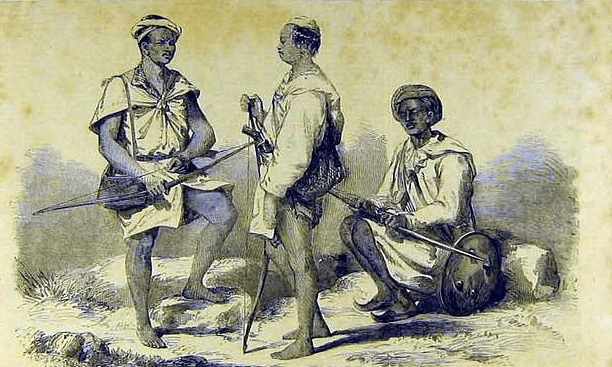
On the 25th, the two hundred Gurkhas originally promised by Ramsay arrived from Palpa, which briefly brought things to a check. More Gurkhas were pouring in from Nepal, and Wynyard sent them on. It was time for Mr. Peppe to leave. Wynyard relieved him of his duties as Deputy Magistrate and transferred the position to Mr. Cooke. He then requested him to return to his Grant at Birdpore. With the district “assuming some appearance of quietude,” Peppe returned to his property on the 29th of July.
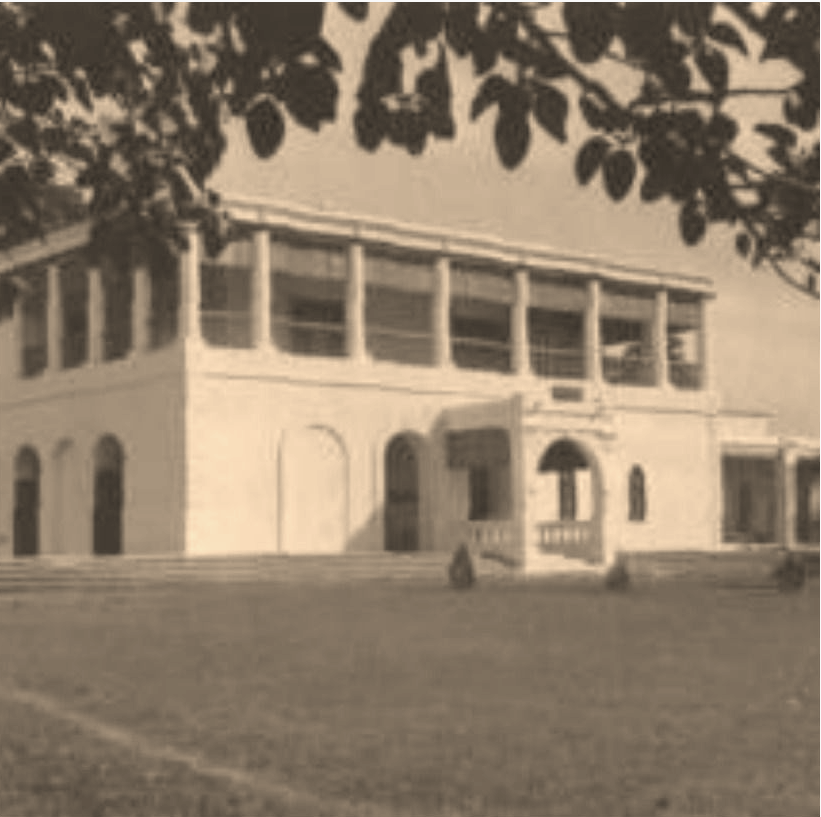
On the 28th of July, the disheartening news reached Gorakhpur that Major Holmes of the 12th Irregulars had been murdered in Sagauli. Realizing he now had another possibly mutinous force to deal with, Wynyard sent a message to the first division, who were still within marching distance, to make haste and return to Gorakhpur. They complied and arrived the same evening.
While this certainly saved the lives of the Europeans at Gorakhpur, it also spelt an end to Wynyard’s hold on the district. The Gurkhas were under orders to march by way of Azimgarh to Allahabad, but Azimgarh was still in the hands of the rebels. Colonel Pahlawan Singh declined to leave his men in Gorakhpur and refused to divide his forces. So, while they had but temporarily halted the inevitable, it was still coming. Wynyard received notification that the 12th that risen in Saguali were on their way to his station – without the Gurkhas, he could not hope to fight them off. As they would certainly be accompanied by all manner of rabble from the countryside – Wynyard’s burning expeditions had hardly made him popular – it seemed madness to remain.
So he made his decision. Before the Gurkhas left, Wynyard disarmed the 17th NI on the 1st of August. They were peaceable to the last. He then turned his attention to the few men left of the 12th Irregulars – while they gave up their arms to their own commandant, Risaldar Muhammad Bahksh, a few had other ideas. They wrested them from Baksh’s control and took off, pursued by the remainder of the comrades and Captain Warren. Six were killed, and one would later die of his wounds. The remaining 83 men remained staunch to the end. They would march with Havelock and Outram to the relief of Lucknow. Rissaldar Muhammad Bahksh finished his career as extra-ADC to the Governor-General.
The news arrived two days later that Captain Dunbar had been defeated near Arrah, which flung open the Bihar border for yet more mutineers to cross into the Gorakhpur District. He was relieved when the next day, Mr. Tucker at Benares informed Wynyard and the other gentlemen of the district that they could leave with the Gurkhas.
“Have no scruple,” Lord Canning had written, ” in retiring in time — you have long ago saved your honour.” He took Mr. Peppe with him, whose life would have been forfeit as soon as Wynyard’s back was turned. He then made over the charge of the district to the last loyal landowners and bid goodbye to Major Robert Wilberforce Bird, the last European in Gorakhpur.
Bird’s father had been well-known in the district as its first Commissioner, and Robert had been born there – he had a close affinity with most of the local zamindars and felt that in his position, and the memory that was held of his father, he would be safe, and he was wrong. As soon as the Gurkhas were gone, Gorakhpur became the scene of a heated fight between the zamindars of the surrounding neighbourhood and Munhmaed Hussein, who swiftly declared himself Nazim and came out victorious.
“But before this happened, one of the zamindars, the raja of Gopalpur, entered the town and released the prisoners. One of these, a man whom Bird himself had committed for forgery, forced his way into the presence of his old committing officer and seated himself on the table. The native guards declined to remove him. Bird then wrote to his European comrades for assistance, but it could not be given. The Gurkha commandant declined to send a man.”
For Bird, there was nothing left but flight. He first found refuge with Ahmad Ali in the Miyan Sahib’s Imambada. Ahmad Ali had been providing Wynyard with information about Azimgarh and developments throughout Gorakhpur. Unmindful of any danger to himself, he supplied the British with food, camps, carts and money in the course of the rebellion – it is said he prayed for the victory of the British, whom he saw as just and equal rulers. His is one of the rare accounts of that troubled time that points out the cruelty and rapine of the marauding rebels and the miserable rule of Muhammad Husein.
Unfortunately, Bird could not stay with Ahmad Ali for fear of bringing an early death on the man. Hussein put a price on Bird’s head of Rs 5000, an opportunity for easy money thought many, and Bird, cognisant of the fact, did not wait to see who would be the winner. Chased by all and sundry, he escaped to the jungle where the pursuers lost him. There was something to be said for knowing the district – Bird had hunted in it most of his life, and there was scarcely a path he did not know. He reached Betiah in the Champaran district in safety. Bird’s house in Gorakhpur was burned to the ground.
As for Ahmad Ali, he remained in Gorakhpur, tending his Imambada, much to the fury of the new ruler, who would have liked nothing better than to chop off his head. Unfortunately for Hussein, had he done that, he would have faced the wrath of the local population for whom Ali was nothing less than a saint. So he satisfied himself by looting the Imambada instead (but not the gold and silver tazias as this would have been the end of Hussein) and stealing Ali’s personal property while leaving the man unharmed. Ali continued providing intelligence to the British, for which they would eventually reward him with Rs 5000 for his damaged property, confirmed his early land holdings, compensated the losses of the Imambada (Ali had kept a very careful register) and a considerable property. They even offered him the title of Nawab, which he declined, saying that in his position, it was inappropriate, but he was grateful for their favours nevertheless.
Hussein would rule Gorakhpur for six months. Ahmad Ali wrote that during that time, every house in Gorakhpur was left poor and desolate. The soldiers were greedy and looted travellers on the roads, even recounting the atrocities they committed against the women of the city. Nor did Hussein remain unchallenged. Both the Rani of Basti and the Raja of Bansi took him to task, but on the other hand, several zamindars followed his flag. In what might be seen as Wynyard style, Hussein punished the Raja of Gorakhpur for refusing to pay the land revenue – an army was sent against him, and the raja fled to Azimgarh. However, he did manage to keep the treasury safe and, for a little while, did his best to administer the district with some modicum of success. However, the British would come back, and his reign would end.
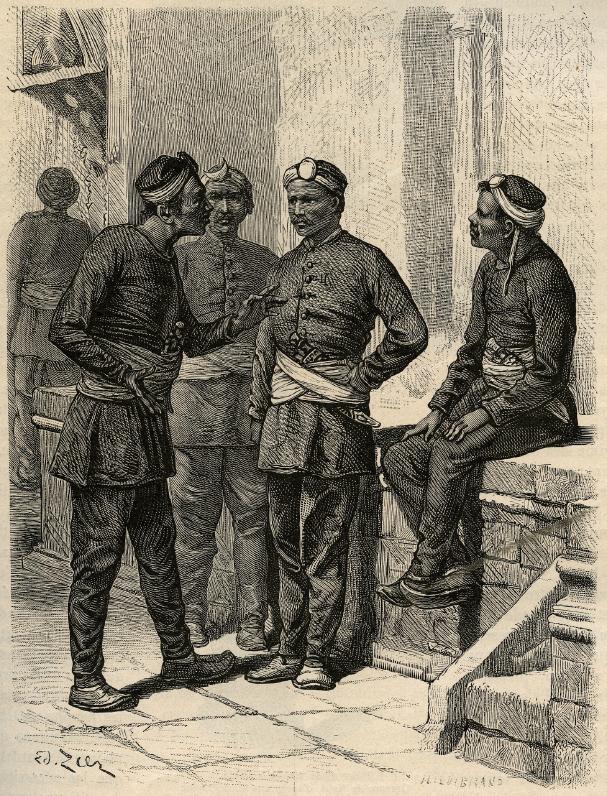
Meanwhile, the Gurkhas marched towards Azimgarh. On the 20th of August, they successfully repulsed a rebel attack on their camp at Gagha; the next day, they crossed the Gogra River and entered Azimgarh six days later. Wynyard was nominated civil officer of the Azimgarh District; for now, we shall leave him and the Gurkhas here.
Sources
Malleson, G. B. History of the Indian Mutiny, 1857–1858: Commencing from the Close of the Second Volume of Sir John Kaye’s History of the Sepoy War. Vol. 2. London: William H. Allen and Co., 1879.
Malleson, G. B. History of the Indian Mutiny, 1857–1858: Commencing from the Close of the Second Volume of Sir John Kaye’s History of the Sepoy War. Vol. 3. London: William H. Allen and Co., 1880.
Nevill, H. R. Gorakhpur: A Gazetteer. Vol. XXXI of the District Gazetteers of the United Provinces of Agra and Oudh. Allahabad: Government Press, 1909.
Links:
Some Little Known or Unknown Freedom Fighters of the War of Independence – https://www.jstor.org/stable/44147212
Civil Rebellion in Gorakhpur During the Revolt of 1857 – https://www.jstor.org/stable/44146077
The Peppés of Birdpore, U.P. – http://www.pastpresented.ukart.com/mahuadabar/mahuadabar-birdpore.htm
https://jmi.ac.in/upload/departments/history/drs/NoorulHaqiqat_DrFNasreen.pdf
 Mutiny Reflections