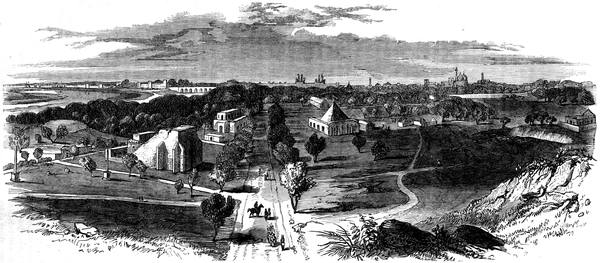
Taking the Ridge, 8 June 1857
8th of June
60th Rifles
Privates
Carthy, Michael, – severely wounded
Jennings, George – killed in action
75th Foot
Captain R. Dawson – severely wounded in the leg by round shot
Sergeant John Pearce – slightly wounded
Privates
Parker, James – slightly wounded
Peel, John – slightly wounded
Young, James Young – wounded in the right side
2nd European Bengal Fusiliers
Corporal John Merrifield was slightly wounded in the right knee. A mason by trade from the province of Andalusia, he enlisted at Devenport on 9 February 1848 for ten years. Merrifield died at Roorkee on 16 June 1861. He died intestate, leaving behind his entire savings of £28 to be disposed of by the government.
Privates
Nelly, Thomas – wounded in the neck. From Ennis, Clare, Nelly enlisted at Clonmel on 30 March 1854, for 10 years’ service, a labourer by trade. In 1858, he was at the Subathu Depot. In 1861, he volunteered to join the 104th Foot.
Porteous, William – left hand amputated. A blacksmith from North Berwick, William had enlisted on 30 January 1855 at Glasgow. He was invalided back to Europe in 1858.
Reily, Edmond – wounded at Delhi; died at Ambala in hospital
9th of June
1/ 60th Royal Rifles
Privates
Connoboy, Patrick – slightly wounded
Cranmer, Job – slightly wounded
Higgins, John – severely wounded
Hakeman, William – killed in action
Higgins, John – severely wounded (there are 2 men of the same name; this one bears No.3338)
Kearney, Thomas – slightly wounded
Grimes, Thomas -killed in action
Pugh, Richard – severely wounded
Smith, Richard – dangerously wounded
Wakeman, William – killed in action
75th Foot
Privates
Crosbie, Robert – severely wounded in the arm and hand
Graham, Lysander – wounded in right thigh
1st European Bengal Fusiliers
Corporals
Manning, James- died of wounds received in action
McGee, John – Killed in action
Privates
Logan, James – killed in action
2nd European Bengal Fusiliers
Privates
Kelly, Thomas – killed in action. A labourer from Borrisokane, Tipperary, Kelly enlisted on 22 October 188 at Kilkenny for 10 years’ service.
6th Dragoon Guards
Private John Hayden – Slightly wounded
Corps of Guides
Lieutenant Quentin Battye (56th BNI)– dangerously wounded, died of wounds 11th of June. Attached to the Guides Cavalry – Aged 25. Born at Kishnagarh, Bengal. Son of George Battye. Served in the Burma Campaign (1853). Grave at Rajpura Cemetery, Delhi – “Sacred to the memory of Quintin Battye, Lieutenant in the late 55th Regiment Bengal Native Infantry and 2nd in command of the Corps of Guides who fell whilst nobly performing his duty against the mutineers before Delhi on the 9th June 1857. this tomb is erected by his brother officers in the Guides as a slight token of their respect and esteem for his many soldierlike and amiable qualities.”
Lieutenant C.W. Hawes (43rd BNI) – slightly wounded.
Bengal Field Artillery
Gunner Michael Glenaun (3/3) – slightly wounded in the head
10th of June
1/ 60th Royal Rifles
Private Henry Geering – killed in action
75th Foot
Private Robert Crosbie – severely wounded
1st Bengal European Fusiliers
Private Lawrence Butler – died of wounds received in action
Bengal Horse Artillery
Gunners
Baker, Henry (1/2). Killed in action. Baker, a labourer from Cork, enlisted on 5 February 1852 at Southampton, for 12 years.
Denehy, Daniel (1/2). Killed in action. Denehy, a labourer from Dungarvon, Waterford, had enlisted for unlimited service at Cork on 20 January 1840.
Sirmoor Battalion
From Major C. Ried, Commanding the Sirmoor Battalion and Main Piquet, to Captain H.W. Norman, Officiating Adjutant-General of the Army – No. 71, dated Hindu Rao’s House, 11th June
For the information of the Major-General Commanding the Forces, I have the honour to report that about five o’clock yesterday evening, the mutineers, about five hundred strong, with two light guns and a party of cavalry, came out of Ajmere Gate, with the intention apparently of turning our right flank and threatening our rear. I immediately proceeded out with two guns of Major Scott’s battery, seven companies of the Sirmoor Battalion , two companies of the 60th Rifles, and a hundred and fifty of the Guides. The latter I threw out in skirmishing order, with directions to encourage the enemy to approach. The Rifles I extended on my left flank,, wih Gurkhas in line on my right. About six o’clock the mutineers approached in force. The guns they had with them opened with grape on the right line of skirmishers. I then threw out another company of my own regiment in skirmishing order in continuation of the first line. They advanced steadily with orders to spare ammunition as much as possible. Whilst the Gurkhas were advancing the mutineers called out to them,saying they would not fire as they (the mutineers) wished to speak to them. Others called out, “We expect the Gurkhas to join us; we won’t fire.” The Gurkhas replied, “Oh yes, we are now coming to join you.”
They closed upon their centre and went up withing twenty paces of the mutineers when they gave a well directed volley, killing between twenty and thirty, and followed them up until fired upon by the batteries at Ajmere Gate.
Major Scott’s guns opened with grape, ad apparently with good effect on the infantry and cavalry, which were seen retreating towards the Ajmere Gate. About 7.30 pm the mutineers retreated, on which I withdrew.
Our loss was three killed and two wounded in my regiment. The Guides three killed, but as yet no report of wounded (since reported, three wounded). Major Scott’s battery (two guns) three horses wounded, one killed.
The total loss in my regiment up to the present time is as follows –
3 Sepoys killed
Wounded: 1 Jemadar, 1 Havildar, 1 Naick, 12 Sepoys
Total Killed and wounded: 18
“The jemadar is severely wounded, and is just now a great loss to me, as I consider him one of the smartests officers in the regiment. He is certainly worthy of promotion; and although I have no vacancies, I trust the Major-General Commanding will be pleased to authorise me to promote him at once to the grade of subadar, retaining him on the rolls of my regiment as a supernumerary subadar until a vacancy occurs.”
11th June
1/ 60th Royal Rifles
Private James Power– died of wounds
12th of June
1/ 60th Royal Rifles
Lieutenant P.J. Curtis – severely wounded –“a shot between the arm and side which took a bit out of each” (H. Greathed, letter to his wife, June 13th)
Lieutenant H.G. Deedes – slightly wounded
Sergeant William Courtenay- slightly wounded
Ensign Everard Aloysius Lisle Phillips (11th BNI) attached to the 1/60th, slightly wounded
Privates
Bastable, Edward – slightly wounded
Eastment, George – severely wounded
Johnson, Thomas – slightly wounded
Lewis, William – slightly wounded
Rae, George – severely wounded
75th Foot
Captain Edward William John Knox – killed in action – Aged 37. Son of John and Maria, of Co. Mayo. Joined the Army in 1839. Husband of Charlotte Gardiner. Ref. The Times 28-8-57: ‘before Delhi, while gallantly leading his picket to repel the assault of the rebel army on The Tower Battery, he was shot through the head.’ He had only a moment before shot a mutineer when “his eye caught sight of a sepoy levelling a musket at him. “See,” said he, to one of his men, “that man pointing at me, take him down.” The words had hardly escaped his lips when the fatal shot took place upon his person. He was on one knee when singled out as a mark by the mutineer…as soon as he received the shot, he rose regularly “to attention” and then fell and expired without a word or groan.” (Rotton)
There are two stories about Knox’s death. The one comes from the pen of Reverend Rotton, as stated above, though colourful, it contradicts that of an eyewitness. Knox was neither shot in the head nor kneeling. He “was on his feet at the time and that as he was shouting orders to his men, a ball entered his mouth. It crashed through his cervical vertebrae and hurled him backwards to the ground, stone dead.” (de Rhe- Philipe)
Privates
Banks, Abel – killed in action
Bates, Thomas – severely wounded in the hand
Child, Thomas – wounded in the left leg
Cullen, Brian – killed in action; shot in the abdomen
Dinsdale, John – slightly wounded
Farrell, John – wounded in right hand
Freeman, Patrick – wounded in left leg
Kelly, Daniel – wounded in left leg
Knights, Samuel – slightly wounded
Rourke, Richard – slightly wounded
Sibley, Thomas – slightly wounded in right hand
1st European Bengal Fusiliers
Private James Pople – dangerously wounded through the chest on 12 June. Died of wounds 13 June. A labourer from Axbridge, Somerset, Pople enlisted for unlimited service at London on 8 December 1842.
2nd European Bengal Fusiliers
Corporals
Greenback, Richard – wounded in the spine
McKinnon, John – dangerously wounded in the right leg. He died on 30 September 1857.
Maguire, Robert – musket ball through the wrist
Drummer John Neil – died of dysentery. Neil enlisted in India, having arrived from Edinburgh in 1853, by his own means. He was a farrier by trade and joined the 2nd Bengal Europeans as a drummer.
Privates
Blair, John – wounded in the shoulder. A weaver from Glasgow, Blair enlisted on 1 May 1854 for 10 years’ service. He would be killed in action on 14 September during the assault on Delhi. Dying intestate, he left behind £101/5/10.
Cox, Henry – killed in action. Cox did not list an occupation when he enlisted at Agra on 12 March 1850, but stated his place of birth as Newington, Surry.
Lynan, Christopher – wounded in the hand
Prentice, Richard – dangerously wounded in the right arm, died of wounds
Rowland, Charles – wounded in the shoulder. He died on 12 September 1857.
Ryan, Patrick – wounded in the right foot.
Smith, Joseph – killed in action
Swindell, David – wounded in the shoulder, the right leg and testicles, Swindell had enlisted at Manchester on 3 January 1855, aged 24. He was born in Youlgreave, Derbyshire, on 28 January 1831. He was discharged on account of his wounds at Calcutta on 3 September 1860. In 1896, Swindell was a pensioner, living in Manchester, listing his address as 2, Stanley St., Hall St., Moston (Late of Manor House, Leverhulme, Manchester). FIBIS, Soldiers & Widows Pension Details, 1896.
Corps of Guides
Lieutenant Thomas Gilbert Kennedy (62nd BNI) – severely wounded
Bengal Horse Artillery (3/3)
Corporal Edward Reddin – wounded. A labourer from Borrisokane, Tipperary, Reddin enlisted on 4 February 1851 at Liverpool for 12 years. He was discharged, time expired, on 9 March 1861.
Bombardier James McAllister – severely wounded. Listing his profession as a clerk, McAllister came from St. Mark’s and enlisted on 23 October 1849 at Dublin. With the rank of sergeant, he was invalided home in December 1857.
Gunner Matthew Bissett – severely wounded
13th of June
1/ 60th Royal Rifles
Privates
Bergin, Dennis – severely wounded
Burne, Patrick – slightly wounded
Caroll, Michael – slightly wounded
Kerr, John – dangerously wounded by a musket ball “causing a compound comminuted fracture of the right radius about its middle, doing also much injury to the flexor tendons; several pieces of bone were taken away at the time.” He lost the use of his hand and was invalided out of the service at the age of 20 on July 21st, 1858.
75th Foot
Private Charles West – killed in action
1st European Bengal Fusiliers
Private James Fitzgerald – died of cholera
14th of June
2nd European Bengal Fusiliers
Private Benjamin Teale – died of cholera. A clerk from Leeds, Teale enlisted at London on 7 May 1849 for 10 years service.
15th of June
9th Lancers
Private Thomas Whitehead – severely wounded
1/ 60th Royal Rifles
Corporals
Forbes, Peter – severely wounded
Hickey, Michael – severely wounded
Privates
Green, Thomas – wounded
Healey, Daniel – died of wounds
75th Foot
Corporal Joseph Gibson – shot in the right forearm
Corporal John McDonald – severely wounded in the elbow. He was able to return on modified duty in September 1858, but had lost most of the use of his arm.
Privates
Atterbury, William – slightly wounded
Brondell, Henry – wounded in right thigh
Cook, William – wounded in the right shoulder
Greenfield, Charles – dangerously wounded in the chest by a bullet. According to “Gunshot Wounds of the Indian Mutiny,” Greenfield, aged 25, was wounded by grapeshot, weighing 4 ounces, on the left side of his chest. The ball “entered through the anterior fold of the axilla, and passed downwards, backwards, and inwards, in a slanting direction, through the left lung, and made its exit apparently between the ninth and tenth ribs, close to the spinous process of the tenth vertebra. The entrance aperture soon healed; that of exit did not heal for seven months, and for six or seven days portions of his food passed through it, and air from the lung.” He would not be fit for modified duty until August 1858.
Leary, Patrick – dangerously wounded in the chest by a bullet
Loraine, George – killed in action
McCue, James – shot in the left shoulder
McDonald, John – shot in the arm. He received a musket ball in the lower part of the elbow. Although is wounded healed, he could barely bend his arm, and he could no longer open his “little and ring-fingers” while the remaining were “powerless.” Following the injury, his arm was three inches shorter than the other, but he returned to modified duty on September 8th, 1858. He was 26 years old. (From “Gunshot Injuries from the Indian Mutiny”)
McDonagh, William – killed in action
Rolph, Thomas – killed in action
Starkey, William – slightly wounded
Widenham, Edward – killed in action
Bengal Field Artillery
Gunner Ralph Mardney– dangerously wounded, died of wounds 20th of June
16th June
1/ 60th Royal Rifles
Privates
Healy, Daniel – died of wounds
Riordan, Daniel – wounded
17th of June
6th Dragoon Guards
Privates
Hartnett, Thomas, – killed in action, Hindu Rao’s House
Jarvis Robert – killed in action, Hindu Rao’s House
McNamara, James – severely wounded
Sheeley, William – slightly wounded
1/ 60th Royal Rifles
Ensigns A.S. Heathcote – slightly wounded in Delhi Camp
Privates
Alexander, James, severely wounded
Conray, John – killed in action
Douglas, George – severely wounded
Myers, George – slightly wounded
Richards, James – severely wounded
1st European Bengal Fusiliers
Captain E. Brown – severely wounded
Corporal John McDonald – killed in action
Privates
Mealon, John – killed in action
Gibbons, Peter – killed in action
Neglan, John – killed in action
2nd European Bengal Fusiliers
Sergeant John Roberston – wounded. Died 22 June. From Lanark, Robertson enlisted on 21 September 1842 at Edinburgh, listing his profession as an engineer.
Private Patrick Carberry -died of cholera
Bengal Horse Artillery
Colonel Henry Tombs – wounded
Bengal Engineers
Lieutenant A.E. Perkins – slightly wounded
Engineers
Second-Lieutenant J.N. Champlain slightly wounded June 17
Sirmoor Battalion
List of killed, wounded and missing in the 2nd Column, commanded by Major C. Ried in the attack on the enemy’s position at Kissengunge on the 17th of June
Corporals and Naicks killed – 1
Sepoys wounded – 2
Ensign E.C. Wheatley (54th BNI) attached to the Sirmoor Battalion. Killed in action by cannon ball.
The shot which killed Wheatley killed a further seven men in Hindu Rao’s House, wounding another 2 who ultimately died of their wounds. Wheatley was said to be sleeping in a corner of the house when the fatal shot fell. He had been “well thought of for his gallantry and untiring energy of character.“
18th of June
1/ 60th Royal Rifles
Private Peter Forbes, aged 32, severely wounded “…by a musket ball, which struck the left testicle, passed through the pubis and bladder, and made its exit posteriorly in the centre of the right hip. The left testicle was so much injured that it was removed the same day.”
1st European Bengal Fusiliers
Privates
Abecco, Joseph – died of wounds received in action. A musician by trade from Manchester, Abecco enlisted at Liverpool on 12 November 1849 for ten years.
Nolan, John – died of cholera
Artillery
Captain J. Young, slightly wounded (Cave-Brown does not give a regiment)
Engineers
Second Lieutenant E.R. Jones, wounded, died of wounds July 24th
19th June
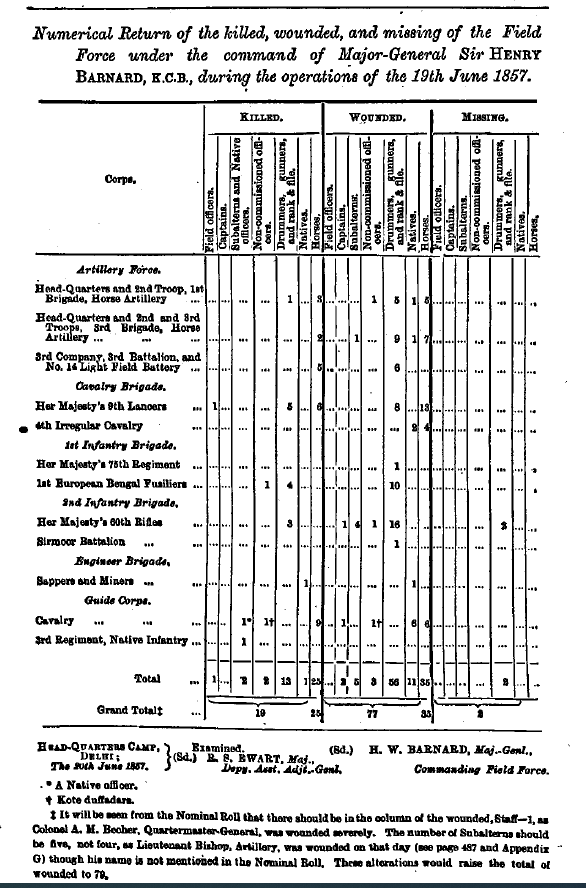
Staff
Colonel Arthur Mitford Becher (Quartermaster General) wounded, slightly musket ball in the arm “through the fleshy part of it below the elbow…” (Colonel Keith Young, letter to his wife, Camp Delhi, 20th June)
9th Lancers
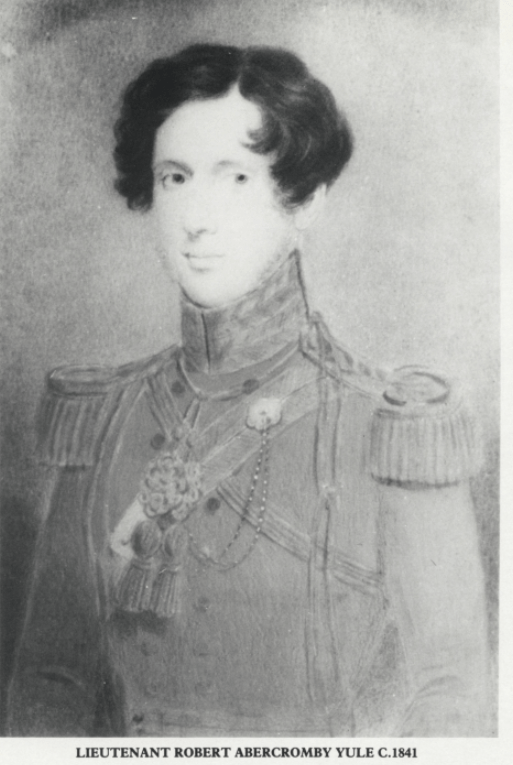
Captain & Lieutenant Colonel Robert Abercrombie Yule – killed in action. Served Ghuzni 1839 (16th Light Dragoons – medal), Sutlej 1845 (medal and bar), 9th Lancers in 1847, Punjab 1848 (medal and 2 bars). Married Margaret Rodgers at Edinburgh, 9th November 1841. Author of a treatise on cavalry tactics, “Notes on the Employment of the Cavalry.” He was 40 years old when he died leading his men on the 19th of June. His brothers, George and Henry, both served in the mutiny.
Corporals
Lee, James – severely wounded
Hancock, Thomas – severely wounded
Farrier George Crittenden – killed in action
Privates
Bowling, William – killed in action, 19th June
Butler, Michael – severely wounded, 19th June
Cullum, William – slightly wounded, 19th June
Durtnall, Edward – killed in action, 19th June
Leech, Alfred – killed in action, 19th June
Peckham, James -dangerously wounded, 19th June, died 24th June
1/60th Royal Rifles
Captain H.F. Williams – dangerously wounded, left femur fractured
Lieutenants
Dundas, J.D. – slightly wounded
Humphreys, Mervyn Archdall (20th BNI) – mortally wounded, died of wounds. Attached to the 1/60th Foot. Aged 26. Son of William and Anna, of Co. Cavan. Joined the Bengal Army in 1850. Grave in Rajpura Cemetery, Delhi – “Sacred to the memory of Lieutenant M. A. Humphrys of the 20th N.I. who was killed in action on the 19th June 1857.”
According to Reverend Rotton, who attended Humphreys, he had been struck by a musket ball in the neck “…and the wound impeded very considerably the organs of speech; the ball seemed to have travelled, and in its course, wounded the lung. The wound ultimately proved fatal: the poor young fellow linger through the night, and his sufferings were very great. I was a witness to them, and to the exemplary patience with which he bore them. I knew little of this officer in cantonments but saw him much in camp…My recollections of him, especially those which have reference to his last moments, are very pleasant. His conduct always inspired me with respect, but now I felt a deeper sympathy.”
McGill, J.S.D. – slightly wounded in Delhi Camp
Sergeant George Waller – severely wounded by gunshot in left thigh
Ensign E.A. Lisle Phillipps – slightly wounded 30th of May, again 19th of June, aged 22.
Private John Chilcott – killed in action
Private John Flynn – wounded by a musketball in the left leg, aged 21. The musket ball “entered the
inner side of the left tibia, two inches above the ankle-joint, and probably passed out at the external malleolus. Several pieces of bone came away from the entrance wound.” Flynn survived but his ankle joint was partially disabled.
75th Foot
Privates
Bennett, Henry – severely wounded in the back
Ford, Martin – dangerously wounded, right leg amputated. Died of wounds
1st European Bengal Fusiliers
Sergeant William Hawkins – killed in action
Corporal Patrick Redmond – killed in action
Privates
Armstrong, Henry – killed in action. A labourer from Waterford, Armstrong enlisted on 9 March 1854 at Cork for a term of 10 years.
Edwards, Michael W. – killed in action. From Callan, Kilkenny, Edwards, a labourer, enlisted on 18 April 1855, at Wexford.
Hartned, Daniel – killed in action
2nd European Bengal Fusiliers
Privates
Bateman, William – severely wounded. Bateman died on 22 June. He had enlisted in London on 2 May 1854, a labourer by trade.
Coyne, Michael – died of cholera. A collier by trade, Coyne had enlisted at Sollihull on 20 February 1855 for ten years. He was from Castlenagh, Roscommon.
Daly, Patrick – wounded in action, died of cholera on 19 June. Daly, a labourer, had enlisted for 10 years’ service at Cork on 27 April 1849.
Dines, Thomas – slightly wounded in the left leg. A labourer from Farnham, Hampshire, he enlisted for unlimited service on 9 January 1843 at London. Dines volunteered in 1861 to the 104th Regiment.
Heffernan, William – killed in action
O’Brien, Patrick – wounded in the stomach. A labourer from Youghal, Cork, O’Brien enlisted on 23 June 1854 at Cork. He survived his injury and would later volunteer in 1861 to join the 104th Regiment of Foot.
Sterling, William – wounded in the left knee. Sterling, a bookbinder by trade from Portsmouth, enlisted at Southampton for 10 years on 4 March 1852. In 1861, he volunteered to join the 104th Foot.
Walton, John – died of cholera
3rd Bengal Native Infantry
Lieutenants
Alexander, Robert Waller – Killed in action – Son of Rev. Robert Alexander. Grave at Rajpura Cemetery, Delhi – “Sacred to the memory of Robert Waller Alexander 3rd NI. Son of Revd. R. Alexander of Blackheath Ireland who was killed before Delhi on the night of the 19th June 1857 whilst gallantly engaged in repelling an attack made by the mutineers on the British outposts.
Yorke, James – Dangerously wounded. Attached to the 4th Sikh Infantry. Died of wounds, 1st July
Corps of Guides
Captain Henry Daly – severely wounded
Bengal Horse Artillery
Sergeant Matthew Gelverton (3/3) – wounded
Corporal James Milligan (1/2) – severely wounded
Gunners
Davis, Andrew(3/3) – severely wounded in the right wrist. A labourer by trade from Dublin, born around 1831, he enlisted at Liverpool in October 1853. Davis was discharged in London on 11 August 1858, having served 2 years and 7 months. He received a pension of 1s. 3d. In 1896, he was living at Flemingtown, Naas, Co. Wicklow. FIBIS Soldiers & Widows Pension Details – 1896
Gaynor, Bernard (1/2) – severe gunshot wound to the left arm. Gaynor was a gardener from Ballyboy before he enlisted at Dublin on 26 April 1840 for unlimited service. Raised in rank to sergeant, Gaynor was discharged in 1860.
Hogan, John (1/4)– severely wounded in the left thigh. A clerk from Cork, he enlisted on 4 August 1850 for 12 years service. As a sergeant, he reached the end of his service (time expired) and was struck off on 1 October 1860.
Pitt, Robert(3/3) – severely wounded. A shoemaker from Shoreditch, Middlesex, Pitt joined up at London on 30 December 1844. He was invalided back to Europe in December 1857.
Quinlan, James (3/3)– slightly wounded
Russell, Lawrence (3/3)– severely wounded. Enlisting at Dublin on 15 April 1851, Russell, a labourer from Rathdrum, Wicklow, had signed on for 12 years’ service. He was invalided home on 7 December, 1857.
Saxton, John (3/1) – dangerously wounded, died of wounds 21st of June. A watchmaker from Shrewsbury, Shropshire, Saxton enlisted at London on 1 September 1842 for unlimited service.
Scott, Henry (3/3)– wounded. Scott had enlisted at Glasgow on 4 June 1847, stating his profession as a labourer, from Rathfriland, Down. He died in the hospital at Bareilly on 14 May 1858.
Turley, Hugh (1/2)– killed in action. A currier from Glasgow, Turley enlisted on 27 June 1853 for 12 years.
Woods, James – Sword cut right shoulder 9 Jan 1857, slight. However, it would not be his only injury. On 11 September, he received a musket ball in the left hip joint, a wound severe enough that he was invalided to Europe on 27 November 1858. A draper from Gateshead, Durham, Woods had enlisted at Birmingham on 27 April 1854, for 12 years.
Bengal Field Artillery
Corporal Charles Corcoran (4/6) – severely wounded in the thumb of the right hand and left groin.
Born in the parish of Abbeystrowry, Co. Cork, a labourer by trade, Corcoran enlisted in Skibbereen on 25 April 1847 for unlimited service. He was noted as 5ft 7 1/2 inches in height, with brown hair, blue eyes and a fresh complexion. Attested on 26 April, he joined the depot on 10 May and on 21 June set sail for India. He died on 1 June 1864.
Gunners
Reilly, Timothy – (3/3) severely wounded in the breast. A labourer from Kenmare, Kerry, he enlisted at Cork on 6 April 1850 for 12 years.
Walsh, Robert (3/3) – slightly wounded in the thigh and again in the right side on 9 July. Walsh was invalided to Europe in 1866. He had enlisted at the age of 23 on 9 January 1848 in Wexford. Stating his trade as labourer and his birthplace the parish of Suttons, near New Ross, Wexford, Walsh signed on for 12 years’ service. He was 5’7″, with brown hair, blue eyes and a fresh complexion. The recruiters did not wait long to send Walsh to London: he was attested on 11 January and sent off four days later. By June 1848, he was on his way to India. FIBIS Register – EIC Recruits Dublin District Recruiting 1843-1850
Williams, John (3/3) – slightly wounded in the right side. A tailor from Ashton under Lyme, Lancashire, Williams enlisted in 1856 at Warley Barracks, Manchester, for 12 years.
20th of June
Regiment 1/60th Foot
Corporal Thomas Jennings – severely wounded
Privates
Boulter John – severely wounded
Coulter, William – severely wounded
Dixon, Thomas – severely wounded
Flynn, John – severely wounded
Hannick, Thomas – wounded
Hart, Christopher – severely wounded
Heaver, Edward – slightly wounded
Jones, George – dangerously wounded, died of wounds 28th of July
McDonald, John – dangerously wounded, died of wounds
Sheeley, Michael – severely wounded
Sullivan, Daniel – severely wounded
Turner, Samuel – slightly wounded
Wallace, Edward – slightly wounded
1st European Bengal Fusiliers
Corporal Thomas Spencer – died of cholera
Private Thomas Navesay – killed in action
2nd European Bengal European Fusiliers
Connelly, William – died of cholera. A labourer from Bandon, Cork, Connelly enlisted at Cardiff on 29 December 1854 for 10 years.
Marshall, James- died of cholera
Bengal Horse Artillery
Captain H.P. Bishop (2/3) – slightly wounded
Gunner James Lennox (3/2)– dangerously wounded, died of wounds. A linen weaver, born in the parish of Artrea, Magherafelt, Derry, he enlisted for 12 years’ service on 8 April 1854 at Ballymena, aged 25. He was noted as 5’8″, with brown hair and green eyes and a fresh complexion. FIBIS: Depot Registers of Irish Recruits (1811-1855)
21st of June
1/60th Foot
Private Edwin Carthy – killed in action
2nd European Bengal Fusiliers
Privates
Kelly, Patrick – died of cholera
McDonald, Patrick- died of cholera
Bengal Horse Artillery
Gunner John Thomas (3/2) – dangerously wounded, died of wounds. A hatter from Roscrea, Queens, Thomas enlisted on 29 December 1854 at Nenagh, for 12 years.
Bengal Field Artillery
Gunner Ralph Moroney (3/3)– dangerously wounded, died of wounds
22nd of June
1/60th Foot
Privates
Brown, Charles – slightly wounded
Corcoran, Philip – died of wounds
McPherson, John -killed in action
Regiment – Bengal Field Artillery
Gunner James Smith (3/3) – dangerously wounded, died of wounds
23rd of June
1/60th Foot
Captain C. Jones – severely wounded
Colour Sergeant James Baker – slightly wounded
Sergeant John Fairweather – severely wounded at Hindu Rao’s House
Corporal Samuel Ormsby – severely wounded
Privates
Butler, William – severely wounded, Hindu Rao’s House
Chisnell, Robert – severely wounded
Dickerson, John – dangerously wounded, Hindu Rao’s House, died of wounds
Eaid, Thomas – killed in action
Gordon, James – slightly wounded
Higgs, William – killed in action
Hogan, Thomas – killed in action
Irish, Samuel – killed in action
Lidgebird, John -slightly wounded, Hindu Rao’s House
Moncur, Alexander – slightly wounded
Palmer, Hugh -slightly wounded
Spick, George – severely wounded
Walker, Daniel – slightly wounded
Walker, James – severely wounded
Whitlow, Thomas -killed in action
75th Foot
Corporal D. Butler – slightly wounded
Private John Pellister – severely wounded in right arm
1st European Bengal European Fusiliers
Colonel J. Welchman – severely wounded
Sergeant Richard Harcourt – killed in action
First Lieutenant Stuart Hare Jackson – killed in action – Aged 19. Joined the Bengal Army in 1855. Third son of the late A.R. Jackson, MD of Warley Barracks. Buried at Rajpura Cemetery, Delhi – “Beneath this lies the mortal remains of Lieut. S.H. Jackson 2nd EB Fusiliers killed in action against the rebels on 23rd June 1857 during the siege of Delhi. erected by his brother officers as a mark of deep esteem.”
Corporal Matthew Bryan – died of wounds
Privates
Austin, Edward – killed in action. A labourer from Dublin, Austin enlisted on 9 May 1853 for 10 years’ service.
Austin, John – killed in action
Comyns, Martin – killed in action. A mason from Kilrush, Co. Clare, he enlisted for 10 years’ service on 2 February 1854.
Daly, Michael – killed in action. A labourer from Eyrecourt, Galway, Daly enlisted at Athlone on 7 April 1852, for 10 years’ service.
Hemsley, John – killed in action. Enlisting for unlimited service at London on 30 March 1846, Hemsley was a tailor by profession from London.
Hogan, Edward – killed in action. Hogan, a labourer from Nenagh, Tipperary, enlisted on 25 January 1854 at Nenagh for 10 years’ service.
Kerr, George – killed in action. A labourer from Paisley, Renfrew, he enlisted at Glasgow on 28 February 1854.
McArthur, John – killed in action. From Port Glasgow, Renfrew, McArthur, a labourer, enlisted at Glasgow on 8 October 1850, for 12 years.
Pilkington, Martin – killed in action
Smith, William George– killed in action
Willcock, Esau – killed in action. Willcock, a labourer from Stony Stratford, Bucks, enlisted at London on 14 December 1842 for unlimited service.
2nd European Bengal Fusiliers
Staff Sergeant John Kean- killed in action
Sergeant Michael McNamara – wounded in the thigh. A labourer from Kilkeady, Co. Galway, he enlisted at Cork on 16 November 1847 for 12 years. McNamara died at Delhi on 28 December 1857, leaving his estate, amounting to £111/11/3, to his wife, Bridget.
Corporals
Fread, Thomas – wounded in the shoulder. The wound was determined to be “disabling.”
McLaughlin, John – severely wounded, leg amputated. A blacksmith from Castlebar, Co. Mayo, he enlisted at Liverpool on 6 March 1848 for 10 years’ service. He was invalided home in March 1858.
Thomas, William – killed in action. Thomas had nearly seen the end of his service when he was killed. A carpenter from Dublin, he enlisted at Liverpool on 7 May 1848 for 10 years.
Privates
Brown, James – mortally wounded. A labourer from Dromore, Co. Down, Brown enlisted at Banbridge for 10 years on 31 January 1848. He died on 26 June 1857.
Cantle, Charles – killed in action. A clerk from Bath, Somerset, Cantle enlisted for 10 years’ service on 5 May 1855, at Dublin.
Connors, Patrick – killed in action
Cragan (alt. Creegan), Francis – died in camp. Enlisting for 10 years’ service on 30 June 1849 at London, Cragan was a labourer from Longford.
Fryers, Thomas – killed in action
Gallen (alt. Gallon) Terence – severely wounded in the right shoulder and breast. He was invalided to Europe on 14 March 1858. Gallen, a labourer from Enniskillen, Co. Fermanagh, enlisted for unlimited service on 12 June 1847.
Hales, William – wounded in the thigh. A brush maker from Southwark, Surrey, Hales enlisted for 10 years on 10 March 1854 in London. He was discharged in 1859.
Kelly, Michael – wounded in the leg. He was invalided to Chunar on 4 March 1858. Kelly enlisted at Althone on 1 March 1852 for 10 years. He hailed from Cork, Co. Cork and listed his profession as a labourer.
McCartney, Samuel – killed in action. Enlisting at Belfast on 9 May 1855, McCartney was a labourer by trade from Belfast.
Maguire, John – wounded in thigh
Mehan, Patrick – wounded in the knee
Morgan, Benjamin -killed in action. From Pontsteiverr, Cardigan, Morgan enlisted at London on 27 April 1849 for 10 years, a labourer by trade.
Morton, Thomas – wounded in the chest. A labourer by trade from Manchester, he enlisted at Dublin on 5 June 1830 for unlimited service. He was pensioned in 1860.
O’Dwyer, Michael – killed in action. From Limerick, O’Dwyer enlisted on 15 August 1939, for unlimited service.
Ormsby, James – killed in action. Born in Ghazpore to European parents, Ormsby enlisted at Subathu on 21 October 1846, although it is likely he had enlisted earlier on 1 December 1842, when it is noted as “Entertained as a musician by Regimental Order.”
Parry, William – killed in action. A puddler from Bangor, Flint, Parry enlisted for 10 years on 15 May 1855 at Liverpool.
Power, James – wounded in the knee. He was invalided on 26 December 1859 and pensioned in Europe at 9d a day from 3 June 1869. A labourer from Portlaw, Waterford, Power enlisted on 2 April 1849 at Plymouth.
Wilson, James – killed in action
Corps of Guides
Lieutenant A.W. Murray (42nd BNI) – slightly wounded
Bengal Field Artillery
Bugle Major John O. Byrne (H.Q. /6) – wounded
Unposted Recruit, Patrick Tynan – thigh fractured by a musket ball. The wound was severe, and he was invalided to Europe and struck off on 27 November 1858. Tynan was a clerk from Waterford and had enlisted at London on 16 July 1855, intending to serve for 12 years.
24th of June
75th Foot
Private James Guinane – killed in action
2nd Bengal European Fusiliers
Privates
Ambrose, William – wounded in the leg and on 14 September 1857, he was killed in action. A clerk from Kilworth, Co. Cork, Ambrose enlisted on 1 January 1848, for 10 years.
Donovan, Dennis – wounded in the neck. A labourer from Tipperary, he enlisted on 2 April 1849 for 10 years. He was discharged with the sanction of the government and struck off by Regimental Order on 10 May 1859.
Hutchinson, William -died of wounds
25th of June
1/60th Foot
Colour Sergeant William Court – slightly wounded
2nd Bengal European Fusiliers
Privates
McGrath , John – died at Delhi Camp. A labourer from Frenchpark, Roscommon, McGrath enlisted at Manchester on 4 July 1849 for 10 years.
Bengal Field Artillery
Gunner James McDonald – (3/3) – dangerously wounded, died of wounds
26th of June
2nd European Bengal Fusiliers
Private Michael Hanna – died at Delhi Camp. A weaver from Lurgan, Armagh, he enlisted at Newry on 25 February 1852 for a term of 10 years.
27th of June
1/60th Foot
Privates
Bathurst, James – severely wounded
Callaghan, John – severely wounded
Carter, Thomas – severely wounded
Dooley, Robert – died of wounds,
Hand, Henry – severely wounded
1st European Bengal Fusiliers
Private Michael Murphy – killed in action
2nd European Bengal Fusiliers
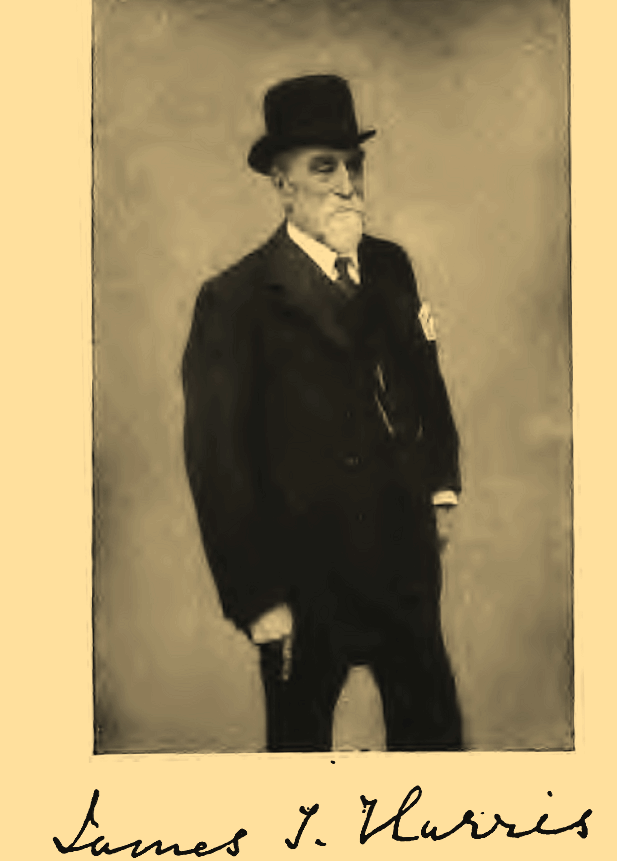
Lieutenant J.T. Harris – severely.
Harris would not be fit to rejoin his regiment for the rest of the siege of Delhi, only returning to the Fusiliers in February 1858.
Colour Sergeant James Dickson – killed in action
Privates
Agnew, James – wounded in the right foot
Bosher, James – severely wounded in the right arm; amputated
Briggs, Arthur J. – killed in action
Cook, John – killed in action
Doyle, John – slightly wounded in the left thumb
Dunkerton, Herbert – wounded in the right arm
Hartley, James – severely, died of wounds
Hanlon, Michael – wounded in the fingers. He was invalided to Europe on 4 March 1858. Hanlon was a labourer from Mitchelstown, Co. Limerick who enlisted on 1 November 1849 for 10 years’ service at Clonmel.
Harwood, Charles – wounded in the right thigh. A baker from Tiverton, Devon, Harwood enlisted at London on 27 March 1854, for 10 years. He transferred to the 5th European Regiment in 1858 as a sergeant.
Hones, George – wounded in the left leg. A shoemaker from Oxford, Hones enlisted at London on 27 April 1854. As a corporal, he transferred to the 5th European Regiment in 1858.
Keen, Lawrence- wounded through the groin. He died at Delhi on 2 July 1857. Keen was a labourer from Uxbridge who enlisted at London on 16 June 1854 for 10 years.
Moore, George – wounded through the body
Sharkey, John – wounded in the breast and arm. He died at Delhi on 11 July 1859. His estate amounted to £18/2/0 at the time of his death and he died intestate. A labourer from Roundwood, Wicklow, Sharkey enlisted at Dublin on 13 June 1849 for 10 years.
Walsh, John – dangerously wounded in the abdomen
Bengal Field Artillery
Gunners
Harding, William (3/3) – killed in action
McGillicuddy, Thomas (3/3) . slight graze on face
Unposted Recruit, John Woolridge – severe contusion of groin
28th June
1/60th Foot
Private Charles Mowatt – slightly wounded
29th June
2nd European Bengal Fusiliers
Privates
Ahern, Dennis – died of cholera
Cleary, Timothy- died of cholera. Contracted for a service of 10 years, Cleary was a labourer from Ennis, Co. Clare, who enlisted on 2 April 1849 at Limerick.
30th of June
1/60th Foot
Privates
Duggan, Patrick – severely wounded, 30th June
Enfield, Charles – severely wounded
Osborne, George -slightly wounded (regimental number:3167)
Peters, William – severely wounded
Tomlinson, George – wounded
2nd European Bengal Fusiliers
Lieutenant Charles Renny Blair – dangerously wounded (according to Tavender, Blair was wounded on the 31st of July; Colonel Young wrote of the incident in a letter to his wife on the 1st of July). Blair was shot through the liver, and it seemed, by the nature of the wound, he had been shot by his own men from behind; there was suspicion this may have been a case of taking care of old grudges rather than wounds of war. Nothing was ever proved. Lieutenant Blair survived his wound and ended his career as a general.
Private James Smith – wounded in the spine
3rd Bengal Native Infantry
Captain Caulfield – slightly wounded at Delhi. Attached to the 1st Bengal Fusiliers
4th Bengal Native Infantry
Lieutenant C.F. Packe – severely wounded. Attached to the 4th Sikh Infantry
Artillery
Lieutenant E.H. Hildebrande – wounded
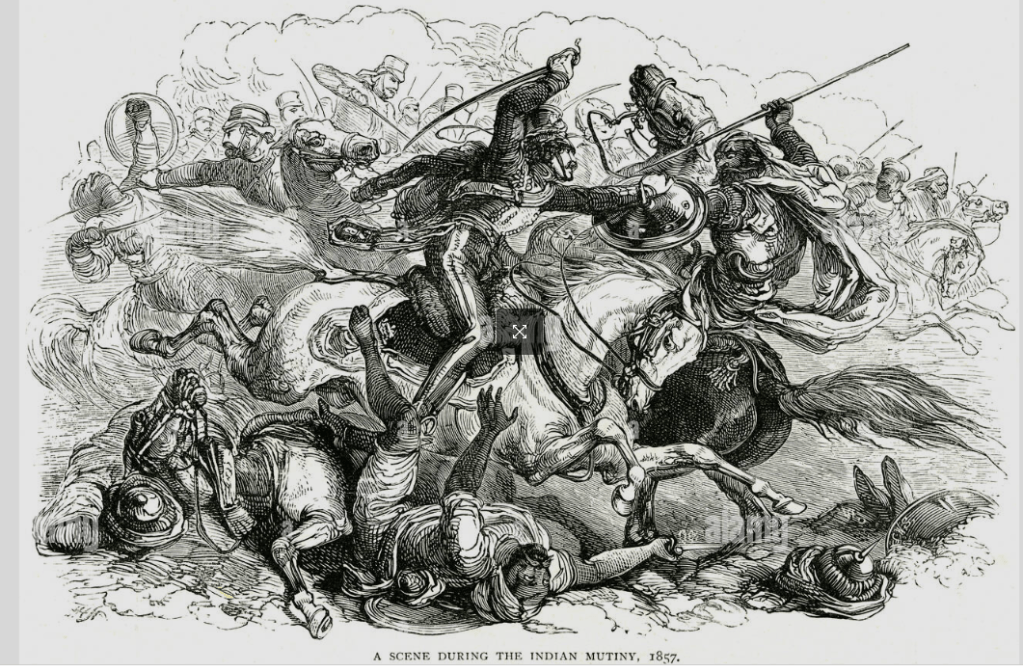
God of our fathers, known of old,
Lord of our far-flung battle-line,
Beneath whose awful Hand we hold
Dominion over palm and pine -
Lord God of Hosts, be with us yet,
Lest we forget - lest we forget!

"Recessional" (Rudyard Kipling, lines 1-6)
Sources:
Barter, Richard. The Siege of Delhi: Mutiny Memories of an Old Officer. London: Folio Society, 1984.
Cave-Browne, John. The Punjab and Delhi in 1857. Vol. 1. Edinburgh: William Blackwood and Sons, 1861
Greathed, Hervey Harris. Letters Written During the Siege of Delhi. Edited by Elisa Greathed. London: Longman, Brown, Green, Longmans, & Roberts, 1858.
Forrest, G.W. Selections of Letters and Dispatches & Other State Papers, Vol 1 . Calcutta: Military Department Press, 1892
Ireland, William Wotherspoon. History of the Siege of Delhi by an Officer Who Served There. Edinburgh: Adam & Charles Black, 1861.
Rotton, John Edward Wharton. The Chaplain’s Narrative of the Siege of Delhi, from the Outbreak at Meerut to the Capture of Delhi. London: Smith, Elder & Co., 1858
Tavender, I. T. Casualty Roll for the Indian Mutiny 1857–1859. London: Hayward, 1983
Young, Keith. Delhi 1857: The Siege, Assault, and Capture as Given in the Diary and Correspondence of the Late Colonel Keith Young. Edited by Henry Wylie Norman and Mrs. Keith Young. London: W. & R. Chambers, 1902
De Rhe-Philippe, George William, comp. Inscriptions on Christian Tombs or Monuments in the Punjab, the North-West Frontier Province, Kashmir and Afghanistan, Part II: Biographical Notices of the Military Officers and Others Whose Names Appear in the Inscriptions in Part 1. Lahore: Punjab Government Press, 1912
The Letters of Brevet Lieutenant-Colonel Robert Abercromby Yule: Part II
Journal of the Society for Army Historical Research Vol. 64, No. 259 (Autumn 1986), pp. 152-172 (21 pages)
https://www.jstor.org/stable/44225138
FIBIS:
Register – European Soldiers, Bengal Army 1790-1860
Depot Registers of Irish Recruits (1811-1855)
Soldiers & Widows Pension Details, 1896.
 Mutiny Reflections
still fascinating to read
LikeLike
I try to add details where I can. I thank you most whole heartedly for the compliment!
LikeLiked by 1 person