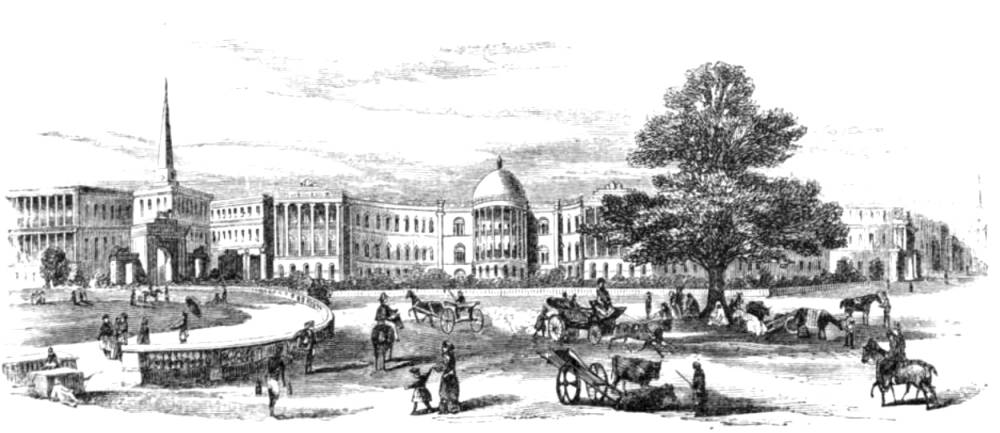
We left Calcutta on 16 May, with Lord Canning and his councillors considering the situation that was upon them. Information was not as forthcoming as would have been hoped, and from Delhi, there reigned an eerie silence. Canning had received a message from Agra that gave him some hope –
“The worst of the storm has passed,” wrote Mr. Colvin, “and the aspect of affairs is fast brightening. A very few days will now see an end to this daring Mutiny.”
Up to that point, with the facts they knew for sure, it looked like a localised uprising. However, some more astute advisors were fortunately not willing to believe the words of Mr. Colvin. From Barrackpore, General Hearsey wrote to Colonel Birch to urge Canning to call for all available troops from Madras, Bombay and Persia and to stop the China expedition. Henry Lawrence telegraphed Lucknow to Canning in the same vane, but also requested he ask for troops from Ceylon and the Gurkhas from the Hills; while Patrick Grant, Commander-in-Chief at Madras sent a hasty telegram to Canning, telling him to waste no time and send a fast steamer to stop the China force while John Lawrence gave him all of these suggestions and then some, all at once.
Beset by suggestions and recommendations from men far more able than his own council, and what had ended as a week of telegrams now started as a new week of letters. Canning wrote to everyone he could think of. Time was of the essence – the longer Delhi remained in the hands of the rebels, so much harder would it be to convince the other native regiments -as yet docile – that Company rule was not at an end. Delay was akin to death. With so few European troops along the Grand Trunk Road, Canning was all too aware that it would be impossible to quell any large outbreaks with any sense of efficiency.
On 19 May, the regular mail left Calcutta, bound for Ceylon – in it were letters from Lord Canning to Sir Henry Ward, Governor of Ceylon, to Lord Elgin, and General Ashburnham. To Sir Henry Ward, he sent a request to send as many European troops as he could spare – his request was for 500, and he would “accept Malays in place or besides them.” As for Elgin and Ashburnham, they were expected to stop off in Ceylon on their way to China.
These two astute men were being sent to China to settle a dispute – the Chinese had recently seized a British-registered but Chinese-owned boat, which was suspected of smuggling opium. When the Chinese refused to release the vessel, the British decided to send an “expeditionary force“ to settle the dispute. As unfortunate as the circumstances would be for China, they were a blessing for Canning.
In a letter to Lord Elgin, Canning wrote,
“I place the matter briefly before your Lordship; but I hope clearly enough to enable you to come to a ready decision. I will add, that I am anxious to bear the whole responsibility of all the consequences of turning aside the troops from China to India. But I beg your Lordship to believe that, in saying this, I am not influenced by any though that whatever may be, the course for which your Lordship’s wise judgement shall decide you will need any help from me in vindicating it to her Majesty’s Government.”
In the same post, Canning called on England to send troops, writing to the Chairman of the Court of Directors and the President of the Board of Control, he wrote to Mr. Mangles,
“…a proposal goes to by this mail for the immediate raising of three European Regiments for Bengal. No sane man will doubt that much of increase to our European forces is wanted and that the want should be supplied with as little delay as possible is obvious from the present exposure of our weak points. I do not as for augmentation to the established number of Queen’s troops, because for permanent purposes I much prefer an addition to the Company’s Army; and for the exigencies of the moment no reinforcements, except that of the China regiments would avail. But I do beg the Government to make up the complement of Queen’s troops, irrespective of those which now or hereafter may come to us from China. Do not let the supply of the missing regiments depend upon the turn of affairs in China, but let the gap be filled up at once.”
From Madras, Elphinstone suggested sending a swift steamer that would have overtaken the regular mail ship, but Canning refused. The letters meant for the China expedition missed them in Ceylon, but Canning had had the foresight to send identical messages by separate steamer bound for Singapore and it finally caught up with the China expedition as it made its way through the Sunda Straits between Java and Sumatra. Elgin took Canning’s letter somewhat seriously and eventually ordered the entire force to be diverted to India, though he himself would continue on to Hong Kong to await his troops at a later date. When it became clear his wait would be long one, Elgin himself set sail for Calcutta.
Letters written, there was nothing for it but to wait. The troops from Madras and Pegu were not expected to arrive for another two weeks, while the Persia and China forces would not arrive in India for months to come. Until then he would have to put on a brave face and hope Anson would organise himself to retake Delhi.
Canning’s next hurdle was the State Ball, given yearly on the 24th of May in honour of the Queen’s Birthday – in 1857, as it fell on a Sunday, the ball would take place the next evening. Loud were the calls to cancel it, but Canning refused. He also resisted the advice to replace the Indian Guard at Government House with European troops. His wife continued to make her rounds and drive in the evening in her carriage on the esplanade wither her small escort. For Canning, it seemed the best thing to do now was business as usual.
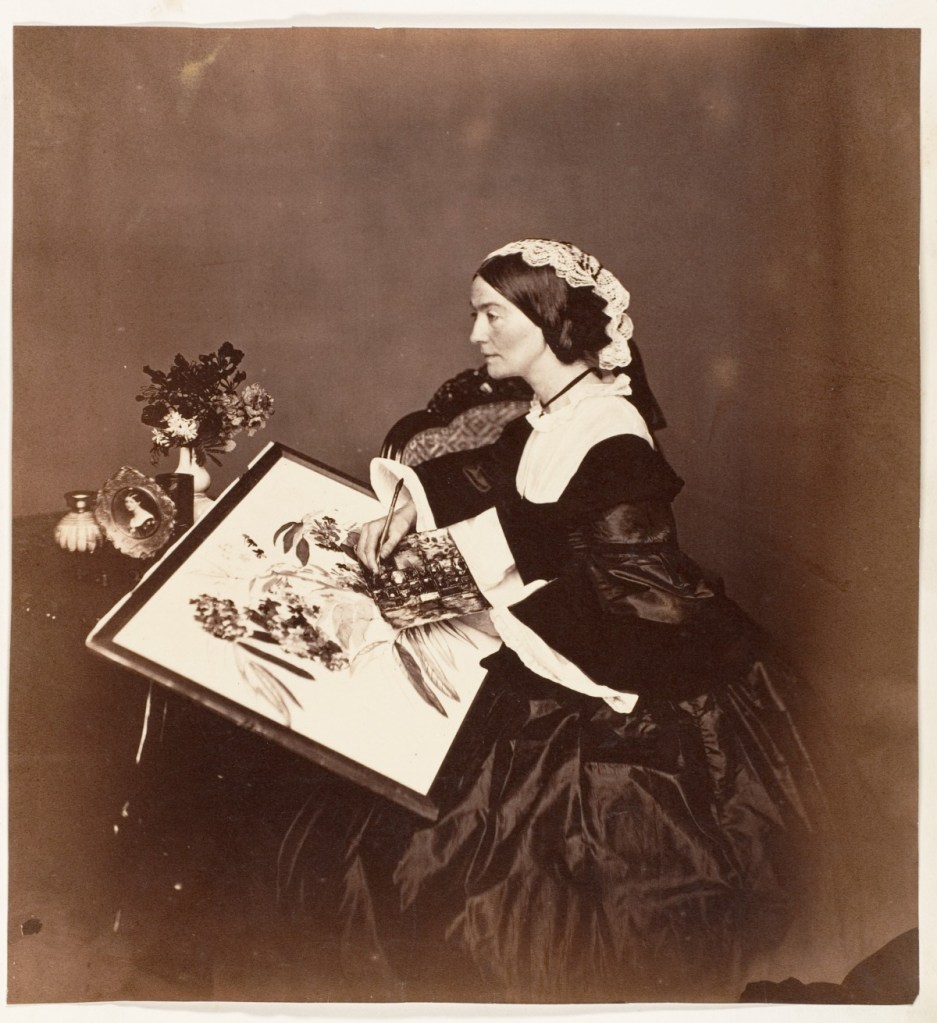
What Lord Canning saw around him now in Calcutta, as news of the mutiny spread through the tea rooms and officer’s quarters, disgusted him. The city was on the verge of hysterics as only a tranquil, self-possessed city can be, where for nearly 100 years, nothing at all had happened. The official inhabitants were not of the daring-do types; they were experienced in commerce and trade but had little interest in India or Indian policy outside of what was important for their business. Like Dorin, many had never even been past the boundaries of Calcutta in their lifetimes.
“…many of the European residents of Calcutta knew little of the great world beyond, and were prone, therefore, to attach undue importance to the busy commercial capital in which they were buying and selling, and were holding their household gods. Their idea of India much resembled the Chinese map-maker’s idea of the world. The City of Palaces, like the Celestial Empire, covered, in their minds, nearly the whole of the sheet.”
It should then be of little wonder that men of this class who were unaccustomed to even the smallest riot and little used to activity besides their habitual rides, and for the most part unable to use a weapon with any modicum of skill, should be shocked into stunned bewilderment at the news that assailed them from the provinces. Some took to carrying revolvers on their person with little thought of how to use them, and others organised boats on the river in which they placed their families and household goods – just in case.
A mortified Canning wrote:
“I never came across such a set of old women – some of them with swords by their sides – as those who fetch and carry the news of this town amongst the clubs and gossiping tiffin rooms of their acquaintance. Men, soldiers, whose authority on matters relating to the Army and the Sepoys is readily credited and whose words are caught up by Newspaper caterers, are spreading not reports only – in they themselves be decieved – but opinions as to the state of things present and future which make me ashamed for Englishmen. And it is not the shame only; there is mischief in it. The example will be catching. Hitherto, the merchants (even the native merchants, greatly as they hate the Sepoys) and the non-official community have (most of them) shown sense and calmness. But how long this will last if our officers and officials crawl about with their tails between their legs, frightening themselves and everybody else, I cannot say.”
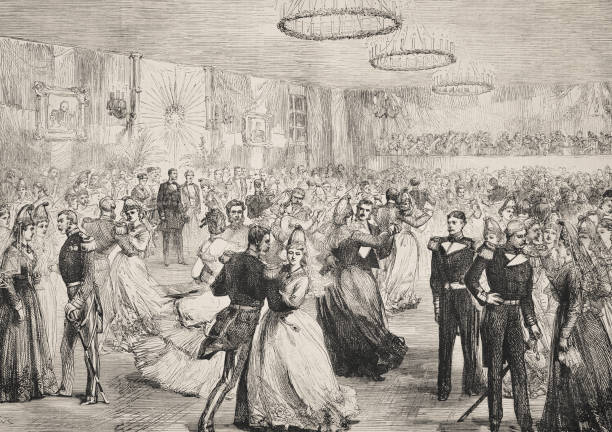
Determined that nothing should appear amiss, the Cannings hosted a grand ball on the 25th of May.
The ball itself was well attended, but some of Calcutta’s denizens stayed away, believing the sepoy guard would rise and cut their throats; if not the sepoys, they prophesized, then certainly the Muhammedans – with the whole European population assembled under one roof, what better time would there be to murder them all? One young lady, instead of attending the ball, organized a gang of sailors to act as her protectors at her own home in the event the sepoys had designs on her throat. The sailors obliged and became so raucously drunk while in the process of protecting the damsel that she ended up having to fend off their impertinent advances.
Worried officials pled with Canning to forgo the usual feu-de-joie to be fired in the Queen’s honor – Canning refused and, in the same light, refused to leave a troop of Europeans on guard in the basement of Government House, just in case of an uprising. To avoid even more misunderstandings, he allowed the sepoys to retain their ammunition even though it had been proposed to replace these with blanks – Canning would not sanction the exchange “unless any symptoms of disaffection were displayed.” He was lucky that in this case, his trust was not misplaced – Calcutta was weak in European troops, and an uprising would have been fatal.
 Mutiny Reflections
Another relative of mine 😉 Orfeur Cavenagh was the brother of my great great grandfather. I wrote about him at https://anneyoungau.wordpress.com/2018/04/17/o-is-for-orfeur/
Sir Orfeur Cavenagh gave his own account of his career in a letter of 1868 included in his private letter book number 11 which included the followng comments about the mutiny:
In 1854, at the special request of the then Governor General Lord Dalhousie, accepted the appointment on his staff of Town Major of Fort William [the fort in Calcutta]. In this capacity as the Governor General’s representative, recommended the numerous alterations in the European Barracks and other buildings as well as general sanitary improvements, which have led to the ordinarily satisfactory state of health of the Garrison.
On the 26th January, 1857, frustrated the design of the Mutineers to seize Fort William (vide statement of Jemadar Durrion Sing, 34th Regiment, N.I.).
Throughout the Mutiny discharged all the arduous duties connected with the command of Fort William and Calcutta, including the charge of the state prisoners, the raising a Corps of Volunteers, the organisation of a body of Native Servants for the use of the troops arriving from England, the management of a large Military Canteen, the protection of the town, the control of all Public Departments, Military Buildings, Hospitals, etc., and the entire charge (arming, clothing and victualling) of all European invalids and recruits, numbering several thousands, of the company’s service. On four occasions received the thanks and commendation of the Supreme Government.
At the close of the mutiny, appointed Governor of the Straits Settlements.
Regards
Anne
LikeLiked by 1 person
Thank you Anne! You have the most fascinating family history. Were any of your relations in Agra too?
LikeLike
At various times relatives were in Agra but not as far as I know at the time of the mutiny
LikeLiked by 1 person
I will be in Delhi soon. Will definitely look for your relatives grave on the Ridge if it is still there. I won’t make it to Calcutta this time.
LikeLike
That would be terrific – it may not have survived the inscription in memory of Captain Smith was published 1910. https://archive.org/details/ALlistOfInscriptionsOnChristianTombsPunjabKashmirNWFPVol1Inscriptions/page/n32/mode/1up
Mathew Reveley’s name is recorded on a tablet in St. James’ Church, Delhi and I guess it is still there.
Another cousin Charles Mainwaring died at Cawnpore and is remembered on a tablet in All Souls Church, Cawnpore. I really liked the film about Cawnpore you linked to in a blog post ages ago (Anniversary)
I was in India in 1989 and didn’t know any family history then. I would love to go back – fantastic country, lovely people, marvellous sites and great food
LikeLiked by 1 person
I am going to Delhi, Meerut, Agra, Cawnpore and Lucknow with side trips to Gwalior, Etawah and Mathura. The church at Cawnpore is definitely on my list.
LikeLiked by 1 person