RETREAT
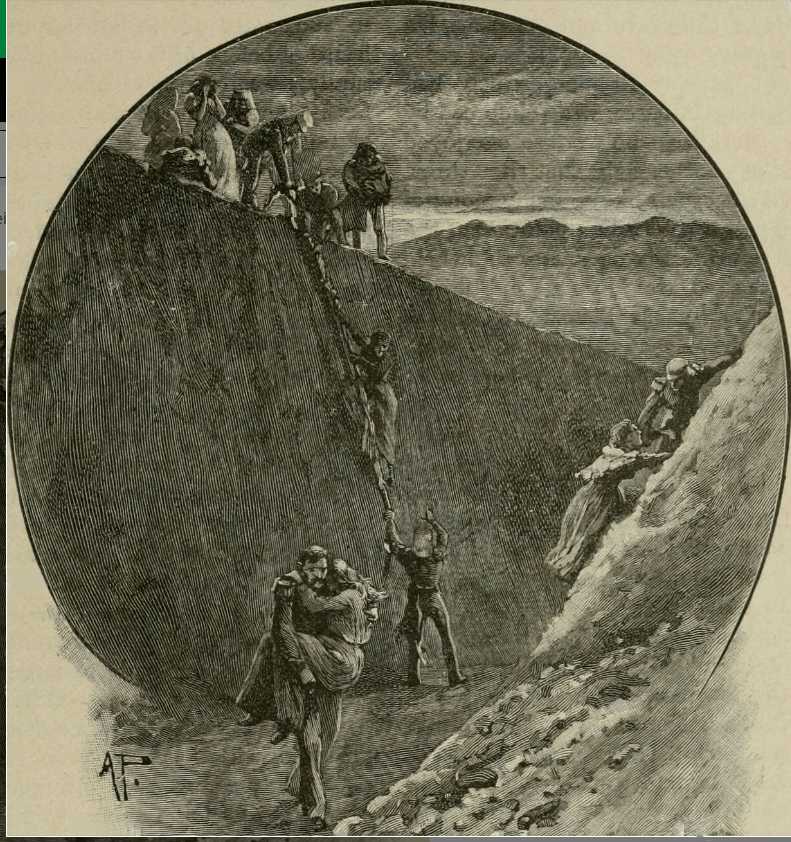
Those who survived the explosion at the Magazine soon found their way to the Main Guard. Dazed and covered in dust, they would not find shelter here for long. An order had come from the Brigadier to withdraw Major Abbott’s men and Aislabie’s guns. As they approached the gateway, sepoys of the 38th rushed towards it, slamming it shut. They discharged a volley at a group of officers – and the other sepoys swiftly joined in, opening fire on the officers and the gathered civilians. In the ensuing pandemonium, Vibart scrambled up the ramp, which leads from the courtyard to the bastion above. Everyone appeared to be doing the same. Twice I was knocked over as we all frantically rushed up the slope, the bullets whistling past us like hail and flattening themselves against the parapet with a frightful hiss.” Several officers were shot in the attempt, and those who made it to the top did not hesitate long to jump out through the embrasures below and quickly scramble up the ditch. Above them, the cries of the ladies, who had taken shelter in the officer’s quarters above the gateway, caused the men to stop – some of them quickly tied their belts together to make an impromptu rope for the ladies and then jumped into the ditch first to break the ladies’ falls. For some, it proved unnecessary – the roar of the gun below and the incessant whistle of round shot above was enough to convince the ladies that now was not a time for manners, and they quite readily leapt into the ditch. All except one, Mrs Forster, a fat and elderly woman, refused to move, her screams and wails audible above the cacophony around her. Pleading was dispensed with by a swift push from one officer, sending the poor lady tumbling headfirst down into the ditch.
Hiding against the wall for a time until the sepoys lost interest and ran off to join in plundering the Treasury, with a supreme effort, the party made it up the counterscarp, which rose nearly perpendicular to the ditch, the ladies in their inconvenient attire having to make several attempts to get to the top.
“We now quickly ran down the short glacis and plunged into some thick shrubbery that grew at the bottom. Here, we stopped to take a breath, but the sound of voices proceeding from the high road, which ran close by, induced us to hurry off as fast as possible. “ They were making their way to Metcalfe House. Mrs Forster, after her fall and a bullet wound to the forehead, was obliged to abandon in the scrub brush, unable to carry the weight of her nearly unconscious form.
Sir Theophilus Metcalfe was not at home, but his servants welcomed the fugitives kindly, and the head bearer took them down to the safety of the tyekhanna. Exhausted by their plight, many of the party lay down on the floor and slept.
Flagstaff Tower
In her home, Harriett Tytler was starting to worry. Her husband had left hours ago, instructing his wife to stay in the house until he sent for her. But what she saw did not inspire her with confidence.
“Servants running about in a wild way, guns tearing down the main street as fast as oxen could be made to go, and Mrs Hutchinson, the judge’s wife, without a hat on her head and her hair flowing loosely on her shoulders, with a child in her arms and the bearer carrying another, walking hastily in an opposite direction to the guns…” Harriet’s French maid, Marie, started locking up everything in the house, even the clean clothes the laundry man had just returned, declaring, “Madame, this is a revolution, I know what a revolution is.”
Her next-door neighbours, the Hollands, now implored Harriett to come to their house with the children, but initially, Harriett refused – Robert had told her to stay home until he sent for her. But an order had come from Brigadier Graves that all the ladies must leave the cantonments and make their way to a rendezvous point, an order even Harriett could not disobey. Gathering up her two children and with Marie at her side, they left the house, never to see it again. The rendezvous point chosen was the bungalow of the sergeant-major of the artillery, his wife welcoming as best she could all those who now filled up her house. It was a short respite – the Brigadier now ordered everyone to Flagstaff Tower.
Situated on the Ridge, this one-room signal tower had been built by the British in 1828. Not designed as a shelter by any means, it was certainly not meant for what was to befall it on the 11th of May. What remained of the civilian population and all the women and children from the cantonments now flooded into the tiny space.
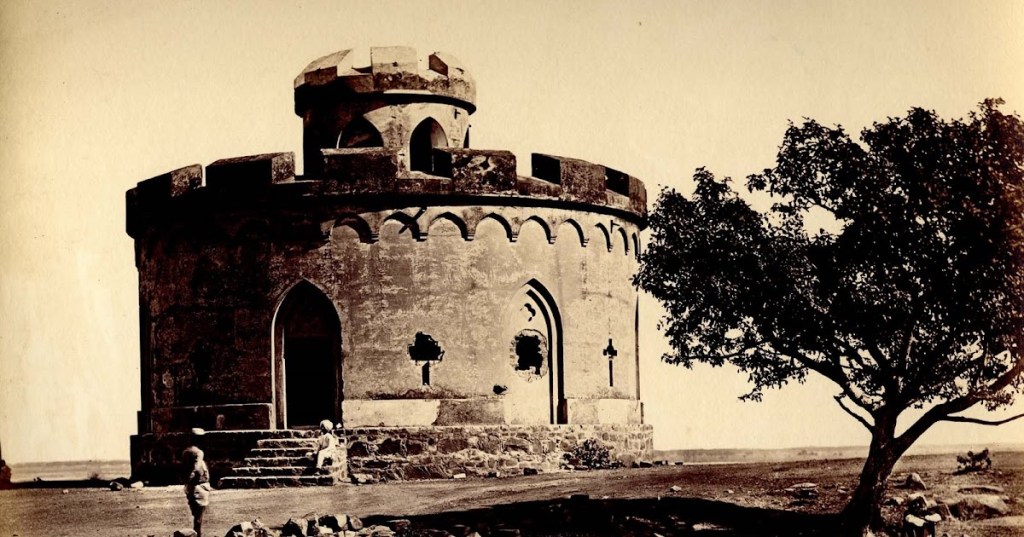
Here, they found the Brigadier waiting with his staff and four guns. The soldiers of the 74th and whatever was left of the 38th made up a sobering welcoming party. The women and children were quickly shuffled off into the stifling hot tower to await further orders.
Like in Meerut, beyond bringing everyone together in one place, the officers appeared to be at a loss as to what to do next. The Brigadier, this late in the day, was still waiting for reinforcements from Meerut and whatever his reasoning may be, he simply did not dare to abandon his post. Meanwhile, Harriett found time to be cross with her maid, who was using her time not in thoughts of gloom and doom but was flirting in French with the officers, leaving Harriett, eight months pregnant, in charge of the children – four-year-old Frank, who was hiding in her skirts and two-year-old Edith, who refused to leave her mother’s arms. Pregnancy was no excuse, and Harriett, children and all, soon joined the other ladies in handing up muskets and arms to the Christian band boys who were on top of the tower, readying themselves for an attack. It was as far as Brigadier Graves had got in the way of defence – bandsmen on the roof.
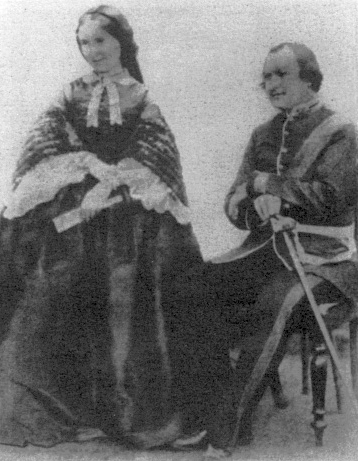
Captain Tytler and Captain Gardiner, in the meantime, had given up guarding the White House and, together with the remains of the 38th, made their way to the Flagstaff Tower. With 80 men, they arrived at the post, and the adjutant now told them what had happened in Delhi since the morning. He strode into the tower, and telling his wife he would speak to her later, he asked where he could find the Brigadier. Finding him in the middle of the crowd, Tytler loudly asked blustering Graves what exactly he intended to do. His wife gave an account of the conversation which followed.
“Stay here, Tytler, and protect the women and children.”
Tytler replied, in the most emphatic manner, “It’s madness, sir, have you any food?”
“No, Tytler.”
Have you any water?”
No, Tytler.”
“Then how do you propose protecting the women and children with the two remaining guns ready to blow us up?”
The Brigadier, now forced to admit he had absolutely no idea what to do next, for if they showed their heads outside, they would surely be shot off. Captain Tytler staunchly proclaimed his men would never shoot them.
Some of the other officers now accused Tytler of having his head turned by his men, to which he replied,
“Look here, gentlemen, it is not for you to say listen or don’t listen to Tytler. We cannot hold our post; therefore, it is our duty to retreat.”
Wearied by this sudden and obvious voice of reason, the Brigadier entreated Tytler to go and ask his men what they would do.
He went out “bare-headed and empty-handed and said to the men, ‘Listen to me, my men, if you intend to do any harm to those within, let me be the first to fall, that they may know their fate. But if you will be true to your salt and will go with us wherever we tell you, then say so.’
Touching his hair as a sign of their fidelity, the men only had three demands.
That Tytler and not the Colonel command them;
That they be given water to drink;
And the two remaining guns go with them.
Tytler reported back to the Brigadier, but the other officers were still not convinced.
“Very well, gentlemen,” said the Captain, “do just as you like, stay here and be butchered, but I will go with my family and stand my court martial. I will not stay here to see my wife and children butchered.”
The Brigadier sent Tytler back to his men; one more assurance, perhaps, would convince the others.
The men were growing tired of this procrastination – either the fugitives would leave at once, or the men would not go with them. After all, they reasoned, the mutineers were fresh and ready; they would have all the leisure time through the night to kill everyone at Flagstaff Tower. It took a bullock cart full of the dead bodies of the men of the 54th killed earlier that day, covered up with a few ladies’ dresses, to convince even the most hardened nay-sayers that perhaps Tytler had a point. Vibart had intended the bullock cart to be sent to the cantonments, but their presence served to remind the stumbling officers how precarious their position really was.
What followed was nothing less than a stampede, with “everyone rushing to their carriages to see who could get out first.” Some of the escapes would turn out to be nothing short of miraculous.
Sources:
Chick, N.A. Annals of the Indian Rebellion. Calcutta: Sanders’ Cones & Co.,1859
David, Saul. The Indian Mutiny: 1857. London: Penguin Books, 2003.
Hibbert, Christopher. The Great Mutiny: India 1857. London: Penguin Books, 1978.
Leasor, James. The Red Fort. London: Werner Laurie, 1956
Malleson, Col. G. B. The Indian Mutiny of 1857. London: Seeley & Co. Ltd, 1891
Tytler, Harriet – An English Woman in India. Oxford University Press, reprint, 1986
Wagner, Kim A. The Great Fear of 1857 -Rumours, Conspiracies, and the Making of the Indian Uprising. Oxford: Peter Lang Ltd., 2010
 Mutiny Reflections
I really am astonished with your work, writing about such things requires interest for history and passion both. Really Aspiring.
LikeLike
It is definitely a passion, one that I have followed for a very long time. Thank you for your appreciation!
LikeLike