The Military at Delhi
The 38th, 54th, and 74th Bengal Native Regiments and a battery of native artillery continued to take orders from their officers. Surly and certainly not in general good humour – the troops, like their British officers, were awaiting reinforcements from the brethren in Meerut, who by now must be on their way.
Earlier that morning, the three regiments and the artillery were paraded in their lines north of the city to be informed of the execution of Isuree Pandey, who had been hanged in Barrackpore three weeks earlier. It struck Captain Tytler of the 38th that the response of his men was unusual. “I remarked a murmur of disapprobation throughout the whole regiment. Though it lasted but a few seconds, it struck me forcibly as something extraordinary, never having witnessed anything like it before.” The men “hissed and shuffled their feet – a clear sign to an experienced officer like Tytler that his men were no longer to be cowed by an execution. The parade was dismissed, and the officers returned to their quarters.
As officers were just finishing their breakfasts, a message came from Mr Fraser that the troops should be sent post-haste to the city to prevent the mutineers from entering. Until now, none of the officers had any idea what was happening in Delhi – Tytler went so far as to tell his wife, “…those fellows from Meerut have come over, and I suppose they are kicking up a row in the city..” There was nothing to be afraid of, he assured her and went off to his duty. Upon reaching his men, he found them curiously agitated, and when the time came to receive their ammunition, many took more than they were meant to. They left the lines very excited, “shouting vehemently every now and then.” Told off to guard a small magazine north of the city called The White House, which commanded the river, they would have to wait here for several hours, watching the smoke rising from the city and clear sounds of disturbances reaching them through the sweltering heat.
The men stood around in small, sullen groups, refusing to come in out of the sun, even when Tytler ordered them. “When I went into one of the rooms, I remarked, for the first time, a native, from his appearance a soldier, haranguing the men of the companies and saying that every power or government existed allotted to them and there was nothing extraordinary that the English had come to an end…Before I could make a prisoner of him, the Magazine in the city exploded and then the men of the 2 companies, with a tremendous shout, took up their arms and ran off to the city, exclaiming, ‘Prithvi Raj Ki Jai’ or “Victory to the Sovereign of the World.”
Captain Tytler and Captain Gardner managed to keep back 80 men, but the rest were beyond their control. The few who stayed had served with their officers in Afghanistan.
Nineteen-year-old Lieutenant Edward Vibart, too, had barely finished his breakfast when the orderly havildar of his regiment rushed into his room to report that the 3rd Light Cavalry from Meerut had arrived in the city and was “creating disturbances.” Quickly putting on his uniform, Vibart dashed down to his lines – the 54th – to find the men were falling in, and a very excited Colonel Ripley was giving out orders to the different companies. Vibart’s company and the Grenadiers, with Major Paterson commanding, were to proceed to the artillery lines to bring two guns to the city, while Colonel Ripley would lead the rest towards the Kashmir Gate.
Colonel Ripley marched down 8 companies to the Kashmir Gate, where a detachment of the 38th BNI was on duty at the Main Guard – situated close to St. James’ Church. As they approached the church, they were suddenly confronted by a large body of men from the 3rd LC, approaching them from the palace. Swiftly, they shot four officers dead. The remainder frantically ordered their men to attack, but they merely fired their weapons into the air and then turned on their officers, cutting down Colonel Ripley and attacking the others with bayonets. Two officers escaped down a side street, where they eventually got through a gap in the city walls, thus evading their pursuers. Three others barricaded themselves in a house, but the door was soon smashed in – the sergeant major was killed, and though the crowd made it nigh impossible, the other two managed to get away.
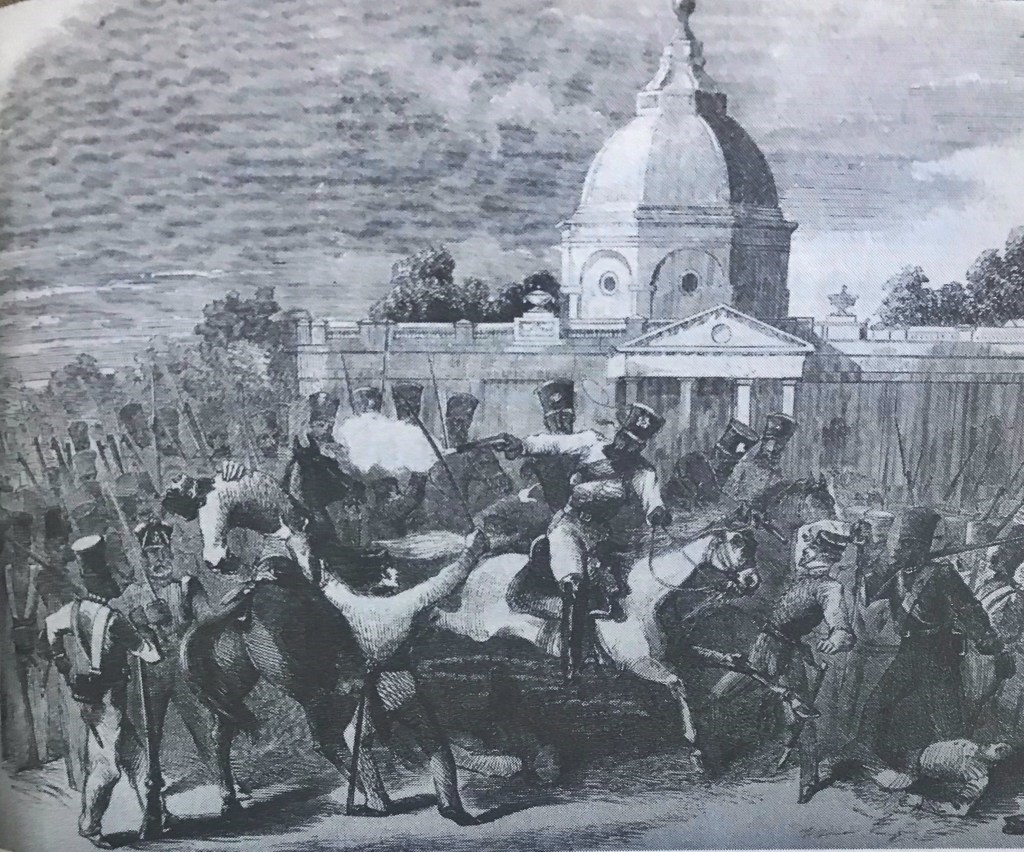
Meanwhile, Lieutenant Proctor of the 38th had also ordered his men to fire upon the mutineers, but they jeered at his helplessness, telling him that the time had come for revenge on all those who had tried to destroy their religion. Captain William Wallace of the 74th now left Proctor on his own and galloped out of the Kashmir Gate, intending to get reinforcements from the cantonments. Riding past Vibart and Paterson, he implored them to hurry up with the guns – their fellow officers were being murdered in the Main Guard. Moments later, Vibart saw Colonel Ripley carried out, “literally hacked to pieces. The poor man was still alive…I now entered the Main Guard and found everything in confusion…a few cavalry troopers in French-grey uniforms were seen galloping back in the direction of the Palace, but as for the men of my own regiment, they had all vanished. The lifeless body of Captain Burrowes was lying close by the gate of the churchyard…Other bodies were observed scattered about the place…I saw our poor fellows brought in, their faces distorted with all the agonies of a violent death, and hacked about in every conceivable way…” Hearing now that the 11th and 20th had also arrived from Meerut and were possibly already on their way to the Main Guard, the two guns which Vibart had been escorting were placed in position at the gate.
For now, the men with Vibart did not seem inclined to run off, while those with Lieutenant Proctor, although insubordinate and refusing to obey any orders at all, did not appear to want to leave either, probably believing, as did Vibart himself, that the British troops from Meerut were not very far off.
By early afternoon, a reinforcement of 150 men of the 74th NI led by Major Abbott and two more guns under Lieutenant Aislabie arrived at the Main Guard. Then, some 200 men of the 54th showed up, clutching their regimental colours and protesting most vehemently that they had been gripped with panic by the sudden sight of the 3rd LC and had bolted from fear. It soon became clear, however, that none of the men, despite their protestations, were willing to follow orders any more than it suited them, and their loyalty was just a passing notion.
The situation was not helped by the sudden arrival of English families and various stragglers from the city, appearing at the Main Guard looking for protection. They had survived the massacres in the city, and the sight of English officers filled them with some hope. But Vibart and his fellow officers could do nothing. They stood by and watched as the church was ransacked, as none of their men would take their orders. Worst of all, an impassioned cry for help came from Mr Galloway of the Treasury, who, with a borrowed sword in his hand, was attempting to fend off hordes of attackers. Vibart could do nothing, and Galloway died alone. Another call came from the Magazine.
The Magazine
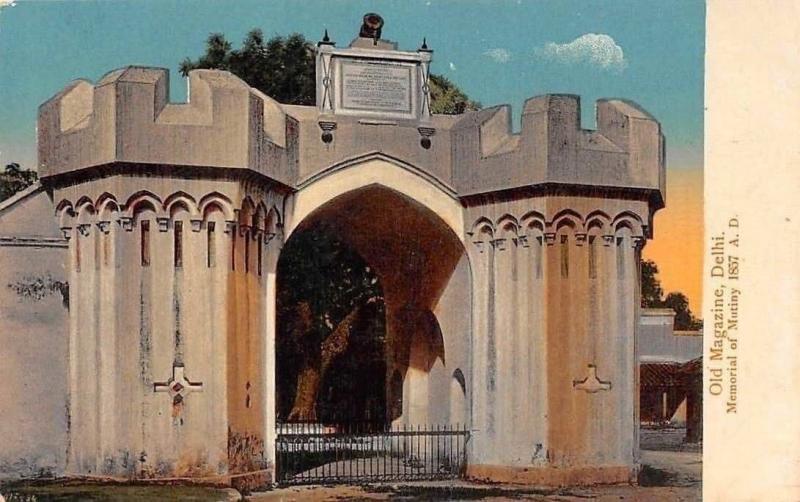
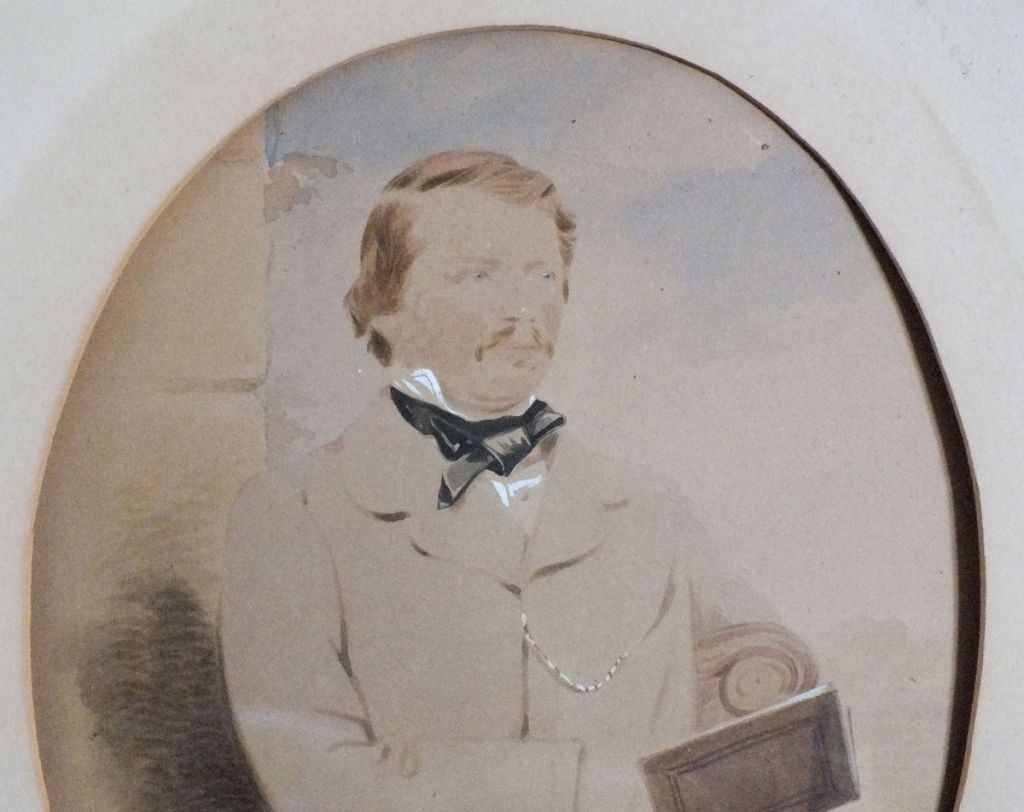
In charge of the Delhi Magazine was George Willoughby, a shy, reserved and portly young man. He had been on duty since early that morning, and from a bastion facing the river, he had watched the mutineers enter the city. The native guard flatly refused to take his orders, but even without them, he managed to barricade the outer gates and position guns on the inside, double-loaded with grapeshot. He wasn’t alone – Lieutenant Raynor with Conductors Buckley, Shaw, Scully and Acting/Sub-Conductor Crow and Sergeants Edwards and Stewart were with him. Knowing his defences would not hold up to any sustained attack, Willoughby laid a train of powder from the storeroom to a tree in the Magazine compound and on a given signal (Conductor Buckley would wave his hat), Conductor Scully was to light the match.
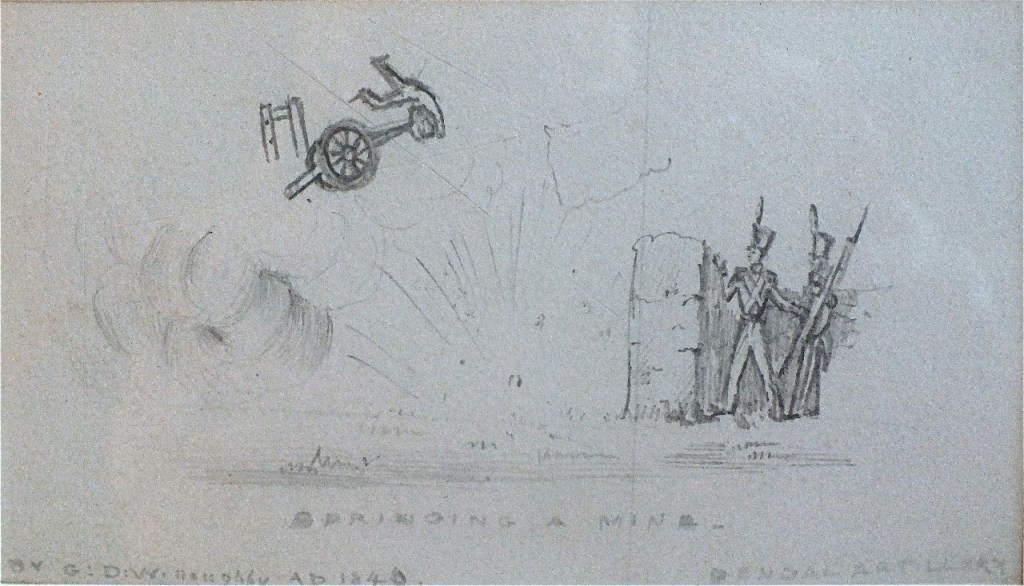
There is no better account of what happened in the Magazine than that of Lieutenant George Forest.
From Lieutenant G. Forest. Assistant Commissary of Ordnance, to Colonel A. Abbott, CS., Inspector-General of Ordnance and Magazines Fort William.
Sir,l have the honour to report for the information of Government, and in the absence of my commanding officer, Lieutenant Willoughby, Artillery, supposed to be killed on his retreat from Delhi to this station, the following facts as regards the capture of the Delhi Magazine by the mutineers and insurgents on the 11th inst. On the morning of that date, between seven and eight p.m…. Sir Theophilus Metcalf came to my house and requested that I would accompany him to the magazine, for the purpose of having two guns placed on the bridge, sons to prevent the mutineers from passing over. On our arrival at the magazine, we found present Lieutenants Willoughby and Raynor with Conductors Buckley, Shaw, Scully and Acting/Sub-Conductor Crow and Sergeants Edwards and Stewart with the native establishment. On Sir Theophilus Metcalf alighting from his buggy, Lieutenant Willoughby and I accompanied him to the small bastion on the river face, which commanded a full view of the bridge, from which we could distinctly see the mutineers marching in open column, headed by the cavalry, and the Delhi side of the bridge was already in the possession of a body of cavalry. On Sir Theophilus Metcalf observing this, he proceeded with Lieutenant Willoughby to see if the city gate was closed against the mutineers. However, this step was needless, as the mutineers were admitted directly to the palace, through which they passed cheering. On Lieutenant Willoughby’s return to the magazine, the gate of the magazine were closed and barricaded, and every possible arrangement that could be made was at once commenced on. Inside the gate leading to the park were placed two six-pounders, double charged with grape, one under Acting/Sub Conductor Crow and Sergeant Stewart, with the lighted matches in their hands and with orders that if any attempt was made to force that gate both guns were to be fired at once, and they were to fall back on that part of the magazine in which Lieutenant Willoughby and I were posted. The principal gate of the magazine was similarly defended by two guns, with the chevaux de frieze laid down on the inside, For the further defence of this gate and the magazine in its vicinity there were two six-pounders so placed that either commanded the gate and a small bastion in its vicinity. Within sixty yards of the gate and in front of the office, and commanding two crossroads, were three six-pounders and one twenty-four-pounder howitzer, which could be so managed as to act on any part of the magazine in that neighbourhood.
After all these guns and howitzers had been placed in the several positions above named, they were loaded with double charges of grape. The next step taken was to place arms in the hands of the native establishment, which they most reluctantly received and appeared particularly the Mussulman portion of the establishment to be in a state not only of excitement but also if insubordination, as they refused to obey any orders issued by the Europeans. After the above arrangements had been made, a train was laid by Conductors Buckley, Scully and Sergeant Stewart, ready to be fired by a preconcerted signal, which was that of Conductor Buckley raising his hat from his head, on the order being given by lieutenant Willoughby. The train was to be fired by Conductor Scully, but not until such time as the last round from the howitzers had been fired. So soon as the above arrangements had been made, guards from the palace came and demanded the possession of the magazine in the name of the king of Delhi, to which no reply was given.
Immediately after this, the Subadar of the guard on duty at the magazine informed Lieutenant Willoughby and myself that the king of Delhi had sent down word to the mutineers that he would without delay send scaling ladders fro the palace for the purpose of scaling the walls, and these shortly after arrived. On the ladders being erected against the wall the whole of our native establishment deserted us by climbing up the sloped roofs on the inside of the magazine and descending the ladders on the outside, after which the enemy appeared in great numbers on the top of the walls. We kept up an incessant fire of grape on them, every round of which told well, as long as a single round remained. Previous to the natives deserting us they hid the priming pouches, and one man in particular, Kureem-buksh, a Durwan, appeared to keep up a constant communication with the enemy on the outside and keep them informed of our situation. Lieutenant Willoughby was so annoyed at this man’s conduct that he gave me an order to shoot him should he again approach the gate.
Lieutenant Raynor, with the other Europeans, did everything that possibly could be done for the defence of the magazine, and where all have behaved so bravely it is almost impossible for me to point out any particular individual.
However, I am duly bound to bring to the notice of the Government the gallantry of Conductors Buckley and Scully on this trying occasion. The former, assisted only by myself, loaded and fired in rapid succession the several guns above detailed, firing at least four rounds from each gun, and with the same steadiness as if standing on parade, although the enemy were then some hundreds in number and kept up a continual fire of musketry on us within forty or fifty yards. After firing the last round, Conductor Buckley received a musket ball in his arm above the elbow, which has since been extracted here; I, at the same time, was struck in the left hand by two musket balls which disabled me (or the time. It was at this critical moment that Lieutenant Willoughby gave the order for firing the magazine, which was at once responded to by Conductor Scully firing the several trains. Indeed, from the very commencement, he evinced his gallantry by volunteering his services for blowing up the magazine, and remained true to his trust to the last moment. As soon as the explosion took place, such as escaped from beneath the ruins, and none escaped unhurt, retreated through the sally port on the river face. Lieutenant Willoughby and I succeeded in reaching the Cashmere gate. What became of the other parties it is impossible for me to say. Lieutenant Raynor and Conductor Buckley have escaped to this station. Severe indisposition prevented my sending in this report sooner.
I have, etc.,
(Signed) G. Forrest, Lieutenant, Assistant Commissary of Ordnance.
NB. – After crossing the river on the night of the 11th, I observed the whole of the magazine to be on fire, so that I am in hopes that little of the property fell into the hands of the enemy. Park Sergeant Hoyle was shot about eleven a.m. by the mutineers in attempting to reach the magazine to aid in its defence.
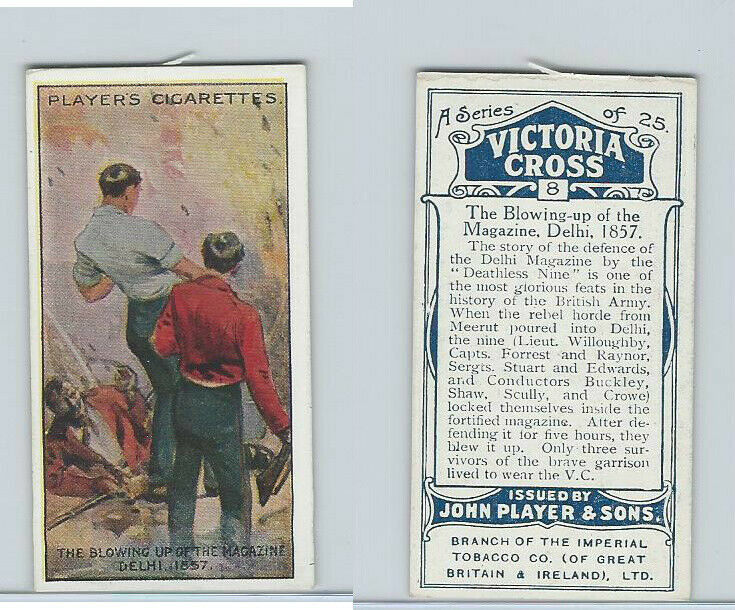
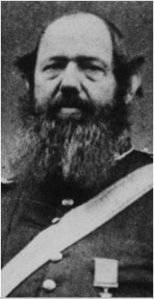
They became known as the Delhi Nine, and to this day, their names are still visible on a plaque, albeit no longer easy to read, on the gate that once would have led to the Delhi Magazine.
 Mutiny Reflections
I really am astonished with your work, writing about such things requires interest for history and passion both. Really Aspiring.
LikeLike
It is definitely a passion, one that I have followed for a very long time. Thank you for your appreciation!
LikeLike