So it Begins
On the 13th of April, five huts were burned down in Meerut, including that of the native orderly, Brij Mohan. His house would be fired a second time, but for now, the incident was not considered of particular importance. Incendiarism had preceded events in many stations – but Meerut, with so many British troops, what could possibly happen?
It took Lieutenant Colonel George Munro Carmichael-Smyth, on 24 April in Meerut, to put a slow match to a long train of disaffection, which would have consequences for stations near and far over the months to come. Having just returned from leave, he was perfectly aware that the army was unhappy. While in Mussoorie, he had overheard some sepoys talking, and the gist of their conversation was, simply put, “the whole army will Mutiny.” When he returned to Meerut, Carmichael-Smyth reported this to Colonel Curzon, the Military Secretary to the Commander-in-Chief. It worried him enough to have reported it, but not enough to stop what he did next.
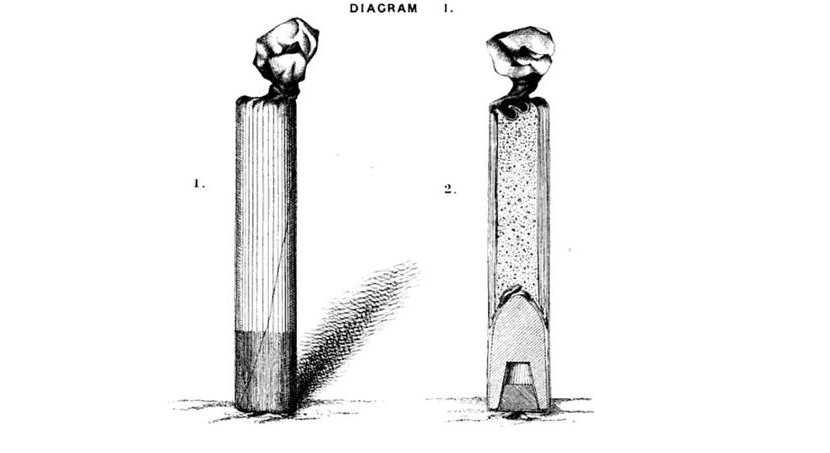
Arriving back at his station, Carmichael-Smyth found that instructions for a new platoon drill had been issued, which looked, on the surface, like the solution to all of his problems. Until now, the chief problem had been that the new cartridges for the Enfield rifle were greased; however, the army had been using greased patches with unballed cartridges already, and this with no problems. The army wanted to have unity in their armaments, and switch everything over to the new, balled cartridges. This would eliminate the use of the patch, and the cartridge itself could be greased on the tip instead. The change from unballed to balled cartridges had been an ongoing process in the Bengal Army for the past 10 years. The Enfield rifle itself was new in Meerut – the 1st Battalion of the 60th Queens had been issued it in January 1857 – only ten rounds of ammunition per man were issued at the time, and this had been made up at the arsenal in Dum-Dum, close to Calcutta. It was, however, not the ammunition served out on parade.
Whether rightly or not, the sepoys believed the grease used was pig and cow fat, abhorrent to Muslims and Hindus – a rumour which had been in circulation for some months already. According to the drill, they had to tear open the cartridges with their teeth, thus coming into contact with the suspect fat and as a result, leading to a loss of caste for the Hindus and causing a massive insult to the Muslims. What is for certain, however, is that the cartridges handed out on parade in Meerut in 1857 were blanks, ergo, unballed and therefore ungreased. The problem seems to have arisen because the paper used looked different. Assurances that the British were not using underhanded means to turn the army Christian had fallen on deaf ears until now — even when presented with ungreased cartridges or given the option to grease them themselves with any fat of their choosing, the problem persisted.
The cartridges may not have caused the mutiny singlehandedly, but the way the issue was dealt with from the very beginning was foolish and certainly watered the growing seed of sedition. The new drill was designed for all weapons and not just for the new Enfield, which, at the time, had not been distributed to any Indian regiments. The drill cartridges were ungreased, thus solving the problem of the fat, and they could tear them open with their fingers. However, the troops no longer believed in their officers.
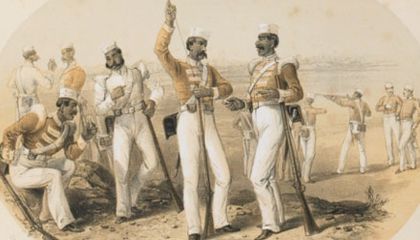
Rumours regarding the new drill circulated as soon as it was announced, and all the men of the 3rd Bengal Light Cavalry, six troops in all, swore oaths not to receive the cartridges the next day. When the men of the 4th Troop asked their commanding officer, Captain H.C. Craigie, to stop the scheduled drill, he explained to them that there weren’t any of the new cartridges circulating in Meerut, but they explained, ” if they fire any kind of cartridge at present they lay themselves open to the imputation from their comrades and from other regiments of having fired the objectionable ones.” In other words, it didn’t matter what cartridges were used; the outcome would be the same. It didn’t stop there. Sowars from several other troops asked their officers to stop the parade. Craigie himself beseeched Carmichael-Smyth to put an end to it. But the obstinate lieutenant colonel was having none of it. As soon as the men saw the new drill, the very idea of mutiny would go up in smoke, or so thought Carmichael-Smyth. The Havildar Major and Brij Mohan both concurred that the new drill would please the men.
So why did Carmichael-Smyth bother writing to Colonel Curzon in the first place? It would appear that Carmichael-Smyth was not necessarily acting out of vanity, but he was weighing his options. He had warned the military leadership and provided them with information for which he could be given credit. And by going ahead with the drill, he was showing his ability to follow orders. Though neither idea was wrong, they both became disastrous.
Brij Mohan, too, played a part in the upcoming events. Returning from his meeting with Carmichael-Smyth, he boasted to the men in his lines that he had used the new cartridge and the skirmishers would have to use them the next day. The Muslim corporals of the troop then told their comrades about the objectionable fat. It was by concession that all of the men now swore they would not touch the cartridges the next day unless every regiment did so, too. What the men did not know was that Brij Mohan had never touched the new cartridges and had lied. The parade was scheduled for the 24th of April, and they went ahead with it. It did not occur to Carmichael-Smyth when his tent was burned down the night before, along with the hut of Brij Mohan Singh, for a second time, that perhaps he should reconsider.
On the 24th of April, the ninety skirmishers of the 3rd LC were lined up on the Meerut parade ground. When Carmichael-Smyth arrived, none of the men had taken the cartridges. It should be noted here that Archdale Wilson was absent from Meerut at the time, and there were no officers above the rank of captain of the 20th NI in the cantonment either. Colonel Jones of the Carbineers was standing in for Wilson, but his India experience amounted to very little. Except for Hewitt, there was no one Carmichael-Smyth could defer to.
The Havildar Major Buksh Ally loaded and fired his carbine following the new drill, tearing the cartridge by hand and not with his teeth. Then, blanks were served out to the men, to the growing surprise of
Carmichael-Smyth, only five could be induced to take them. When asked why, the men, one after another, replied, “If all the regiments will take cartridges, I will.” Pointing out that the cartridges weren’t even greased did not even make an impression on the 85 men, and any amount of remonstrance from the five NCOs changed nothing. Carmichael-Smyth was forced to dismiss the parade, and the 85 men were taken off duty and confined to their lines. Smyth now reported the incident to the Brigadier Major Whish, who then passed it on to the station commander, Colonel H.R. Jones, who reported it to Hewitt. General Hewitt was not a man made for confrontation.
Sent away from Peshawar for being “too inactive…He had drowsed and nodded his way through some fifty years of routine service, rising by mere seniority. He was now old, obese, indolent and notoriously incapable. He had agreeable manners and a soothing habit of ignoring the disagreeable. Lord Melbourne’s favourite question, “Why can’t you leave it alone?” represented General Hewitt’s intellect…In General Hewitt’s case, the familiar fable of an army of lions commanded by an ass was translated into history once more.” When Carmichael-Smyth came to report, Hewitt was less than pleased, responding,
“Why did you have this parade? My division has kept quiet all this time, and in a few weeks, this cartridge affair would have blown over!”
Even Cornet John Campbell McNabb, 19 years old and new to Meerut, wrote, “…because there was no necessity to have the parade at all, or not make any fuss of the sort just now, no other Colonel of Cavalry thought of doing such a thing, as they knew at this unsettled time their men would refuse to be the first to touch these cartridges, but that by not asking they would not give their men the chance of refusing, and that next parade season when the row had blown over they would begin firing as a matter of course, and think nothing of it.” McNabb further believed, “the real case is they hate Smyth, and if almost any other officer had gone down they would have fired them off.”
Greathed called the whole fiasco “pitiably senseless.”
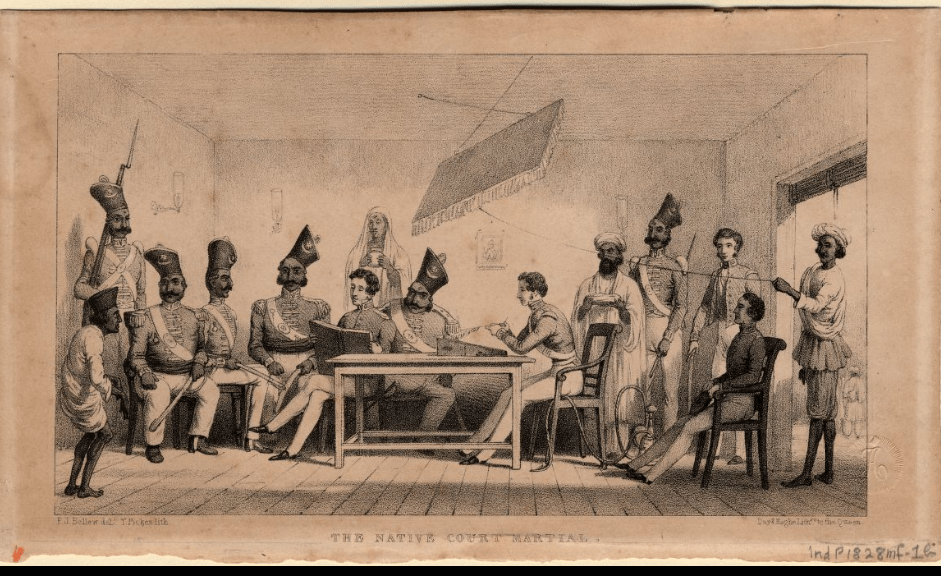
Hewitt ordered an initial Court of Inquiry comprising seven native commissioned officers, four from the 20th NI, three from the 3rd LC, with Captain Macdonald and Captain Earle acting as Superintending Officer and Interpreter respectively, with Judge Major Harriott presiding – they assembled the next day. He also wrote to the Adjutant General Colonel Chester, then in Simla. The reply from the Commander-in-Chief, General Anson, was fairly simple – the whole affair was an outrage, and the summary dismissal for the 85 was certainly deserved.
Hewitt now commenced his part in the upcoming disaster. An initial court of inquiry found the men had no legitimate reason to refuse the cartridges, but several men stated there “was a general rumour” against the cartridges, but acknowledged that they were the same ones they had always used. In fact, the inquiry could prove the ones handed out on the 24th of April had been made up under the supervision of Havildar Pursad Singh, one of the men who had himself accepted them on the parade. But even though these ones were “apparently alright”, they were tainted by rumour. One of the men went so far as to say, “I know of no objection to them, but yet I have a doubt in my heart.” What it came down to finally was that even though these cartridges were not a problem per se, in the wider context, they were the problem anyway. Even though no one in the army had been ordered to bite off the tip of the cartridges, it was clear this was an excuse rather than a cause. The fact that they were distributed by the British was enough to taint them beyond repair. At Meerut, the British had very clearly failed to understand what ostracism meant to the men of the army, be it loss of caste or pollution, and they completely refused to understand that the fear of being taunted by other regiments if they had taken them was a bigger disgrace in the minds of their men than they were willing to handle. The pattern had already shown itself in Berhampore and in Ambala, where, like Meerut, no greased cartridges were distributed, but the stigma of taking them had taken hold.
What the initial inquiry found was that, as the men had had no legitimate reason to refuse the cartridges, then the conclusion must be insubordination. The findings were sent to Simla for approval, and the Judge Advocate General, Colonel Keith Young, recommended a court-martial, which was then approved by the Commander-in-Chief.
Fifteen Indian officers were mustered, and others even summoned from Delhi, but it was by no means a fair trial. The superintending officer was British, who undoubtedly held more than a little influence on the outcome of their judgment. After three days, on the 8th of May, the 85 men were found guilty and sentenced, by fourteen votes to one, to ten years of hard labour. Only 11, on account of their youth, were sentenced to 5 years. The judges were themselves clearly not pleased and requested Hewitt to show some leniency, taking into consideration the general good character of the men and the very fact that they had acted the way they did because they had been misled. But stubborn to a point, Hewitt declared, “There has been no acknowledgement of error, no expression of regret, no pleading for mercy.” Basically, no one had said sorry. The 85 men were taken back to their impromptu prison – the old hospital building – and as their jailors, their comrades from the 20th NI were given the onerous duty.
The details of the sentence were telegraphed to Major General Anson in Simla for approval, who grudgingly gave it, though he would say he found the procedure of shackling in public “unusual,” and on the 9th of May, the 85 condemned men were marched out, for the last time, to the parade ground at dawn to meet their fate.
In front of the eyes of the entire garrison, with Major General Hewitt and Brigadier General Wilson and their staff making up the rest of the onlookers, the 85 men were stripped of their uniforms and fetters were hammered in around their ankles. By noon, they were marched off, stumbling to the New Jail, some two miles away, under an escort of the 60th Rifles. Some of the men threw their boots at Carmichael-Smyth as they walked past him- he paid them no notice. Others swore at him in Hindustani. From somewhere in the ranks, a call came up, ” For the Faith!” repeated over and over again – a cry that would resonate throughout India many times in the coming months. “Remember us! Remember us!” shouted the prisoners to their comrades, but the troops could not help them. The guns of the assembled British regiments were pointed directly at them, port fires at the ready. At the first sign of disaffection, it would have been nothing short of a massacre. After the whole disgraceful affair was over, Hewitt, possibly touched by the sun, wrote, “The remainder of the Native troops are behaving steadily and soldier-like. ” That Hewitt was alone responsible for the shackling of the 85 men is highly unlikely – most probably his decision was influenced by someone from his staff or even by the Deputy Judge Advocate-General Harriott himself. However, it was Hewitt, influenced or not, who approved it.
The Fate of the 85
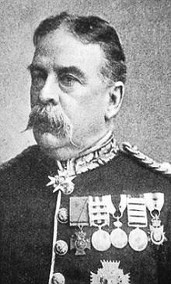
Lieutenant Hugh Gough, serving with the 3rd Light Cavalry since 1853, had been immensely proud of his regiment. “The 3rd Light Cavalry was then considered one of the best of the ten regiments of regular cavalry in the East India Company’s Service…In the 3rd Light Cavalry, we used to pride ourselves on being steadier on parade than the British cavalry regiment then stationed in Meerut.” A kind-hearted young officer, he was rightly horrified by his commander and more so, the scenes he then witnessed at the jail as he went to give them their last pay, “made the strongest impression on me…Old soldiers, with many medals, wept bitterly, lamenting their sad fate and implored their officers to save them from their future.”
In the Company’s army, a soldier’s career passed from father to son; they were respected and held in high esteem in their village, and a good reputation and an honourable life- now all of this was gone. Their pensions were forfeit, and their honour was hopelessly destroyed. Cornet McNabb wrote, “They could not have hit upon a more severe punishment, as it is much worse to them than death. It is, in fact, 10 years of living death. They will never see their wives and families, they are degraded, and one poor old man who has been 40 years in the regiment, and would have got his pension, is now thrown back the whole of his service.”
Many refused their pay, telling Gough they had no use for it now; why take pay when they had nothing left to live for? Some begged him to give it to their wives whom they would never see again. “It came with the deepest effect, and I believe I was weak enough almost to share their sorrow.”
Young officers like Gough and McNabb had a genuine affection for their men, and they felt their loss keenly. It was the end of a brotherhood and, for the older sepoys, an end to everything they had been proud of. Unfortunately, the army was not run by Gough or by McNabb. It had Carmichael Smyth, Hewitt, Wilson and many others whose long service, obstinacy, vanity and apparent senility had made them both blind and deaf to the very army they commanded.
 Mutiny Reflections
Not much has changed since those days when one considers the continuum of incompetence, posturing and grandstanding of the military establishment to this day. As we are witnessing once more similar occupational debacles of western might right now.
LikeLike
Afghanistan has been called the Graveyard of Empires and with good reason. But everyone seems hell bent on proving their might over the region. The armies of today could learn a lot if they would read about the past, even mutiny literature would be instructive on how not to treat an army and a people.
LikeLike