The Escape of Captain John Hearsey
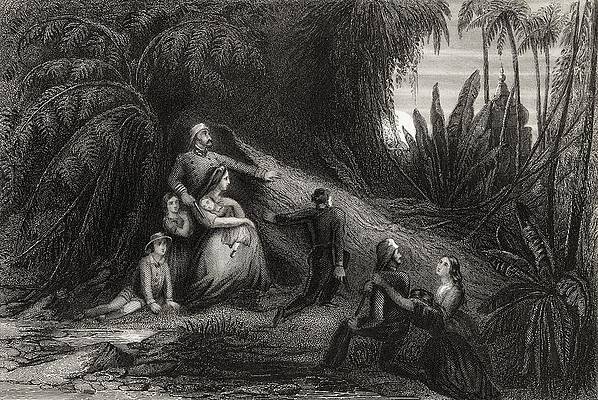
“Rugunath Singh, the Subadar, and six men forcibly carried me away to the tree. Here I was detained. Sergeant Major Rodgers, his wife and his son, arriving at this crisis, were also placed in custody. By this time some twenty-eight men came up and surrounded us…” The loyalty of his men proved fortuitous to Captain Hearsey. He and his party were the last to leave Sitapur – under cover of darkness and with two additional survivors, Miss Georgiana Jackson and Mrs. Greene. Spotted by Hearsey’s servant hiding in the jungle, the Subadar had given his permission for them to be brought to the Captain. And now,
“Placing the ladies, Mrs. Rodgers and her son, on my elephant, the Sergeant Major and myself mounted on horseback. We left for the north about 9 p.m. Mahdoo Missur and fifteen men accompanied us as escort. My arms, which had been taken away at the commencement of the massacre by Rugunath and six men, were restored…” They travelled through the night finally arriving at the village of Onel. Here, the people of Rajah Nurood Singh proved less than helpful, refusing the party entrance to the fort, not even the chance the rest. Using what persuasion he could muster, Hearsey managed at least to organize a fresh escort, which consisted of two men who promised them safe passage through the district. His men would go no further and left him here. “Accompanied by these..we pushed on towards the north and reached a small fort near the Chouka river late in the evening. After a night’s rest, we crossed over and reached Baragaon. During the night, the elephant broke loose and disappeared.”
With no transportation for the ladies, the party halted for a few days, trying to figure out what to do next. It was through some chance, that Mr. H. Gonne had heard of their flight and he now invited them to join his party on their own escape – by river to Calcutta.
Mr Gonne had been in a difficult position. Although he was a deputy commissioner, his station – Malapur in the Kheri district – was not deemed interesting enough to have any troops at all. He had no mutiny to escape from, but he had a district that was soon running riot, and he had no military help to quell even the smallest disturbances. Civil law was ending, and Mr. Gonne knew his time was up. Acting quickly, he organized boats and planned, if possible, to make his way to Calcutta. He wasn’t alone in his flight – two of his companions, Mr. Carew and Mr. Brand, had made it to Malapur from Shajahanpore, two more names on a list of survivors which seems now to be growing exponentially. Captain Hastings and Mr. Brown made up the rest.
With the party of Captain Hearsey, the group now number eleven.
Miss Jackson
Mrs. Green
Mrs. Rodgers
Mr. H. Gonne
Captain Hastings
Mr. Brand of Shajahanpur
Mr. Carew of Shajahanpur
Sergeant Major Rodgers of the 2nd native police
Mr. Brown, writer in Mr. Gonne’s office
J. Sullivan, stepson of Sergeant Rodgers
Captain John Hearsey
With the help of a friend – Rajah Anunt Singh, uncle to the Dhourund Rajah – Captain Hearsey organised another elephant, two ponies and a palkee. Crossing the river, they found their transportation waiting for them at Mutheara village. It would take them one more day to reach Malapur.
Now, as we have seen before, a river escape is not to be trifled with. By foot, it was nearly 1000 kilometres to Calcutta – in fact, Malapur is closer to Nepal than to Bengal, and only 65 kilometres from Lucknow, but Mr Gonne seems to have had his mind set on Calcutta. It is an odd choice, seeing what circumstances reigned in the countryside, but disregarding it, they set off. As fate would have it, on the second day of their boat trip, news reached them from Thakur Gooman Singh – Bairaich was up in arms, and Mr Cunliffe, with his companions, had been murdered while trying to cross the river at Byram Ghat just the day before. It was, after all, a foolhardy idea to attempt going further. Mr Gonne now decided to return to Mutheara village. Throwing themselves at the mercy of the young Rajah of Dhoreyrah and his mother, they stayed put for the next two months. Captain Hearsey was able to contact Patrick Orr, and it looked like they would all be able to weather the storm in their respective forts. For now, the two captains had bought themselves some time.
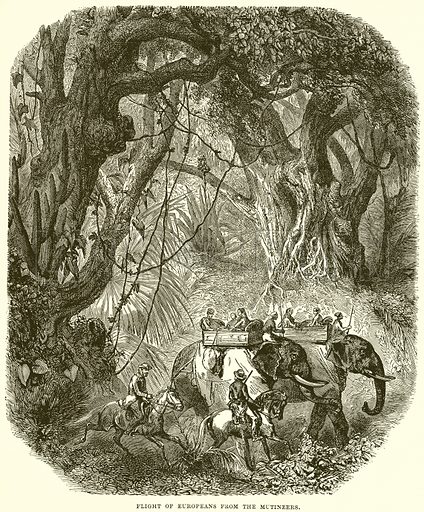
Captain Hearsey and his ten companions had spent the last two months under the protection of the Rani and her son in Mutteara. It was not an uncomfortable stay, and the government agent, Fakirudin Khan himself, had received them after their failed boat escape, ensuring them that everything was being done to ensure their safety. Yet, things in Mutteara were not exactly as quiet as all that.
In early August, 300 men of Girdara Singh’s regiment arrived from Lucknow. They had been sent to bring in fugitives to Lucknow as prisoners. The captain and the other men of the party, with what arms they had at their disposal, kept watch through the night, informing the Rani in no uncertain terms that they were not interested in going anywhere. Farikudin Khan made himself scarce, neither assisting them nor allowing them to escape.
“At last, seeing no other alternative, and as a last resort, a sort of compromise was made with the leaders of the mutineers, Bunda Hussein of Tumbour; and the party, after nearly three weeks’ delay, marched back to Lucknow; Fackeer-ood-deen Khan with 400 men of the Raja’s were also sent. On our second march from Mutteara, Thakoor Daba Singh, a respectable zamindar in the Dhowraria Raja’s service, came in the evening and confirmed our former suspicions, saying the Ranee and the Government Agent had formed a collusion with Bunda Hussein and deliberately sold us to the rebels. The agreement, signed by the latter, allowing us to retain our arms, wold be violated on our reaching Esanuggur…”
With no alternative left and obviously alarmed by this new piece of intelligence, there was nothing to do but flee. The next evening, the ladies were placed on Mr Gonne’s elephant, and the men, mounting their ponies, fled towards Kypreegurh, hoping to make it as swiftly as possible to the hopeful safety of Raja Kholraja Singh’s palace in Koolapore. At their first stop, after more than 16 hours in the saddle, while resting their animals and availing themselves of some refreshment offered by friendly villagers, they were suddenly told that 300 men of Dhowraria, sent by the Rani, were in pursuit and closing quickly. After an hour of hard riding, they arrived at the Mohon River – now impossible to ford, having risen during the monsoons. No ferry boats were to be had, but Mr Gonne, undaunted, proposed going further upstream where he hoped it might be lower. When luck runs out, it is not to be trifled with – two miles had made no difference to the river. They were now stuck at Khowakaira Ghat. The rain was coming down in sheets, and evening was closing in.
“Whilst deliberating how to get across, suddenly a shout was raised. Our pursuers, under cover of the brushwood, had gained upon us. Fastening the horses in a neighbouring hollow, we took up a position behind trees. Presently, the enemy opened a fire of matchlocks and commenced advancing, but moving very cautiously, as they knew we were armed with very good double-barreled rifles. When within 50 yards, I obtained a glimpse of the leader and fired. The shot took effect, which checked their further proceeding…”
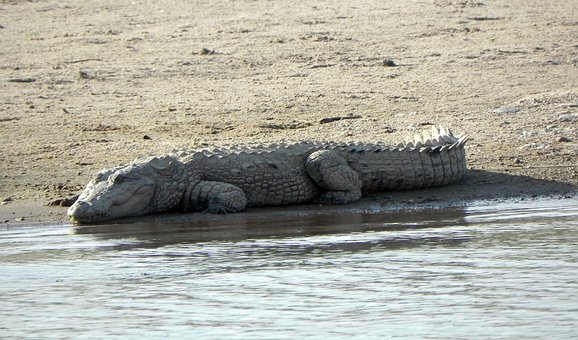
The ladies, still on the elephant, and Mr Carew on his horse, did not wait to see the outcome of the fight. They “went off to the west…” In the growing darkness, Captain Hearsey and Captain Hastings lost the elephant’s tracks in the undergrowth and fell further and further behind. Finally giving it up as an impossible task, they returned to the river. The others in the party, Mr Brand, Sergeant-Major Rodgers, Mr Brown and Mr Gonne, had not followed the elephant and were now nowhere to be seen. Captains Hastings and Hearsey abandoned their horses and swam across the river (the presence of the ladies had likely prevented them from doing this earlier). The next day, they reached the village of Gonapatia, where the kindness of Rajah Koolraj Singh of Pudnaha made it possible for them to proceed onwards to Koolapore. To their surprise, the Rajah had other guests – Mr Brand and Sergeant-Major Rodgers, who, like the two captains, had swum across the river during the night. Mr Brown, unfortunately, met a different end: “before the latter had gained the shore, an alligator had pulled him down under the water, and he was seen no more.” Mr. Gonne appeared in Koolapore a day later.
Sergeant-Major Rodgers refused to give up on his family. Somewhere in the jungle were his wife and stepson, along with Miss Jackson and Mr. Carew. They waited two days, sending out parties of the rajah’s men to scour the countryside, but they found no one and would never see their companions again.
Meanwhile, the Dhowraria Rani had not given up the chase. Her followers came across the river and were within a mile of Koolapore when the party was forced to flee again. They stumbled their way to a forest, thick enough to allow for cover, where they remained for two days. On the third, a jemadar in the service of Raja Koolraj Singh found them, and under his escort, they found their way to Dhoolee Kote in the Nepali Hills. It was here they learned the fate of their other companions, Miss Jackson, the sergeant-major’s family and Mr. Carew. Unable to cross the river, they had “fallen into the hands of the Dhowraria people and were taken back to Mutteara, from when they were forwarded to Lucknow…”
Forwarded to Lucknow they were – and killed when Havelock arrived in the city on 25 September. It is said that the ladies were shot together, but where their bodies and those of their companions were left is unknown.
Captain John Hearsey, the Sergeant-Major and Mr Brand stayed with the Rajah until January 1858. Their whereabouts were not as unknown as they had presumed, and the Rajah was presented with an ultimatum by the rebels- either send in the heads of the remaining party or be attacked. Unwilling to comply with the former request and not wanting to be involved in the latter, the Rajah forwarded them to a military post in Nepal – Dyluck. Still sick and unable to travel further, the Sergeant-Major and Mr Brand now leave the picture, leaving only Captain Hearsey. He decided now to take fate into his own hands. Having heard that Jung Bahadur of Nepal was planning to join Sir Colin Campbell’s force on its march to Lucknow, he decided to join the Nepalese. His journey to join the force would entail another month of travelling, but arrive he did, and eventually, the Captain would become Head of the Intelligence Department for Sir Colin, remaining with him until the end of the campaign.
There was still another party that had escaped the Sitapur massacre, who would eventually arrive in Lucknow, but not quite as they had expected.
Sources:
Chick, Noah Alfred. Annals of the Indian Rebellion. Calcutta: Sanders, Cones, and Co., 1859.
David, Saul. The Indian Mutiny: 1857. London: Viking, 2002.
Hibbert, Christopher. The Great Mutiny: India 1857. London: Allen Lane, 1978.
Llewellyn-Jones, Rosie. The Great Uprising in India, 1857-58. Woodbridge: Boydell Press, 2007.
Robinson, Jane. Angels of Albion: Women of the Indian Mutiny. London: Viking, 1996.
Wylie, Macleod, ed. The English Captives in Oudh: An Account of the Mutinies of the Oudh Regiments in 1857. Calcutta: G.C. Hay and Co., 1858.
 Mutiny Reflections
This tragic true-life account presents itself even more chilling because of its pure factual description of the events. There is no escape into romanticism that fiction usually allows us to do.
LikeLiked by 1 person
There is no romanticism and very rarely, a true happy ending. Survival was by chance and luck, and escape many times a mad flight into the unknown. Death was sometimes preferable to surviving, a concept which our modern world would have problems grasping.
LikeLiked by 1 person