Sitapur 30th May to the 3rd of June, 1857
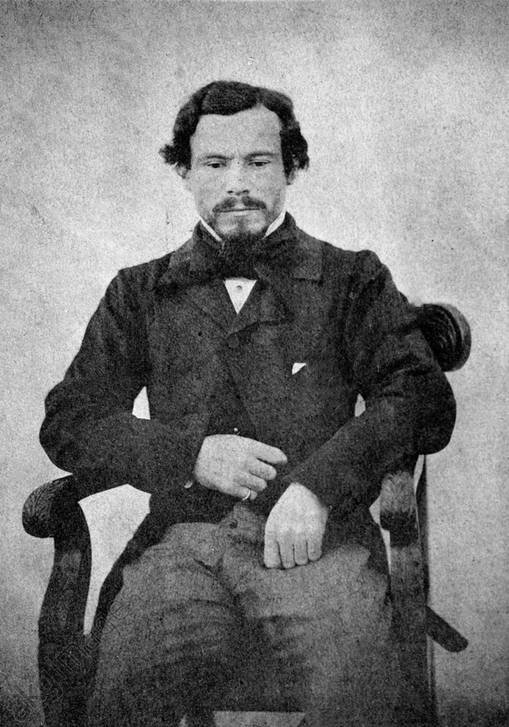
On the 30th of May, Mr. George Jackson Christian wrote to his father-in-law, Charles Raikes in Agra,
“All quiet here, and throughout my division the people seem well disposed, and the regular regiment here, the Forty-first, is quiet; and I have in position nine hundred and fifty men, so that if things go wrong elsewhere, and they are tempted to rise we could crush them in an hour..”
He was of course talking about the Irregulars and the Oudh Military Police – Sitapur was garrisoned by the 41st BNI, 250 recruits of the 9th and 330 recruits of the 10th Oudh Irregular Infantry, 360 men of the 2nd Regiment of the Military Police – he did not trust the 41st, but the others he trusted completely.
As a precaution, Mr Christian had chosen what he thought was the best position of defence – his own house. On two sides of it flowed the river Surayan- prefect for preventing an attack from the rear – and with the 9th and 10th with 4 guns posted between the bungalow and the lines of the 41st, and a strong guard of the police stationed in the compound itself, it would not be difficult to render the position defensible, at least until reinforcements arrived. That the house was located in such a place that there was no way of getting to the main road without going through the military cantonments did not seem to strike Mr Christian as problematic. Nor the fact that the roof was made of thatch. Believing he had done what he could, Mr Christian now gathered all the civilians of the station and their families at his house. The military families, although invited, refused to leave the lines. Not once did it occur to Mr Christian to send the women and children away while there was still time.
Things were not well in Sitapur. On the 27th of May, the vacant lines of the 2nd Regiment of Military Police – under the command of Captain John Hearsey – were set on fire. Hearsey himself did not take much notice of the incident, and no one was punished. The sepoys after all had helped to put out the fire. On the 2nd of June, a plea was made by the sepoys that the flour they had been given was tainted – this too on purpose, to destroy their caste. Again, the rumours were not investigated. The flour was, on the sepoys insistence, thrown in the river. Emboldened by their success, that same afternoon they raided the gardens of the European residents helping themselves to all any fruit they could find. A short rebuke by the officers quelled the plundering, but the peace was but momentary.
Lieutenant-Colonel Birch
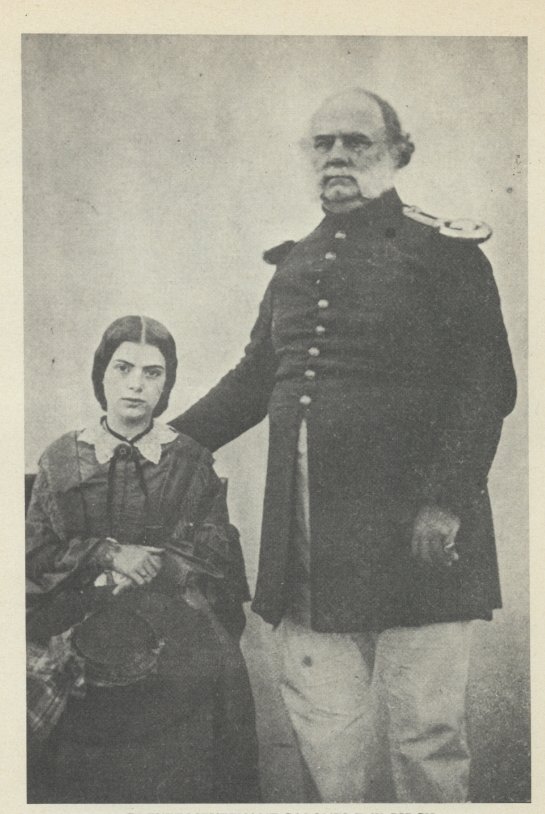
Brevet Lieutenant Colonel Frederick William Birch was an officer of the old Bengal school – an officer who staunchly believed in the loyalty of his men. He joined the Bengal Army in 1821 at the age of 16. By 1824, he gained the rank of Lieutenant in the 41st BNI. It was a regimen he would return to throughout his career. Though he served in the 1st Burma War with the 1st Grenadier Battalion in 1825, by 1831, he was back with the 41st. In 1836, Birch was appointed Superintendent of the Calcutta Police, where he stayed for 10 years. In 1845, he was even the magistrate of Calcutta town – but by 1852, he returned to regimental duties and, now a major, he returned to the 41st. In 1854, he gained his Brevet Lieutenant-Colonelcy.
When it came to trust, he had it in abundance, almost to the point of infatuation. His men would never mutiny. After all, on receiving the first news of the Lucknow mutineers, who were heading to Sitapur, hadn’t Birch marched out his men along the Lucknow road and hadn’t they fired on the advance guard of the mutineers? Wasn’t that proof enough of fidelity? It was the 2nd of June.
A mere 24 hours later things took a different turn.
At sunrise on the 3rd of June, Major Apthorp of the 41st reported to Mr Christian and the Colonel that the men were ripe for mutiny, their insubordination now unmistakable. Still not believing it, Colonel Birch nevertheless called out the 9th and the 10th Oudh Irregular Infantry, had the guns readied and placed a guard of military police around Christian’s house, which by now was full of women and children. At 8 o’clock the same morning, a company of the 41st marched towards the treasury with the intent of seizing its contents, while others advanced on the guns around Mr Christian’s house.
Colonel Birch was determined to recall his men to duty. He rode off to the Treasury with four companies, and “on the way, the sepoys were beating their breasts and saying that they would fight to the last for their colonel and would not permit the rascals of the 10th to do any harm. The poor old colonel, on hearing all this, turned to his adjutant and said, ‘Is it not affecting to see the devotion of the men?”
Our colonel now formed up the companies at the Treasury, but as there appeared to be no symptom of any disturbance, he was about to return, upon this, the adjutant, Lieutenant Graves, said he did not like the looks of the men; that, in fact, he did not think they would obey the order to march back from the Treasury. Just then, the colonel gave the order, ‘Threes, left shoulders forward,’ and at that moment, a sepoy of the Treasury guard stepped forward and shot him dead, and he fell from his horse.”
Not waiting a second longer, Lieutenant Graves turned his horse towards the cantonments – but not before he was wounded in the temple and his poor horse was shot out from under him. Undeterred, he started to run – a friendly havildar major of the 41st, however, gave him his pony, and Graves made it back to the lines to warn his fellow officers of what had transpired. Without a moment to lose, they gathered up their families, and with an escort of some 20 loyal sepoys and a band of Christian drummers, the remaining officers of the 41st turned their backs on Sitapur and made their way, as best they could, towards Lucknow. There was nothing else they could do.
Everywhere else in Sitapur, chaos reigned as the irregular regiments now turned on the officers. Captain Gowan, Lieutenant Green, Dr. Hiliard, and the sergeant major of the 9th were killed on the parade ground, along with Lieutenants Dorin and Snell of the 10th. Snell’s wife and child were killed near their bungalow. Lieutenant Barnes and Quarter Master Morton of the 10th and Quartermaster Abbott of the 9th fled to the commissioner’s house.
A clerk tried but failed to press on Mr. Christian the need to leave the ill-fated house. He writes,
“The firing was increased, and the Military Police displayed no inclination to cooperate with us. I besought the commissioner to escape with his family, but he declined and went forward, armed with his rifle towards the position occupied by the Military Police. I followed, reiterating my conviction of the urgent necessity of escape, but the gentleman unfortunately could not divest himself of his firm, yet as the event showed, mistaken confidence in the loyalty of the Military Police, declaring that he feared no danger and could never think of abandoning his post.”
Huddling in a corner was the sister of Sir Mountstuart Jackson, Madeline. This was probably not the start of his career that the young man had envisioned. As nephew to Sir Coverley Jackson – the predecessor of Sir Henry Lawrence at Lucknow – he had secured a position as a writer in the Bengal Civil Service through his uncle’s connections and had arrived in India in 1856. Sitapur was his first posting. His two sisters, 19-year-old Georgiana and 17-year-old Madeline, had just completed school in Paris and had joined their brother in India at the beginning of the year. Madelaine witnessed Mr Christian and the other men running back inside the house. They were shouting the awful truth: the police and soldiers had turned.
” Mrs. Christian was crying, and my dear sister was trying to comfort her. They all came in and our brother had not come. I asked Mr. Christian where he was? Poor man, he could not answer. At last, Mountstuart came – the last in. The house was barricaded, and they fired through holes, but the natives were breaking in, and we all got out at the jungle side. Everyone had been told to try and get to the Raja of Mithauli’s palace. Well, only half of a French window could be got open, and everyone was forcing their way through, regardless of anyone else…”
Christian himself now just as resolutely walked out of his house carrying his six-month-old son, his wife closely behind, holding her daughter Sophie in her arms. Although he left the house last, it did not take Lieutenant Barnes very long to catch up with the Christians. Mrs. Christian cried out to the Lieutenant, “Oh, save my child! Who will save my child?” Obligingly, he took the little girl from her mother and carried her off with him. The Christians struggled across the river when the mutineers fired a volley at them, instantly killing Mr. Christian and his son. His wife took the baby in her arms and, sobbing, sat herself down next to her husband’s corpse. Coming up behind her, a rebel beheaded her with one stroke.
The deaths in Sitapur were, in comparison to other stations, rather few, but no less dear.
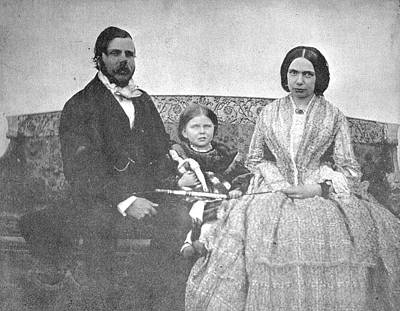
Mr. and Mrs. Christian, 1 child, and a nurse – George Jackson Christian was born in 1821. He was the son of Rear-Admiral Hood Hanway Christian and Harriet Shute. He married Sophia Carolina Anna Raikes (born in 1835), daughter of Charles Raikes (Suddar Court Judge at Agra during the Mutiny) and his first wife, Sophia Matthews, at Salisbury Cathedral, Salisbury, Wiltshire, England.
Mr. and Mrs. Thornhill and one child – Henry Bensley Thornhill and his wife, Catherine, née Heathfield. He was the son of John Thornhill, one-time Postmaster General of Bengal. The Thornhills were singularly unlucky during the mutiny – of the four Thornhill brothers, two were killed: Henry at Sitapur and Robert Bensley was murdered at Cawnpore. He had been serving in Fatehgarh as a judge at the time of the mutiny. Cudbert Bensley and Mark Thornhill spent the mutiny in Agra; for his part, Mark escaped from his station, Muttra, twice. A cousin of theirs, John Bensley, married to Mary Havelock (niece of Sir Henry and daughter of Major General Sir Charles Frederick Havelock), was besieged at Lucknow with his wife and infant daughter. During a tragic misadventure, John Bensley was mortally wounded and died in October 1857. He lies buried at the Lucknow Residency cemetery with his baby daughter Mary.
It is said the daughter of Henry Bensley Thornhill, Cathy, was picked up by the river outside Sitapur but died of exhaustion in the next few days. It had never been established what really happened to the Thornhills. Whether their daughter really was picked up by someone or if this story was created to make at least her fate a little less horrible is a matter left for history to decide.
Lieutenant-Colonel Frederick William Birch – Son of Richard Comvns Birch, B.C.S., P.M.G., Bengal, and Frances Jane his wife, dau. of William Rider.
Services: Posted as Ensign to l/9th N.I. Transferred to 2/2 1st N.1. in 1823 ; to 41st N.I. (late l/21st) May 1824. First Burma War; Arakan 1825; Lieut. 1st Gren. Bn.Intr.&Qmr. 41st N.I. 18 Feb. Supt Calcutta Police 1 Jan 1836. Supt. Police and Salt Chokies, 1840. Senior magistrate of the town of Calcutta in 1846. Reverted to regimental duty in 1849. Like the Thornhills, the Birchs were a well-established family in India and very much like the Thornhills, albeit in the military tradition. His son, Frederick of the 71st BNI, was wounded during the Siege of Lucknow. After escaping from Sitapur, the lieutenant colonel’s daughter Frances would find herself surrounded by relatives in the Residency, including another brother, who would be killed during the siege, and at least two cousins.
Captain George Thomas Gowan, wife Olivia Grace and son, George Boyce Combe. A mural tablet, erected in St. Paul’s Cathedral Calcutta, reads thus:
To the beloved memory of GEORGE THOMAS GOWAN, Captain in the 27th Regiment Bengal Native Infantry, and Commandant 9th Regiment, Oude Irregular Force, second son of Major-General G. E. Gowan, Bengal Artillery, killed at Sitapur, Oude, June 1857, in the 35th year of his age. He fell whilst endeavouring to recall the mutinous sepoys of his own corps to order and obedience. Also to the memory of OLIVIA GRACE, daughter of Major-General James Stuart, Bengal Army, and wife of Captain G. T. Gowan, who, with their infant son, George Boyce Combe, was cruelly murdered by the rebels at Sitapur, June 1857.
Lieutenant Robert Thornton Smalley, 41st BNI
Sergeant-Major Middleton
Dr. Marcus Hill
Sergt-Major Keogh and 2 children
Lieutenant Greene
Lieutenant Dorin
Lieutenant Snell, wife and child
Mr Cranenburgh, clerk
On the 4th of June, a note, unsigned and written on scrap of paper, was brought in to the Residency. It simply stated that some European refugees were on the road to Lucknow and were in need of assistance. Captain Forbes at once collected a group of volunteers and as many carriages and buggies he could find and set out to look for them.
Towards evening, the first group from Sitapur arrived at the Residency, exhausted and worn out but alive. Among them was Major and Mrs Apthorp and three children, Mrs Ward, the Birchs and Mrs Keogh, the widow of Sergeant Keogh of the 9th. They were the families of the officers who had very wisely declined to go to Mr Christian’s house. Lieutenant John Henry Graves of the 41st (the only son of Brigadier Henry Graves), although wounded in the head, survived Sitapur. Tragically, he died on 7 July 1857 of cholera in the Lucknow Residency. They had been escorted into Lucknow by a group of 30 sepoys of the 41st. Fifteen of them had taken them away from Sitapur itself, while the rest of the troopers joined the group on the road. It was an uneasy partnership; the remaining officers of the 41st had had the sense to arm themselves as heavily as possible before leaving the station – and if anything untoward passed through the sepoys’ minds, then it was probably passing through their former officers’ minds too.
The sepoys were well rewarded by Henry Lawrence for their conduct and placed in the Macchi Bawan under the command of Major Apthorp. Unfortunately, their fidelity lasted only for another two weeks. After overhearing some seditious conversations among his men, Apthorp decided to ask them if they would prefer to go on leave – to a man, all 30 of them opted to go. It was the end of Major Apthorp’s command and at least a praiseworthy finale for a part of the 41st.
In small groups, in ones and twos, the refugees kept coming. Mr Bickers – a clerk with his wife and child, after escaping Christians’ house under a perfect hail of bullets, found refuge in a village and was escorted with much kindness to Lucknow. Lieutenant Lester – the assistant commissioner of Sitapur – managed to get to the jungle. Here he met up with Quartermaster Sergeant Abbott – they wandered about for some hours, not having decided yet which direction to go. They eventually came across a friendly villager who told them he had seen a European woman and child hiding in the jungle. Entreating him to bring them to the fugitives, to the Quartermaster’s delight, it turned out to be his wife and child. There were more:
Mrs Morton, the wife of Sergeant-Major Morton and one child
Mrs Brown (the sister-in-law of Sergeant Keogh) and one child
Sergeant Anderson of the 10th Oudh Irregular Infantry had also managed to cross the river. Under the guidance of Lester, who had an admirable knowledge of the countryside, they all managed to get to Lucknow safely four days after the massacre in Sitapur.
Three weeks later, the next group from Sitapur arrived -Mr Dudman and his family, Mr Morgan and his wife, Mrs Horan and five children. Having been under the protection of the zamindar of Ranekot, they had been very kindly treated – Mrs Cranenburgh (whose husband had been shot in front of her as they had escaped from their house), Mrs Owen and her two sons, and Mr Scott preferred to stay with the zamindar. He arranged a few carts and an escort of loyal villagers to bring the group to Lucknow. With them was Mrs Dorin, who, having witnessed the murder of her husband, a lieutenant in the 41st, had fled on her own. Stumbling through the countryside without any idea where to go, she was found by some villagers who, unable to take her to Lucknow and unwilling to hand her over to marauding sepoys, kept her hidden in their village for a fortnight. Finally, they took her to the zamindar of Ranekot, and she joined the group headed for Lucknow.
By the 28th of June, anyone who could escape to Lucknow had done so. After the Battle of Chinhat on the 30th, anyone still outside the Residency was left to their own devices, as the magistrate’s clerk, Mr Philips, and his wife soon found out. They had managed to flee Sitapur disguised in native clothes, avoiding not only the rebels but all the fleeing Europeans. After some very near misses and ten months of hiding in various villages, jungles and forts, they reach Sir Colin Campbell’s Relief Column in March 1858, on its way to Lucknow.
Two other groups escaped Sitapur, but neither would find their way to the Residency, and would be taken to Lucknow to meet their fates.
Sources:
Chick, Noah Alfred. Annals of the Indian Rebellion. Calcutta: Sanders, Cones, and Co., 1859.
David, Saul. The Indian Mutiny. London: Viking, 2002.
Hearsey, John Bennett. “Account of Captain Hearsey in His Escape from Sitapur.” In Annals of the Indian Rebellion, edited by Noah Alfred Chick. Calcutta: Sanders, Cones, and Co., 1859.
Hibbert, Christopher. The Great Mutiny. London: Allen Lane, 1978.
Orr, Patrick. “The English Captives in Oudh.” Letter to Adolphus Orr, June 1857. In Annals of the Indian Rebellion, edited by Noah Alfred Chick. Calcutta: Sanders, Cones, and Co., 1859
 Mutiny Reflections