The mutiny in Fatehgarh did not commence until the 17th of June; however, panic had induced a portion of the civilian population to flee towards Cawnpore at the beginning of the month. Some of these returned to Fatehgarh and would take their place in the fort, only to subsequently flee towards Cawnpore again.
A.
- Ahern, John, Sub-Conductor and Mrs Lucy, Clothing Agency
John Ahern of the Army Clothing Department distinguished himself during the siege of the Fort as an excellent gunner. Upon his death in the Fort, his wife proved herself to be a very capable shot with a musket, taking her husband’s place on the ramparts. Mr Ahern was killed in the Fort, and his wife was murdered in Cawnpore on the 15th of July in the Bibighar. The marriage register of the old Church of Fatehgarh lists them as: John Ahern and Lucy Lambeth, 1st January 1850. - Alexander, Mr. Killed at Cawnpore on the 12th of June.
- Anderson, Mr. and Mrs.(his mother). Clothing Agency. Mr. Anderson drowned at Manpur. HIs mother was killed on the Parade Ground on the 23rd of July.
- Atkins, Mr. and Mrs., two children. They were captured in Fatehgarh and killed on the Parade Ground on the 23rd of July.
B.
- Bellington, Mr. Clerk, Office unknown. He was killed in Cawnpore on the 12th of June.
- Best, Sergeant and Mrs., and three children. Bridge Daroga. Sergt. Best was killed at Cawnpore on the 10th of July. His family was murdered on the 15th of July at the Bibghar.
- Bignell, Captain, Fredrick D’Oyley, 10th BNI. Captain Bignell swam across the Ganges to join his company as they left Fatehgarh, believing he could turn them around. He was pushed out of the boat at Meora Ghat above Kanauj. Swam to the Oudh bank and died at Sirriapurt, where he died of exposure. Believed to have been married, a mysterious Mrs. Bignell presented herself to the authorities after the mutiny.
- Boscow, Mr., Mrs., and two children. Pensioner. Mr. Boscow was killed at Cawnpore on the 10th of July. His family was killed on the 15th of July at the Bibghar.
- Brierly, Mr. John and Mrs. Mary Margaret and two children. Tent manufacturer, boat agent, coach builder and shopkeeper. Established in Fatehgarh in 1834. All killed at Cawnpore on the 12th of June. John Brierly married Mary Margaret Boulton on October 7th, 1844, in Fatehgarh. Their son was born on the 8th of October in 1850 in Fatehgarh. Of the other child, there are no records.
- Brierly, Mr. Richard and Mrs. Eliza, and one child. Clerk in the Collector’s office. Mr. Brierly was wounded at Kusumkhor. All were killed at Cawnpore on the 12th of June. Richard and Eliza were married in Fatehgarh on the 8th of September 1846. Eliza was the relict of the late Thomas Fletcher. Their first daughter, Florence G., was born in June 1847, but she died on the 8th of September of the same year. The “one child” mentioned was their infant daughter, who had been born in Fatehgarh on the 11th of March 1857. Richard was affectionately known as” Dick Sahib” and both brothers were well known in the town. The family was well-established in Fatehgarh.
There is another Brierly mentioned in the FIBIs records – Joseph Brierly, who was married to Charlotte. It would appear he was the father of John and Richard, with John being his 4th son. Charlotte died at the age of 51 on July 12th, 1848. Joseph was to die of apoplexy at the age of 72 on the 9th of May, 1852. If this is so, then it must be that Joseph came to Fatehgarh in 1830, and the brothers John and Richard were working with their father. Research is in progress. 2 Brierly daughters are buried in Fatehgarh, Esther, whose birth year is unknown, and Sarah, who died in 1831 aged 1 year, 10 months and 11 days. They were the daughters of Joseph and Charlotte. - Brierly, the Misses E. and F., killed at Cawnpore on 12th June.
- Byrne, Ensign Reginald Sutherland, 10th BNI. Killed at Cawnpore on the 10th of July. A
Born on the 8th of January 1836 in Calcutta, the son of Wale Byrne and his wife Janet Rymer, 1856 was a merry year for the young ensign. According to Cosens & Wallace, Byrne and his brothers were “an instance of the unusual circumstance of an Anglo-Indian getting a Commission in the regular Bengal Army.” His brothers received commissions in the 77th and 53rd BNI respectively.
Instead of buckling down and getting on with his career, Reginald had another idea. This impetuous young man, who seems to have had plenty of time on his hands, promptly married on the 8th of October, 1856. His match was none other than with Amelia Eliza De Fountain (born 1 6th June 1837 in Bancoorah, Bengal), the daughter of a disgraced Anglo-Indian merchant, John Defountain once an officer in the 54th BNI, and his wife, Adolphine Rabeholm. Adolphine was the daughter of Jesper Nicolay Rabeholm, an agent of the Dutch East India Company and assistant to the British Commissioner at Serampore. Adolphine’s mother was Baronesse Maria Conradina Schaffalitzky de Muckadell, who was born in Serampore. Perhaps this hint of baronetcy helped to turn Reginald’s head.
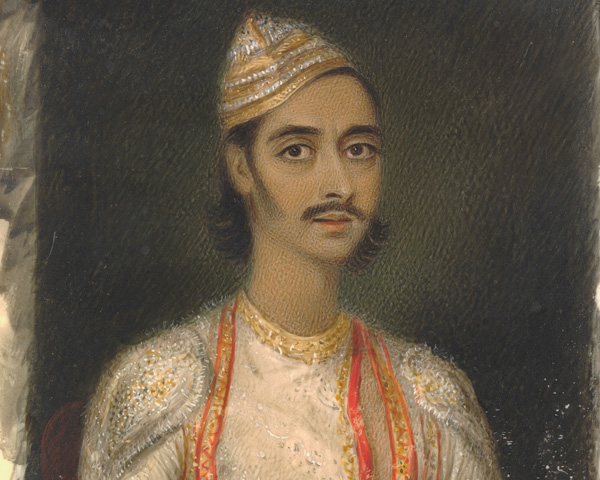
Amelia, better known as Bonny, lived in Fatehgarh with her widowed mother, who had other ideas of how to better the family fortunes and introduced young Bonny to the Nawab of Farrukhabad. This union caused an unholy scandal, as Bonny was very much a child. The authorities at Fatehgarh were having none of it and promptly packed Bonny off to Kidderpore Girls’ School in Calcutta, making it clear to the Nawab that his licentious attentions to the maidens of Fatehgarh were in no uncertain terms considered abhorrent. His brother had earlier seduced and eloped with a young Miss Harriet Birch, making her his second wife. No amount of coaxing could make Harriet leave his zenana, and as she was “of age”, there was little the authorities could do. But not so with Bonny.
” The Kidderpur School at this period appears to have been a convivial establishment, which under some covering of decorum was nothing more than a marriage bureau. The School Committee were accustomed to give balls, to which young cadets were given special invitations with a measure of cordiality only exceeded by that of the cadets in accepting it. In this free and easy manner, Miss.. became settled in the life of Ensign Byrne.” (Fatehgarh and the Mutiny).
Fate would have it that shortly after their marriage, Ensign Byrne was assigned to the 10th BNI in Fatehgarh. Delighted at her return, the Nawab promptly took up his visits to Bonny at her home once again, much to the fury of Reginald, who, returning home one day, promptly kicked the visiting Nawab down the stairs of the veranda. His humiliation did not check his ardour, and when Reginald was fighting for his life in the Fort, Bonny and her mother were safely ensconced in the Nawab’s zenana, where they remained for the duration of the mutiny.
Following the Nawab’s arrest, Magistrate Power wrote to Lord Canning asking permission to hang Bonny, but the request was denied. The Nawab was exiled to Mecca, and Bonny remained in India. She went on to marry a sub-collector in July 1858 in Cawnpore, Edward John Chandler, who by all descriptions was jovial but immensely fat. She gave birth to a child who she named Byrne, and died in 1859 at the age of 20, her tombstone declaring she was “a sincere friend and attached wife.”
C.
I will not be adding extensive biographies of the American missionaries in Fatehgarh. “A Memorial of the Futtehgurh Mission and her Martyred Missionaries” by Rev. J. Johnston Walsh makes interesting reading for anyone who wants to understand how the Mission worked and of the prejudices that existed at the time in India and especially against Indians. It is a book of its time and not ours and should be read as such.
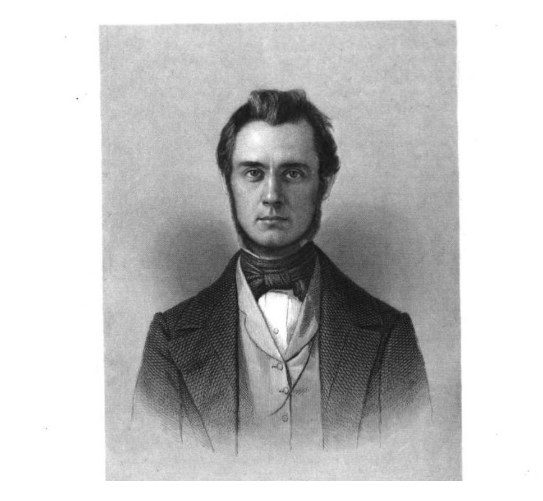
- Campbell, Rev. David Elliott, Mrs. Maria Irvine and two children, Fannie and Willie. Missionary at Rakha. All killed in Cawnpore on 12th June. Reverend Campbell was born in Mercersberg, Franklin County, PA, on the 7th of June 1825. He had arrived in Calcutta on the 30th of December 1850, with his wife Maria.
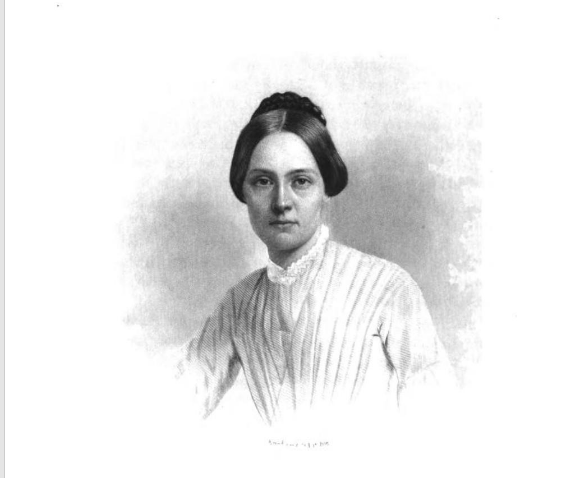
Maria Irvine Campbell,née Bigham, was born on the 31st of March, 1830, in Millersburg, Ohio. By all accounts, she was a devoted wife, a kind friend and “acted from a strong and unwavering sense of duty.” She was a lady of “peculiar loveliness, and distinguished in early life by her patient, amiable and gentle disposition.”
At the end of 1856, on account of ill-health of their son Davidson, the Campbells travelled to the Hills where they left the child in the care of Rev. W.J.Jay, in Landour. By December, they were back in Fatehgarh with their other children, Fannie and Willie. Maria Campbell’s horror at the events as they unfolded prompted her to write to her brother, “I felt so thankful that our dear Davidson was safe, and so anxious about poor innocent Fannie and Willie. How I wish Davidson was with Mother to take my place! We do not think of sending him, but may see it our duty to go home with our children, for their sakes, and our own, in two or three years, should we be spared so long…”
Reverend Campbell was the only missionary who opposed leaving Fatehgarh. Strongly committed to the mission’s followers, he believed their place was with the native Christians. If anything, Reverend Campbell had no illusions. He writes: “We do not know how long we are to be here, for we soon be aled to follow those unfortunates (or fortunate ones, perhaps), who were cut down in Meerut and Delhi. Let us be prepared. Brought so near death, we know now what is necessary to make it easy, even though it be violent…”
In “The Story of the Cawnpore Mission,” Isuri Dass recollects his last meeting with Reverends Campbell and Freeman:
“Mr. Campbell would have rather laid down his life on the spot. He did not seem much inclined to leave the place and asked me whether they did right in going away. I replied it was their duty to do all they could for their safety. He said there was merely a bare chance of escape, as the whole (riverbank) was lined with rebellious zemindars.
” For my part,” he said, I am ready to be cut to pieces.”
- Catania, Mr. and Mrs., Inspector of Post Offices. Both killed at Cawnpore on the 12th of June.
- Cawood, Mr. and Mrs., and two children. Head Clerk, Clothing Agency. All killed at Cawnpore on the 12th of June.
- Churcher, Mr. Thomas H., Indigo Planter. Killed at Manpur. Brother of David Churcher.
- Collins, Mrs. Hannah. Killed in her bungalow on the 18th of June.
- Collins, Miss. Daughter of Mrs. Collins. She was kidnapped by a tailor on the 18th but brought back to the bungalow the next day, supposedly to show the tailor where her mother had hidden her jewelry. When she could not or would not reveal where it was, she was murdered. Alternately, the girl hid in the bazaar, was discovered by rebels, brought back to the house, shown her mother’s corpse, forced to find the jewels and then murdered.
D-E
- Dick, Mrs.and Master. Captured at Fatehgarh. Killed at the Parade Ground on the 23rd of July.
- Donald, Mr. Planter and son from Budaon District. They had escaped with Mr. Edwards but chose not to remain in Dharampur. Both were killed in Cawmpore on the 10th of July.
- Eckford, Ensign, 10th BNI. Killed at Manpur. He had sent his wife to Allahabad on the 23rd of May, but she was never heard from again. According to “Records of Intelligence”, J.W. Sherer, in writing to W. Muir, states the following on the 30th of August: “Nawab of Farruckhabad carrying on his game of cruelty and fanticism. A native Christian reports that Mr. Bridges, an indigo planter, his wife, mother-in-law and daughter who was Mrs. Eckford (?) captured in Mofussil, and blown away from guns.” (p. 501) If this is the same Mrs. Eckford, her disappearance on the way to Allahabad could be explained.
- Elliot, Sergeant, Mrs. and five children. Formerly in the Bengal Sappers. Was employed by Maharaja Duleep Singh to look after his Toshak khana. Was the son-in-law of Mr. Maclean. All killed at Cawnpore on the 12th of June.
F.
- Faulkner, Mr., Mrs., and two children. Pensioner. All killed at Cawnpore on the 12th of June.
- Finlay, Mr., and Miss. Clothing Agency. Both killed at Cawnpore on the 12th of June.
- Fisher, Rev. Frederick, Mrs., and child. Chaplain of Fategarh. Mrs. Fisher and son drowned at Manpur. Mr. Fisher was killed at Cawnpore on the 10th of July.
- Fitzgerald, Lieut., Henry John, Mrs. and child. All killed at Manpur.
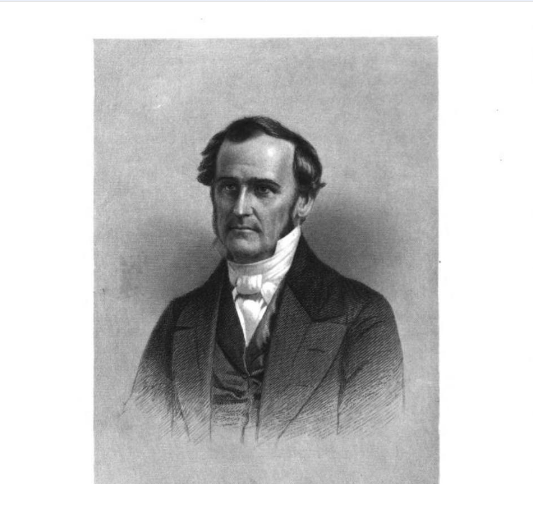
- Freeman, Rev. John Edgar and Mrs. Elizabeth. Missionary at Rakha. Both killed at Cawnpore on the 12th of June. John Edgar Freeman was born on the 27th of December 1809, in South Orange, Essex Co., New Jersey. An old classmate recalled that he was known as a man of ” high social qualities…his bright social contenance…was very cheerful and with an effort, imparted his cheerfulness to others..He was quick and warm in his attachments, and those who enjoyed his friendship knew him always as a the same unwavering friend. He was of a very ardent temperment and earnest in all his impulses…”
In 1838, he married his first wife, Mary Ann Beach, and together they set out for India on the 12th of October. First, they joined the mission in Allahabad, where they both took charge of the orphanage. On the 8th of August,1849, Mrs. Freeman suddenly died. Unwell himself, grief-stricken and with a young son to care for, Reverend Freeman went home, reaching America on the 28th of April 1850. His son must have been a source of great concern, having already buried two of his daughters in India. His other daughter, Fanny Lucetta / Letitia (1842-1886), had been sent back to America at the age of five, having been rendered deaf and dumb after an illness. She was cared for by her grandmother and then attended the Deaf and Dumb Institution in New York.
His son, John Newton (1844-1921), was duly deposited in a boarding school in Hackettstown, New Jersey, while Reverend Freeman found his second wife, the very capable Elizabeth Vredenburgh of Elizabethtown, whom he married on the 3rd of June 1851. They sailed for India on the 10th of July 1851, the Reverend’s health restored and his children safe. On their return, they were stationed in Mainpuri, where they remained for six years. In November 1856, they arrived in Fatehgarh.
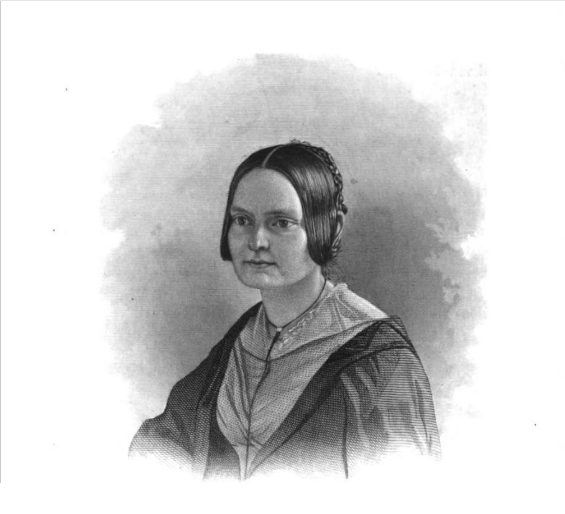
Elizabeth Nevius “Lizzie” Freeman née Vredenenburgh was born on the 22nd of December,1810, in Somerville, Somerset County, New Jersey. She was a stellar wife. In a letter home on their first anniversary, Reverend Freeman wrote to her sisters, “Lizzie is just the one that I would mark out for an invaluable missionary wife. She has qualities few possess for life in India. She not only makes her husband happy but all whom she meets. She wins wherever she goes among our missionary and English friends, and she will win with the natives too when she has the opportunity.”
Mrs. Freeman embraced life in India, enjoyed good health and walked a great deal. Unlike other women of her time, she made little fuss about the weather and delighted in the rain. Death held but small terror for her, and she was steadfast in her faith and realistic about her future: ” We have no place to flee for shelter, but under the covert of his wings, and there we are safe.: not but that he may suffer our bodies to be slain, and if he does, we know he has wise reasons for it…but I sometimes think that our deaths would do more good than we would do in all our lives; if so, “His will be done”. Should I be called to lay down my life, do not grieve, dear sister, that I came here, for most joyfully will I die for him who laid down his life for me.“
 Mutiny Reflections