Memorial Dinners
The Ballarat Star of 16 January 1889, posted the following article.
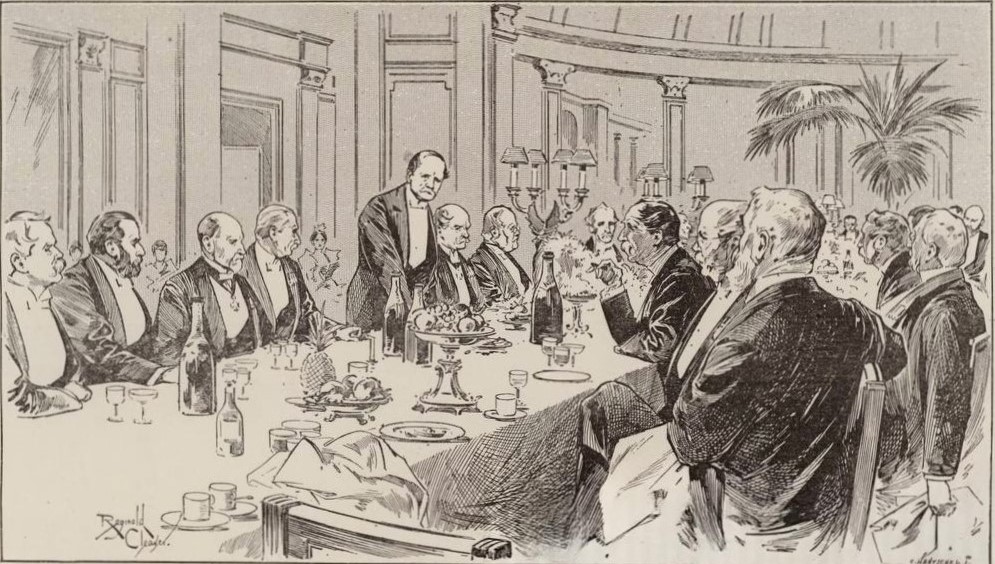
“General Sir William Olpherts, V.C. Proposes “To Our Departed Comrades.”
THE HEROES OF LUCKNOW
(From the Daily News, 26th September, 1889)
Those of the Lucknow heroes whom death has spared, and whom circumstances have not prevented attending, met last night at the Hotel Metropole, Northumberland Avenue, to celebrate, by their anniversary dinner, the relief of the Lucknow garrison on the 25th September, 1857. In the whole history of war, there have been but few exploits equally worthy of commemoration.
The story of the relief of Lucknow will live as long as the English language and until deeds of valour cease to move the hearts of men. Of the brilliant roll of officers of the relieving force 73 survive, namely, 13 officers of the staff (including two who were attached to it in a civil capacity), nine officers of volunteer cavalry, seven officers (including one attached) of Olphert’s and Maude’s batteries, four engineer officers (including one attached), six officers of the 5th Fusiliers, of the 6th Regiment, eight of the 78th Highlanders (besides two others attached), six of the 84 Regiment, seven of the 90th. Light Infantry, eight of the 1st Madras Fusiliers, and two of the gallant regiment of Ferozepore. Of this number, 30 sat down last night to their commemoration dinner, Lord Napier, of Magdala, who had come from the Continent to take part in the celebration, occupying the chair. The dining-hall, though not the largest, is one of the finest rooms in the Metropole—a building in which taste and sumptuousness are well combined. It is known as the King’s room, beautifully proportioned, and wrought in dark oak. One of its chief features is an alcove, semi-circular and dome-shaped, with a row of lights at the spring of the arch. Opposite the alcove is a portrait of King James I. The other portraits are those of Sir Walter Raleigh, Lord Howard (of Armada fame), Ben Johnson (once upon a time a soldier, and a rough and ready one by all accounts), George Villiers and other celebrities of the Elizabethan and Jacobean periods. By the way, the room — library—in which the Lucknow survivors met before dinner is treated very success fully ill the Elizabethan style, the interior of the vast building having been designed and furnished in a variety of styles, including Italian, Renaissance, and Moorish.
In that company of men who sat down quietly, unostentatiously, last night together, in the spirit of old comradeship, to live again for a brief space in the heroic past, how much of the romance and valour of our “island story ” was embodied! The very names of the regiments whose exploits were commemorated recall many of the greatest scenes in our national drama of a thousand years….(Here follows a description of the regiments and their new names).
Take any one of those renowned regiments, and the mere record of its wanderings is an epitome of the adventure and the daring of the great race whose language and civilisation have gone round the world. He, however, he may love peace; must he be a poor creature whose heart is not stirred by memory of their deeds. Besides those regiments of the first relief of Lucknow, which we have just named, there was an English regiment of the defence, the brave 32nd, now known as the 1st Battalion North Staffordshire Rifles. But we may explain that the 25th of September meeting commemorates the relief only, and that only those are eligible for membership who entered Lucknow on that day, or who on that day began the defence of the Alambagh, the palace and park four miles south of Lucknow. There is a separate list of survivors of the original garrison, and that list is kept up to date by the secretary of the “ Defence” dinner. Havelock, the illustrious leader of the relief, compared the defence of the English Residency by its handful of Europeans—and its little hand of loyal native troops—to the siege of Saragossa. The whole series of operations in and around Lucknow—lasting nearly a whole year—the defence, the relief, then the blockade which followed the relief, and, finally, the defeat of the investing force in the spring of 1857, all these constitute the most interesting episode, or series of episodes, in the wonderful story of the mutiny. Nowhere else, not at Delhi, nor at Agra, nor at Cawnpore, has there been so many repeated displays following each other with such extraordinary rapidity—of obstinate English valour in face of terrific ordeals. Nowhere else had the mutineers displayed such a combination of skill and bravery. “Do or die,” it was, on both sides, as if the fate of the English Empire in the East depended on the issue, as, in fact, it did. But wonderful as was the series of Lucknow episodes, that one among them which has most fascinated the imagination was the relief of the 25th September, 1557, under Havelock and Outram!—the special event which, as already said, was celebrated last night. The relieving force was, as we have seen, itself blockaded, but its release—though a most formidable task, involving desperate fighting—was a question of time; whereas, in all human probability, it was on the-25th September, just in time to save the inmates of the Residency from the fate that befell the women and children at Cawnpore. But there is another circumstance which justifies the selection of the great feat of the 25th September, namely, the series of 11 or 12 battles —most of them fought furiously, and every one of them a brilliant English victory—in which Havelock’s little army was engaged between the 12th of July and that date. (In the original article, here follows a lengthy outline of Havelock’s entire campaign.)
The chair was, as we have said, filled by Lord Napier. With all his load of years, the fine old soldier looked remarkably well. To look at him, one would baldly have thought that he saw rough service in the Punjaub long before the Mutiny, winning the special thanks of the Indian Government for service in the Hazara country, years previous to his gallant service in the relieving force. It was just 10 o’clock when Lord Napier rose to make the first of the special speeches, the usual loyal toasts, having already been disposed of. The first toast, proposed by him, was that of the memory of the men Lawrence, Havelock, Neill and others who died during the episode of the relief. The toast was drunk in solemn silence. The reference which he made to Sir Henry Lawrence, in the course of his speech, was loudly cheered —“’Henry Lawrence who “tried to do his duty”—in allusion to the pathetic epitaph which Lawrence wished to be inscribed on his tomb. “We cannot,” said Lord Napier, “add to the glory of our countrymen who fell there; let us hold out their noble example to those who come after us.” General Olpherts, whom the British soldier long ago dubbed affectionately as “ Hellfire Jack,” followed next, eliciting loud cheers when he pointed with his outstretched hand to the sole survivor from the Cawnpore massacre—General Delafosse—who, in spite of his grey hairs, looked young and hearty. “We are not here,” said General Olpherts, “to mourn our dead comrades, but to do honour to their memory.” The speech, rattling, fluent, vigorous, humorous, was Olpherts all over. General Dodgson proposed the defenders of the Residency, and four of the survivors stood up, while their spokesman, General Innes, replied. The general’s speech, full of pathetic touches, was heard with profound attention. Other toasts followed—for the chairman, for the secretary (General Barker). In some respects, General Barker’s reply was about the most interesting speech of the evening, inasmuch as it gave quotations from letters written by Lucknow heroes who sent their heartfelt greetings to their younger comrades with assurances that they would be present in spirit.
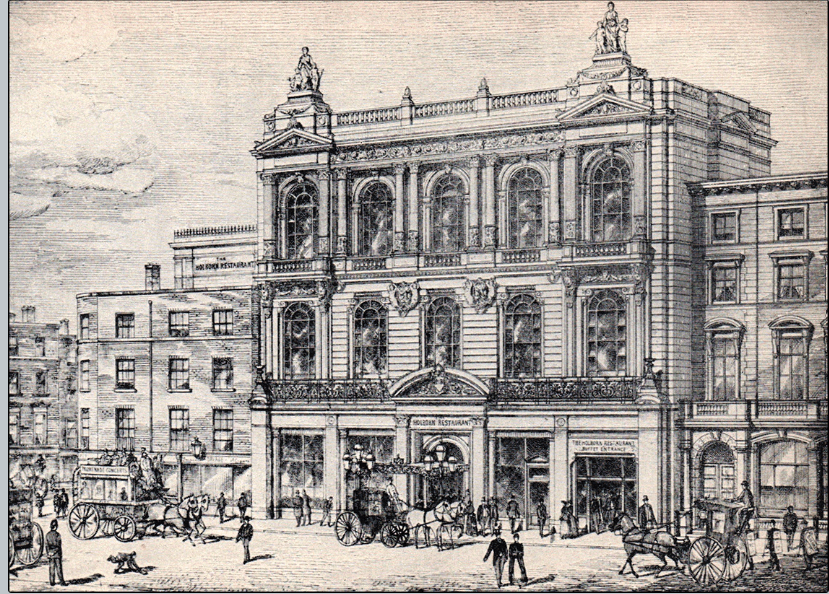
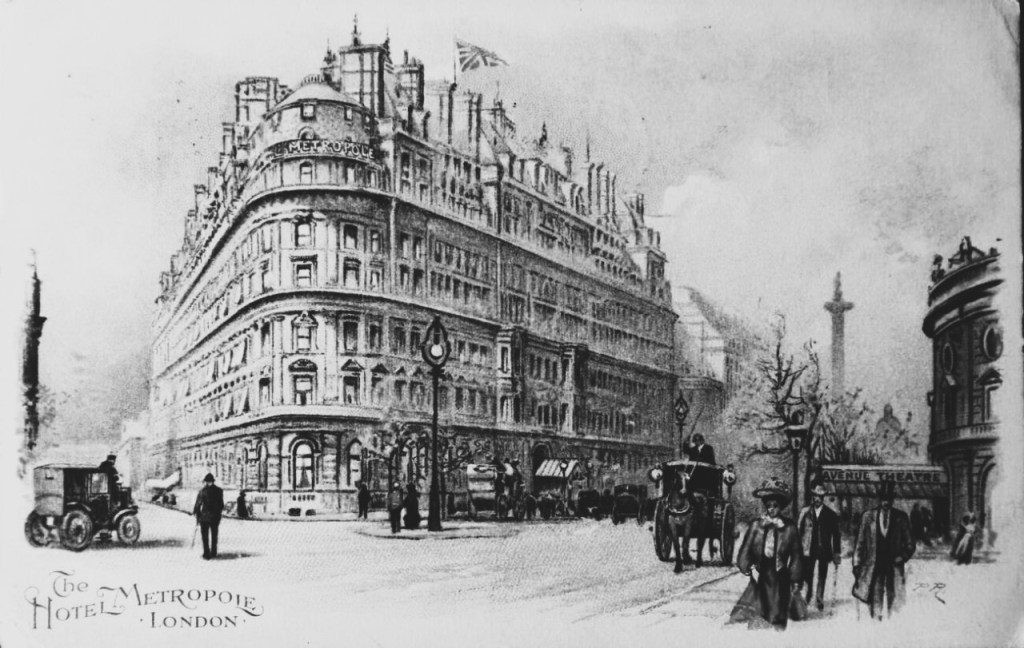
To commemorate the events at Lucknow, dinners became an annual event. Although survivors had been meeting informally in smaller regimental circles or private homes immediately after returning to England in 1858, the first formal Relief of Lucknow Dinner was held in London on 17 November 1872. The banquets were only attended by gentlemen and were open only to those who had participated in the actual relief, either under Havelock or Campbell. Following this 1872 event, the dinner became a fixture of the London social and military calendar, rotating through venues such as the Whitehall Rooms at the Hotel Metropole and the Holborn Restaurant, all the way until 1911.
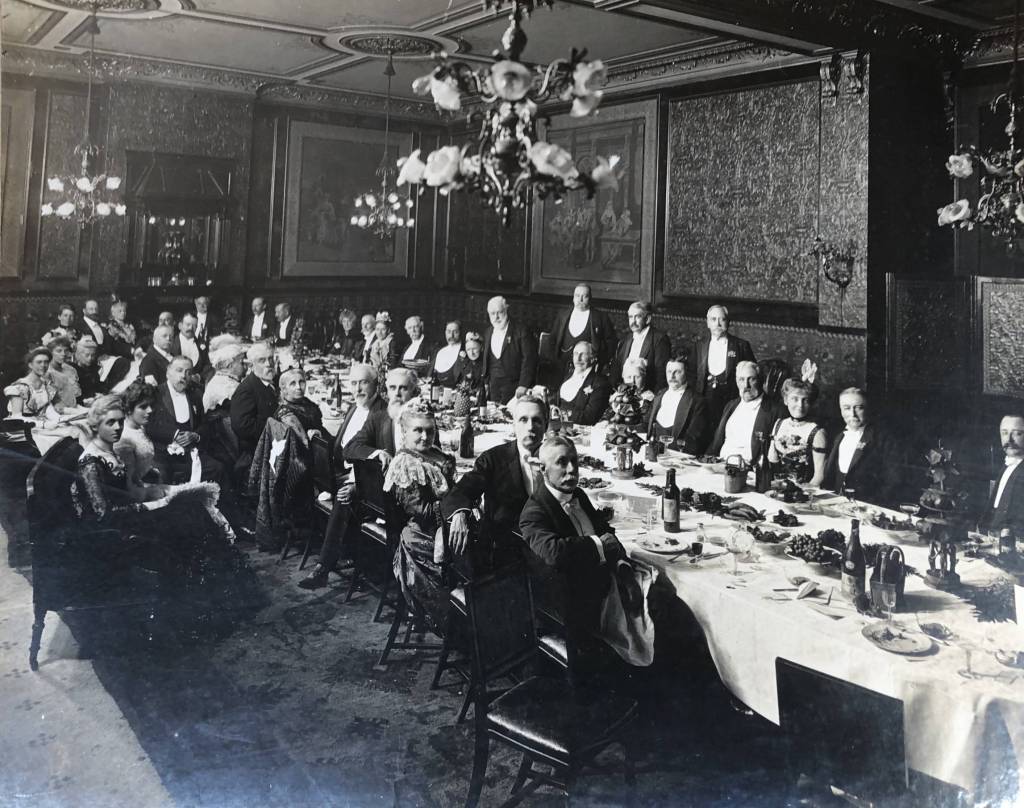
The Lucknow Garrison Dinner or “Defence Dinner “ was first held on 25 September 1880, and as mentioned in the “Battle Dinners”, attended for the first time by the ladies in 1901. One of the ladies to attend was Lady Inglis, accompanied by her son, Alfred, who had been a baby during the siege. To adapt to the summer schedule (The London Season), the dinner was eventually moved to 6 June. Likewise, the Relief of Lucknow Dinner was then rescheduled to 25 September.
Battle Dinners
A very interesting siege dinner was held a year ago, June 1901, when the survivors of the Lucknow Garrison, including, for the first time in the history of this anniversary banquet, ladies who passed through the trials and tribulations of the siege of 1857, gathered together under the presidency of Lieut. General Innes, V.C. The company included nine combatants, members of the garrison, nine women, and seven children who went through the siege, and in addition to these, five members of the relieving force were also present. Among the ladies at the dinner were three who had given birth to baby boys at Lucknow during the siege, and of the seven children who survived those troublesome times, who was also present, was Mr. A. Dashwood, who was born during that terrible turmoil. Mr. Dashwood was last year joined by two other children of the siege an Messrs. R. A. Fayrer and J. W. Perry. By a strange coincidence, on the day of the dinner, another veteran, named Hill, who was one of the relieving force, had the honour of presentation to the Prince and Princess of Wales (then Duke and Duchess of York at Auckland. (The Mercury (Hobart, Tas. : 1860 – 1954) Wed 27 Aug 1902)
 Mutiny Reflections