The “mixed stars” mentioned in the previous post, “The Lay of Land”, would begin to show their bad disposition early on in Sir Colin Campbell’s Rohilkhand Campaign. Like with the appointment of Windham for the defence of Cawnpore, and Mansfield during the final battle to retake the city on 6 December 1857, Sir Colin once again placed his trust in a man who, though showing much promise at first, had little business leading a column.
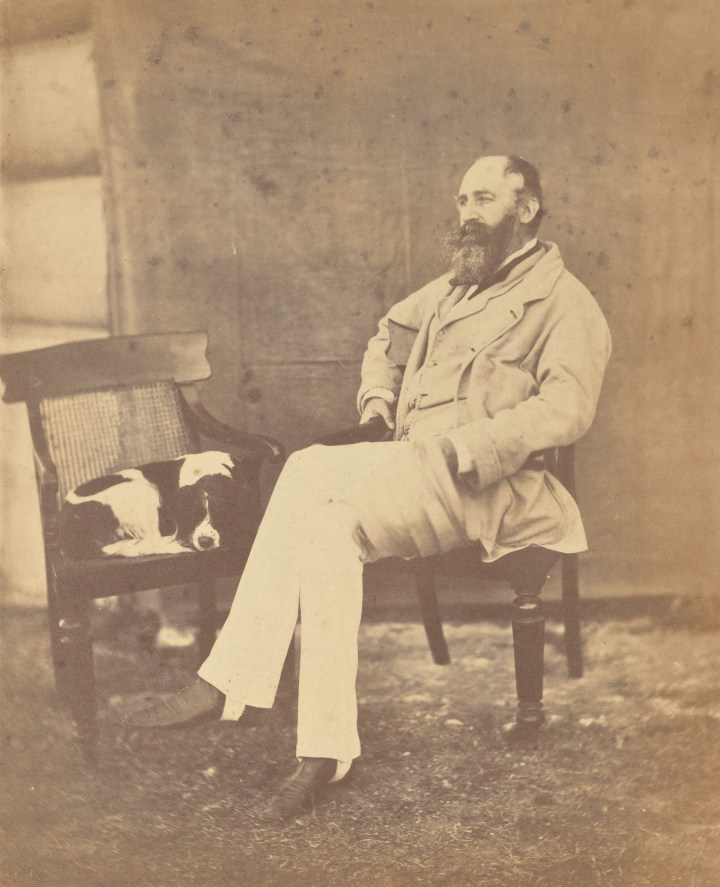
Robert Walpole was born in 1808, the son of Thomas Walpole, a British diplomat and his wife, Lady Margaret Perceval, the eighth daughter of the 2nd Earl of Egmont. Educated at Dr Goodenough’s school in Ealing and at Eaton College, Robert received a commission in the Rifle Brigade in 1825 – his first posting, however, was not India, for his regiment at the time was in Nova Scotia. His career, indeed, had no connection with India at all – Walpole served with his regiment in England, Ireland, Jersey and Malta. Rising through the ranks, Walpole was promoted to lieutenant-colonel in 1847 and to the staff of the deputy adjutant and quartermaster general while in Corfu. In 1854, he was promoted to colonel and remained in Corfu for another two years.
In 1857, Walpole and the Rifle Brigade set sail for India, arriving in Cawnpore in early November. He would not participate in the evacuation of Lucknow but would remain behind with Brigadier Windham to follow Campbell’s orders of ostensibly keeping Cawnpore safe. As we have seen, things did not go quite to plan; however, it was Windham whom Campbell censured for the near-disaster at Cawnpore. Walpole, who, on 28 November, had indeed defeated an attack of the Gwalior Contingent and captured two 18-pounder guns, was rightly praised for his work. On 6 December, Walpole commanded a brigade during the Battle of Cawnpore; then on 18 December, he led a detached corps through the Doab, capturing Etawah on the 29th. On 3 January 1858, they had reached Bewar, where Walpole took command of Colonel Thomas Seaton’s force, joining Campbell at Fatehgarh the next day. Upon the formation of the Army of Oudh, Walpole was once again at the forefront, commanding the third division (5th and 6th Brigades). With the Dilkusha taken on 6 March, Brigadier General Walpole, together with Sir James Outram, crossed the Gomti to take the rebel positions in the reverse.
Until now, Walpole had not given anyone cause for concern. He followed orders, was neither overly loved nor universally despised and a steady officer.
Walpole Marches
On 7 April 1858, Colonel Walpole left Lucknow in command of his own division. It was certainly an illustrious one, consisting of 4000 fighting men:
Cavalry
9th Lancers
2nd Punjab Cavalry
Brigadier Haggart, 9th, commanding
Infantry
42nd Highlanders
79th Highlanders
93rd Highlanders
4th Punjab Rifles
Brigadier Adrian Hope, 93rd, commanding
Artillery
2/1 Bengal Horse Artillery (Capt. & Brev.-Lt. Col. H. Tombs, VC)
3/3 Bengal Horse Artillery (Capt. ( Brev.- Lt. Col. F. F. Remmington)
Detachment 1/5 Bengal Artillery (Lt. E.W.E. Walker)
4/1 Bengal Artillery (Captain H. Francis)
Two 18-pounders
Two 8-inch howitzers
Two 8-inch mortars
Two 5 1/2 -inch mortars
Major J. Brind, Bengal Artillery, commanding
23rd Company, Royal Engineers, detachment of Bengal Sappers and Miners
The task before Walpole, though difficult, was not considered one that would severely test the qualities of a commander. While he might need to dismantle a fort or two and disperse handfuls of disorganised rebels or quell a recalcitrant talukdar and his band of matchlock men, Sir Colin Campbell was quite sure a man of Walpole’s abilities would be able to tackle such problems. He had no major rebel force in his path, and his orders were simply to “advance up the left bank of the Ganges, and so to penetrate into Rohilkhand.” He was, according to his orders, to march to Aliganj, and there wait for Sir Colin Campbell and on “no account to seek the enemy, or turn to the right or left to undertake any operation.” While the march itself would take some three weeks to accomplish, Sir Colin Campbell did not anticipate that Walpole would face any resistance, and his orders were very clear.
The men of the 93rd Highlanders were tossed out of their beds in Lucknow at 3 am on 7 April, for a 5 am march; however, they only moved 9 miles from the Dilkusha to the Musa Bagh, where they were ordered to halt at 8 in the morning. For some unexplainable reason, their baggage did not arrive for another five hours, when, for reasons again unknown to anyone, they were ordered to move another two miles down the road, “and, although there was enough shade in the neighbourhood to shelter an army of 10,000 men, we had to pitch our tents out in the open, under a sun with which you could cook a beefsteak on a flat stone! The tents were not pitched till past two o’clock, when we retired to their shade with the thermometer at 140 °!”
While Alexander and the 93rd grumbled, the plain slowly filled up with the other corps who were joining them in Walpole’s division – until late in the day, they marched in, one after the other, from their various posts around Lucknow and early on 9 April, the division moved out.
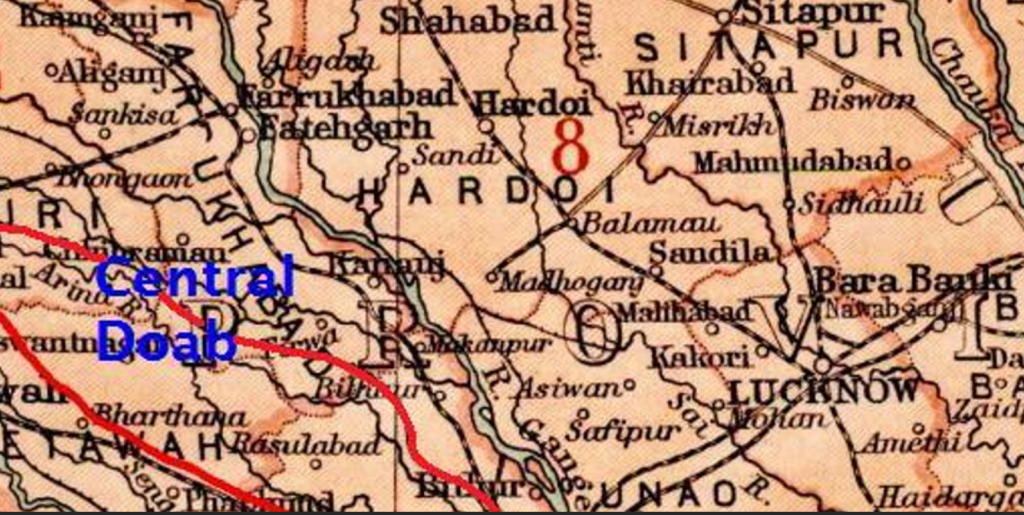
There were no prepared or metalled roads to speak of between Lucknow and Aliganj, and the division moved cross-country over sandy tracks, often intersected by dry water courses. They moved on in a north-westerly direction through a land bereft of both shade and mutineers. For the next seven days, they marched in what could only be described as the bowels of hell, for Walpole now showed himself as a most terrible manager.
Instead of taking advantage of the night hours, as most experienced, sensible commanders were wont to do in Indian summers, he never managed to issue his orders for the next day before midnight, and the marches commenced, not at any regular time but whenever it seemed to appeal to Walpole. It was 3 am one day, but 5 am the next, and perhaps 4 on the day after that, but by the time everything was packed and ready, there were hardly any night hours left and the force, though Walpole kept their marches short to no more than 9 miles a day, by the time they reached their camping ground, it was in the full blaze of an Indian sun and hours to wait until they could crawl under canvas. Walpole appeared to have fostered a particular fear of trees for his force was inevitably ordered to encamp on the open plain, “under a sun which generally registered on the thermometer 140 ° or more whilst we were pitching our tents, and never less than 108° for the day, when we got into them, whilst we were surrounded by magnificent groves of mango-trees capable of sheltering five times as large a force as ours, and there were no military reasons for our not taking advantage of them.”
The heat made sleep impossible during the day and the night was no better; the tents were pitched close next to each other, surrounded by the sounds and smells of camp life – “for the shrill trumpeting of elephants, the infernal noise made by the camels which were kneeling close round our tents in scores, the horrible effluvium emitted from their bodies, the constant monotonous crunching, grind noise made by them as they chewed the cud…” The heat verily radiated off the ground, leaving the army sleepless, restless and after a few days of this treatment, exhausted. The next day, at whatever time Walpole chose, they would stagger to their feet and face another gruelling march. It was no surprise that the first casualties in Walpole’s force did not fall to the bullet, but to sunstroke and heat apoplexy.
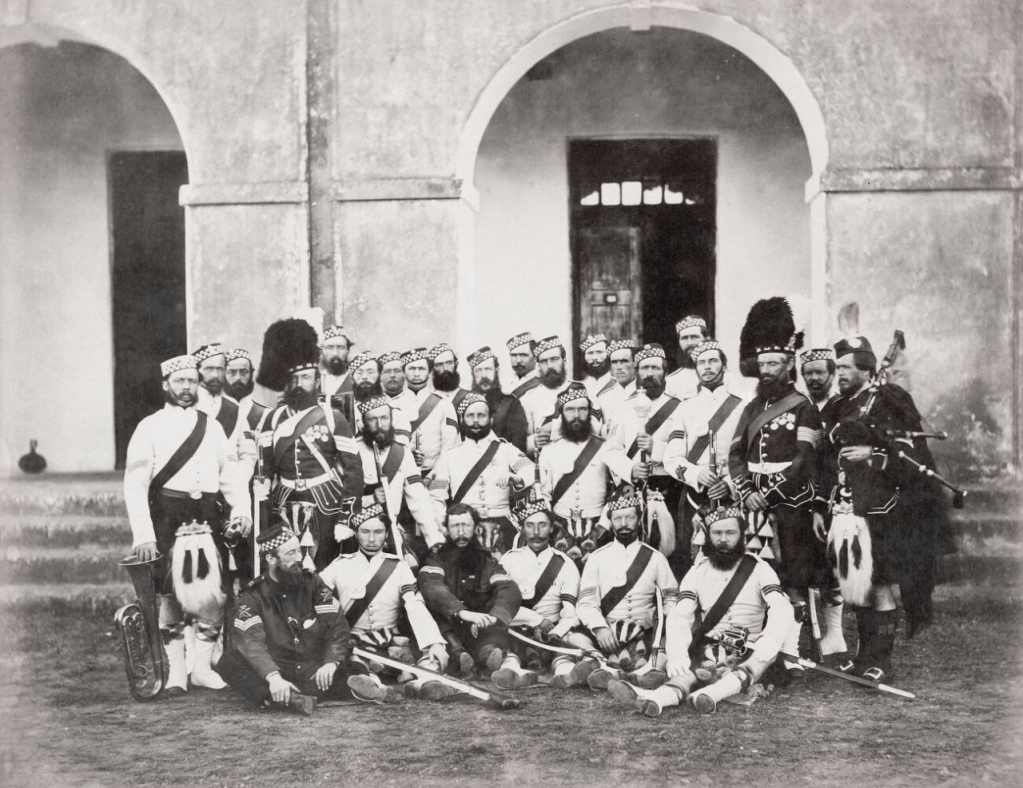
The Highlanders were possibly worse off than anyone else, for no one had considered that their heavy dress (full Highland dress) was unsuitable for an Indian summer. There would have been enough time in Lucknow to fit them up in lighter clothing, but here they were, marching on a grilling plain, wearing wool. “Their cries for water were incessant – no jest or laughter was heard, they were too weary and life at the time too uncertain, for every now and then, as we moved silently and listlessly along, a comrade would stumble in the ranks, and, without further warning, fall to the ground, smitten down by heat apoplexy.”
At the latest, after the third day of such misery, Walpole should have realised he was marching his army to their deaths, but he continued on with his strange ideas, and camping out in the open, oblivious not only to the protests of tried India hands from the Bengal artillery and the cavalry, but the regimental surgeons.
While this certainly pointed to poor leadership, the men would soon see worse.
 Mutiny Reflections