The Delhi VCs July and August 1857
There was no lack of valour on the Ridge. As the weeks turned into months, the camp was seized with the spirit of men who felt they had nothing to lose. Outnumbered and, truth be told, outgunned, the only thing left in abundance by July, besides the rain and flies, was spirit. Although the men of the Ridge were undoubtedly already made of sterner stuff – barring Lucknow, there were more VCs awarded on the Ridge than during any other time during the Mutiny, with 30 VCs presented for actions of valour between June and September alone.
Lieutenant Alfred Spencer Heathcote, the 60th Rifles
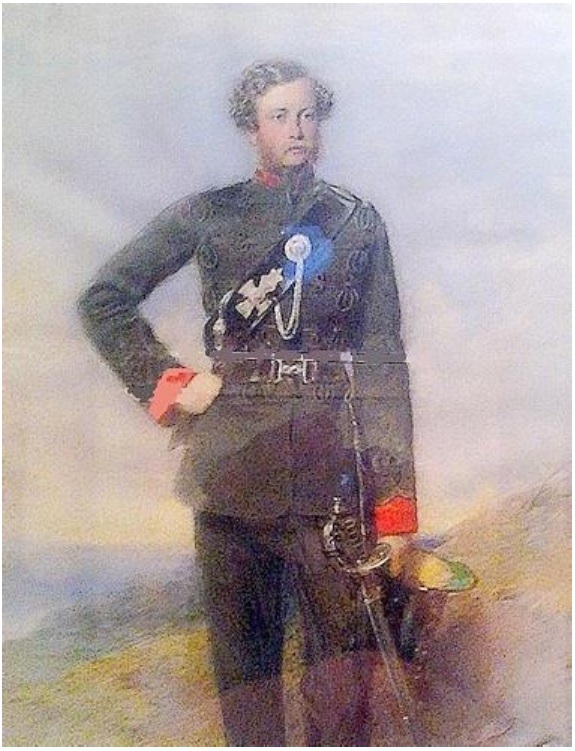
Elected by the officers of his regiment – the 60th Rifles – to receive a VC, the citation in the London Gazette states:
“For highly gallant and daring conduct at Delhi throughout the Siege, from June to September 1857, during which he was wounded. He volunteered for services of extreme danger, especially during the six days of severe fighting in the streets after the Assault.” (No. 22347, The London Gazette, January 20th 1860)
Born in 1832 in Winchester, the first son of Henry Spencer Heathcote and his wife Ann Currie, Alfred was the nephew of Sir Frederick Currie, 1st baronet and Vice-Admiral Mark John Currie. Educated at Winchester College, and unbeknownst to Alfred, he would become the first of six students of the college to be awarded a VC.
It is interesting to note that Alfred did not follow a traditional career – as a young man of some means, his port of call was not the army but New Zealand. After leaving school in 1851, Alfred joined the myriads of other men seeking their fortunes on the other side of the world, in the Australian Gold Rush. However, his ship stopped in New Zealand, and young Alfred decided to try farming instead. However, the 500 acres he had purchased did not hold his interest for long – shortly after, he sailed for Australia, where he staked a claim at Bendigo and bought more land, this time in Melbourne.
What Heathcote was thinking can be left to the imagination. Within a year of arriving in Australia, Alfred joined an East Indiaman and sailed his way through the seas, stopping off in the USA, Mexico, China and Singapore. By October 1855, we find Alfred back in England, where, with a little help from his family connections, he was commissioned as an ensign in the 1st Regiment of the Royal Surry Militia. This was still not quite what Alfred wanted – next, on the 16th of May 1856, he received a commission as ensign in the 60th Regiment of Foot, also known as the 60th Rifles or King’s Royal Rifle Corps. As a member of the 1st Battalion of the 60th Foot, he soon found himself in Meerut.
Possibly, his experiences on the 10th of May framed Heathcote’s mindset, at least where soldiering was concerned. His regiment had been shifted and shunted the whole night of the 10th, Hewitt refusing to let anyone loose on the mutineers, and Alfred would have been one of the many men at Meerut who would have been forced to watch the town burn. Once in Delhi, Alfred refused to miss any opportunity to prove himself. In a testimonial written by Major F.R. Palmer, we can get a sense of who 25-year-old Heathcote had become.
“No one ever better deserved the Victoria Cross; he obtained with not only one act but for many acts…commencing with the march on Delhi. On one occasion, an advanced post in Delhi was retained by his declaring to the officer in command, who wished to retire, that he could do so with his men, but that he, Lieutenant Heathcote, would endeavour to hold the post with six riflemen he had with him. On another occasion, he made his way to the front with six men, supported by fourteen of those under my command. He and his party killed eight or ten of the enemy. This was the first forward step taken after the Army had been three days in the portion of Delhi first occupied by it.”
When the final assault on Delhi dawned on the 14th of September, Alfred Heathcote was one of the first men through the Kashmiri Gate, leading the men of the 60th who rushed into the streets of the city. At the time of the mutiny, he was still an ensign.
His career did not end with Delhi. Alfred Heathcote fought through the rest of the mutiny in Oudh and Rohilkhand, receiving his lieutenancy in 1859. He also married Mary Harriet Thompson in Dehra Dun the same year. Not that this stopped Alfred Heathcote. Instead of returning with his regiment to England after the mutiny, Heathcote preferred to transfer to the 2nd Battalion of the 60th in 1860, serving with them in China. He took part both in the assault on the Taku Forts and the capture of Peking. In 1863, he finally gave up soldiering but not his wayfaring life. Following a short stint in England, he returned to Australia, this time with his wife. Their first child was born in Sydney in 1864.
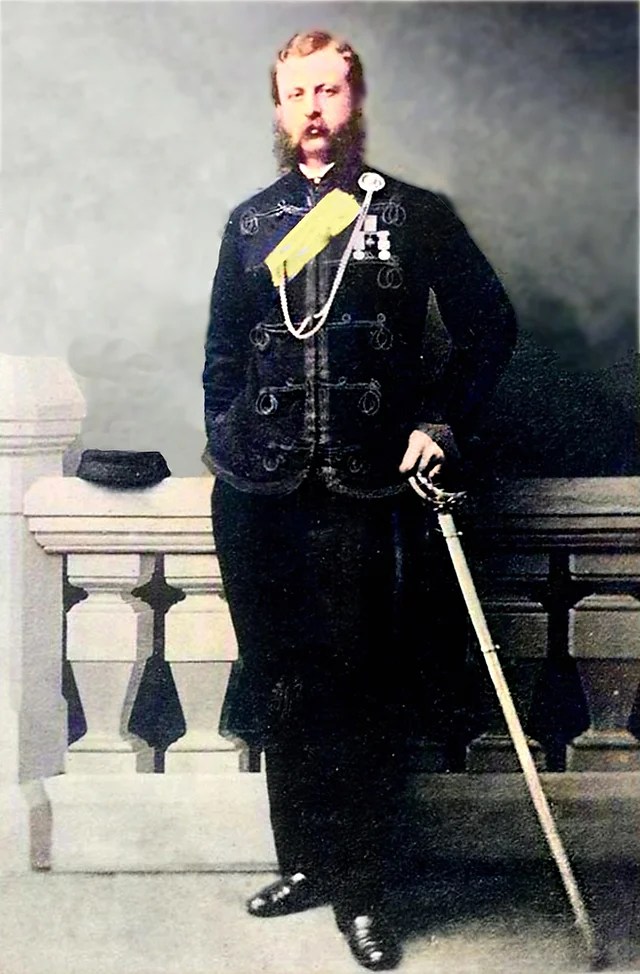
Farming seems to have been on his mind, but soldiering was never far away. In 1871, Heathcote raised the Warwick Troop of Irregular Cavalry 1871, the first of its kind in Queensland. He would then serve as a captain in the New South Wales Artillery until their disbandment in 1872.
Henceforth, his life took a different turn. Appointed Clerk of Petty Sessions at Tambaroora and Hill End, it would appear he had finally settled down. In 1875, however, Heathcote was on the move again, though this time, he would remain in Orange, NSW, for 17 years before returning to Sydney and then finally to Bowral, where he died in 1912, aged 79.
Perhaps a poem, penned for the Warwick Irregulars, is a better memorial for Alfred Heathcote than any other.
The Warwick Irregulars
List to the tramp of Warwick’s warlike troop,
An thro’ the town they march in bold array”,
While fair young maids and hoary matrons group
To gaze on our Irregular Cavalry!
We dread no more the blustering Yankee foe;
Our hearts are beating – but with love, not fear !
What foe could stand those sixteen in a row,
Well fortified with poor old David’s beer?
There rides the Captain on his charger fair,
Proud as a lord, ready to do or die;
For he can fight as well as he can swear –
Those medals are a witness if I lie.
The haughty U—- n, terrible in fight,
Surveys the drill ground with a fiery eye;
While timid maidens tremble at the sight,
And dream all night of him and victory.
Young S—-de a ” Victor*’ creditably rides,
And sits his charger with consummate grace;
No doubt while be his noble horse bestrides,
Bethinks him of his speed in hurdle race.
But where is Adam V—-‘s comely form,
Full fifteen stone of muscle, bone, and fat?
And where Young E—- whom may the gods reform ?
And where the hardy and the jovial Mat?
H—– prick your drowsy charger with the spur.
And sound the martial trumpet shrill and wild;
Pray go and see what all the rest deter.
Blow ! H—-n, Blow I but, H—-n, blow it mild !
– Warwick,’ April 25,1871. (https://www.armymuseumnsw.com.au/Alfred_Heathcote.php)
 Mutiny Reflections