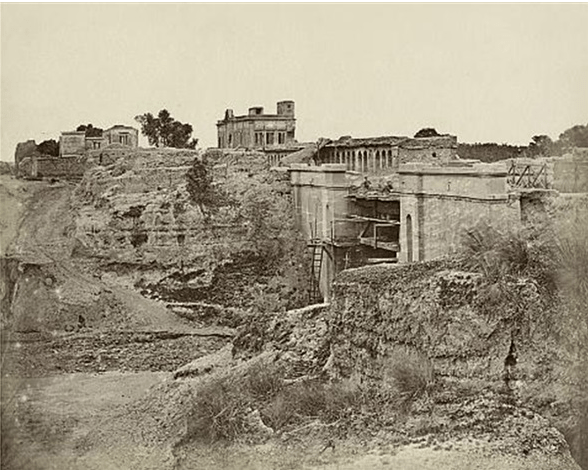
After leaving the Alambagh, Havelock’s forces were met with staunch resistance at the entry to the city, at the Charbagh Bridge. It crossed a canal from the River Gumti to the southern extent of the city. The insurgents, well-entrenched, had built a battery of six guns, including a massive 24-pounder protected by an earthen parapet at the far end of the bridge. To take the city, the force would have to cross the bridge. The surrounding countryside was nothing more than a large swamp, waterlogged by the recent rains – to bypass Charbagh Bridge, the force would have had to skirt around the entire city and approach the Residency from a different angle altogether, as Sir Colin Campbell would do in November. But Havelock insisted on haste and the bridge would be his first hurdle on the 25th of September.
The VCs awarded for Charbagh Bridge belong to Private Joel Holmes of the 84th, Captain Francis Cornwallis Maude of the Royal Artillery, and Surgeon Joseph Jee of the 78th Regiment and William Olpherts of the Bengal Artillery.
Francis Cornwallis Maude, Royal Artillery
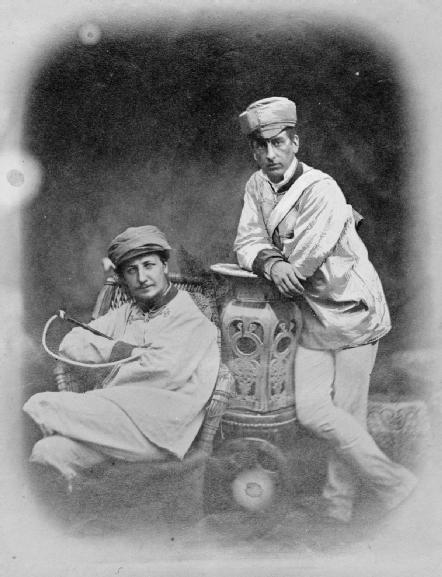
The son of Captain Francis Maude (one of the 16 children of Cornwallis Maude, 1st Viscount Hawarden) of the Royal Navy and his wife Fanny (née Brooking) in 1828, he attended Blackheath Proprietary School and Rugby School before joining the Royal Military Academy at Woolwich. Commissioned into the Royal Artillery in 1847, Maude was serving in Ceylon when he and his battery were called to India to join Sir Henry Havelock’s Column at Allahabad.
The battery was, in Maude’s estimation, “terribly shorthanded” consisting of 58 gunners and would be supplemented on the road to Cawnpore by Lieutenant Charles Crump of the Madras Artillery who convinced Maude of drawing the guns by bullock, something Crump had experience with and Maude was initially reluctant to use and with him, they got together a “little six-gun batter, consisting of two 6prs, two 9 prs and two 12 pr. howitzers. “ With successive engagements, Maude improved the strength of his battery with captured guns and at his request 31 volunteers, all of whom had had some experience at gunnery, complimented his battery. Most of them came from the ranks of the 64th but later others from the 84th joined in. Within 4 months only 23 effective gunners and non-commissioned officers of his original compliment that had landed with him in Calcutta were still able to serve, so much of the gunnery work would fall upon these reserves.
In his two-volume “Memories of the Mutiny,” Maude delves into some detail of the march to Cawnpore, of his fight with white ants that bored a hole through his trunk and ate away his last pair of gold-laced overalls and of Havelock’s horror at seeing Lieutenant Eardley Maitland (who had come to India with Maude from Ceylon) wearing “a well-fitting juste-au-corps suit, of a sap-green colour, and a soft drab felt wide-awake, which, although unmilitary in appearance, had done excellent service in the Ceylon jungle. On our arrival at Cawnpore, he was enabled to rig himself out in. blue, with red stripes and facings, but the only cloth procurable was of that cerulean tint which the Artillery had discarded since the year 1844.” Maude himself would further scandalise the prim brigadier general with his ‘‘ ‘meerzai,’ or scarlet cotton tunic, over which was the regulation white cartouche belt and black pouch, leather-strapped regimental overalls, and forage cap with white cover and puggree,” but the tunic caught fire at the third battle and Maude narrowly missed being severely burned by his own clothes. He quickly took to wearing tussore-silk coats and noted that the gunners, by the time it came to recapture the city of Lucknow in March 1858, could not procure a full uniform amongst them, with only one man wearing a jacket belonging to a dead Bengal artilleryman. As for Maude, he found Havelock “sterner and more severe than seems to be generally understood”, and was little impressed by Neill with whom he had very few dealings. As for Outram, he believed the title “Bayard of India” singularly appropriate and a “kinder, braver, nobler heart never beat…” Though Maude writes little of himself, he had already secured a reputation as an excellent artilleryman, something Sir Henry Havelock would shortly see for himself.
“One day, while riding along the road, Havelock suddenly asked me “ how long it would take to bring a gun into action,” as there was a village a little way ahead, the inhabitants of which were said to be unfriendly to us. “ A little less than a minute, sir,” I replied. “ Very well ! ” he said, “ I shall time you.” Naturally, we took some legitimate precautions, such as estimating the probable distance, preparing a couple of shells, etc. As soon as we came abreast of the village, which was about 800 yards from the road, he ordered us to open fire upon it. Unfortunately, I forgot that a smart shower had fallen an hour or two before, which had damped the tops of our port fires, so a delay of a few seconds arose in lighting them, as we had to chop off the tips before doing so. However, within the minute we popped two shells, rather neatly, into the village; with what result we never heard, but doubtless greatly to ‘the astonishment of the natives.”
Maude then asked Havelock if he had timed them and added he would have been a few seconds quicker if it had been possible to light the port fires, to which Havelock retorted, “Not able to light your port fires! Then keep them always lighted!” For his part, Maude bowed and saluted, without reminding Havelock that “gunners of the period” could not possibly obey his order without depleting their entire stock of port fires in 48 hours, and Havelock was probably thinking of “slow matches,” which Maude kept lit at all times.
For Maude, the march to Cawnpore and the subsequent battles fought under Havelock across the Ganges, meant a series of events in which he watched with growing alarm as his men were killed, his guns rendered useless and his draught bullocks shot through. His battery was constantly called up, and more often than not, at short range, as at the first battle on the 12th of July where he was joined by the Bengal Artillery, under Lieutenant Heward who provided 2 additional guns.
“We advanced in line; I took the two guns on the road myself; while each of the three subalterns had a sub-division of two, and conformed to the movements of the infantry. We opened fire at 800 yards; our second round disabled their leading guns; so perceiving that their fire was silenced and that they were falling back in confusion, we limbered up on the road, and advanced: to the enemy’s guns. But as we did so, the infantry of the latter halted, and appeared inclined to re-form; while, at the same moment, a large body of cavalry advanced down the road towards us. So we came into action again at 650 yards; and, at the first shot, the cavalry turned about and bolted, leaving in view two elephants, two heavy guns, and a large body of infantry. We peppered into these so smartly that they could not stand to their guns; which latter, by the way, when we came up to them, we found to be loaded, and turned them upon the retreating masses.”
It was in this action that Maude was called upon to “knock over that chap on the elephant” and obligingly, Maude dismounted, laid the gun himself and sent a 9-pounder at 700 yards straight at the elephant. The animal was shot just above the tail, the ball coming out of its chest which toppled it to the ground. While Maude regretted killing the elephant (the very last one he would ever kill) he was irritated he had missed the rider who he found out later was none other than Tantia Tope.
Although he admits he would later become hardened to the sights of the retribution carried out by the soldiers of Havelock’s Force, Maude despised the cruelty of Neill’s orders Cawnpore, the kangaroo-court proceedings and indiscriminate hangings and was angered at being ordered to blow a man from his gun, an act he found deeply distasteful. Barely able to hold back his disdain, Maude nearly pointed out to Havelock that this was not a part of the curriculum at Woolwich. Nevertheless, he obeyed his orders. In this particular incident, it would turn out Havelock desired 2 men to be blown from guns – but unlike other generals during the mutiny, it was the only time Havelock resorted to this means of execution.
” Maude’s Battery followed the 84th to the Char Bagh (Four Gardens), and I shall never forget seeing the two leading guns unlimber, and come into action on the road at very close range (150 yards) opposite the Char Bagh (Bridge) under a murderous fire from the enemy’s guns in position on the further side of the bridge The first discharge from one of the enemy’s guns disabled one of Maude’s guns, the greater portion of the detachment serving it being killed or wounded. It was then I offered to assist him, by calling for volunteers from the Regiment, many men of which, for some time, whilst lying inactive at Cawnpore, had, by order, been instructed in gun-drill. Private Jack Holmes was the first man of the Regiment to respond, and his example was followed by others; (among whom were Lieutenants Pearson and Aitken); the gun was again served, and the men remained with it the remainder of the day. The gallantry displayed by Private Holmes throughout the day caused me to recommend him for the Victoria Cross, which he received.”
His action also allowed Maude to continue manning his guns.
In the first half-hour, Maude lost 21 men killed and wounded. Although it would be recalled by others Maude asked a member of Havelock’s staff “to do something, in the name of Heaven!” he personally would have no recollection of either seeing or speaking to anyone and he did not remember seeing young Harry Havelock at all during that day. However as the tale transpired, it was because of Maude that Havelock created the ruse to force Neill to give the order to advance and then led the twenty-five Fusiliers over the bridge. As for Maude, he could make no sense of the chaos of the day, but George Blake of the 84th would recall seeing him, “standing by his guns, smoking a cheroot with 16 dead gunners lying around him, He said to me, “Lend me some of your men, old fellow, until more of mine can come up.” And as we have seen above, one of those volunteers was Joel Holmes.
Private Joel Holmes, 84th Regiment
Born in 1821 in Great Comershall, there is nothing known about Private Holmes’ formative years. He joined the 84th Regiment of Foot and at the age of 36, found himself standing next to Francis Maude at the Charbagh Bridge. Holmes was the first man to rush up to assist the artillery and remained working the gun until it was limbered up. In 1858, he received his Victoria Cross from the queen herself. He settled in Halifax in Yorkshire and died in 1872.
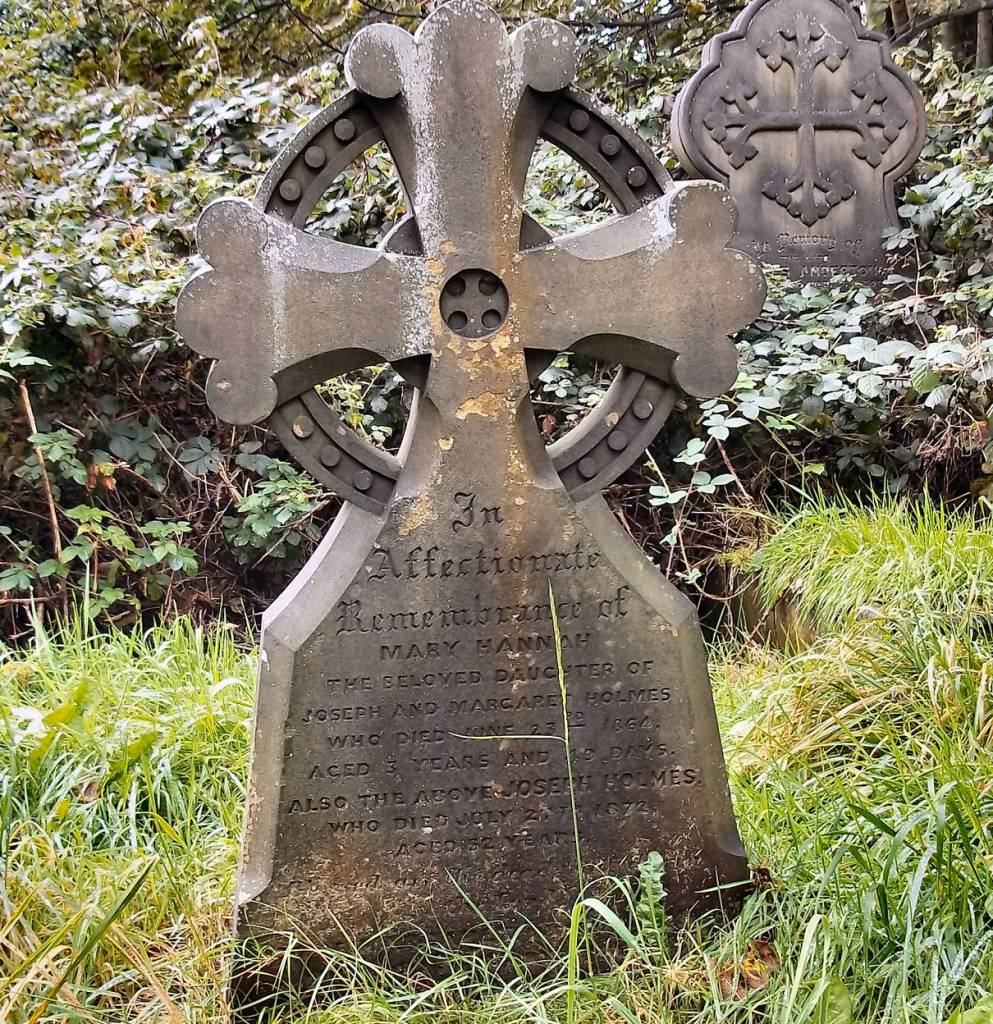
“For distinguished conduct in volunteering to assist in working a gun of Captain Maude’s Battery, under heavy fire, from which gun nearly all the artillerymen had been shot away. (Extract from Field Force Orders of the late Major-General Havelock, dated 17 October 1857.”No. 22154″. The London Gazette. 18 June 1858. p. 2958. )
As for Maude, he was unimpressed with his own nomination for the Victoria Cross, stating quite emphatically,
“And here let me say, boldly, that I do not think I did, as Olpherts is said to have done, ” deserve the Victoria Cross every time I went into action;” in fact, according to my views regarding the distinction, I doubt if I ever deserved it at all, although recommended for it on three occasions.”
Two days after the capture of Cawnpore, Havelock had issued an order to all of the officers commanding corps to send in a recommendation from each regiment of the force for the VC. The names were to be chosen by the ballot-vote officers and men. Maude gave the task to his sergeant-major, Lamont, who only had one question – were officers eligible for selection? Maude asked Havelock and Havelock replied in the affirmative; Lamont returned half an hour later with a small piece of paper, on which he had noted “the tally of votes, corresponding with the effective strength of our Battery.” While Maude had given his vote to Eardley Maitland, his own name had received every vote. He handed in the paper to Havelock and promptly forgot about the whole thing, although he was “deeply touched and affected by it” at the time. Maude reported the gallantry of his men to Outram as soon as Outramthe general assumed command at the Residency. As such, two further ballots were held and on both occasions, Maude was chosen by his men.
However, the whole incident of Cawnpore and Charbagh Bridge would come back to Maude later, when, while reading Archibald Forbes’ “Life of Havelock” he noted, “When the Gazette appeared, containing the Lucknow honours, recommended by General Havelock, it became apparent that while his recommendation of Maude had been honoured, that in favour of Lieutenant Havelock had been disregarded.” Infuriated, Maude retaliated in his book, “Memories of the Mutiny,” Vol II.
“But as Lieutenant Havelock had already “gained” it it is not clear to me what disadvantage he suffered. And most people will, I think, be inclined to consider that I have the greater cause for complaint, Lieutenant Havelock’s V.C. having been granted, pursuant to his father’s recommendation, fully three months previously, while mine had been simply ” burked.” More than this, people will read, with curious wonderment, the following terms of Havelock’s second recommendation for his son:
” On this spontaneous statement of the MajorGeneral (Outram), the Brigadier General (Havelock) consents to award the Cross to this officer; which act, if originating with himself, might, from the near relationship Lieutenant Havelock bears to him, assume the appearance of undue partiality.” Well, yes! it might; and it is difficult to understand how he could have written as he did when the previous despatch had already been received at the War Office!”
As such the following was published in the Gazette:
“This officer steadily and cheerily pushed on with his men, and bore down the desperate opposition of the enemy, though with the loss of one-third of his Artillerymen. Sir James Outram adds, that this attack appeared to him to indicate no reckless or foolhardy daring, but the calm heroism of a true soldier, who fully appreciates the difficulties and dangers of the task he has undertaken and that, but for Captain Maude’s nerve and coolness on this trying occasion, the Army could not have advanced ” (Extract from Field Force Orders of the late Major-General Havelock, dated 17th October 1857. “No. 22154”. The London Gazette. 18 June 1858. p. 2957. )
In Maude’s estimation, the man who should have received the Victoria Cross was Lieutenant Henry George Delafosse for the defence of Cawnpore and his actions in the entrenchment and of course, Lieutenant Eardley Maitland who in an extract from the official report to the Officer Commanding the Royal Artillery concerning Charbagh Bridge,
” . . . . In this action, every man behaved well, and again Lieutenant Eardley Maitland, my only other officer, assisted me in keeping up the confidence of the men, by his cool and steady bearing under fire. He laid one of the guns which exchanged round for round of case and round-shot, at 150 yards range, against five of the enemy’s guns; until the latter were almost silenced.” As it was, Maitland was never gazetted nor were any of the men Maude personally recommended.
Maude continued to fight in Lucknow, making it unscathed through the first relief and subsequent defence, and would do his duty under Sir Colin Campbell at the second relief and the subsequent re-capture of Lucknow in 1858. He was promoted to major in January 1858, appointed Companion of the Order of Bath in March and promoted to lieutenant colonel the same year in July. He received his VC while still in India, his being one of the 16 crosses sent to Sir Colin Campbell by the war office with the instructions for presentations to follow as soon as possible. He returned to England in 1860 and continued his service, appointed to a garrison artillery battery in Plymouth. Maude married the same year, was promoted to colonel in 1866 and finally retired in 1869. He tried his hand at farming, first in England and then in Canada, but it would appear his ventures bore little fruit. Between 1876 and 1886, he served as Consul-General in Warsaw for Queen Victoria. In 1888, Maude once again set off across the seas – this time to Madagascar where he was involved in timber-felling and farming, writing a book about his experiences entitled, “Five Years in Madagascar with notes on the military situation,” in which he tried to promote the island as a destination for British emigration and future enterprise. He returned to England in 1893 and his two volumes, “Memories of the Mutiny” were published in 1894. The following year, he was appointed Military Knight of Windsor by Queen Victoria an honour established for retired officers to receive a pension and accommodation at Windsor Castle. Unfortunately, despite the accolades and positions, Maude was financially ruined. He sold his VC to an American collector on the agreement he would be allowed to wear it during his lifetime, but he nevertheless applied to the War Office in 1897 for the loan of a cross. A provision in Maude’s will stipulated his own VC would only be returned to the collector upon his death so the request is something of a curiosity.
On the 23rd of October, 1900 while returning home, Maude collapsed and died within the walls of Windsor Castle. After his funeral, it was found his entire estate amounted to just £63.15.6. His medals remain in private hands and Maude is buried in Windsor Borough Cemetery. He is the cousin of another VC winner, Colonel Frederick Francis Maude, renowned for winning his cross at the storming of the Redan in the Crimean War.
 Mutiny Reflections