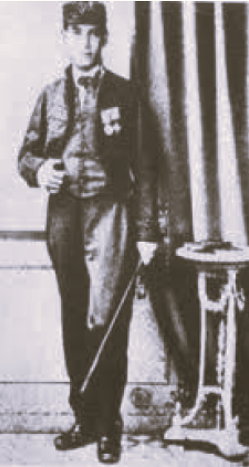
Arthur Mayo was born in 1840 at St. Giles, Oxford, to Herbert Mayo (FGS) and his wife Sarah (née Harman. His father had been an infantry cadet with the EICo in 1820-21, but it appears he did not pursue a military career. His brother John, however, would serve with the HM’s 38th Regiment both in Crimea, at Sevastopol, and, as a lieutenant, at the retaking of Lucknow in 1858.
Arthur was educated at Berkhamsted School in Hertfordshire and joined the Royal Navy at the age of 15 as a midshipman in 1855. He sailed out to India aboard the Wellesley and was commissioned on the 19th of February 1857 as a midshipman into the EICo’s Indian Navy. His India General Service Medal would have a clasp for Persia (1856-57). As Mayo would serve aboard the Indian Navy ship the Punjaub that had formed part of the brigade for the Persia Campaign, he was likely on board.
In 1852, the last two frigates were built for the EICo’s Indian Navy at the Bombay Dockyards by Cursetjee Rustomjee. Rustomjee was a master builder and the fifth of the famous Parsi shipbuilders, the Wadia, to hold the title. In 1735, Lowjee Nusserwanjee, foreman of the EICo yard in Surat, was sent by the Master Attendant of the Company to found the Bombay Dockyards. What made the Wadia ships superior was the quality of their workmanship – built from Malabar teak, they were known for their durability, owing to the wood’s natural oil. The design for these last ships, the Assaye and her sister ship, the Punjaub, were drawn by one Oliver Lang, who drew his inspiration from the hull of an old French frigate.
“ Both ships were built of carefully picked Malabar teak, and no ships were ever better or more honestly constructed. Their engines seem to have given little trouble, but the cumbersome paddle-wheel boxes undoubtedly took off from their speed through the water and spoilt their appearance when under sail. They were armed with ten 8-inch 68-pounders.”
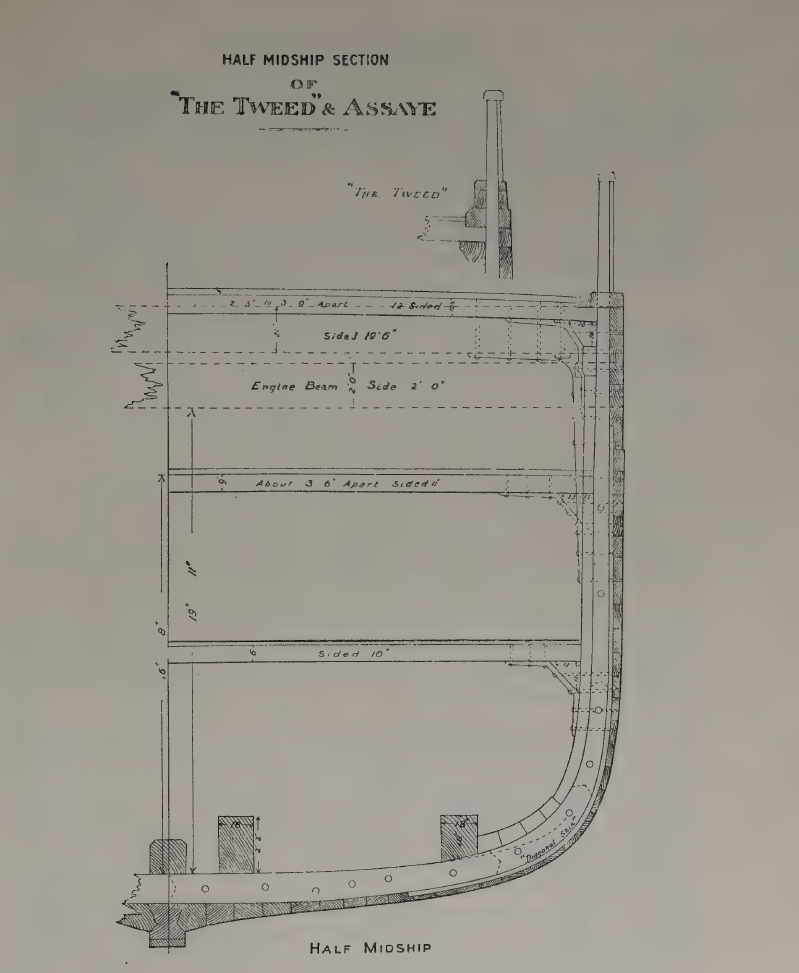
Both ships were launched within a month of each other, in 1854. The same winter, orders were received for the 10th Hussars and the 12th Lancers to proceed to the Crimea. The honour of carrying the Colonel and nearly half the Hussars was given to the Punjaub. After a refitting for the transportation of 250 horses, which was accomplished in 6 days, the Punjaub, on her passage to the Suez “…first gave a taste of her sailing powers; and so superior did she prove herself to her consorts that though she put out her fires and lowered her topsails on the cap whilst they staggered along under full head of steam and press of sail, she ran them hull down despite the impediment of her great paddle boxes.”
In 1855, when 9 fighting ships sailed for service in the Persian War, the Punjaub took the lead, leaving Bombay on the 8th of November. Both the Assaye and the Punjaub returned to India after Bushire was captured – the Punjaub to carry the governor of Bushire and his staff and the Assaye with Admiral Sir Henry Leeke, his staff, three prisoners and the captured Persian flag.
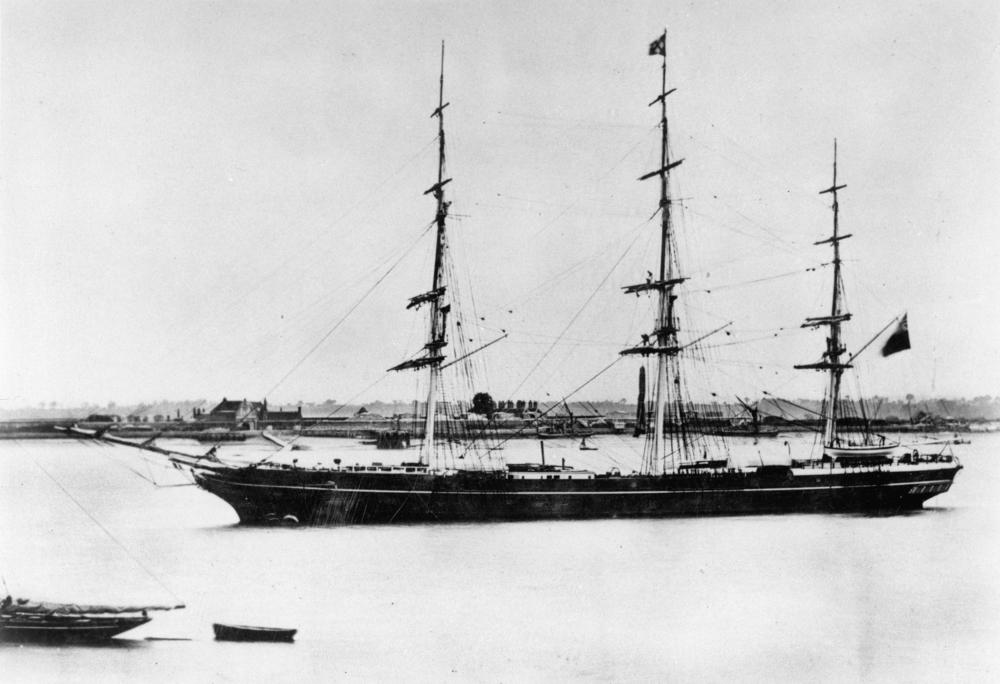
“This diversion deprived the Punjaub of any participation in the gallant little action of Mohamra on the Shatt-ul-Arab, where the Assaye so distinguished herself. This took place on the 26th March 1856; the Punjaub arrived at Bombay on the 9th March and left for the Gulf on the 20th, too late to take part in this operation, which was a hot one.” There would be enough work, however, for her crew.
The Punjaub arrived at Bombay on the 22nd of May 1857 and was ordered to hasten with all speed to Calcutta – the Assaye left the next day carrying the 64th and the 78th Regiments on board; deeming the crisis to be of the most urgent kind, the commander did not stop at Madras to collect any coal, but pushed on towards Calcutta. He saved 2 days and arrived with his last shovelful of coal. The Punjaub left Bombay on the 25th. The Semiramis arrived from the Gulf on the 28th and was directed to sail without delay to Ceylon, where she picked up a wing of HM’s 37th and a detachment of the Royal Artillery. She arrived in Calcutta on the 10th of June.
“They arrived in the Hooghly to find Calcutta in a state of panic, which their 21-gun salute of the Viceroy did something to allay; and we are told that no complaints about broken windows due to the salute were made, as was usually the case.”
The first duty of the crew of the Punjaub was to arrest the ex-King of Oudh, who was suspected of fomenting disaffection in Calcutta.
The commander of the Punjaub, Foulerton, replied that he was “…not able to move the Punjaub as floats were off, and she could not be fitted in time, but that he would take the Semiramis and all the Punjaub’s company in her boats. This Lord Canning agreed to, and Commander Foulerton was dismissed to make his arrangements with instructions to report by 9 o’clock that evening. Commander Foulerton, first of all, procured a reliable pilot, whom he took with him aboard the Semiramis. The pilot at first made objections to taking the Semiramis down without orders from the port authorities, but Commander Foulerton would stand no nonsense and gave in sailor-like language the various things which would happen to him if he remained obstinate, and thereupon he gave in. Lieut. Stradling commanding the Semiramis was next warned to be ready to sail at daylight and to stop all communication with the shore. Finally, the First Lieutenant of the Punjaub received instructions to have all boats manned and armed, ready to be taken in tow by the Semiramis. A little before daylight, the Semiramis with the Punjaub’s boats in tow got underway and presently anchored off the King of Oude’s palace at Garden Reach. Leaving the boats of the Semiramis to guard the landing, Commander Foulerton, with the Punjaub’s crew, disembarked and closed in on the palace. Here, he was presently joined by Colonel Powell and the 58th Regiment, some Artillery and the Governor’s bodyguard. The huge compound and enclosure of the palace were now completely surrounded—1500 armed men were said to be within, but the surprise was complete. It was left to Mr. Edmondstone, Commander Foulerton, and Colonel Powell to tackle the wretched King himself. They found him reduced to a state of semi-imbecility by fright and past excesses. He was sitting on his bed surrounded by some of his wives and attendants. Mr. Edmondstone told him to get ready to go aboard the steamer. At this, there was a general howl from the wives, and the King began to cry and stutter out all sorts of excuses and protestations and seemed prepared for any obstinacy. But his behaviour was more than the sailor could stand, and he told Mr Edmondstone that he would soon settle the matter, if he would allow him, by hoisting the King of Oude aboard the Semiramis by a whip on the main.“
The idea, though perhaps fitting in the world of seamen, was entertained with some horror by the finer souls of the Calcutta government.
In these early days of the mutiny, the five crews of the Indian Navy’s steam frigates, including the Zenobia from Madras and the Auckland from China, were placed at the disposal of the Government. The Assaye had scarcely dropped anchor in Calcutta when Canning, seeking a ship to convey treasure from Calcutta to Bombay, was informed by her commander, Adams, that he “volunteered to convey it, though he had not a ton of coals on board; hastily procuring a supply from the depot of the Peninsular and Oriental Company, he started that night, for which act of promptitude he received a private letter of thanks from Lord Canning. Calling at Madras for treasure and at Galle for coal, the ‘Assaye’ proceeded to Bombay, where she arrived on the 15th of June.”
The Berenice, under Lieutenant Chitty, left Bushire at the end of March for Bombay, where she arrived on the 10th of April. She again proceeded to Mohamra and set sail on the 16th of May, arriving in Bombay on the 28th with Brigadier General Henry Havelock and his staff. She was also towing a transport with the Light Battalion on board. General Havelock and staff, with Brigadier Wilson of the 64th Regiment, proceeded to Calcutta on the 1st of June in the Erin, but halfway between Colombo and Galle on the 8th of June, the ship struck a reef and sank. General Havelock sailed in the Fire Queen to Madras, where General Sir Patrick Grant embarked, and, on the 17th of June, arrived at Calcutta on his appointment as Commander-in-chief, in succession to General Anson. Meanwhile, the Coromandel, a new ship from England, was sent from Madras to Rangoon to collect as many troops as she could carry and drop them off at Calcutta.
If the men of the Punjaub thought their adventures would end in Calcutta, they were mistaken. Struggling with a lack of European troops, it was deemed prudent to send detachments of sailors off on yeoman service to various parts of Bengal. One of these was No. 4 Detachment, composed of men from both the Punjaub and the Zenobia. They reached Dacca in August, numbering 85 seamen and five officers – Lieutenant T.E. Lewis, in command, Acting Master Connor, Midshipmen W. Cuthell and A. Mayo, and Boatswain Brown. The detachment was armed with two 12-pounder howitzers, and the men carried Enfield rifles. Their training fell to Lieutenant Lewis, an officer “remarkable for military attainments which would have qualified him for the post of adjutant of Artillery or Infantry.”
No. 4 Detachment, together with the Dacca Volunteers, would spend the next months drilling and patrolling; they would see the city through several waves of panic, but they had no fighting and some of their number would die of fever. There was little excitement until the 22nd of November when Midshipman Mayo won his Victoria Cross. The details of the raid on the Lal Bagh to disarm the two companies of the 73rd BNI have already been detailed in The Mutinies of November 1857.
“When the Sepoys were brought to bay, it became a hand-to-hand, life-or-death struggle, in which the victor only survived. It is difficult now to realise the temper of those stern times, but it may well be imagined how fiercely a handful of Englishmen would fight for their lives against fourfold their own number of Sepoys, with ‘ Cawnpore !’ ringing in their ears for a battle-cry.
” After about half-an-hour’s hard fighting, the buildings were carried, though not without considerable loss to the sailors, who especially suffered when clearing the loopholed barracks on the embankment. As a last hope, the Sepoys made a stand around the 9-pounder gun, which they had still at work, and the sailors now prepared to charge down upon it from the top of the embankment, where they remained under cover to reform after capturing the barracks. A young midshipman placed himself at the head of about twenty of his men and led them at full speed, and with a loud ‘hurrah!’ straight upon the gun. At almost the same moment, the party of sailors that had cleared the mosque and tomb appeared in view on the left flank of the Sepoys, who, together with the artillerymen, instantly broke and fled, abandoning the gun, which they left loaded, and which was at once turned and fired after them, while the howitzers played upon them from the centre of the enclosure and flanked them in their flight.” That young man was 17-year-old Arthur Mayo.
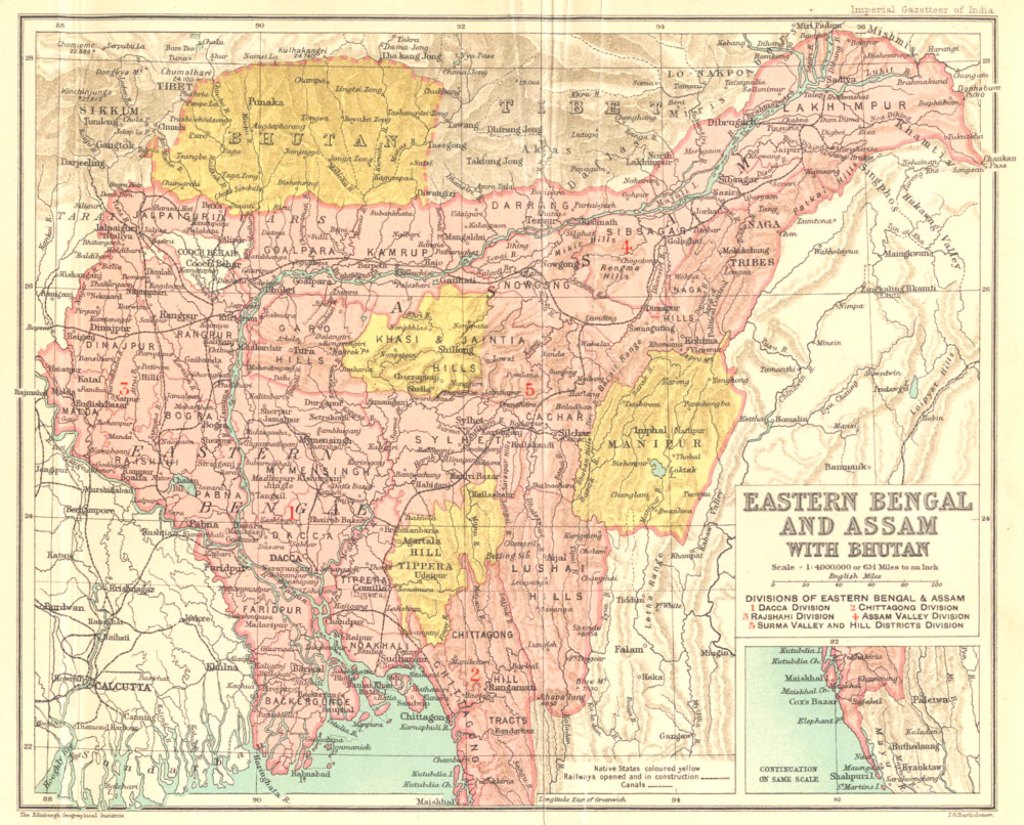
With Dacca secured and Calcutta sending not only two further detachments of seamen and three companies HM’s 54th towards the east, the work of Lieutenant Lewis and his men would continue until more reinforcements, in the form of HM’s 19th Regiment, were dispatched to Dacca in July 1858. As soon as they arrived in August, Lieutenant Lewis and a greater portion of the No. The detachment was pushed up towards Sylhet. Acting Master Connor remained behind in Dacca with a small party of chiefly time-expired men, and the complement of the Sylhet force was now made up of a hundred new hands from Calcutta. It was the height of the monsoon when Lewis and his men set off. It was, as Lewis would write, anything but a pleasurable march.
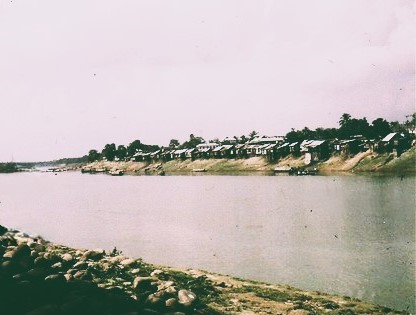
” We arrived at Sylhet after a most disagreeable passage of eleven days from Dacca, pulling boats over paddy fields amongst legions of mosquitoes and flies. We have very good quarters here, everybody very civil and willing to do all they can for us; the Sylhet Light Infantry turned out and received us with military honours, great cheering, &c. It has been pouring down ever since we came here. They had made no arrangement for a hospital for us, notwithstanding that I wrote to them about it when we were first ordered here. We shall have to build one, which will take a long time, I am afraid.”
The “detachment of the Naval Brigade” that was sent to Seton-Karr in Jessore hardly filled him with much confidence and served only to terrify the local population.
“This was, in reality, a collection of discharged sailors and loafers of various kinds and nationalities picked up in the bazaars of Calcutta. The second-in-command, Lieutenant Jackson, was an officer of the Indian Navy and a good disciplinarian. But the officer placed in command was of a different stamp. Molony, the Magistrate, built near the Planters’ Club a large house of bamboo and matting, divided into a mess room and dormitory, to accommodate the men. It was raised four feet off the ground and was well-ventilated. The men were very fairly comfortable, and there was not a single death nor a case of serious sickness amongst them during the whole of their stay, which was about six months. The men were landed at Khulnia, forty miles from Jessore, by a steamer which came vid the Sunderbunds; and the Commandant, with the utmost gravity, informed us that on disembarking he formed his men in line, sent on scouts, and threw out skirmishers, as he imagined himself to be marching through an enemy’s country. It is only necessary to remark that he was passing through lines of populous and loyal villages, lapped in profound peace. The villagers had heard bewildering stories of the habits of these jahāzis or seamen. The bazaars in the line of march were shut up or deserted. Ryots, having been told that the sailors would require lights for their pipes all the way, had taken the precaution, every two or three miles, of leaving earthen pots with live charcoal ready for use. They then kept out of the way till the redoubtable army had passed on.”
To keep the sailors out of mischief, Molony decided to employ them in doing something. He ordered a large mound constructed near the race course from whence they were then instructed, three times a week, in the use of their muskets – unlike Lewis’ men, these had arrived with only the old Brown Bess and as it turned out, their training even with this antiquated weapon, was sorely lacking “…their manoeuvres might have been attended with some danger to life and limb. The bullets went flying all over the place, and it used to be said in jest at the Station that the safest spot on the maidan was the butt itself. The Ryots, however, were duly warned to keep out of the way on the days of practice, and no mishap occurred.” Unfortunately, on the days the sailors were not occupied, they were entertaining themselves by harassing the local artisans and villagers with “rough treatment” – Seton-Karr and the others in Jessore were relieved when this particular brigade was ordered back to Calcutta.
In Sylhet, however, Lewis and his men had another scenario to contend with. They had little or no active duty and their days were spent, like in Dacca, on patrols – with the Sylhet Light Infantry busy chasing the 34h BNI the length and breadth of the district and in Cachar, they were left with the onerous task of ensuring Sylhet did not come to harm, but it came at a price. By the 13th of November, Lewis reported he had but 50 men of his original detachment left; the rest were either suffering from fever or were convalescent. At any given time, the station’s doctor, McCosh, could only consider 70 fit enough for any kind of duty. To alleviate the boredom that slowly crept over the men, Lewis organised a small canteen which served alternatives to their daily grog and a theatre which he raised with the help of the Sylhet residents. It was not considered prudent to remove Lewis and his men from the station just yet, and they would remain mostly idle for the remainder of 1858.
In 1859, with the mutiny in its final throes, there would still be a war of a very different kind waiting for young Arthur Mayo, and it was most likely not at all what he expected. As such, it would change the direction of his life forever.
Sources:
Chakravorty, Birendra Chandra. British Relations with the Hill Tribes of Assam since 1858. Calcutta: Firma K. L. Mukhopadhyay, 1964.
Hamilton, Angus. In Abor Jungles: Being an Account of the Abor Expedition, the Mishmi Mission and the Miri Mission. London: Eveleigh Nash, 1912.
Low, Charles Rathbone. History of the Indian Navy, (1613-1863). Vol. II. London: Richard Bentley and Son, 1877.
Lubbock, Basil. The Blackwall Frigates. Glasgow: James Brown & Son, 1924.
Seton-Karr, Walter Scott. A Short Account of Events during the Sepoy Mutiny of 1857-58 in the Districts of Belgaum in the Bombay Presidency and of Jessore in the Presidency of Bengal. London: Bentley and Son, 1894.
 Mutiny Reflections