The Jaunpore Field Force was only in existence for a comparatively short time – from 29 November 1857 until 4 March 1858. In that time, they had fought no less than four major battles and marched a distance of some 200 miles, the last 130 of these in 13 days.
Only two men who served with the force received the Victoria Cross; both of them ended the campaign injured, and neither of them left a personal account of their deeds. Here, the similarities end, as we take a look at James John Mcleod Innes of the Bengal Engineers and Frederick Robertson-Aikman, formerly of the 4th Bengal Native Infantry and commander of the Jalandhar Cavalry. As Aikman requires more research, we shall begin with Lieutenant General James John Mcleod Innes.
James John Mcleod Innes – Bengal Engineers
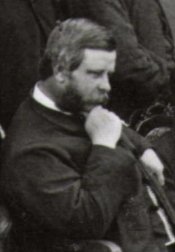
Born on 5 February 1830 in Baghalpur, India, the son of Surgeon James Innes of the EICo’s Bengal Medical Service and his wife Jane Alicia Innes (née Mcleod). Both his parents came from a military background – his father was the son of Major James Innes of the 94th Regiment, 1st Laird of Thurmster, and his mother, who had been born in India, was the daughter of Lieutenant General Duncan Mcleod of the Bengal Engineers.
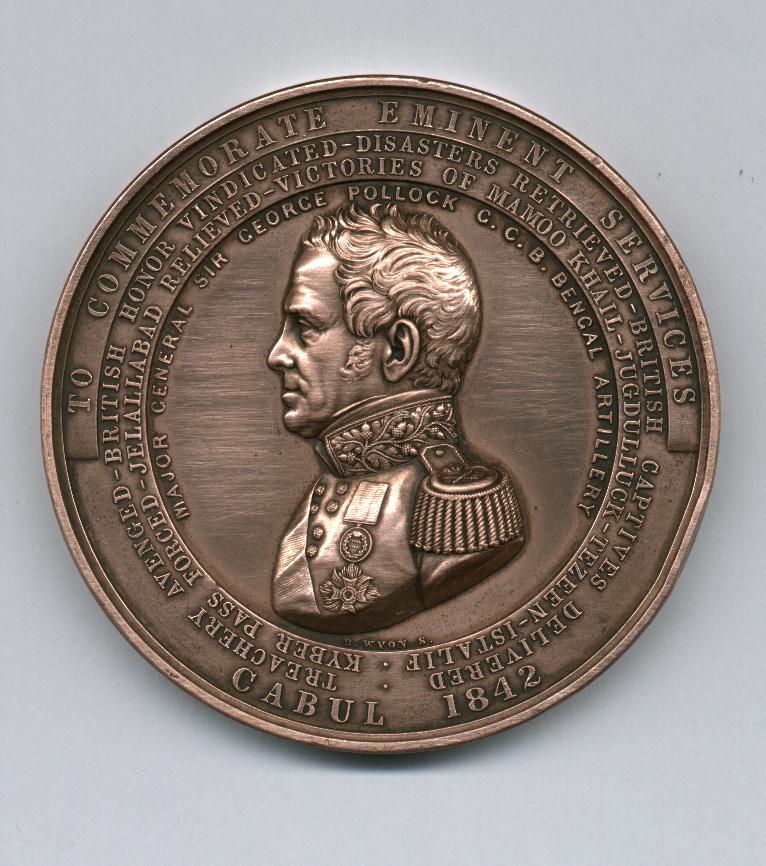
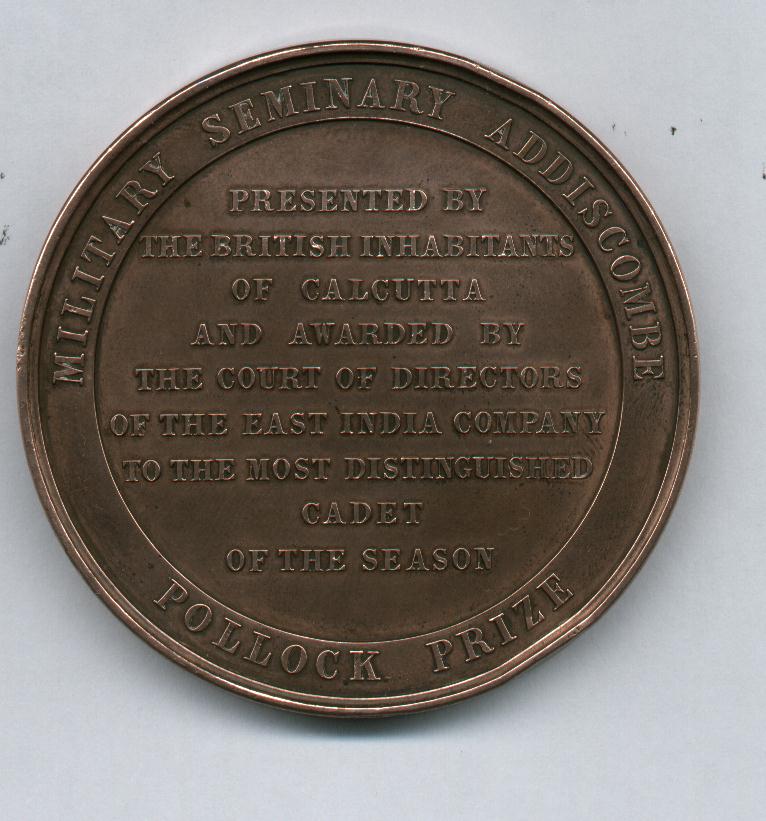
As Innes did not leave behind anything in the way of an autobiography, although he wrote no less than three books following his retirement, we can only surmise he would have spent his formative years in India, after which it was deemed necessary to send children back home for their education. He was educated privately and briefly attended Edinburgh University, where he excelled in mathematics. His father’s untimely death at the age of 50 in Benares in 1846 possibly precipitated his entrance into Addiscombe in February 1847. Once again, the young man excelled, leaving Addiscombe at the head of his term with the Pollock Medal in December 1848.
The Pollock Medal was presented twice a year “to the most distinguished cadet at the East India Company’s Military Seminary, at Addiscombe, near Croydon in England, on passing the biennial examination for a commission.” To commemorate Sir George Pollock’s victories in Afghanistan following the disastrous retreat from Kabul in 1842, it was raised by a subscription of Rs.11,000 by the denizens of Calcutta in 1844 and was first awarded in 1848 to Edward C.S. Williams (later General Sir E. Williams, K.C.I.E) in June and James J. Mcleod Innes in December. Both would be gazetted to the Bengal Engineers.
Two men of the Bengal Engineers, Philip Salkeld and Duncan Home and Sergeant John Smith (Bengal Sappers and Miners) were awarded the VC for the same action – the blowing up of Kashmir Gate at the taking of Delhi; unfortunately both Salkeld and Home died before they could wear their medals and Smith, although he did receive his, died of dysentry on 29 June 1884 in Jalandhar.
Although Innes was gazetted to the Bengal Engineers on 8 December 1848, he only arrived in India in November 1850. Shortly after, he transferred to the Public Works Department (1851) and would be employed for the next five years in the construction of the Upper Bari Doab Canal in the Punjab. It was an interesting project – planned and carried out by John Henry Dyas and James Crofton of the engineers, it came at a volatile time in Punjab’s history, with one of the main motivations for its construction was to employ disbanded Sikh soldiers of the Khalsa, via agriculture. It was one of the first irrigation projects constructed in the Punjab on such a large scale and remains in use today (Madhopur Headworks); however, Innes was not there to see its completion.
The Mutiny and Beyond
The annexation of Oudh in 1856 gave Innes new employment, and he transferred to the new province as Assistant to the Chief Engineer, Major J. Anderson. Based in Lucknow, he had his house in the Residency compound, and if it had not been for the mutiny, we may never have heard of Engineer Mcleod Innes.
Sir Henry Lawrence arrived in Lucknow in March 1857 – a little late to reverse the damage done by his squabbling predecessor, but pragmatic to the last in May, he started looking for a place which could be held in case of an uprising. Initially, he decided to utilise the magazine – the Machhi Bawan – and the work of putting the rambling and somewhat dilapidated fortress into siege readiness was given over to Innes. However, Lawrence also kept his options open and decided to reinforce the Residency compound at the same time, leaving himself the possibility of holding two positions. However, as things turned out, following the disastrous Battle of Chinhat, he gave up the idea and ordered the withdrawal of all the troops from the fortress with as much ammunition and armaments as possible and blow the building to kingdom come.

“Next day, musketry fire was poured in from all sides, and shot and shell from the north of the river, but without any serious result. And then, the semaphore having been repaired, Sir Henry signalled a message to the Mutchi Bhown, ” Retire tonight at twelve. Blow up well.” One note had been received during the night, written in Greek characters, asking if the Mutchi Bhown party were able to evacuate, but the answer, which said ” Yes,” never reached Sir Henry. In fact, it was known that from the previous evening, the enemy had swarmed into the ground intervening between the two posts, and cut off all ordinary means of communication.
On the receipt of the message to withdraw, Colonel Palmer of the 48th N. I., who was left the senior officer, summoned all the commanding and departmental officers and arranged in complete detail for the evacuation. The native artillery drivers had fled during the previous night, so officers had to drive the gun-teams. The State prisoners were to be secured on the artillery wagons, as also the sick and wounded. The guns that were to be left behind were to be spiked at the last moment, and, as the rear guard left, Lieutenant Thomas, the ordnance officer, was to fire the train that was to explode the magazine.
Meanwhile, there was to be absolute silence on the movement, and there was no cessation of the intermittent mortar fire, which, both from the Residency and from the Mutchi Bhown, kept on shelling the ground lying between the two posts. At last, at ten o’clock, the sentries were strengthened, and the actual preparations began. As midnight approached, the troops were formed on parade in the lower plattan or courtyard, and every inmate of the Mutchi Bhown was placed in the exact position in the line of march. At twelve o’clock, Lawrence’s company of the 32nd, heading the column, marched out of the Eastern gate, the whole column following closely, the rear being brought up by Lieutenant Thomas, who had fired a twenty-minute fuse for the magazine train. The whole force marched on rapidly, expecting every moment to be obstructed and attacked, but it reached and concentrated in the Residency without meeting an enemy or having a single shot fired at it. Then, as the rear-guard got within the gates, a great quake of the earth, a thunderous report, and a brilliant glare announced that the Mutchi Bhown magazine had been successfully exploded.”
Innes’ modesty does not permit him to mention that the fortress was blown up under his directions.
During the Siege of Lucknow, Innes found himself not commanding his own house (which was given over to Lieutenant Loughnan) but as part of the Post Office garrison with the other engineers. From here were directed the mining operations and the continuous engineering works – repairs, reinforcement, rebuilding, constructing palisades and batteries, to name but a few. Among his varied tasks was the blowing up of houses outside the walls, especially those the rebels had taken for their own and were using to irritate the Residency.

from Lucknow and Oudh in the Mutiny, Mcleod Innes
“One mine was found to be directed at the Financial garrison, a counter-mine was at once commenced, under the superintendence of Lieutenant M‘Leod Innes, who succeeded in not only blowing it up, but also the miners who were in it at the time. Lieutenant Hutchinson also countermined against another gallery of theirs, intended to destroy the Brigade Mess. The enemy perceiving this, however, stopped in their work, and left it unfinished. A third mine, which they then constructed against the Financial garrison, was taken by Lieutenant Innes, who entered it by a subterranean passage he had excavated and blew the whole of it up.
The arrival of Sir Henry Havelock, who brought a bevvy of engineers with him, including Robert Napier and Major Crommelin, changed Innes’ work somewhat, and he now found himself leading sorties, not as the commanding officer but as a guide, where his work included blowing up guns. Due to his extensive experience, Innes was also placed in charge of mining operations in the extended positions around the residency compound.
Interestingly, Innes wrote a 14-page monograph entitled “A Rough Narrative of the Siege of Lucknow” (Calcutta: J.F. Bellamy, 1857); it was the first of its kind to detail the operations during the siege. Although the monograph is often mentioned, it has proved to be untraceable. It is cited not only by Martin Gubbins in his work about Lucknow but was later supplemented by T.F. Wilson in his “Diary of a Staff Officer.” In his final report regarding the Lucknow Residency, Innes was thanked by Brigadier Inglis for his “arduous duties” and “gallant bearing.”
Following the evacuation of Lucknow, Lieutenant Innes was posted to General Franks’ Jaunpore Field Force and would be their only engineer for the entire campaign and was present at all of their engagements, however, it was at Sultanpore, that he was recommended by Franks for the Victoria Cross.
“On the 23rd Feb., 1858, at the action of Sultanpore, Lt. Innes, far in advance of the leading kirmishers, was the first to secure a gun which the enemy was abandoning. Retiring from this, they rallied round another gun further back, from which the shot would in another instant have ploughed through our advancing columns, when Lt. Innes rode up unsupported, shot the gunner who was about to apply the match, and remaining undaunted at his post, the mark for a hundred matchlockmen who were sheltered in some adjoining huts, kept the Artillery men at bay until assistance reached him”.
In all, 28-year-old Innes would be mentioned three times in despatches before his mutiny career came to an abrupt end. At Dhowrara Fort on 4 March, Innes was charged with blowing open the gates of the fortified inner enclosure – the affair proved to be a bad one; as he was laying the charge, he was shot through the upper part of both his legs, an injury severe enough to exclude him from proceeding to th final taking of Lucknow. Promoted to captain in August 1858 and shortly after to Brevet Major, Innes received his VC from Lord Canning at Fort William, Calcutta, on 1 July 1859.
‘”I must add that it is a peculiar pleasure to me to present this Cross to an officer of the Bengal Engineers, for I say to you—not as a compliment, but in the words of sober truth—that I do not believe that there ever has existed in any army, a body of men who have rendered individually and collectively, more constant and valuable good service to their country, than the Engineers of Her Majesty’s Indian Forces.
Men, all of them, of proved ability and highly cultivated intellect, they have been unceasingly called upon in peace, as much as in war, to achieve great tasks for the protection and advancement of India, and they have never been found wanting. That when summoned to meet an enemy in the field, they can carry their lives in their hands as lightly as any man, your own deeds and those of many of your brother-officers have abundantly proved. It is in itself a distinction to belong to such a corps, and you, Major Innes, have the proud satisfaction to know that while you have derived honour from being enrolled among the Engineers of the Army of Bengal, you have done all that a gallant soldier can do to repay that honour, in augmenting by your own acts the lustre and reputation of your distinguished regiment.” (Lord Canning, address on the presentation of the VC to Major Innes). When Addiscombe closed its doors in 1861, Innes was ‘specially mentioned’ by the Secretary of State and Lord Canning’s address was read out to the cadets at the last Public Examination.
Innes continued to serve in India with the Royal Engineers (Bengal) and held several civil and military engineering posts at Fort William, the Central Provinces and the Punjab, in various grades for the Public Works Department from 1861 to 1867. In 1868, he sat on the commission that was investigating the collapse of the Bank of Bombay and in 1869, he started the upper section of the Indus Valley Railway. 1870 saw him nominated to the position of Accountant General PWD, where he remained for 10 years, after which he took over as Inspector General of Military Works and drew up the designs for the Coast and Frontier Defences and supervised most of the new internal defences. In 1885, he was promoted to Major General and retired a year later as Lieutenant General.
Home Life
In 1855, James Innes married Lucy Jane Macpherson, the daughter of Hugh Macpherson, professor of Greek at King’s College, Aberdeen. Among her relatives was a half-brother, Major Samuel Charters Macpherson, the second son from her father’s first marriage – his untiring work in Gwalior prevented the premature rising of the Gwalior Contingent; while her brother, Roderick Donald, (later Major-General, retired 1875) served with the Bengal Staff Corps served in the Second Burmese War at the capture of Rangoon and in 1855 in the Santhal Campaign. Another brother, (Sir) Arthur George Macpherson, took up instead to the ICS and served in the legal department, ending his career as a Knight Commander of the Indian Empire and Judicial Secretary to the India Office. Lucy herself was not present at the Siege of Lucknow; instead, she was in Gwalior, visiting her brother. After a most adventurous escape, where she “showed remarkable presence of mind throughout the whole of these events,” she remained in Agra Fort for the duration of the mutiny.
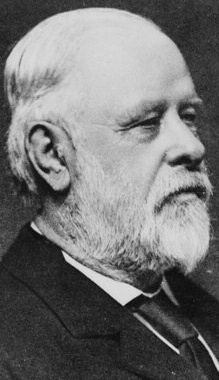
Lieutenant General James John Mcleod Innes and his wife retired to Cambridge, where he spent much of his later retirement writing books – “Lucknow and Oudh in the Mutiny: A Narrative and a Study,” (1895), “The Sepoy Revolt: A Critical Narrative”, (1897) and “Sir Henry Lawrence: The Pacificator” (1898). He died at his home on December 13, 1907. He was buried in the City Cemetery in Cambridge. His wife survived his demise by a decade.
Of their four children, James Edgeworth, the eldest, born in 1859 in Calcutta, joined the ICS but died on June 25 1881, BCS Assistant Commissioner Punjab, aged 22. Their second son, Hugh was a classicist at Trinity College – two of his sons, Patrick and Donald, would be killed in action during WWI within 16 months of each other. The Innes’ other two children, Arthur and Alicia, both died within a few months of each other in 1938 aged 75 and 65, respectively.
Sources:
https://www.thepeerage.com/p48501.htm#i485002
http://trinitycollegechapel.com/about/memorials/brasses/innes/
https://www.findagrave.com/memorial/8026647/james-john_mcleod-innes
https://en.wikisource.org/wiki/Dictionary_of_National_Biography,_1912_supplement/Innes,_James_John_McLeod
Innes, McLeod. Lucknow & Oude in the Mutiny: A Narrative and a Study. London: A.D. Innes & Co., 1895.
Innes, McLeod. The Sepoy Revolt: A Critical Narrative. London: A.D. Innes & Co., 1897.
 Mutiny Reflections