We shall begin our journey into the North Western Provinces in Muzaffarnagar and Sahuranpore on 14 May 1857. The mutiny is in its infancy, and some civilians will have to make some swift decisions.
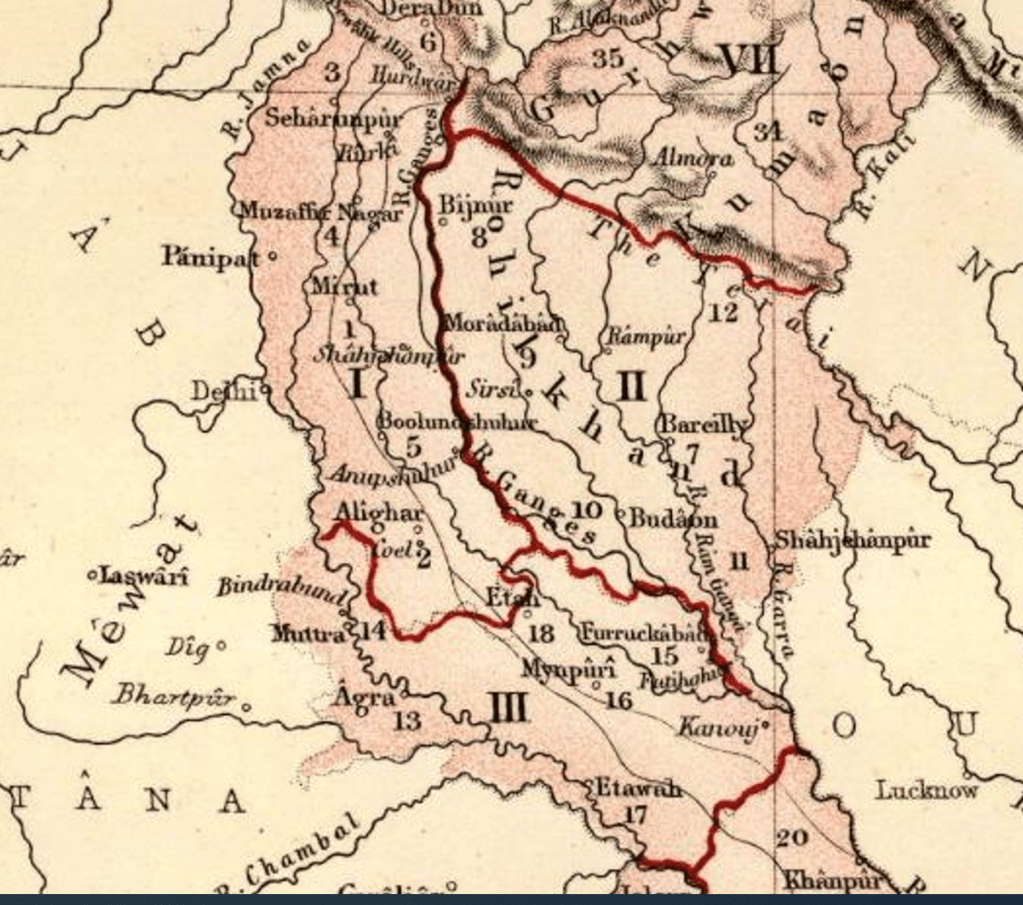
Muzaffernagar, May 14th
In Muzaffarnagar, the treasury guards were men of the 20th BNI, a regiment that had mutinied at Meerut but, unlike the rest of the regiment, had until then given no cause for alarm. However, the magistrate, Mr Berford, was unwilling to take his chances. Believing they would mutiny, Mr Berford suddenly closed all the public offices on the 14th of May. There was a feeble attempt to save the treasury, but when the sepoys refused to hand over the chests, Berford simply left them to their own devices. They quickly helped themselves to as much as they could carry and left the rest to the townspeople, native clerks and Berford’s servants. The sepoys triumphantly marched off towards Moradabad.
“Overcome by unmanly fear for his personal safety”, Berford determined to strengthen his own bodyguard and withdrew the guard at the gaol. To save the prisoners the trouble of breaking down the doors, he simply opened the jail and then quickly retreated to a house in the town, surrounded by his impromptu guards. His action resulted in the destruction of the jail, and joined by the townspeople, the convicts burned the government offices and the European bungalows and laid waste to Muzaffarnagar. The Europeans, in the meantime, had fled the town, while Berford scarped off towards the safety of the nearby jungle. Unfortunately, his inaction had set a series of events into motion — and the idea that British rule had come to a definite end.
The effects of this would be seen at Sahuranpore.
Sahuranpore, May-June-July 1857
Only 80 miles from Meerut, the Sahuranpore district found its isolation at the beginning of the mutiny to be one of its most practical features. Bounded on the east by the Ganges and the west by the Jamuna, a range of uninhabitable mountains provided security from the north, while the Siwalik Hills bound the district to the northeast — its only weak point was the southern boundary with Muzaffarnagar.
The town itself was situated on the right bank of a small river and had once been a walled city during Mughal times, but things had changed since then. The Europeans resided mainly on the left bank of this stream with their bungalows, gardens and their small church. To the north of the town stood a small albeit compact fort built in Sahuranpore’s wilder days as a frontier station.

Before the outbreak, Sahuranpore was essentially a civil station, with three military officers, one man in charge of the government stud, two engineering officers working on the budding Eastern Jamuna Canal, a doctor who devoted his time to the botanical gardens and a few missionaries. With the hill station of Mussoorie close by, many of the residents were on leave in early May and at the most, only seven Europeans were left in Sahuranpore, including the clerks. The guard over the treasury consisted of 80 sepoys commanded by a subhadar, and they were regularly relieved every three months by similar detachments of the 29th BNI from Moradabad. A small local guard stood watch over the jail, while throughout the district, the ordinary police force did their duties.
The nearest station was Roorkee, just 25 miles distant, the headquarters of the Sappers and Miners.
“It was in this position then, with nearly a million of inhabitants in the district… were launched into a rebellion where for long out, only really reliable force consisted of a few gentlemen, canal overseers and clerks…“
However, the importance of Sahuranpore was far-reaching. Before long the army before Delhi would be supplied from the canal establishments at Roorkee with other parts of the district sending men and material to the siege, while supplies of provisions and money would be sent from the Sahuranpore District not just to the low-lying town of Dehra Dun but to the hill stations of Mussoorie and Landour, ensuring the “hill stations…with their helpless occupants, chiefly composed of women and children, or, what was worse, old women in uniforms…” would survive the rebellion. As such, the importance of holding Sahuranpore was paramount.
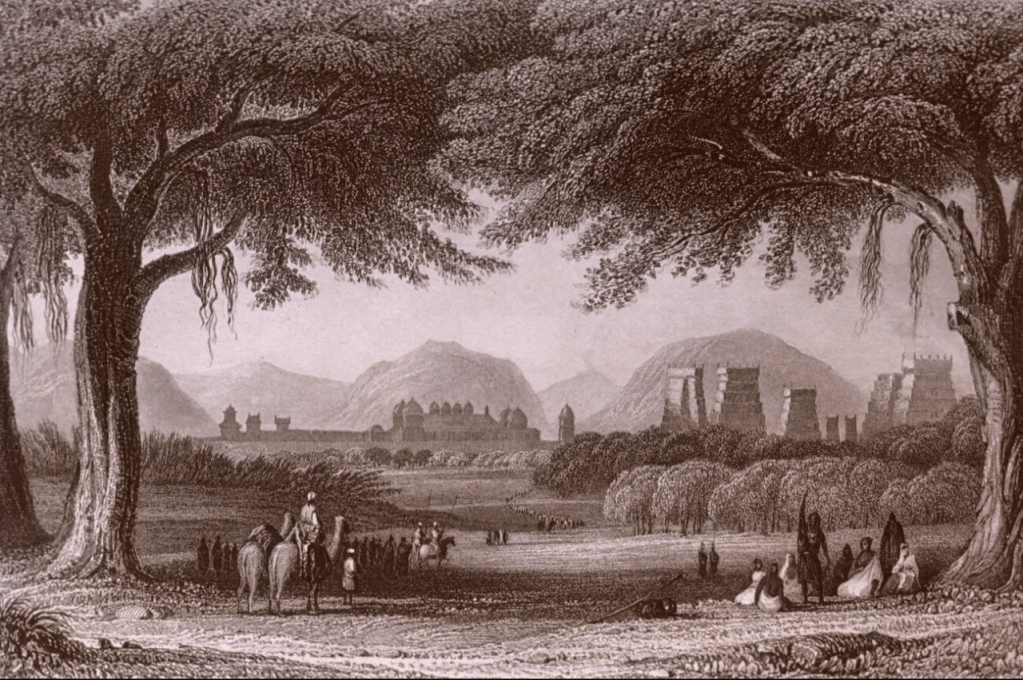
On the 14th of May, Sahuranpore heard of the Meerut mutiny, and the next day, the outbreak at Delhi was hotly discussed following a semi-official statement received in the morning, which, besides giving some details of the city, included a statement of the “general mutinous tone of the whole army.” It seemed only logical then, taking the desperate news into account, that the magistrate, Mr. Robert Spankie and that most able civil servant, his lieutenant, Henry Dundas Robertson, needed to decide if Sahuranpore should be held or if they should all retreat and put the matter before all the civilians present in the station. While there was some murmur of retreat, Robertson pointed out the treasury guard had not mutinied, and there was no reason to leave. Only one man, Lieutenant Barlow, “heartily welcomed” the decision to stay – but to be sure of their safety, the remaining ladies and children were swiftly packed off to Mussoorie, taking the northern road through the Sewaliks. With them went two gentlemen, defecting under the pretext of accompanying their wives and then simply not returning.
The next day, Robertson received word of the mutiny of the treasury guard at Muzaffarnagar and the flight of Magistrate Berford and his assistant, Mr. Grant. Stepping into their place was the Patiala Raja who took it upon himself to deal with the guard, arresting as many as his men could find — for a time it stayed the events at Sahuranpore, but the southern portion of the district was now lost to roving bands of insurgents and plunderers, forcing some of Robinson’s police to abandon their posts. Yet, at the station itself, Sahuranpore was quiet.
The remaining Europeans received word that Meerut was holding its own — news which was hardly a surprise since it had the largest contingent of European troops outside Lucknow and Agra combined — Robinson’s “respect for the dignitaries at Meerut was hardly increased” when he was informed there would be no help coming to him from the said station. The problems at Muzaffarnagar had been increased by the obvious want of action from Meerut – when Berford had requested 50 Europeans be sent to him to secure the treasury, he was refused. It is hardly surprising the man acted then as he did – he was, quite, entirely left to his own devices.
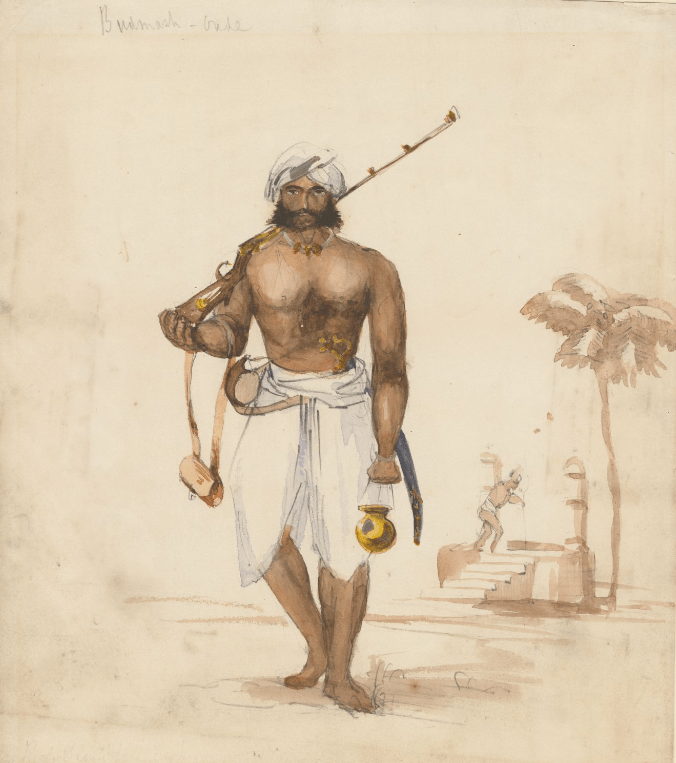
The problem, however, that Meerut faced was not mutinous Sepoys — they had long since left — but large bands of Gujars plying their profession of plundering and murdering throughout the Meerut district. As such, Hewitt would not risk anyone leaving the relative safety of Meerut to help anyone at all. Robertson decided he would act without Meerut, or indeed without anyone else and on 19 May, determined to hold Sahuranpore, come what may.
For mutual protection, the Europeans and the Anglo-Indians determined to live in one house and divided their horses, arms, and ammunition amongst each other so that at least those who had neither a gun nor a horse now would have one. They then settled down to protect their station. However, they were not men to sit quietly. After persuading the subahdar of the 29th to give him 20 men of the treasury guard, Robertson began small excursions into the surrounding countryside, following any rumour of insurrection, and more notably, keeping the northern road open.
They would soon see the mutiny for themselves – not in the shape of mutineers but in fugitives. An engineer in charge of a portion of the Eastern Jamuna Canal would effect his escape with two canal sergeants and their wives when their camp, some 30 miles on the border of Muzaffarnagar, had been crossed repeatedly by rebels, and indeed, the entire countryside was suddenly in a state of anarchy.
While the engineer could have struck out for Sahuranpore himself, he was loath to abandon the others – as such, they found protection in a nearby village. To their relief, the headman, who had, in the past, had to contend with feuds against the very villagers who had run the engineer out of his camp, decided to keep the Europeans safe and sent word to Sahuranpore. Lieutenant Barlow was quickly deputised to bring the party into the town. They would not be the only fugitives to arrive.
As if things were not complicated enough, Spankie received word that companies of Sappers and Miners would be passing through Sahuranpore on the 20th. While this, in and of itself, was not unusual, and their arrival had been known of for the past week, the main body had mutinied the day before in Meerut and killed their commanding officer. Naturally anxious to keep this particular fact secret from the 29th BNI, it was decided that the Sappers and Miners could by no means be allowed to remain at the station.
Arrangements were swiftly made to have them encamp 2 miles further on, where they could collect the provisions allocated to them before hurrying them onwards. Lieutenant Barlow rode out to wait for the Sappers and Miners who, to his immense relief, never showed up. It turned out they had heard of the skirmish at Meerut and, determined to ascertain the facts for themselves, had informed their officers they would return to Roorkee.
Just 10 days after the mutiny in Meerut, the weight of protecting Sahuranpore was becoming clear. The local population was restless, and the station was greeted with nightly reports of small firearms and constant rumours of imminent attacks, from someone, from somewhere. The magistrate had little choice now, to instil some confidence in the populace, to organise nightly patrols and regular watches. However, they were not men to sit quietly. After persuading the subahdar of the 29th to give him 20 men of the treasury guard, Robertson began small excursions into the surrounding countryside, following any rumour of insurrection, and more notably, keeping the northern road open.
Three days later, barely 10 miles out of Sahuranpore, he came upon a band of men actively plundering a mail cart, and as if his day was not busy enough, he was able to apprehend a band of another 26 heavily laden with plundered property which belonged to travellers and villages near the road. Most of these men belonged to villages of the Gokuwalla zamindars who had lately, on realising British rule was shaky at best, started exerting their power along the road. Realising he could not let the prisoners go but having no way of controlling them, Robertson handed them over to another local zamindar on the promise to send them to Sahuranpore. It then struck him, his force of 20 men and his clerk, Mr Hyde, he had no chance of actually securing the road or, for that matter, dealing with the Gokulwalla zamindars – he decided to approach the other Kheree zamindars for assistance and a retiring young man, Deedar Singh, a feudal chief descendant of a tribe from the Punjab. The zamindars and Deedar Singh agreed – and by nightfall, Robinson had a force of 150 men, sufficient to arrest the Gokulwalla zamindars and at least put an end to the plague of pillaging around Sahuranpore.
The zamindars of Kheree, “being poor men, and knowing it would please them, I doubled the strength of all the police stations by enlisting their men, and we never subsequently received any trouble from this part of the district.”
Still, Robertson and Spankie were under no illusions.
As reinforcements started coming down from the Punjab, Sahuranpore was beset by regiments on the march to Delhi – the 4th Lancers, several companies of the 5th BNI had marched from Ambala, but only three officers elected to stay in Sahuranpore and assist in the defence. Meerut continued to be too alarmed to send him any men at all. While the 4th Native Lancers and a detachment of the 5th BNI were at Sahuranpore, however, Robertson decided to use them in a venture of his own and from the 26th of May until the outbreak of the 5th BNI on the 2nd of June, he regained some control of the southern boundary of Sahuranpore. It was, as Robertson admitted, “a big game of brag; the holder of the worst hand might yet be the winner.”

The problems of the 5th BNI started in May, and the detachment had lost none of its querulous spirit – that said, they had been behaving themselves at Sahuranpore and probably would have continued had not, on 2 June, an order been issued, sending them back to Ambala. The sepoys protested, saying they did not trust the European officers and such, had no intention of marching anywhere with them. Two officers (Captain Garstin of the 5th and a Captain Wyld of the 4th Native Lancers), after much discussion, decided it would be better to give the sepoys a choice: march or be dismissed from service. As such, they explained the situation to the sepoys, stating clearly that any man who no longer wanted to continue in the service of the government would be paid and receive their discharge.
“A list of men was then produced and read out, and instructions given that, on each name being called, the man, if he wished to remain in the service, was to join the officers, if not, he was to fall back.” The first few on the list came forward, but one after another, they began to fall back, until, “the mutineers gained strength and courage enough to jeer at all those who joined their officers. ” While this interesting scene was on-going, no one seemed to have noticed that the men who had fallen back were deliberately moving towards the spot where the detachment had piled their arms. Captain Garstin and Robert Spankie, however, had already left the assembly and had retired to a nearby tent to arrange to pay the sepoys desiring their discharge, leaving the other officer of the 5th alone with the men.
When the first man was called to receive his pay, it was not the reaction Garstin and Spankie had expected. The man called out to his comrades that they should not be discharged without their arms – the sepoys grabbed their muskets from the pile and began to load. Captain Wyld ordered the sepoys at his side to load as well, which they did, but they earnestly pressed him to return to the 4th Lancers as they would not be able to protect him. Realising he was very seriously outnumbered, Wyld turned and rushed off towards his camp, a short distance away, with one sepoy sending a parting shot flying over his head.
The shot startled the Sahuranpore civilians, who, for once, were not assembled at their house. Robertson was paying a visit to a friend in town, three others had taken the dog cart out for a ride, and another – an artilleryman – had decided to visit the bungalow he no longer lived in to check on his possessions. However, by the time the next shots were fired, Robertson and the artilleryman were already flying towards the ruckus. To their astonishment, the first man who met them was none other than Spankie’s bearer running down from the house with Spankie’s pistols; Wyld was calling out the 4th Lancers while shots continued to whistle over his head, and in the midst of it all stood Robert Spankie, walking stick in hand, clubbing an armed sepoy about the head. The civilians rushed towards the house to gather their weapons while Robertson and the de facto artilleryman of the little band decided to try out their battery.
“Our guns consisted of one three-quarter and one half-pounder, probably more dangerous to friends than foes. They had been sent to us by the Ranee of Landhoura, and were poor specimens of bad native guns, not less than a hundred years old…The best of the two was rapidly loaded with canister and wheeled onto the edge of the balustrade facing the sepoys, who were within rifle shot….” In middle of this scenario, with Robertson prepared to fire at the sepoys with a gun that might or might not blow up, in rushed Captain Wyld with “sepoys in pursuit,” leaving Robertson to surmise the 4th Native Lancers had mutinied.
Fortunately for everyone, it was getting dark.
The rebellious sepoys melted away in the dusk towards the Meerut road, the loyal ones continued to mill around the grounds, and Robertson never found out if the gun he had planned to fire would have killed him. Garstin and Spankie now reappeared, looking bewildered. They had tried to persuade a few men of the 29th BNI on guard duty nearby to attack the 5th BNI, but they had refused, saying they had received no orders from their officer to leave their post.
Captain Garstin finally mustered up the mettle needed to approach the remaining faithful men of the 5th. These quickly crowded around their officers, saying they had done their best to prevent their comrades from running amok and, as proof, produced the body of the mutineer who had taken a fancy for Captain Wyld’s head.

As for the three men out on a ride in a dog cart, they had decided to take their jaunt without their guns and as such, when they saw the sepoys rushing down the road towards them, did not think anything was amiss. Fortunately for them, their horse chose that moment to stumble and fall, throwing all three men out of the dog cart. As they staggered to their feet, they were surprised to hear the sepoys yelling, “Maro! Maro!” (Kill! Kill!) as they opened fire on them. “Distance, dusk and their heels saved the officers lives.”
As for Captain Wyld – his men had not mutinied; he had gathered them together to pursue the mutineers, and Robertson, had he been a second quicker at his gun, might very well have percipitated another mutiny. Now that night had fallen, it was clear that no pursuit by the Lancers would have any effect and after a cursory search, Wyld reported there wasn’t a mutineer in sight, but a few of his men had used the opportunity to desert.
As for the 29th BNI, they were exactly where they were expected to be. The bulk of them were at the treasury, and others scattered in small groups on guard duty. Not a single man deserted his post: when questioned why they made no attempt to thwart the 5th, they replied the treasure was their main priority, and if the 5th had pestered them directly, they would have quickly found out the 29th was not willing to share.
The next day, the 300-strong Nasiri Battalion of Gurkhas arrived in Sahuranpore, sent by the Punjab authorities for the implicit purpose of protecting the station, and regardless of their behaviour that had caused such an unpleasant panic at Simla, Robertson and Spankie were glad to have them. They would add considerably to the safety of Sahuranpore and the outlying areas, thus allowing Robertson to address the ever-present problem of roving Gujars, squabbling villagers and bands of mutineers from the Punjab on their way to Delhi.
The men of the 29th BNI would remain loyal in Sahuranpore long after their compatriots at Moradabad had mutinied – on the 11th of July, they simply walked off, leaving the treasure and most of their private property behind.
“The 29th had no wish to mutiny with violence but intended to follow the gentlemanly example of their own regiment. When the headquarters of this regiment mutinied, they behaved extremely well; they had secured a safe retreat, not only to their own officers but also to all the European residents at Moradabad who chose to depart within the time granted.” Only two men remained behind, and they were dismissed to their homes the next day.
Robertson was relieved they had left of their own accord – he did not have men enough to either disarm them or guard them if he did; in this way, he was rid of one problem he had no means of containing. With the Nasiri Battalion and ably assisted by the Khakee Ressalah – a volunteer force that patrolled the area around Meerut- he and Spankie would continue holding the Sahurapore district, attacking and dispursing rebels and insurgents until the fall of Delhi in September.
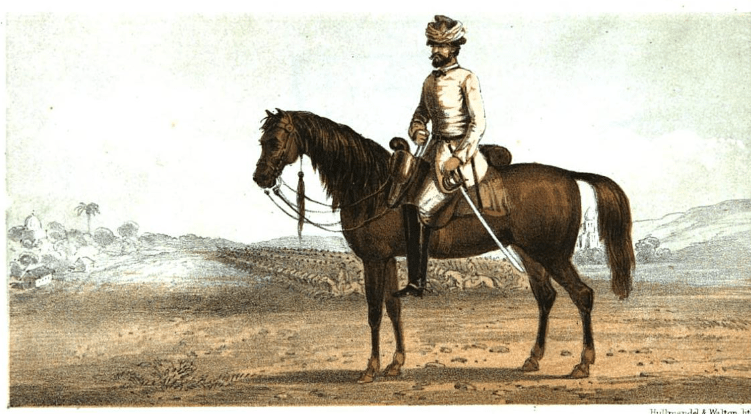
The 29th Regiment Bengal Native Infantry
(Cullunjum Ka Paltan)
Raised 1797. Late 2nd Battalion 14th BNI
Battle Honours: “Dehlee,” “Punjab”.
The headquarters of the regiment, after leaving Moradabad, joined the mutineers of Bareilly and Shajahanpore and marched off towards Delhi. They would form part of the Rohilkhand Brigade, which consisted of five regiments – the 8th Irregular Cavalry, the 18th BNI, 28th BNI, the 29th BNI and the 68th BNI – and a Battery of Artillery, No. 15 Horse Battery and two six-pounder post guns from Shajahanpore. Under Bakht Khan of Bareilly, they would fight at Delhi but following the recapture of the city, would march off south towards Oudh.
Sources:
Kaye, John William. A History of the Sepoy War in India, 1857–1858. Vol. 3. London: Longmans, Green & Co., 1880.
Keene, Henry George. Fifty-Seven: Some Account of the Administration of Indian Districts During the Revolt of the Bengal Army. London: W. H. Allen & Co., 1883.
Malleson, G. B. History of the Indian Mutiny, 1857–1858: Commencing from the Close of the Second Volume of Sir John Kaye’s History of the Sepoy War. Vol. 1. London: W. H. Allen & Co., 1878.
Robertson, H. Dundas. District Duties During the Revolt in the North-West Provinces of India in 1857. London: Smith, Elder and Co., 1859.
 Mutiny Reflections