Shajahanpore in May
The 28th Regiment, Bengal Native Infantry
(Stupper Ka Paltan)
Raised in 1797. Late 1st Battalion, 14th BNI
Battle Honours: “Dehlee,” “Arracan”
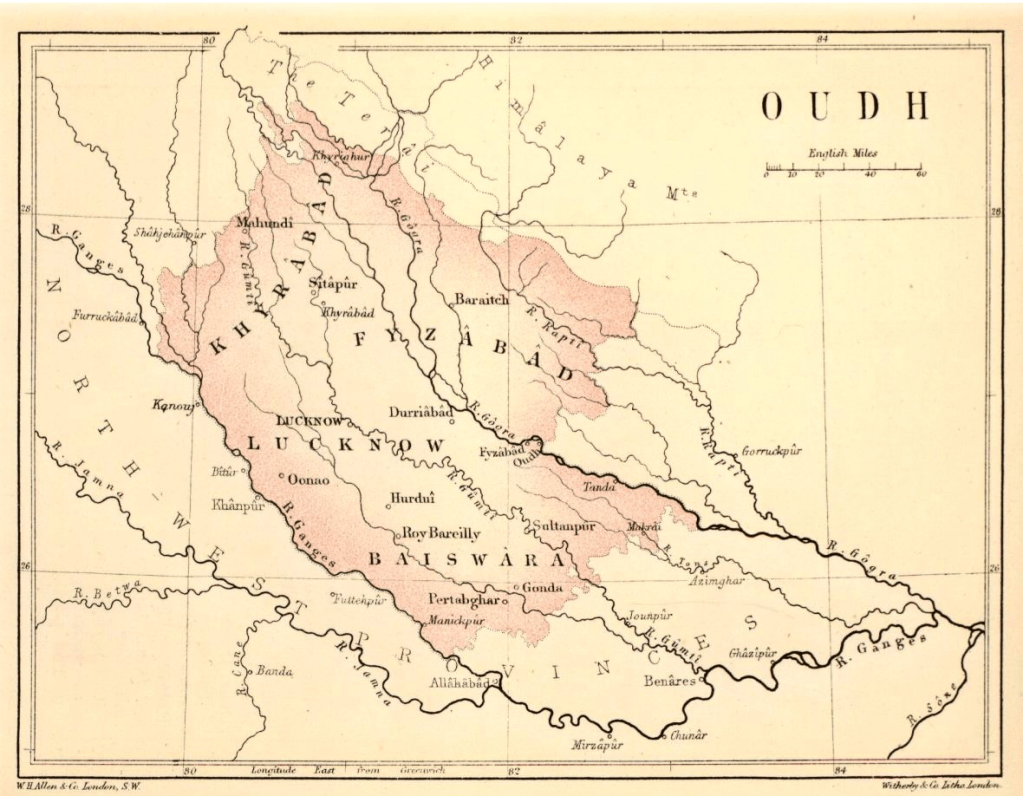
The 28th NI was not a regiment that anyone feared. They had done their duty loyally, fought bravely and had not given anyone a moment’s concern. In 1857, they were stationed at Shahjahanpore, a town in the district of the same name in the south-east corner of the Rohilkhand division. For hundreds of miles around, there were no European troops, and Shahjahanpore was no exception.
The district itself was well-suited to agriculture, but the leading industry of the district was sugar, in all its varied forms. The Rosa Sugar Factory produced a particularly fine refined sugar and rum, utilising “European” methods to produce products found to be most agreeable. Indigo plantations had made an appearance in the district, but these quietly died out. As such, Shahjahanpore was not what one would say was an exciting post.
As for entertainment, hunting was found to be moderately exciting, but unless one wanted to travel to the jungle tracts of Bareilly and Budaon for a chance at tigers and leopards, it was mostly confined to jackals, foxes, hares and wild pigs. The district had once been known for its fine horses, but this was a thing of the past. For the Europeans stationed here, besides the regular district work, there really was not much to do. The station had the usual accoutrements of civil buildings, a church, the cantonment and pretty bungalows laid out in large gardens.
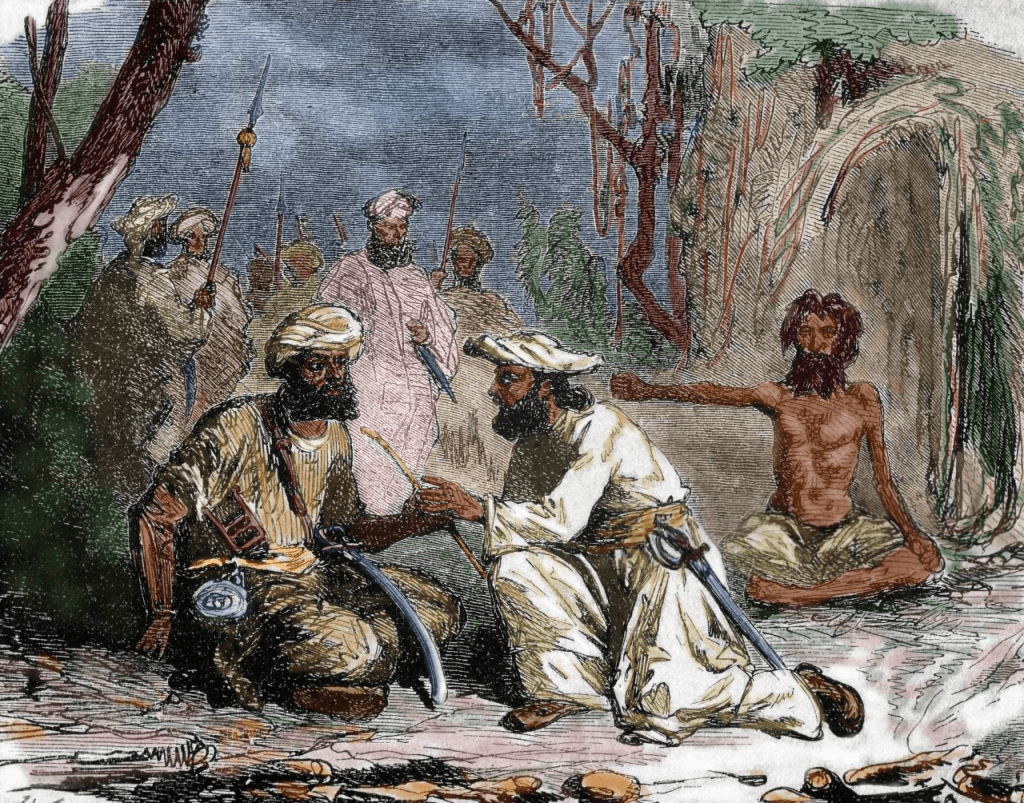
There had been warnings, and ample signs of trouble brewing, but the disaffection was felt in the town of Shajahanpore, amongst the civil population; muttered remarks and rumours of nightly meetings between local officials and outsiders from the district who styled themselves as messengers. Some of the men of the 28th had begun to join in on the seditious meetings. They were very careful to conceal their doings from their older Indian officers, who had grown old in the company’s service. While the native officers might have become grey, they were not witless. They had been listening to the rumours in the bazaar and, above all, the treacherous talk in the lines. The sepoys were muttering the stories they had heard in the bazaar about flour tainted with bones; they had closely looked at the cartridges served out to them since the events at Meerut, and many believed the paper looked suspicious. As none of them had come within breathing distance of an Enfield, nor its cartridges, they were basing their beliefs purely on what they thought they saw. The paper was different, they said, it looked greasy, said some, no, it was shiny, said others – but no one had bothered to tell the sepoys it was, in fact, exactly the same as always, and the cartridges were still being made up in Shahjahanpur. These were not novel imports, but the men were no longer interested in logical arguments.
Worried, three Indian officers attempted to bring the matters to the attention of the commanding officer, Captain Marshall James, in temporary command of the 28th BNI. They hoped he could give them men some assurance, for they fervently hoped, if there was an outbreak in Shahjahanpore, the regiment would be called out to put down any disturbances, provided their European officers could regain their trust. As luck would have it, James was indisposed, and there would be no time for another meeting.
Meanwhile, three local officials or Maliks – headmen in charge of town quarters – had made their worries known to Mordant Ricketts, the District Collector and, as such, the senior-most European civilian in Shahjahanpore. Ricketts had just returned from three months’ leave, as the hot weather was rapidly coming along, he had left his wife (daughter of the late Mr Tyler, one time commissioner of Agra) in Bareilly. She would proceed in a matter of days to Naini Tal with Mrs Alexander, the wife of the Rohilkhand Commissioner, where the ladies would spend the hot weather in pleasanter climes. Ricketts would not have known he would never see her again.
Waiting for him in his office that day were Captain James and Mr Charles Jenkins, the joint magistrate. They, too, had been aware of the rumours in the town, which they believed could no longer be ignored. After a short meeting, the Maliks arrived. The three, Raziqdad Khan, Shah Nawaz Khan and Hoshmand Khan, after the customary greetings, informed Ricketts that the town was in fact worse off than James and Jenkins believed – the people were positively agitated and, according to their information, the sepoys of the 28th were adding fuel to the fire. James scoffed at the idea that his men were anything but staunchly loyal. The Maliks remained obstinate – the sepoys were firmly convinced the EICo was out to make Christians of them and could no longer be trusted. They urged Ricketts and the other Europeans to leave Shahjahanpore with all haste and make for Naini Tal while the roads were still open.
Once again, the Europeans took the advice with a pinch of salt. They were more than capable of looking after themselves, but thanked them most sincerely for the information. If James said his sepoys were loyal, that was certainly good enough for Ricketts and Jenkins, as long as the 28th were by their side, they had nothing to fear. As soon as the Maliks left, Ricketts implored James to ascertain the real feeling in his regiment – something about the sincerity of the Maliks had left him with a heavy heart.
It was decided that the next day, a cavalcade made up of European civilians and local officials would ride through Shahjahanpur to assess the situation for themselves. Outwardly, they noticed no signs of disaffection – the shops were open as usual, and everywhere they rode, the people salaamed in their usual fashion, and while Ricketts did not disbelieve the Maliks, he hoped the conspiracy they spoke of was confined to but a few malcontents.
As for the 28th, James went only so far as to interrogate the subedar-major, a useless enterprise, for if the man was in the conspiracy, he would have said nothing, and if he was not, then he would, in truth, know nothing. Captain Salmon was not as sure as James; he had heard the words, “kill, kill,” shouted out behind his back when he visited the lines – when he turned around, he saw no one who looked mutinous and put it down to a bad joke. His servants had told him they had seen sepoys straggling along towards a small hut in which a supposed mendicant had suddenly taken up residence, but they had no idea who this personage was. A seer, some said; others believed he was simply a beggar. By the time anyone went to investigate, he was long gone.
There was some talk of putting spies in the native lines, but the officers objected; Ricketts wanted to send all the ladies and children to Naini Tal, a proposal well received by their menfolk; he also proposed fortifying a house, namely his or the 28th Mess House, as a place of defence should worst come to worst. The problem was, these plans, though fine, were all a little late.
Five days before the mutiny, James was once again warned that not all was well. His subedar major informed him that the badmashes of the town were planning their revolt for the next day, using the confusion and noise of a nearby fair to mask their intentions. Their plan, as far as he knew it, was to attack the government treasury. James, for his part, agreed to double the guard on the treasury. Unfortunately, the move was not taken well by the sepoys. The guard stationed at the treasury now believed James had lost confidence in them; they also felt that the privilege of attending the fair, which had this year been denied to them, was their punishment for having made their grievances regarding the cartridges known. Their officers had lost faith in them, they said.
On 29 May, the bungalow of Mr Redman suddenly burst into flames during the night, followed shortly after by Lieutenant Russell’s former bungalow. No one was injured, but their owners’ property was lost to the inferno. Only a few men had been seen running away across the Parade Ground from the burning buildings, but no one could say for sure if they were sepoys.
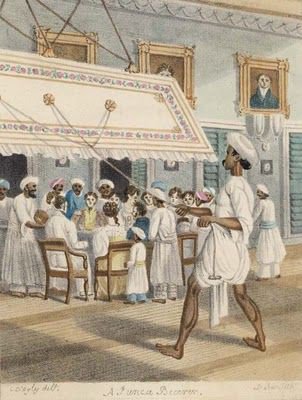
The next day passed off as usual, and in the evening the Europeans assembled at the house of Dr. Bowling for dinner. Duets were sung, some of the officers sat down for a rubber of whist; Ricketts, James and Jenkins huddled together on the verandah discussing the day’s news while inside the ensigns Spiers, Johnston and Scott and Dr Bowling attended the ladies. Not everyone was present – Captain Salmon was in no mood for entertainment and had sent his pardon, Lieutenant Robertson was orderly officer of the day and could not attend, and Mr. Smith, Assistant Collector, was still too sick to leave his bed.
As dinner parties go, it ended early – by 9 pm, Ricketts was back in his bungalow. He entreated his guards to be extra vigilant through the night; he then settled down to sleep, but at 11, he startled his household awake by demanding his horse be saddled and brought to the door. Then, within moments, he countermanded the order and went back to bed. Well before dawn, he was awake again, this time dressing himself in his boots, breeches and hunting coat, with a brace of pistols in his side pockets. He then called for his horse. While the horse was being prepared, he was seen pacing up and down, occasionally muttering to himself. When the horse was brought up, he had ordered it, once again, to be taken away. Ricketts now began looking through the items in his wife’s jewel case, carefully placing some items in small packets before he secured them in his pockets with his pistols. He called for his horse one more time, but once again, the order was countermanded. Ricketts went back to bed. Outside his bedroom window, his orderly believed he could hear him praying.
 Mutiny Reflections
Another extraordinary episode.
LikeLiked by 1 person
Shahjahanpore ended in dreadful tragedy, and every single one of those who escaped was murdered on the road. While the main focus of 1857 has always been Delhi, Cawnpore and Lucknow, many of these small miseries are forgotten. The story continues here: https://mutinyreflections.wordpress.com/category/shajahanpurmuhamdi-and-sitapur/
LikeLike