At Allahabad, Lord Canning, who had set up his headquarters in the city in February 1858, well away from the machinations of Calcutta, received the news from Azamgarh with trepidation. The fight for Lucknow had but recently been won, and Sir Hugh Rose was making waves in Central India, but both Sir Colin Campbell and Sir Hugh were still too tied up with their own affairs to be spared for a march to retake Azamgarh. As it was, no one had taken Kunwar Singh into consideration, and he now stood on the brink of victory, within distance of Benares and what was worse, with an army large enough to shift control of the road between Cawnpore and Allahabad back into rebel hands.
It was critical, therefore, to relieve Milman at Azamgarh and put Kunwar Singh to flight – the question was, who was available to do it?
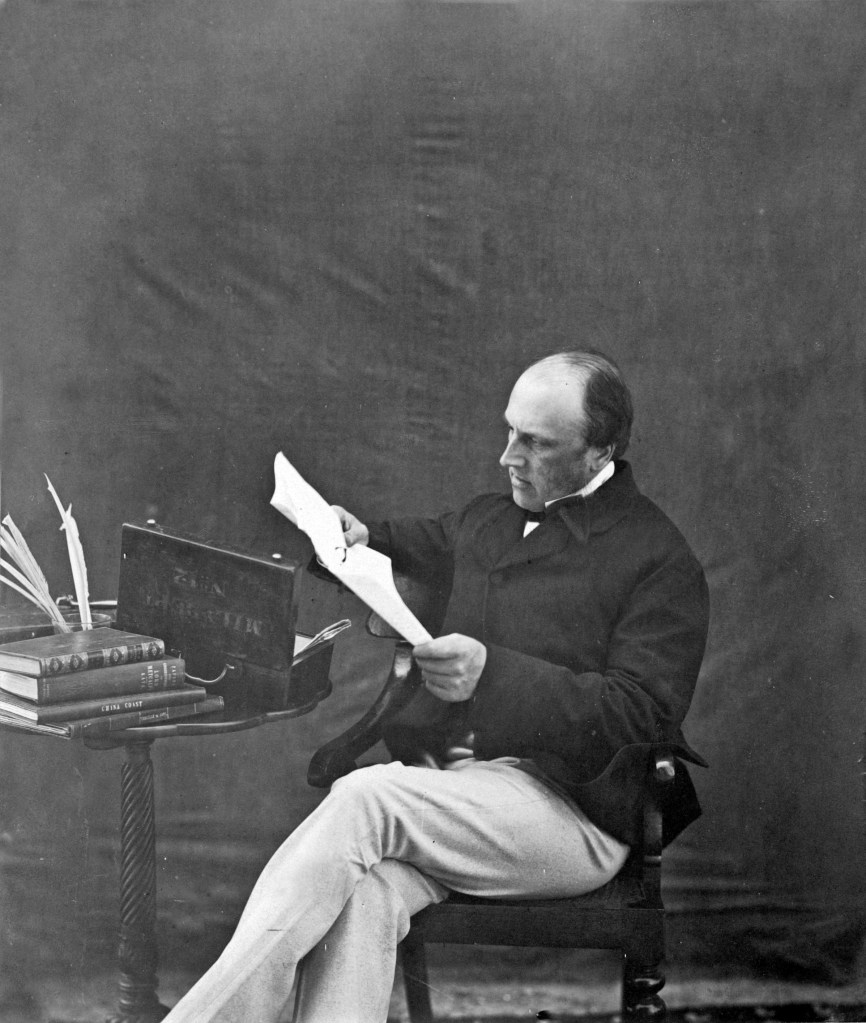
For Lord Canning, the question answered itself for at Allahabad was HM’s 13th Regiment (The Prince Albert’s Somersetshire, Light Infantry was raised in 1685, served in India from 1824 to 1847, 1857 to 1864 and from 1893. Their Indian honours are Afghanistan, Ghaznee, Jallalabad, and Cabool 1842) and their somewhat eccentric colonel, Lord Mark Kerr. While all of Oudh was shouting for reinforcements, the right wing of this regiment had been languishing in India since October 1857. Kerr had been instrumental in having the regiment removed from South Africa for duty in India; the badgering paid off, and they set sail on 20 August. They arrived in Calcutta just as Sir Colin Campbell was putting together his force for the relief of the Lucknow Residency, and there seemed no reason why the 13th should not accompany him to Lucknow. However, fate had other things in store for the regiment.
“It had been Sir Colin Campbell’s intention to entrust to Lord Mark Kerr the command of a column of all arms to disarm the mutineers of the 32nd Native Infantry Regiment in the Raneegunge district, and Lord Mark went to see the Commander-in-Chief on the subject on 13th October, when he mentioned to the Chief that his men were not yet provided with spare soles and heels for their boots. This intelligence was evidently displeasing to Sir Colin Campbell, for on the following day Lord Mark learnt that he had been superseded in the command of the column by Colonel Barker, R.A.; but worse was to follow, for on the 15th, when the headquarters wing of the Regiment was entraining, Lord Canning, the Governor-General, and Sir Colin Campbell came to the station to see them off-Sir Colin greeted Lord Mark with a smile, but the latter passed the Commander-in- Chief without looking at him, and later on when Sir Colin engaged him in conversation, the only replies he made were ‘Yes ‘ and ‘ No. ‘ Lord Mark admits in his journal that he was ‘ most imprudent’, and the sequel shows it. The troops reached Raniganj the same day; Colonel Barker arrived on the following day, the 16th, and took command of the column, which consisted of the Wing of the 13th, a battery of artillery, two companies of the Madras Rifles and a troop of the Bengal Yeomanry Cavalry, altogether about 1,000 strong. It was originally intended that the column should march to Sooruy to disarm the 32nd Native Infantry, but this was rendered unnecessary as on the 22nd, the greater part of the 32nd marched into Raniganj and laid down their arms.
On the 26th October, the column commenced its march to the North-West Provinces. On the 28th, two companies of the Regiment, under Captain H. M. Jones, with the Yeomanry Cavalry, were detached in pursuit of some mutinous sepoys of the 32nd, thus leaving Lord Mark with three companies barely sufficient to provide an escort for the guns. At the end of the day’s march, Sir Colin Campbell with his staff overtook the column, when he sent for Lord Mark and asked him courteously enough how his regiment was getting on. Lord Mark replied, ‘I cannot tell how it is, for I see very little of it…I’ve got no wing here, only an escort for artillery.‘ Sir Colin explained that he had to put Colonel Barker in command as being the senior officer and that he did not wish to hurt anyone’s feelings. Lord Mark maintained that Colonel Barker was a Captain in the same camp at Sevastopol when he commanded a regiment, and that Sir Colin had promised him the command of the column at Calcutta. They parted, and Sir Colin proceeded on his journey, but it was the common belief among the officers of the Regiment that the Regiment lost their chance of taking part in the final relief of Lucknow in consequence.”
For the 13th, it was a sore blow. Lord Mark had hoped Sir Henry Havelock would see his old regiment at Lucknow, but that would never come to pass; Havelock died, and the 13th marched to Allahabad. They then heard of the fighting at Cawnpore in December; once again, Lord Mark urged Colonel Barker to send the 13th, but Barker refused. Instead, on 7 December, they received orders to march to Fatehpur, where they once again halted. Colonel Barker made a punitive expedition, on orders from Sir Colin, to take Koth, a village on the Jamuna River; they then resumed their march to Cawnpore to join the main body of Campbell’s army. Once again, Lord Mark urged Sir Colin to allow the 13th to proceed with the army to Lucknow, and once again, he was rebuked and told he must wait for the left wing of the regiment to arrive. These had been left behind in South Africa and would not arrive in Calcutta until January. As it was, the headquarters and three companies of the 13th had their Christmas in Cawnpore and were then relegated to escort duty to take 23 captured guns and some 200 wounded and sick men back to Allahabad.
“On the 8th February, the Commander-in – Chief, Sir Colin Campbell, arrived at Allahabad to confer with the Governor-General. The 13th furnished a guard of honour, and in the afternoon Lord Mark had another interview with the Chief. The former tells us in his journal that he spoke to Sir Colin for half an hour more strongly, he suspects , than the latter is accustomed to hear, urging the claims of the Regiment to proceed to the front and concludes: ‘ I tell him I have claims for my service and family, and that I have the blood of Wellington, Napier, Marlborough, and Schomberg.’ It was of no avail; the Commander-in-Chief would not give way.
By the 10th of February, the 13th’s band, which had been with the left wing, arrived in Allahabad, but quite obviously without the left wing. They had been sequestered, immediately upon arriving in Calcutta for active service, and headed directly for Benares. From there, on 18 February, with 100 men of the Madras Rifles, they marched to Azamgarh. Adding to its number a few sowars of irregular cavalry and two guns, manned by men of the 13th who had trained as gunners, this small force, under Major Cox, would eventually reinforce the Sarun Field Force to share in their fights and fortunes.
 Mutiny Reflections