Early in the morning of the 20th of June, Sir Hugh Rose ordered the camp to be moved to in front of Gwalior town – firing from the fort had continued intermittently through the night, but officials of Scindia’s court, who claimed they had been kept prisoner, stated before Sir Hugh Rose that the Fort was empty of soldiery. As a precaution, in case he still needed to carry the fort, Sir Hugh Rose moved with Stuart’s brigade to the left of the Gwalior Rock, where it was not precipitous and easily climbed. The 25th Bombay NI under Lieutenant Rose was sent, with support, around to the right, where the ground presented the same appearance and ordered to scramble up the rock. Here in a secluded position, they remained.
Scindia, who had arrived from Agra two days previously and had been waiting at Morar, was conducted to a parade just after dawn, before the Phoolbagh. Sir Hugh Rose received him with every mark of respect and then, accompanied by his staff and all the senior officers of the Force, escorted Scindia to his Lashkar Palace, with a squadron of 8th Hussars and another of the 14th Dragoons taking the lead in the cavalcade. It passed through the long street from the grand parade to the palace, the population of the town lining the streets to welcome Scindia on his return.
Yet the morning did not pass without some excitement.
While the troops were drawn out to receive Scindia, five shots fired in quick succession fell amongst the men, from the ramparts of Gwalior Fort. As the procession to the Lakshar commenced, another fell at the front of the cortége.
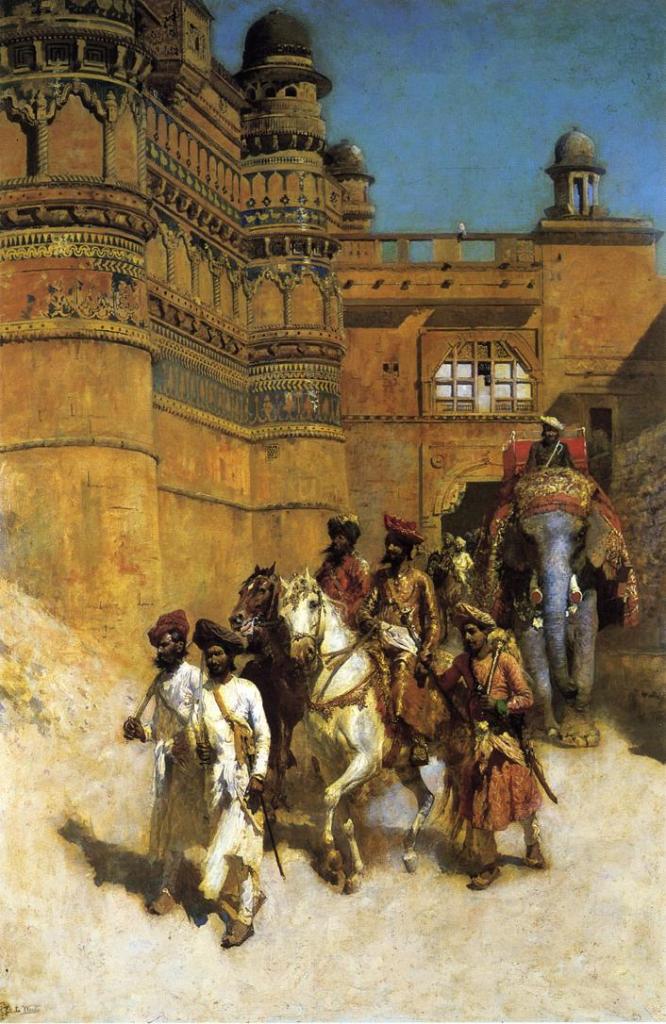
Whoever was firing at Rose’s troops, it was certainly not Tantia Tope. He had absconded the day before, using the cover of the ongoing battle to mask his flight – then, with a considerable body of cavalry and infantry, he attempted the retreat northwards, only to find the British were holding Panniar; he could not proceed to Goona it was likewise held by the British, while a force under Brigadier Showers was moving out from Agra. Colonel Riddell, who should have been ready to capture Tope, was nowhere in sight – his force had been delayed at a ford and Tope slipped past him unseen. He carried with him 12’000 men and 22 guns on his flight and was fast becoming a master at retreat. Tope would attempt to regain a foothold in Rajputana, but it was the beginning of the end. A large portion of Scindia’s revolted troops went on to join rebel groups in their homelands of Oudh and Rohilkhand or went with Tantia Tope. The rest scattered throughout the country but did not give any more bother; many were eventually disarmed and discharged, and most of the ringleaders were seized. However, while Rose had taken Gwalior, he had once again failed to capture Tope.
Taking Gwalior Fort
“When Rose heard the firing of the guns and learnt that some Ghazees were still defending the fort, he went to Waller and suggested that they should attack the stronghold and destroy the desperate fanatics. Taking with them a blacksmith, the two pickets, and twenty Pathan police, they crept up the winding road until they reached the main gateway, which they found closed. ”
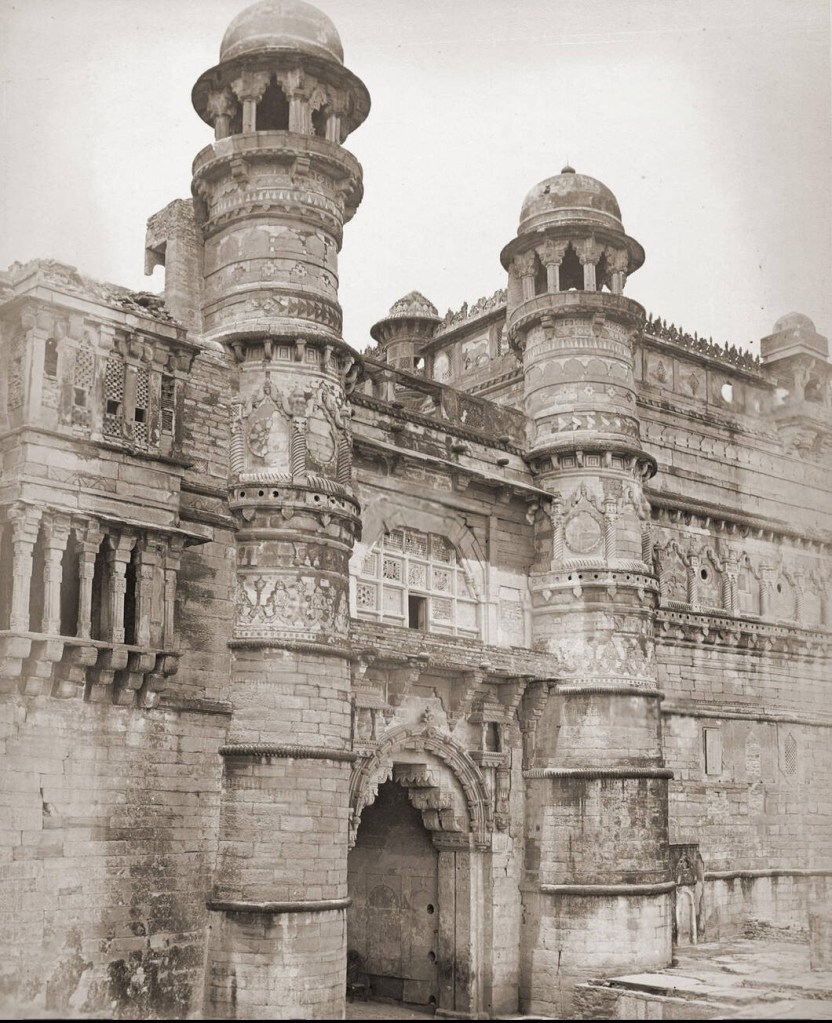
What Rose and Waller found was startling. The entire garrison of Gwalior Fort consisted of thirteen men, of whom four were of the Gwalior Contingent. Only two knew how to use the guns and had spent the entire night going around the various guns, to take their last shots at Rose’s army. Now, with the heat of the day upon them, they joined their compatriots to prevent Rose and Waller from taking the Fort. They had indeed left the day before on the Agra Road, but duty or fate had called them back to Gwalior. The men were determined now to die on their own ground. With them were two women and one child.
With the aid of some Sappers, the Hathipol was burst open; Rose and Waller rushed in, followed by their men. The last desperate garrison of Gwalior, startled by the explosion, quickly retreated behind a gun they had placed behind an archway, but it did not deter Rose or his men, who charged onwards. The insurgents attempted to gain the next of the seven gates, intending to slam the next one shut, but to no avail. Rose was on them. He climbed swiftly on the roof of a house and shot the gunners, and then leapt back down and commenced the final chase, up a bastion, where the last Waliyatis were determined to die for Gwalior. In their desperation, they flung their bags of gold and silver coin over the walls and, before Rose could prevent them, cut the throats of the women and the child. Here they stood, tulwars in hand and fought to the death. In their final struggle, they took Lieutenant Rose with them, who fell, mortally wounded fighting beside his men to the last.
Scindia Reinstated
Mrs. Duberly reached the Lashkar Palace in time to see the greater part of Scindia’s procession being carried out with as much pomp and ceremony as time allowed. Sir Hugh Rose, the brigadiers and their staff, in full dress, accompanied the Maharaja to the courtyard of the palace, where Scindia dismounted and entered the Durbar Hall, leaning on Sir Hugh’s arm.
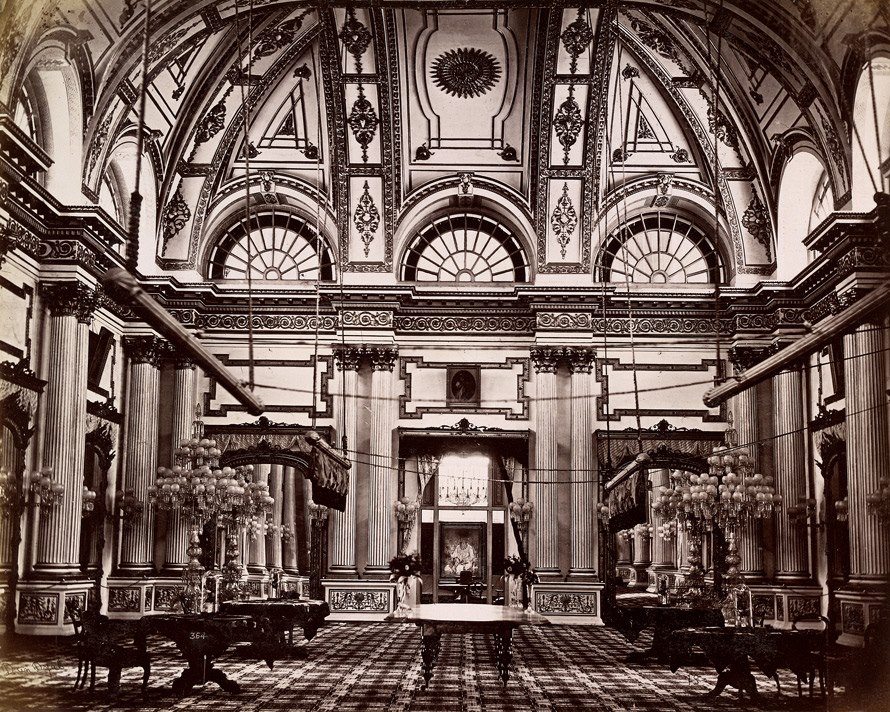
His Highness Maharaja Jayajirao Scindia, in the presence of all the chief men of Gwalior, now retook his throne. Ceremonial proceedings of various lengths and degrees were now performed; betel nut and rose water were distributed, and the whole assembly was crowned with garlands of flowers. Scindia made his first proclamation on his return to his throne, in which he profusely thanked Sir Hugh Rose and his soldiers, declaring his gratitude by asking to present the troops with a special medal for the restoration of Gwalior.
“The Government of India was more than satisfied at the result, and immediate steps were taken to make known its approval. A telegram from the President in Council was sent to all stations, at Lord Canning’s desire, requesting that * the news may be spread through every part of the Deccan, and all Southern and Eastern India, and that the restoration of our brave and faithful ally Sindhia through British arms may be loudly proclaimed.’ At the same time, a public notification was issued at Calcutta, ordering a ‘ royal salute ‘ to be fired at every large town in India to celebrate the event.“
At a banquet thrown by Scindia in their honour that very evening, Sir Hugh Rose, the brigadiers and their staff were regaled in all the splendour his court could offer; conspicuously absent at the events were Brigadier General Robert Napier and Captain Meade. Sir Hugh had instructed Napier to pursue Tantia Tope – another chapter was now opening, but it would be without Sir Hugh Rose. Gwalior was reoccupied, and his work was done. On June 29th, he bade a final farewell to his troops and handed over command to Robert Napier. In his final order, Sir Hugh Rose issued the following address to his men:
“The Major-General commanding, being on the point of resigning the command of the Poonah Division of the Bombay army, on account of ill-health, bids farewell to the Central India Field Forces and, at the same time, expresses the pleasure he feels that he commanded them when they gained one more laurel at Gwalior. The Major-General witnessed with satisfaction how the troops and their gallant companions-in-arms—the Rajpootana Brigade, under General Smith, stormed height after height, and gun after gun, under the fire of a numerous field and siege artillery, taking finally by assault two 18-pounders at Gwalior.
Not a man in these forces enjoyed his natural strength or health; and an Indian sun and months of marching and broken rest had told on the strongest, but the moment they were told to take Gwalior for their Queen and country, they thought of nothing but victory. They gained it, restoring England^ brave and true ally to his throne, putting to complete rout the rebel army, killing numbers of them, and taking from them in the field, exclusive of those in the fort, fifty-two pieces of artillery, all their stores and ammunition, and capturing the city and fort of Gwalior, reckoned the strongest in India. The Major-General thanks sincerely Brigadier-General Napier, C.B., Brigadier-General Stuart, C.B., and Brigadier Smith commanding brigades in the field, for the very efficient and able assistance which they gave him, and to which he attributes the success of the day. He bids them and their brave soldiers, once more, a kind farewell. He cannot do so under better aspects than those of the victory of Gwalior.”
For the Central India Field Force, the end of the campaign was the beginning of their disappointments. They were forbidden from accepting the silver star so graciously offered by Scindia in recognition of their hard labours; furthermore, they received no batta and no special decoration for their series of brilliant successes “untarnished by a defeat or retreat.” Sir Colin Campbell continued to downplay these successes, forcing Sir Hugh Rose into an uncomfortable position with the Commander-in-Chief, and had to appeal personally to Lord Canning for his men to even receive the clasp they so richly deserved. Then to crown it all, the Central India Force was denied their share of the prize money found at Banda and Kirwi – “although the right of the Force to receive a share had been frankly acknowledged by the Government of India, by the Commander-in-Chief in India, and by the military authorities and head of the Government at home. Sir Hugh Rose himself never asked for and never received any pension; and, his means at that time being small, the loss of some £30,000 as his own personal share in the coveted prize-money was a serious one.” For reasons only known to the machinations of government and courts, Sir Colin Campbell received the lion’s share of the prize money (along with Whitlock) for a campaign he had neither fought nor directed.
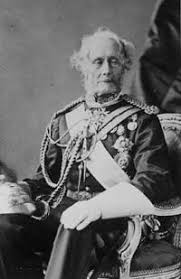
Nor was everything plain sailing for Sir Hugh Rose. He received a reproof from the Government for the delay in submitting his despatches and reports, which sadly added to the delay in the proper appreciation of his campaign. The Government, sticklers for paperwork, had little understanding of Rose’s lack of what they believed was his almost unaccountable excuse for not handing in his reports promptly.
They failed to consider that his campaign had proceeded so rapidly, he had indeed little time to take it all into account; he had no plans of forts or positions and had been obliged to reconnoitre localities himself, nearly daily, an effort which cost him fifteen hours in the saddle at any given time. There was very little time to produce the daily reports that the Government expected. However, this aside, he rejoined his command at Poona, where he rapidly recovered his failing health and continued to hope, in vain, that he would lead another campaign, at least to right the only wrong of his work, his failure to capture Tantia Tope.
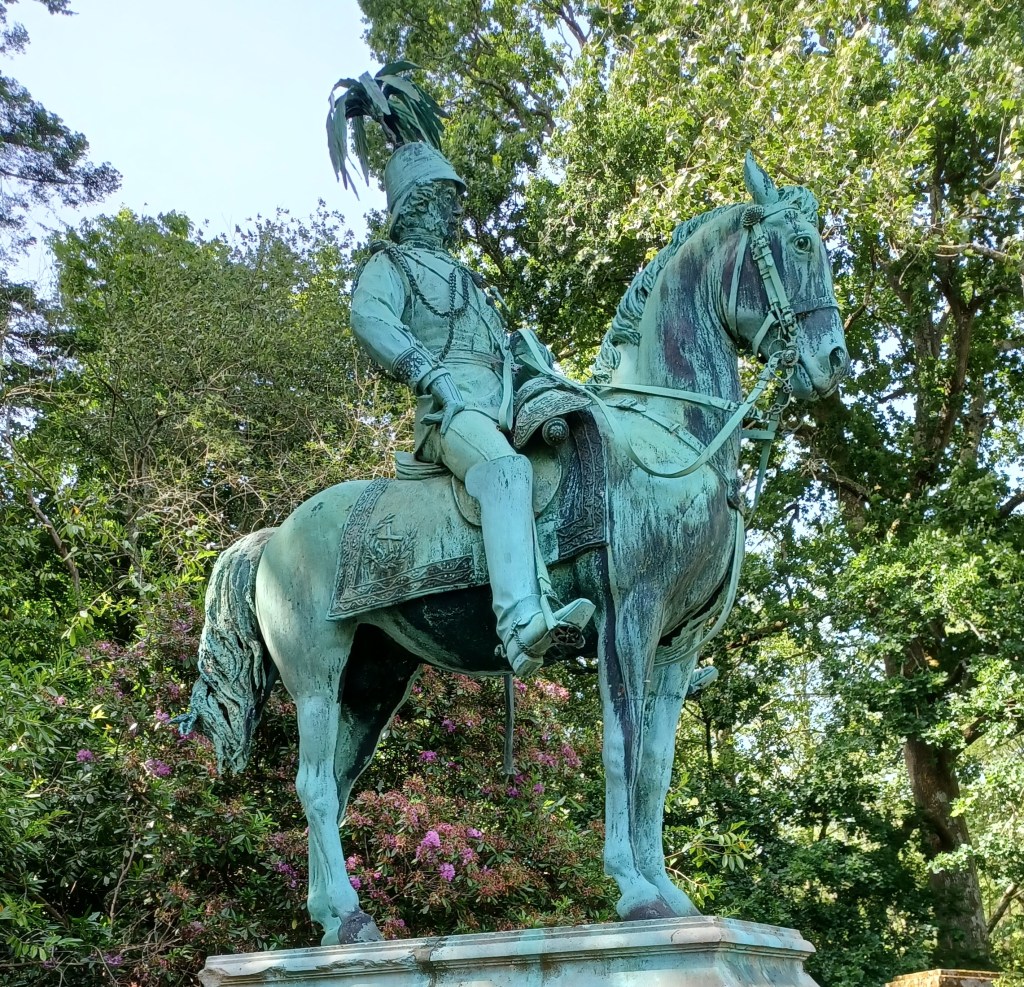
For Sir Hugh Rose, (who was created a GCB and appointed to the colonelcy of the 45th Regiment), his days of campaigning were over – on March 1859 he was appointed Commander-in-Chief of the Bombay Army and a few months later in June, on the departure of Sir Colin Campbell (Lord Clyde) for England, he was appointed to the position of Commander-in-Chief of India. After holding the position for five years, Sir Hugh Rose returned home. He was raised to the peerage with the title of Baron Strathnairn of Strathnairn and Jhansi, and was subsequently promoted to the rank of Field-Marshal. His death occurred suddenly in Paris on 16 October 1885, at the age of 84. He lies buried in the graveyard of the Priory Church, Christchurch in Hampshire.
Afterword
Although Gwalior was taken and Scindia was back on his throne, in the midst of all this, stood Major Samuel Charters Macpherson, who was understandably cross with the Maharaja as he would still do nothing to punish the rebels sitting in his own court.
On the 4th of July, he wrote, “Scindia’s whole army at Gwalior, with the exception of a few hundred men, went, i.e., both ran away at once and received pay from the enemy. His great chiefs went off with the Baiza Baee. Nearly all his officers, military and civil, at the capital, were more or less fully with the rebels, and all, save a very few, like the Dewan, deserted him utterly. All those men who were with him in Calcutta, for example, save Angria and Phalkeah. But the point of the story is to come. Scindia has received every rebel with open arms, while he repels utterly all who have stood by him. The bodyguard rascals and those who brought Tantea Topeh in the other day to the Lushkur for eight days, to pave the way for the rebels’ coming, all dine with him daily in the old way: to none other does he speak a word. We cannot get him to do anything, even to the man, the prime villain, his treasurer, who brought in the rebels and robbed his treasury! His sole wish is to get his army restored in full through new recruits and replaced under its officers who have just betrayed him, as we should say. I fear he may be wholly unmanageable. My line is to treat Scindia as still our ward and remove from him the villains who are leading him to destruction.”
Macpherson would labour another year, with the admirable help of Dinkar Rao, to right the wrongs in Gwalior and set Scindia, by ways of flattery and much pandering to his desires for an army, back into a form as a loyal subject of the British Raj. With order returned, Gwalior became, once again, a prosperous state. In 1860, Scindia was made a Knight Grand Commander of the Order of the Star of India. His photos appeared in the London press, and he was eminently regarded as a friend of the British Empire. In 1877, he became a Counsellor of the Empress and later on a GCB and CIE. In 1872, Jayajirao Scindia loaned Rs 75 lakhs for the construction of the Agra-Gwalior portion of the Great Indian Peninsular Railway, and he received his railway after all. He constructed several buildings and spent another 15 lakhs to reconstruct Gwalior’s Fort boundary wall and the damage done to parts of the fort itself.
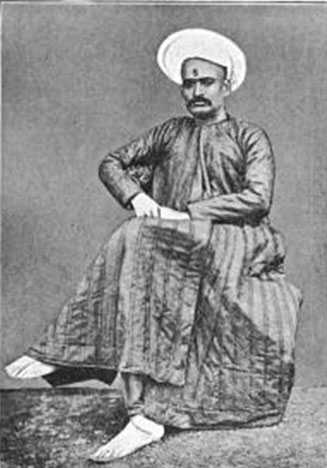
Dinkar Rao remained at Scindia’s side until December 1859. In 1863, he was nominated by Lord Canning, along with the Raja of Benares and the Maharaja of Patiala, to his legislative council. In 1873, he was appointed guardian to the minor Rana of Dholpur, but soon afterwards resigned due to ill health. He was amongst the first non-British members of the Legislative Council of India appointed in 1861 (vide the Indian Councils Act 1861), and an estate was conferred upon him. In May 1866, Dinkar Rao was appointed a Knight Commander of the Order of the Star of India (KCSI), entitling him “Sir Dinkar Rao”, and at the Imperial assemblage at Delhi that year, he further received the title of “Raja.” In 1884, the title was made hereditary by the Viceroy. No Indian statesman of the 19th century would gain a higher reputation than Dinkar Rao.
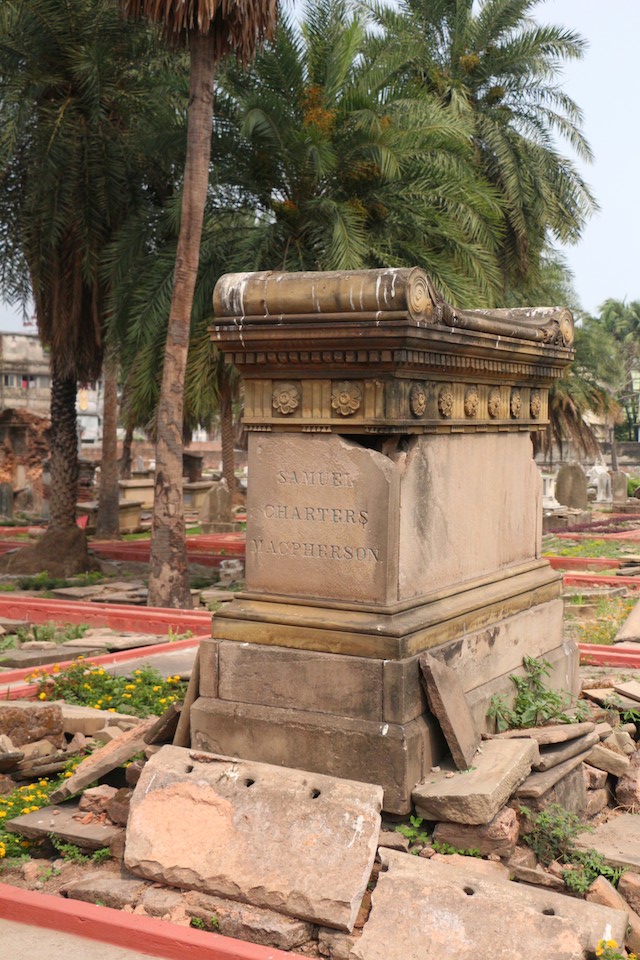
Gwalior was the last task Samuel Charters MacPherson would undertake for the government. He remained there until 1859, battling to the last. The strain finally caught up with him, and he died in Calcutta on the 15th of April 1860, the eminently practical man who had strived to save the Gwalior State.
Sources:
The Revolt in Central India 1857-59, Compiled in the Intelligence Branch (Simla: Government Monotype Press, 1908)
Bulletins and Other State Intelligence for the Year 1858, Vol II – T.L. Behan (Harrison & Son, London Gazette Office, 1860)
Rulers of India – Clyde and Strathnairn – Maj.Gen. Sir Owen Tudor Burne KCSI (Oxford: Clarendon Press, 1892) Campaigning Experiences in Rajpootana and Central India during the Suppression of the Mutiny, 1857-58 – Mrs. Henry Duberly (London: Smith, Elder & Co., 1859)
Selections of Letters, Despatches and other State Papers Preserved in the Military Department of the Government of India 1857-58, Vol IV – edited by George W. Forrest (Calcutta: Superintendent Government Printing India, 1912)
Historical Record of the 14th (King’s) Hussars from 1715 to 1900 – Col. Henry Blackburne Hamilton (London: Longmans, Green & Co., 1901)
History of the Royal Irish Rifles – Lt. Col. George Brenton Laurie (London: Gale & Polden, 1914)
History of the Indian Mutiny, commencing from the close of the 2nd Volume of Sir John Kaye’s History of the Sepoy War, Vol. III – Col. G.B. Malleson (London: W.H. Allen & Co., 1888)
Memorials of Service in India, from the Correspondence of Major Samuel Charters Macpherson, C.B. – edited by his brother, William Macpherson (London: John Murray, 1865)
The 95th (The Derbyshire) Regiment in Central India – General Sir Julius Raines, KCB (London: Swan Sonnenschein & Co., 1900)
Recollections of the Campaign in Malwa and Central India under Major General Sir Hugh Rose – Asst. Surgeon John Henry Sylvester (Bombay: Smith, Taylor & Co., 1860)
General Sir Richard Meade and the Feudatory States of Central and Southern India: A Record of Forty-Three Years of Service – Thomas Henry Thornton (Longmans, Green & Co., 1898)
 Mutiny Reflections
